Loading video…

 16 Concepts
 51 views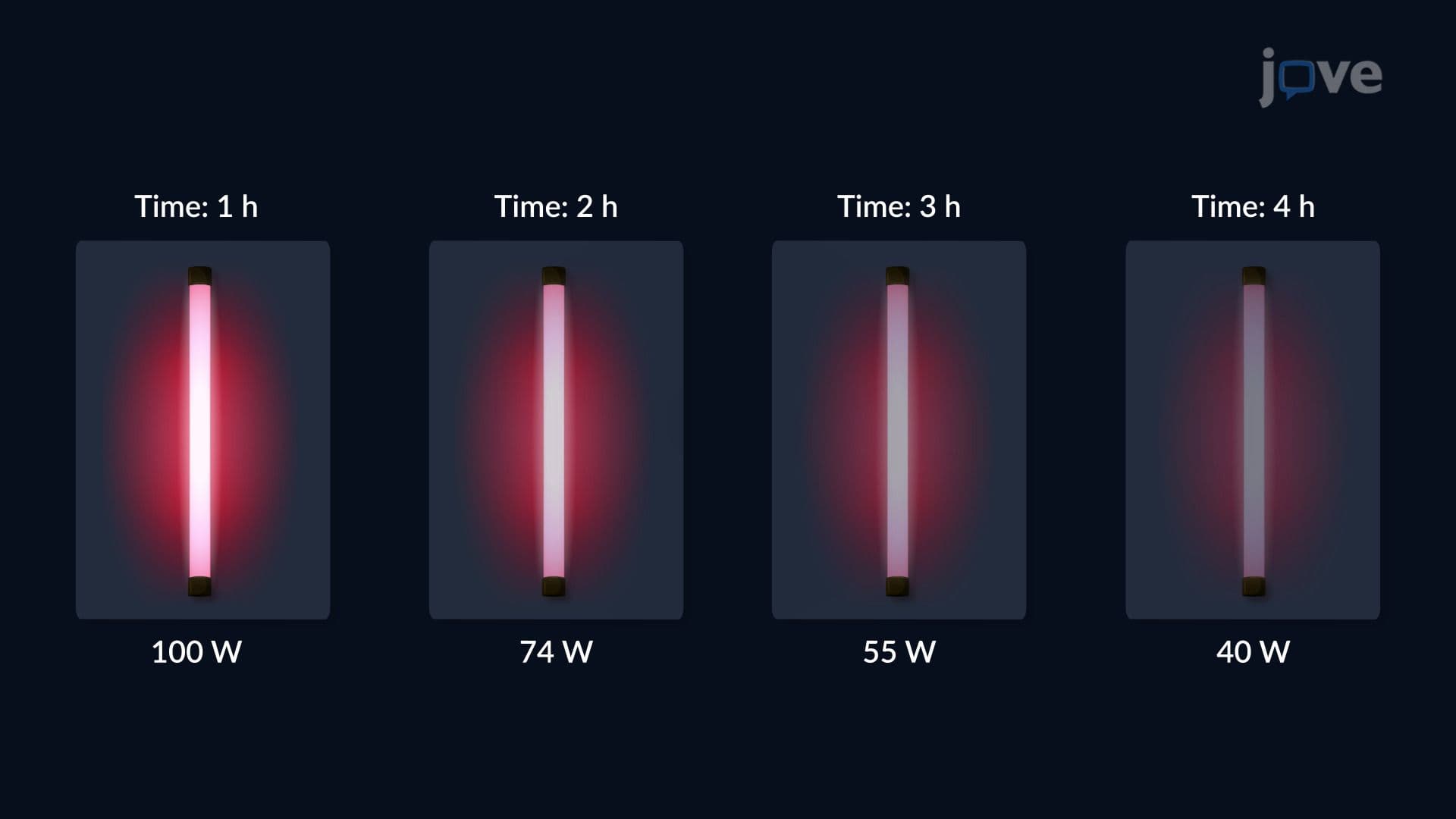

Video Summary: What Is the Integral Test
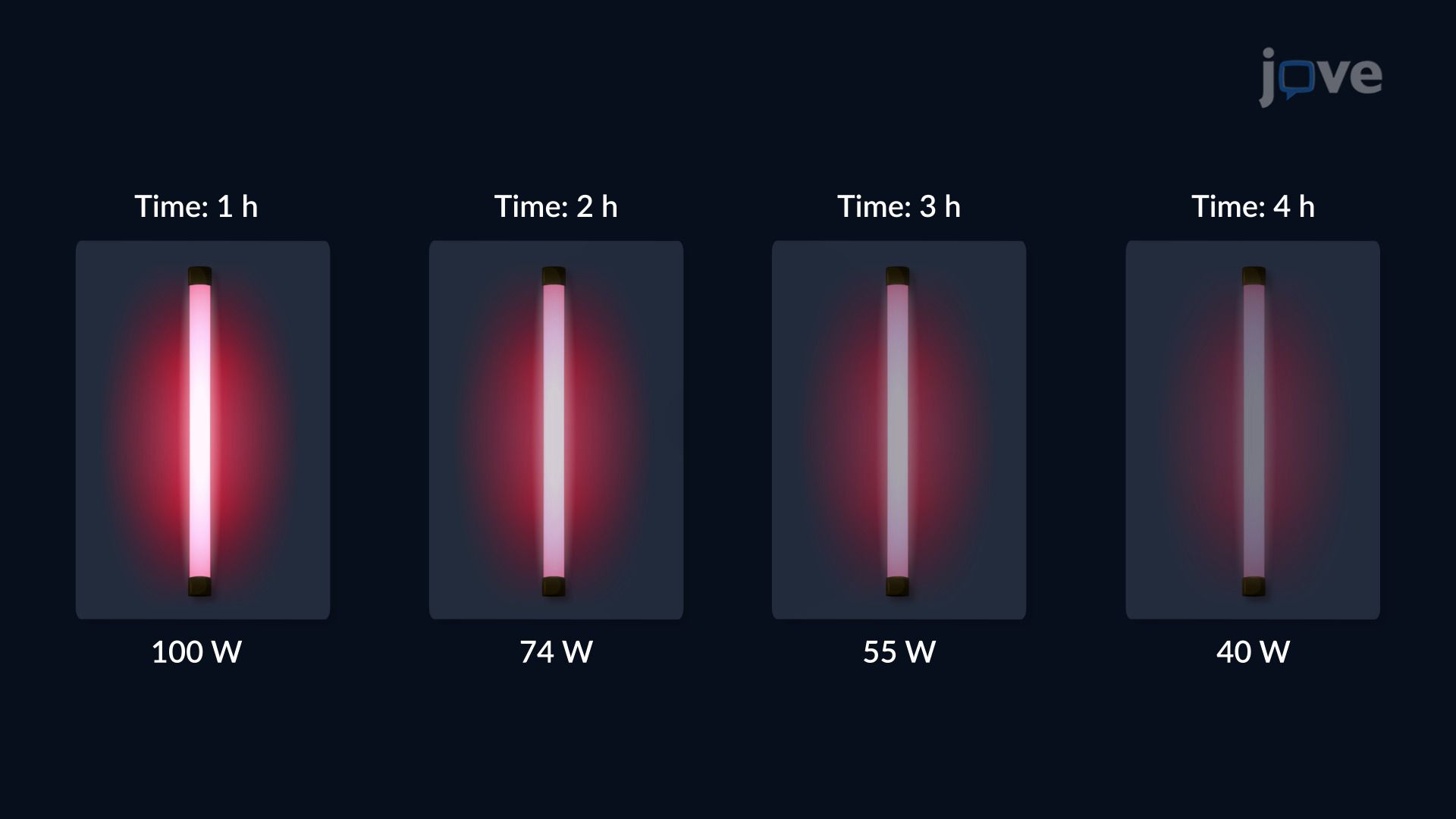
Ever wonder if an infinite series of numbers can actually add up to something finite? The integral test is the key to answering that question. This powerful calculus tool compares an infinite series to the area under a continuous curve, like measuring how a glow stick slowly dims over hours until its total energy output reaches a fixed limit. Watch the full video on JoVE Coach to master this concept with expert-led visuals and step-by-step explanations.
The integral test is one of the most elegant tools in calculus for determining whether an infinite series converges or diverges. At its core, it works by translating a discrete problem, summing an infinite list of numbers, into a continuous one: finding the area under a curve. If that area is finite, the series converges. If that area grows without bound, the series diverges. This connection between summation and integration is what makes the integral test both powerful and intuitive.
Before applying the integral test, the function f(x) that generates your series terms must satisfy three non-negotiable conditions on the interval from some starting point N to infinity:
1. Positive: f(x) must be greater than zero for all relevant x values. 2. Continuous: f(x) must have no breaks, jumps, or undefined points in the interval. 3. Decreasing: f(x) must be getting smaller as x increases, the terms can't grow or bounce around.
If any of these conditions fails, the integral test simply does not apply, and you'll need to reach for a different tool, such as the ratio test or the alternating series test. For example, the harmonic series, 1 + 1/2 + 1/3 + 1/4 + …, meets all three conditions, which is why the integral test cleanly proves it diverges even though its individual terms approach zero.
Once the three conditions are confirmed, the process is straightforward. You set up an improper integral of f(x) from N to infinity and evaluate it using a limit. Specifically, you compute the limit as b approaches infinity of the integral from N to b of f(x) dx. If this limit equals a finite number, the series converges. If the limit is infinite or undefined, the series diverges.
A classic US college calculus example is the p-series, written as the sum of 1/n^p. Using the integral test, students can prove that a p-series converges when p is greater than 1 and diverges when p is less than or equal to 1. This result appears repeatedly on AP Calculus BC exams, college midterms, and in university-level Calculus II courses across the United States.
The integral test does not exist in isolation. It sits inside a larger family of convergence tests that includes the ratio test, the root test, the alternating series test, and direct comparison. Understanding when to use the integral test, versus when to reach for geometric series formulas or Taylor series approximations, is a critical skill for AP Calculus BC students and college undergraduates alike.
The integral test is especially useful when the series involves functions that are easy to integrate, such as logarithmic or power functions. It also lays conceptual groundwork for deeper topics, including power series and the question of how to find the interval of convergence of a power series. Mastering the integral test now means smoother sailing when those advanced topics arrive. In short, the integral test is not just a computational trick, it is a conceptual lens that reveals how the continuous world of calculus and the discrete world of series are deeply, beautifully connected.
Related Micro-courses