Loading video…

 16 Concepts
 51 views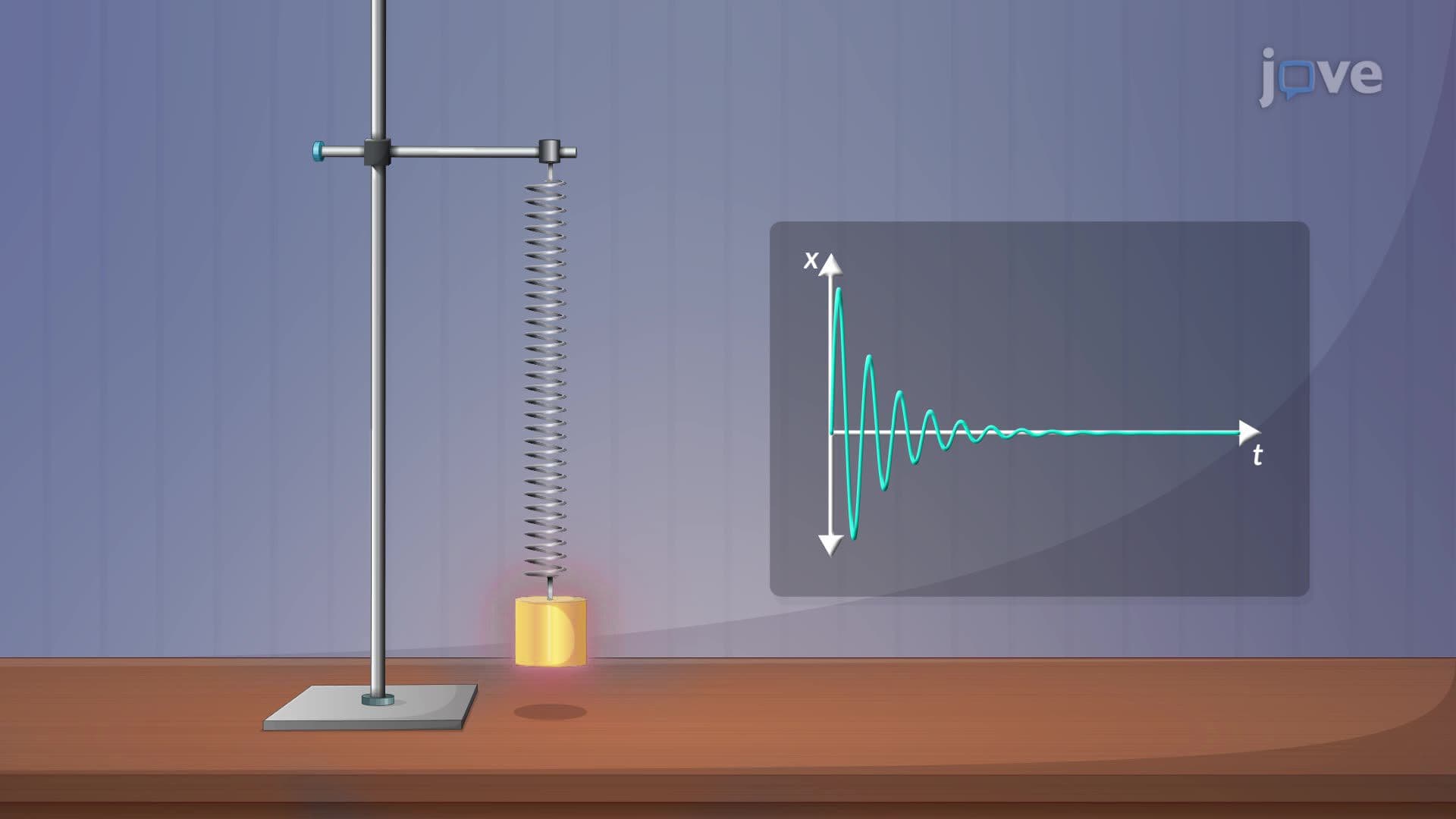

Video Summary: Alternating Series and Absolute Convergence Explained
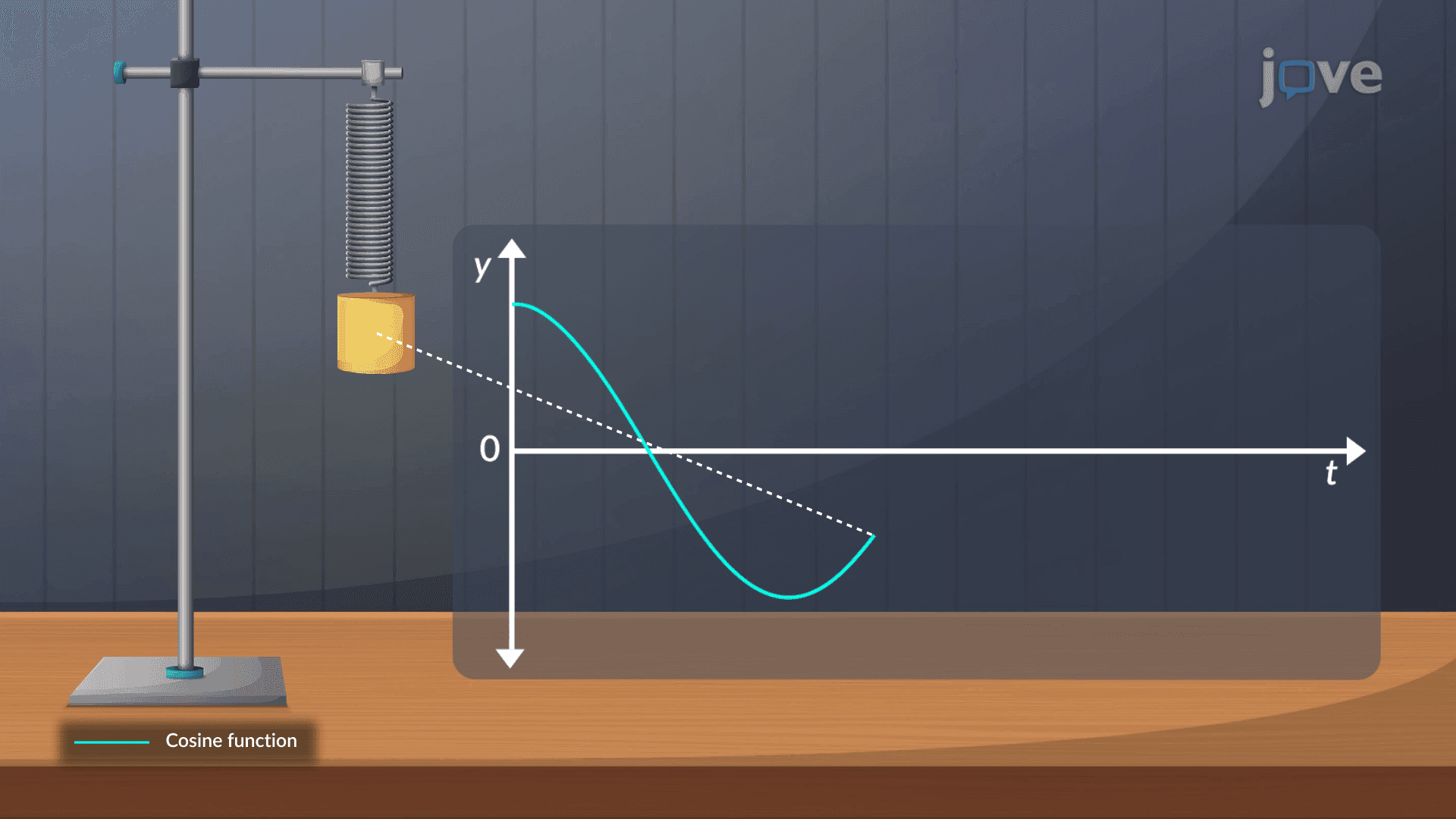
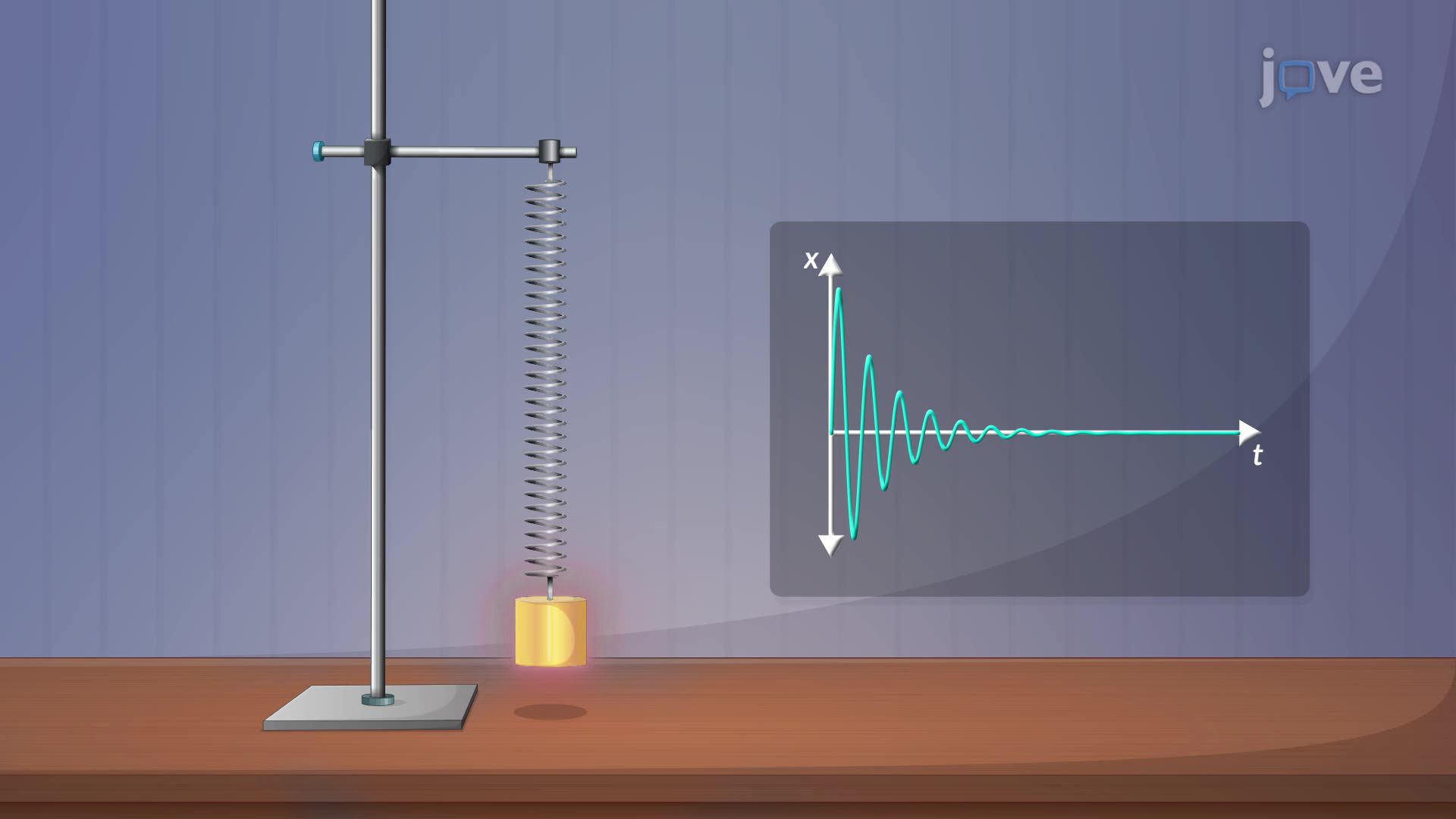
Did you know a bouncing spring can teach you one of the most powerful ideas in calculus? Alternating series and absolute convergence describe infinite sums whose terms flip signs, positive, then negative, just like a spring oscillating around rest. Engineers at NASA use this concept when modeling damped vibrations in spacecraft components. Master Alternating Series and Absolute Convergence Explained to unlock convergence testing with confidence. Watch the full video on JoVE Coach to master this concept with expert-led visuals and step-by-step explanations.
Infinite series are everywhere in mathematics, but alternating series, where every term flips sign, carry a unique elegance and a surprisingly powerful convergence test. Understanding alternating series and absolute convergence is a cornerstone of Calculus BC, college-level Calculus II, and any serious study of mathematical analysis. The core idea is simple: can an infinite sum of positive and negative values "settle down" to a single finite number? And if so, *how* does it settle?
An alternating series is an infinite sum where consecutive terms switch between positive and negative values. The classic example is the alternating harmonic series: 1 − 1/2 + 1/3 − 1/4 + … This series converges, but only *conditionally*, not absolutely. In contrast, a geometric series with a ratio between −1 and 1, such as 1 − 1/2 + 1/4 − 1/8 + …, converges *absolutely*, meaning the sum of the absolute values of its terms is also finite.
The Alternating Series Test (also called the Leibniz Test) provides two clear checkpoints for convergence: 1. The absolute values of the terms must be decreasing, each term is smaller in magnitude than the one before it. 2. The absolute values of the terms must approach zero as the number of terms grows.
When both conditions are satisfied, the alternating series converges. Think of it as a spring losing energy with each oscillation: if each swing is smaller than the last and the motion eventually stops, the system reaches a stable resting point, exactly what convergence represents mathematically.
This distinction is critical for AP Calculus BC students and college exam takers. A series is absolutely convergent if the series formed by taking the absolute value of every term, removing all the negative signs, also converges. If a series converges but its absolute-value version diverges, the series is called conditionally convergent.
Why does it matter? Absolutely convergent series behave more predictably. You can rearrange their terms in any order without changing the sum. Conditionally convergent series, however, can be rearranged to sum to *any* value, a counterintuitive and exam-worthy fact known as the Riemann Rearrangement Theorem.
One of the most powerful applications of alternating series appears through Taylor and Maclaurin series. For example, the Maclaurin series for sin(x) is:
sin(x) = x − x^3/3! + x^5/5! − x^7/7! + …
This is an alternating series! When you substitute this into a physics model, like a damped spring equation, you transform a trigonometric function into an infinite polynomial sum that can be analyzed term by term. This technique is used by engineering students at MIT and Stanford, and it appears frequently on AP Calculus BC free-response questions.
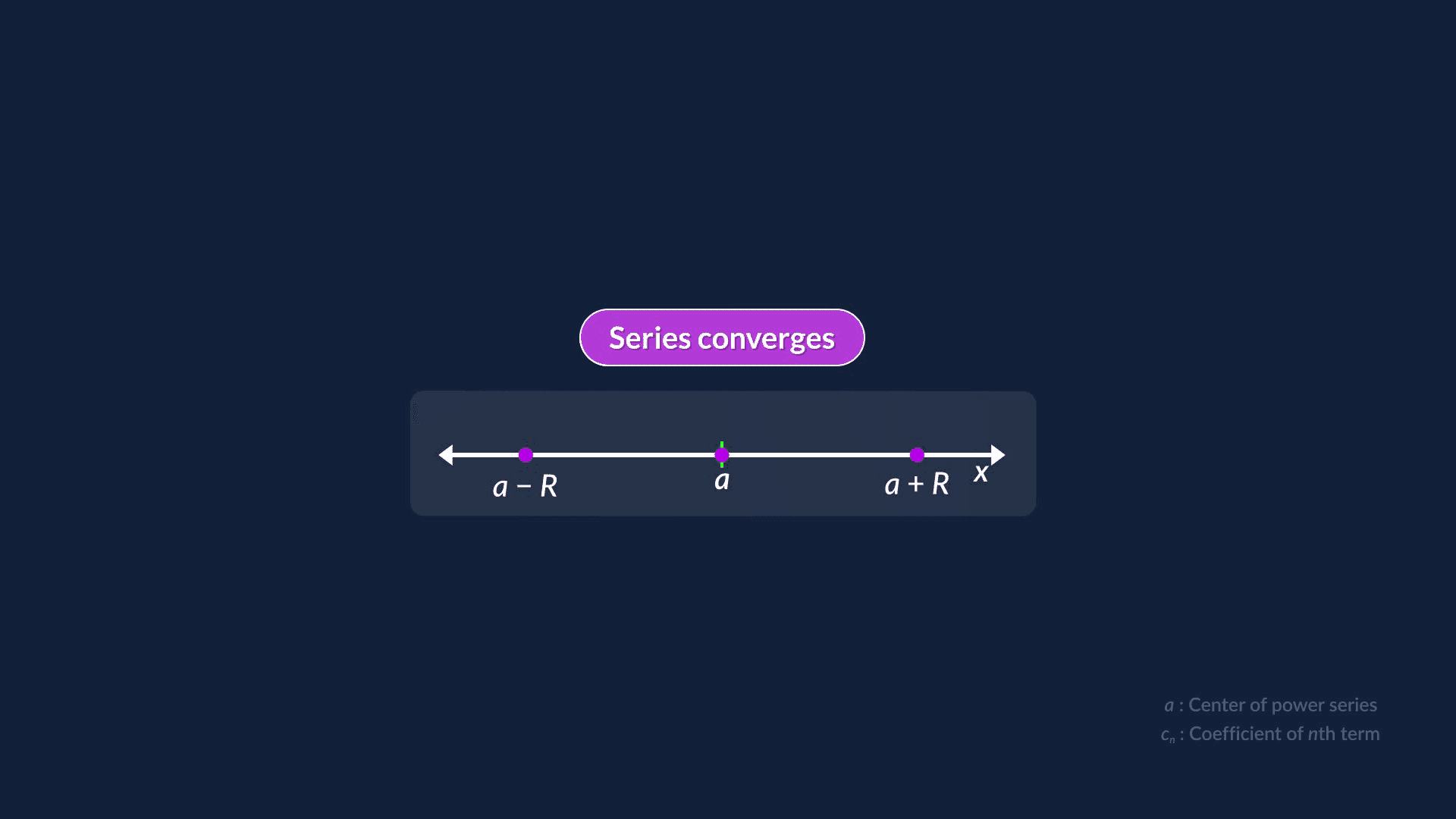
Beyond the Alternating Series Test, students should know when to reach for the Ratio Test or Root Test, particularly for power series. The Ratio Test compares the ratio of consecutive terms and is especially effective for series involving factorials or exponential expressions. The Root Test works well when terms are raised to the nth power. Determining the interval of convergence of a power series, the range of x-values for which the series converges, often requires testing the endpoints using the Alternating Series Test, making all these tools deeply interconnected.
On AP Calculus BC, college midterms, and final exams in Calculus II courses across the US, students are regularly asked to classify a series as absolutely convergent, conditionally convergent, or divergent. Mastering each test and knowing *when* to apply it is the key to scoring well.
Related Micro-courses