Loading subject page…


51 views


Video Summary: Real World Applications of Power Series Explained
Did you know a swinging pendulum helped revolutionize timekeeping in America? The real-world applications of power series make that possible. Understanding real-world applications of power series basics reveals how mathematicians tame complex, nonlinear equations, like pendulum motion, by replacing trigonometric functions with manageable polynomial approximations using Maclaurin series. This breakthrough turned an unsolvable equation into a clean, linear one. Watch the full video on JoVE Coach to master this concept with expert-led visuals and step-by-step explanations.
Power series might look like abstract mathematics on paper, but they are one of the most practically powerful tools in science and engineering. From designing pendulum clocks to modeling electrical circuits, the ability to represent complex functions as infinite sums of simpler polynomial terms is what makes modern technology possible. At its core, a power series is an infinite sum of terms in the form c(n) · (x − a)^n, where c(n) are coefficients and a is the center of the series. When centered at zero, this becomes a Maclaurin series, a special case of the broader Taylor series framework.
One of the clearest demonstrations of power series in action is the simple pendulum. The governing equation involves the sine of the swing angle, which makes it a nonlinear differential equation, notoriously difficult to solve in closed form. By expanding sin(θ) using a Maclaurin series, the function becomes: sin(θ) = θ − θ³/6 + θ⁵/120 − ...
For small angles (typically under 15 degrees), the cubic and higher-order terms shrink so rapidly they become negligible. This lets engineers approximate sin(θ) ≈ θ, transforming the equation into a standard linear second-order differential equation. The result? A clean formula showing the pendulum's period depends only on its length and gravitational acceleration, the principle behind precision mechanical clocks used throughout American horology history, including famous pendulum regulators built in 19th-century New England.
An approximation is only useful if you know where it holds. This is where convergence becomes critical. The ratio test and root test are standard techniques, taught in AP Calculus BC and college Calculus II courses, that determine whether an infinite series converges to a finite value. The alternating series test applies specifically when terms alternate in sign, as they do in the sine expansion above.
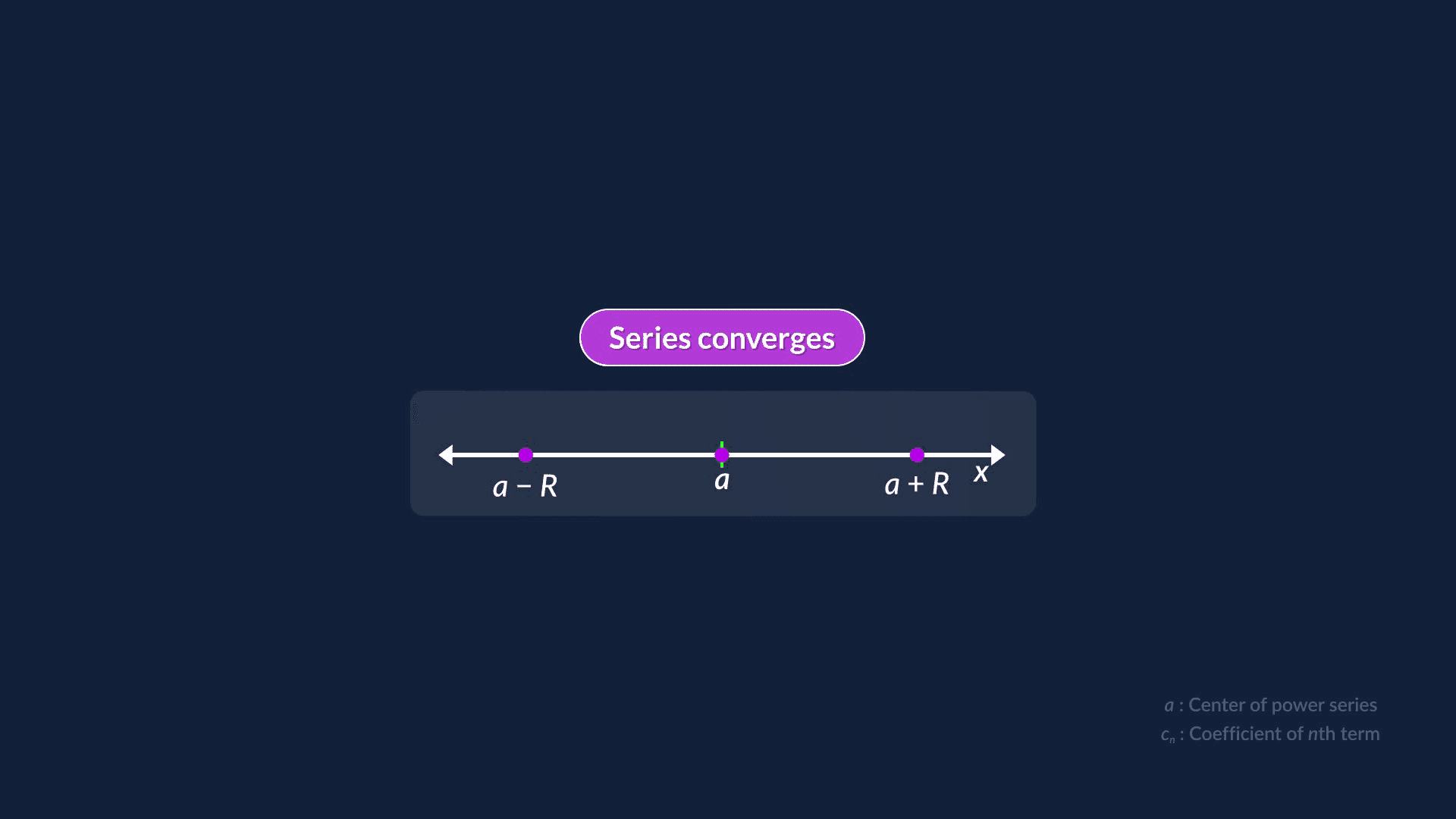
Every power series has an interval of convergence: the range of x-values for which the series produces valid, finite results. For sin(θ), the Maclaurin series converges for all real numbers, making it a reliable tool across the full physical range of pendulum motion. Understanding how to find the interval of convergence of a power series is a core skill tested on AP Calculus BC exams and college midterms nationwide.
Before mastering power series, students benefit from understanding what distinguishes a sequence from a series. A sequence is an ordered list of numbers (e.g., 1, 1/2, 1/4, ...); a series is the sum of those terms (e.g., 1 + 1/2 + 1/4 + ...). The geometric series, where each term is a constant multiple of the previous, is the simplest convergent series and often the entry point into this entire branch of calculus.
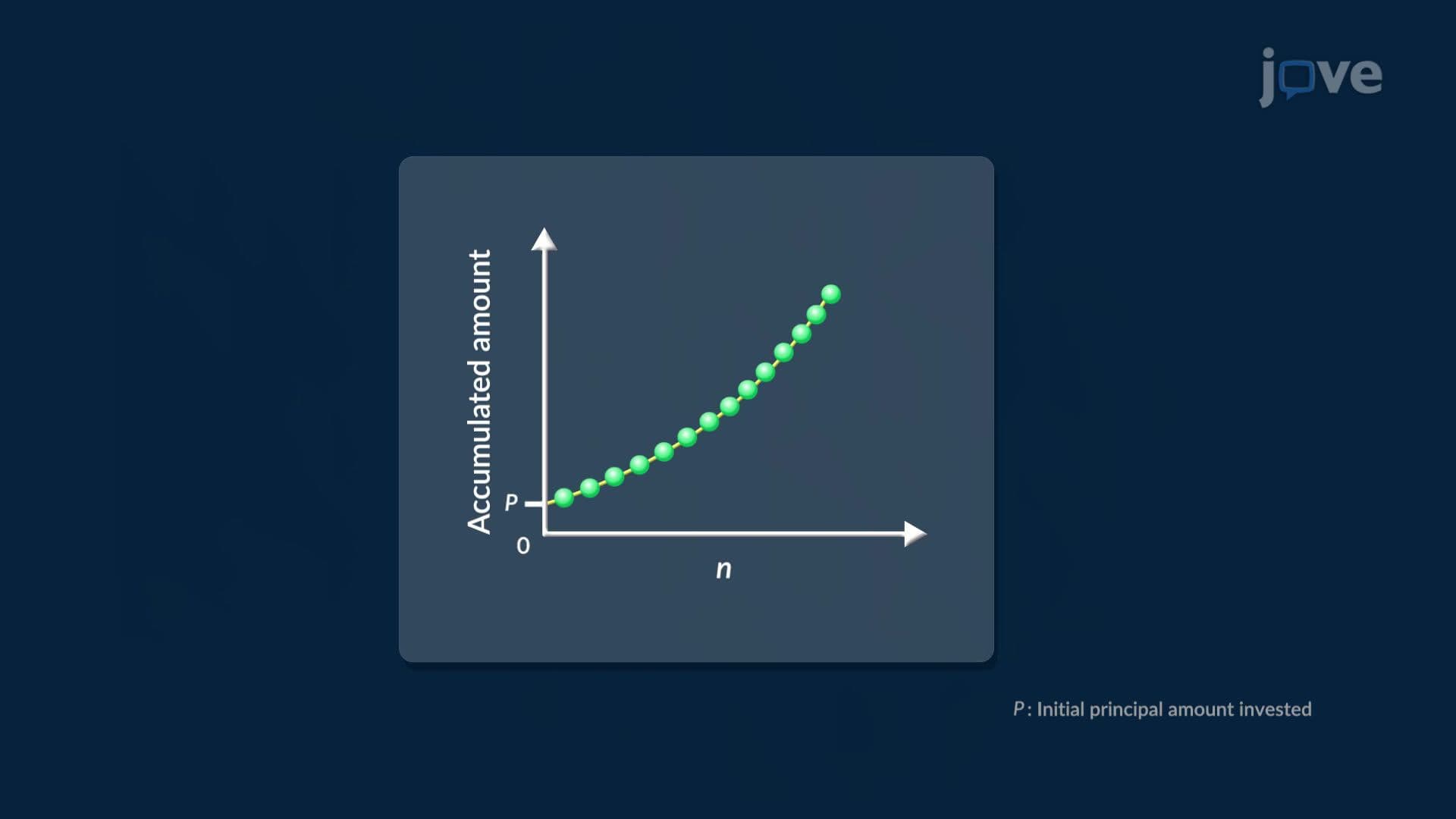
Geometric series appear directly in finance (calculating present value of annuities), physics (modeling wave interference), and computer science (analyzing algorithm complexity). Recognizing the geometric series as a special case of a power series with constant coefficients helps students build intuition before tackling the full Taylor and Maclaurin framework used in university-level physics, engineering, and data science programs across the US.
Related Micro-courses