Loading video…


 6 Concepts
 2.5K views

Video Summary: What are Separable Differential Equations
Why does a hot cup of coffee cool down faster at first, then slowly level off? The answer lies in separable differential equations, a foundational concept in calculus where variables are split and integrated independently. This real-world cooling behavior, studied in American college physics and calculus courses, is a perfect example of separable differential equations basics in action. Watch the full video on JoVE Coach to master this concept with expert-led visuals and step-by-step explanations.
A separable differential equation is a type of first-order ordinary differential equation (ODE) that can be rewritten so all terms involving one variable appear on one side of the equation and all terms involving the other variable appear on the opposite side. This clean separation makes them one of the most approachable and widely used tools in introductory calculus and differential equations courses across the United States.
The standard form looks like this:
dy/dx = f(x) · g(y)
Once separated, it becomes:
(1/g(y)) dy = f(x) dx
Both sides can then be integrated independently, the left with respect to y, the right with respect to x, yielding a general solution.
Solving separable differential equations follows a reliable process that shows up repeatedly in AP Calculus BC and college-level ODE courses:
1. Separate the variables, Rearrange the equation so y-terms (including dy) are on the left and x-terms (including dx) are on the right. 2. Integrate both sides, Apply integration independently to each side. Don't forget the constant of integration C on one side. 3. Solve for y (if possible), Simplify the result into an explicit or implicit solution. 4. Apply the initial condition, If an initial value is given (for example, y(0) = 5), substitute to solve for C and obtain the particular solution.
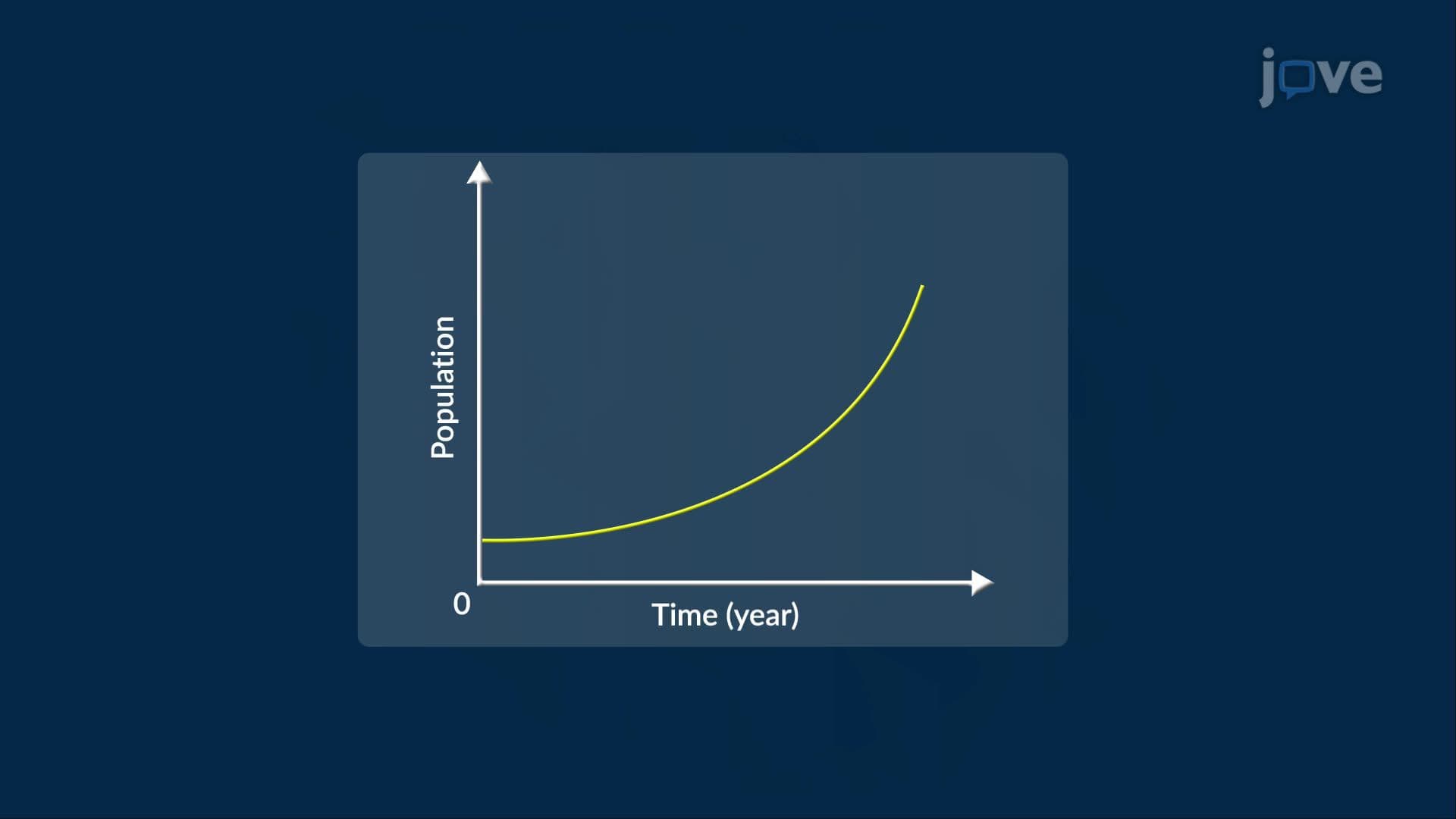
For instance, Newton's Law of Cooling, used in forensic science programs at universities like UC Davis and in AP Physics, states that the rate of temperature change is proportional to the difference between the object's temperature and the room temperature. This produces a separable ODE whose solution shows exponential decay: the object cools rapidly at first, then more and more slowly over time.
A general solution contains an arbitrary constant C and represents a family of curves, every possible solution to the ODE. A particular solution pins down one specific curve by using an initial condition, typically written as y(t₀) = y₀ or T(0) = T₀.
This distinction is critical on AP Calculus BC free-response questions and college midterm exams, where students are often given an initial value problem (IVP) and must produce a fully simplified particular solution. Leaving C unsolved when an initial condition is provided is a common, and costly, mistake.
Separable differential equations are not just a textbook exercise. They model:
On the AP Calculus BC exam, separable differential equations appear consistently in both multiple-choice and free-response sections. Students are expected to correctly separate variables, integrate, apply initial conditions, and interpret solutions graphically using slope fields. Mastering this topic is also excellent preparation for college-level Differential Equations (typically Math 2420 or equivalent), where separable equations serve as the entry point before tackling linear first-order equations and integrating factors.
Related Micro-courses