Loading video…


 8 Concepts
 85 views

Video Summary: Curves Defined by Parametric Equations Explained
Ever wonder how physicists track a baseball's exact position mid-flight? Curves defined by parametric equations basics make this possible. Instead of one equation linking x and y, parametric equations express both coordinates as separate functions of time t, capturing not just the shape of a path but the motion along it. Used everywhere from NASA trajectory modeling to AP Calculus BC, this concept unlocks a deeper understanding of movement in mathematics. Watch the full video on JoVE Coach to master this concept with expert-led visuals and step-by-step explanations.
In standard algebra, a curve is described by a single equation relating x and y, for example, y = x². But this approach has a critical limitation: it shows *where* a curve is, not *when* or *how fast* something moves along it. Curves defined by parametric equations solve this problem by introducing a third variable, typically t for time, so that both x and y are expressed as separate functions: x = f(t) and y = g(t). Each value of t produces an ordered pair (f(t), g(t)), and together these pairs trace the complete curve through space while simultaneously encoding motion.
Imagine tracking a soccer ball kicked across a field at a US high school championship game. The ball rises, peaks, and falls, following a parabolic arc. A Cartesian equation like y = -x² + 6x can describe that shape, but it cannot tell you where the ball is at t = 1.5 seconds versus t = 3 seconds. It also cannot distinguish the ball's upward journey from its downward one, even though the ball passes through the same height twice. Parametric equations eliminate this ambiguity by tying every position to a specific moment in time.
Graphing parametric equations involves creating a table of t-values, computing the corresponding x and y coordinates, and plotting the ordered pairs in sequence. The direction of increasing t is called the *orientation* of the curve and is typically shown with arrows on the graph. For example, given x = cos(t) and y = sin(t) for t from 0 to 2π, the resulting graph is a unit circle traced counterclockwise, something a simple equation like x² + y² = 1 cannot convey on its own. On the AP Calculus BC exam, students are expected to graph parametric curves, find their orientation, and identify key features like intercepts and turning points.
Parametric equations are a core topic in AP Calculus BC and are revisited extensively in college-level Calculus II courses at universities across the US. Key skills include finding the slope of a parametric curve using dy/dx = (dy/dt) / (dx/dt), computing arc length using the integral formula, and analyzing motion along a curve. These ideas connect directly to related topics such as polar coordinates, graphing polar equations, and conic sections in polar coordinates. Students who master parametric equations are well-prepared for topics like area of polar curves and arc length in polar coordinates, all of which appear on the AP exam and college midterms.
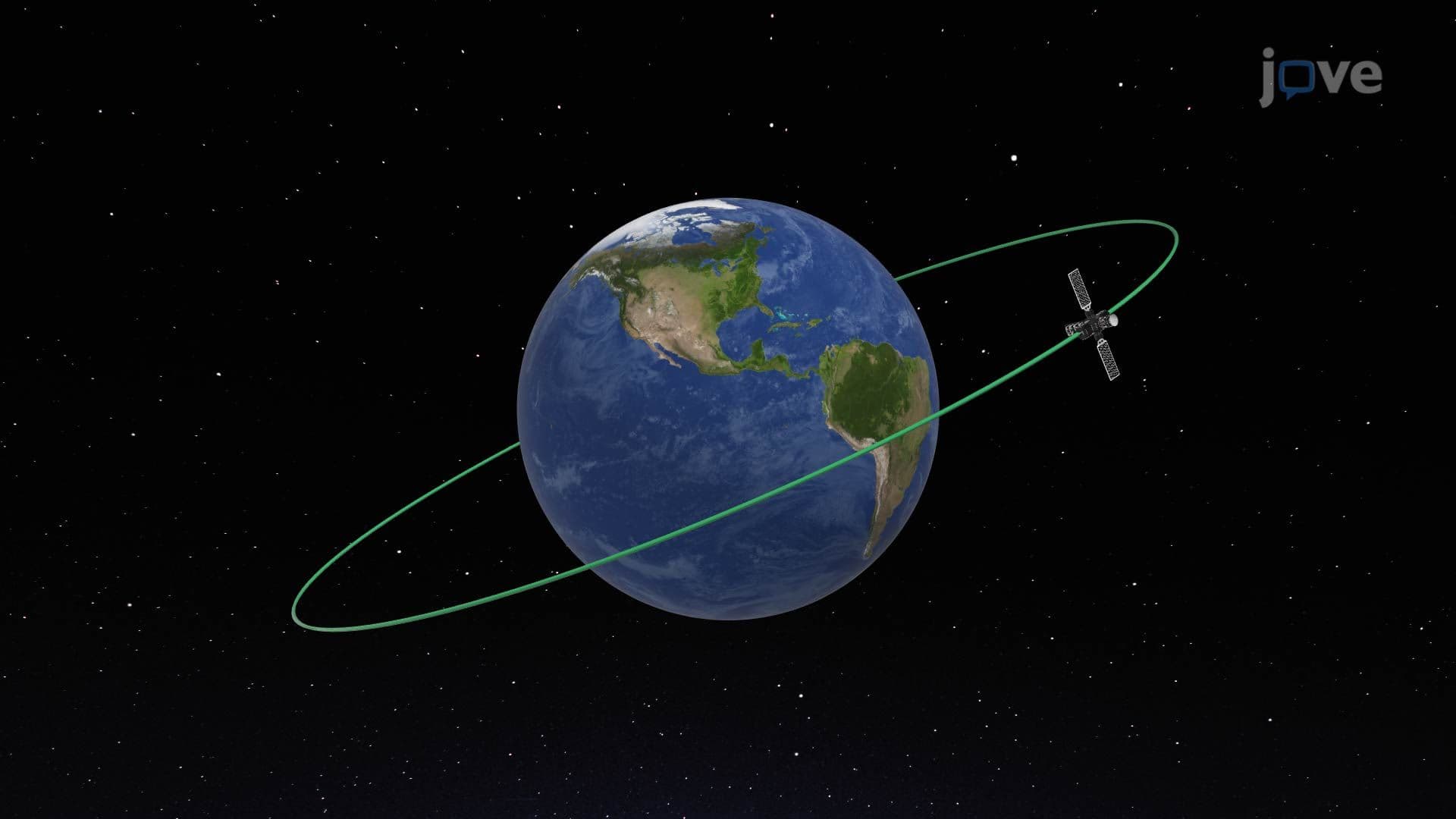
Beyond baseball and soccer, parametric equations are used by NASA engineers to model spacecraft trajectories, by video game developers to animate character movement, and by robotics engineers at companies like Boston Dynamics to program precise mechanical arm paths. In business analytics, parametric models also describe time-dependent data curves. Understanding calculus with parametric curves provides a mathematical foundation that extends into physics, engineering, computer science, and economics, making this one of the most versatile tools a student can learn in precalculus and calculus.
Related Micro-courses