Loading video…

 8 Concepts
 85 views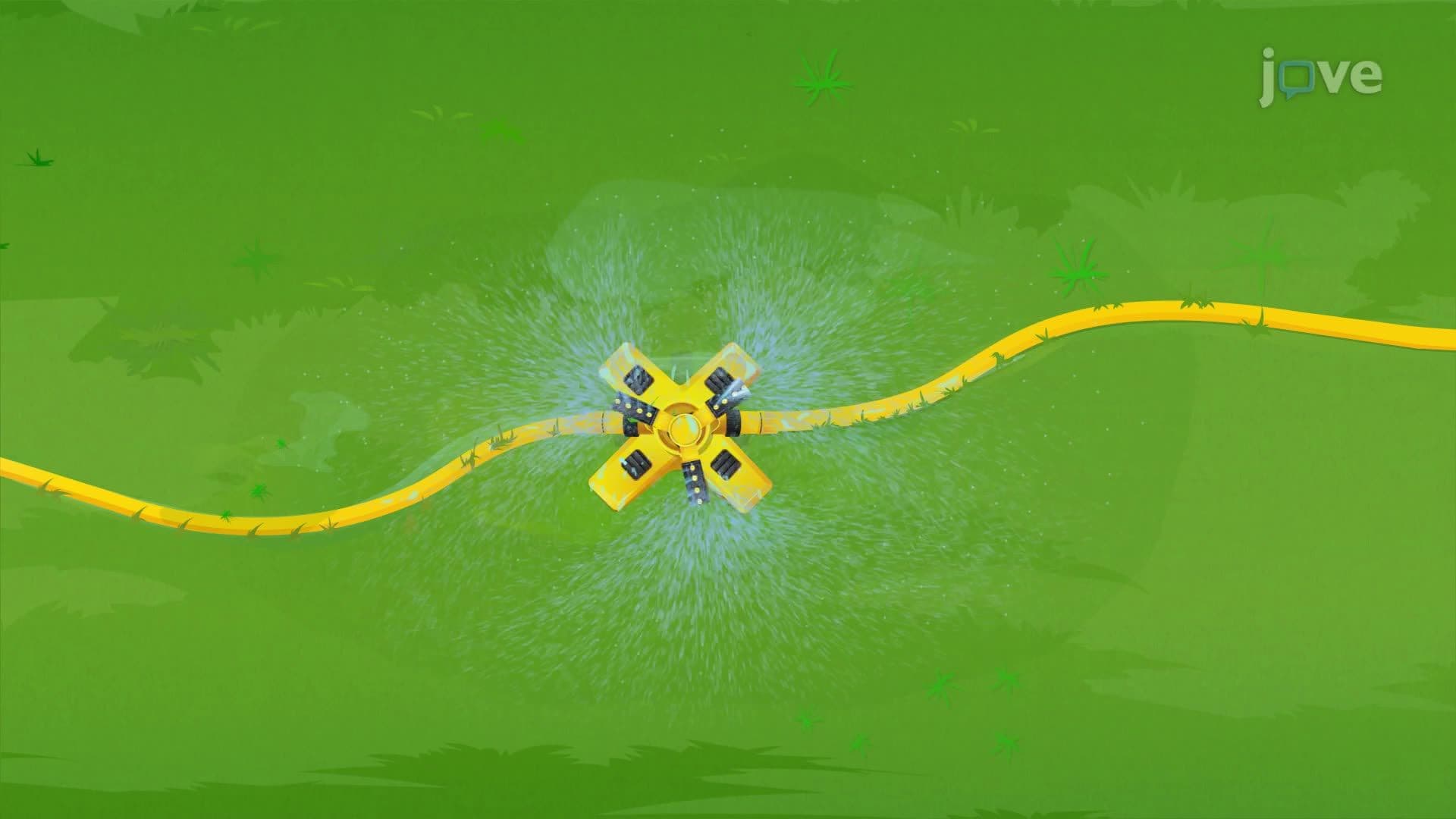

Video Summary: Integration Applied to Polar Coordinates to Find Areas Explained
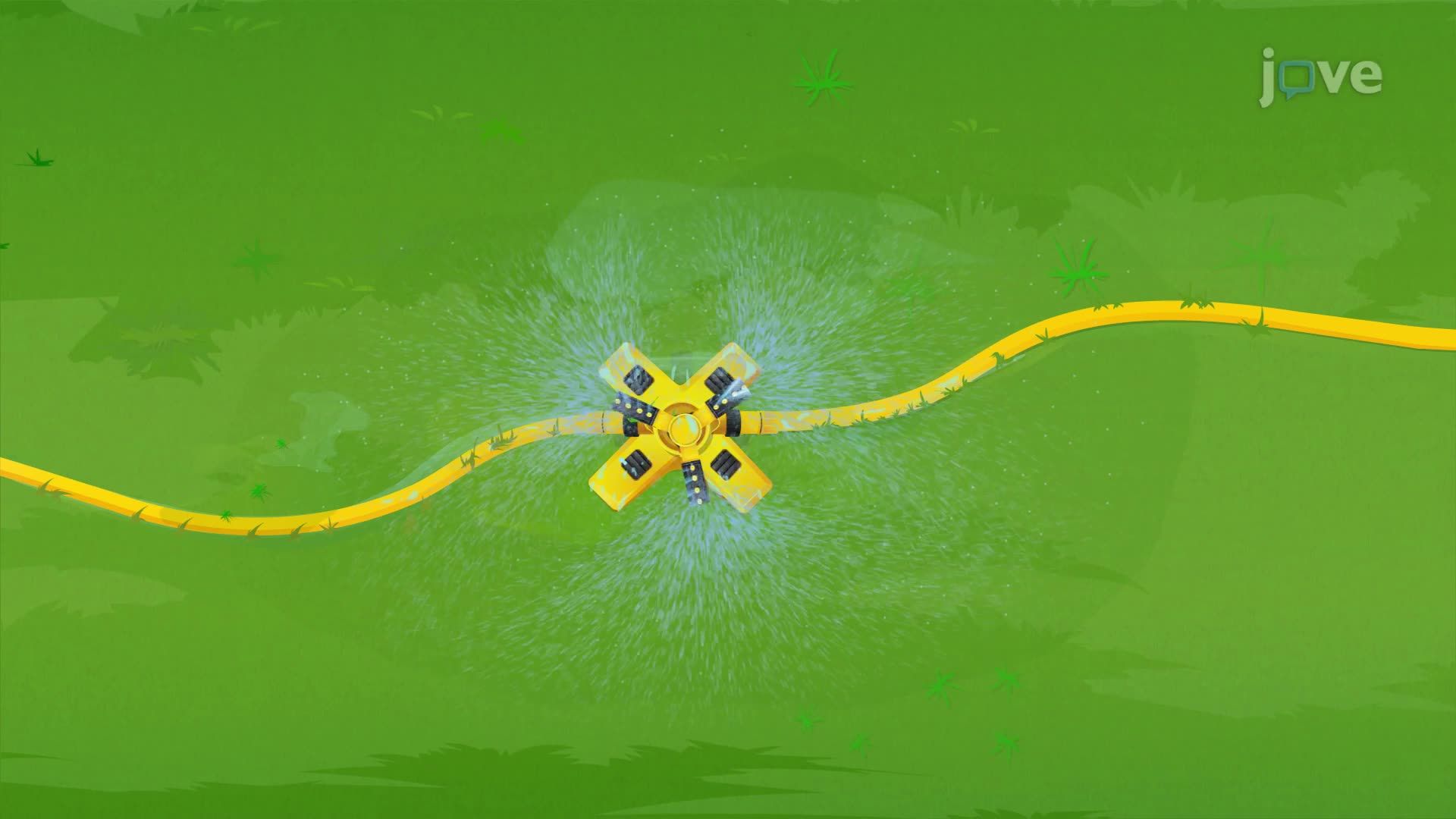
Did you know a lawn sprinkler traces a mathematical curve that calculus can measure exactly? Integration applied to polar coordinates to find areas transforms that uneven spray into a precise calculation. This concept, also called Integration Applied to Polar Coordinates to Find Areas, uses definite integrals and radial slices to compute regions NASA engineers and civil planners rely on daily. Watch the full video on JoVE Coach to master this concept with expert-led visuals and step-by-step explanations.
Most students first learn area calculations in rectangular coordinates, where regions are sliced into vertical or horizontal strips. But many natural shapes, spirals, rose curves, limaçons, are far easier to describe in polar coordinates, where a point is located by its distance r from the origin and its angle θ from the positive x-axis. Integration applied to polar coordinates to find areas is the calculus technique that lets you find the exact area enclosed by these curves, replacing rectangular strips with thin radial "wedges" that fan out from the origin.
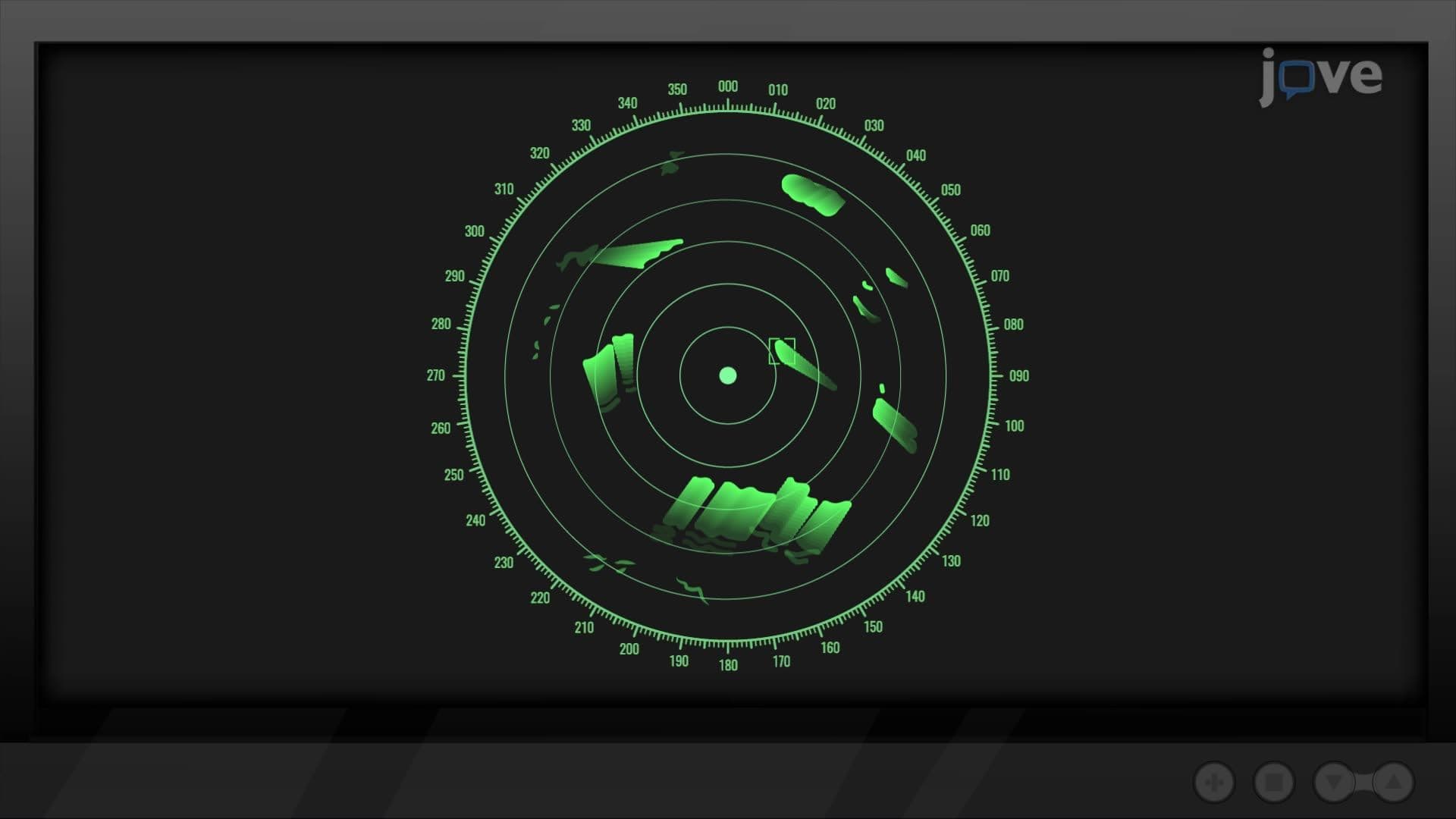
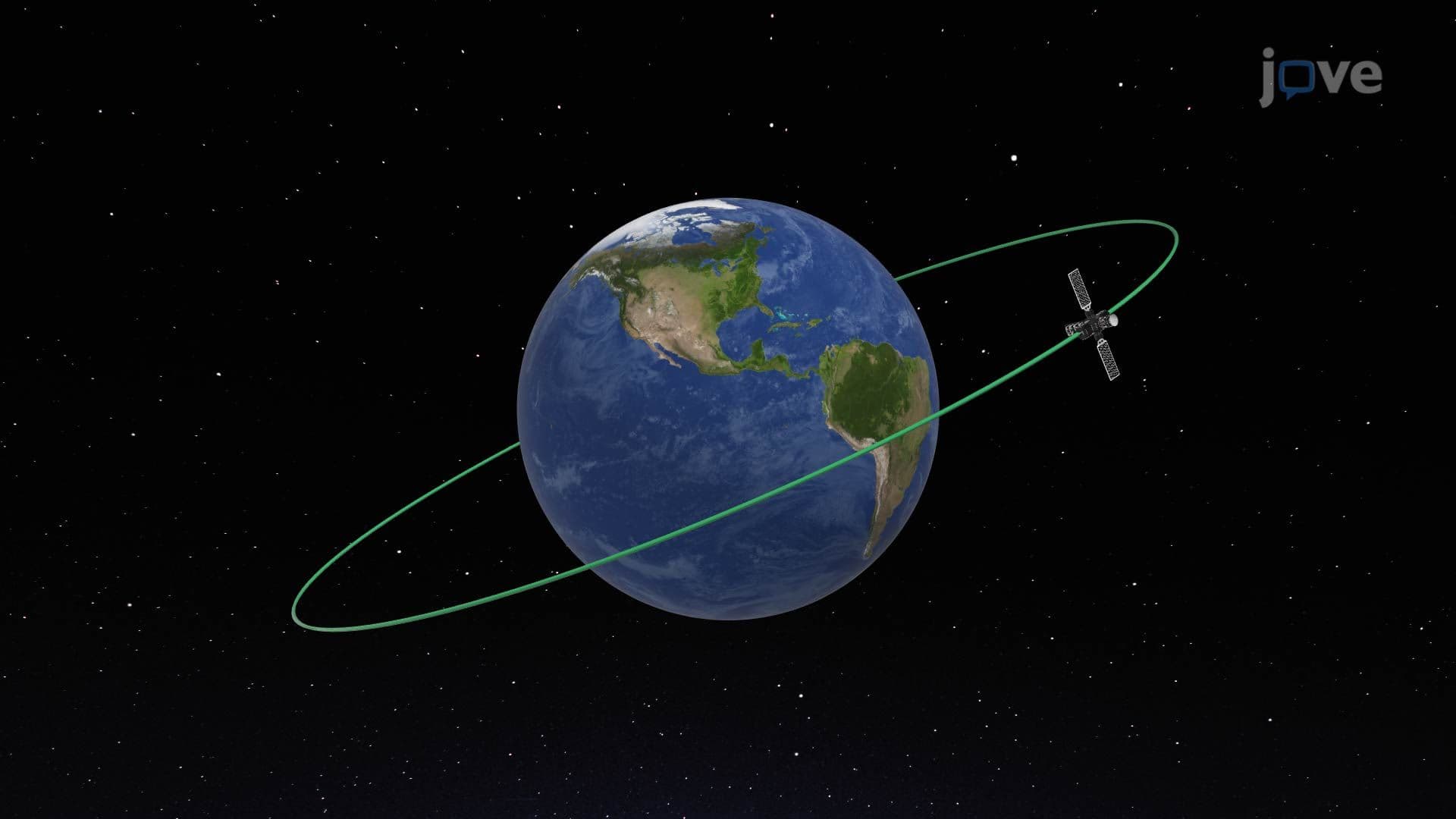
Polar coordinates appear wherever circular or rotational symmetry dominates. A weather radar station in Chicago, for example, sweeps a full 360° and records rainfall intensity at each angle, the coverage area it monitors is a polar region. Satellite dish signal footprints, irrigation sprinkler coverage, and even the effective range of a lighthouse beam are all naturally modeled in polar form. Understanding what polar coordinates are used for, and how to compute the areas they define, is essential in engineering, physics, and environmental science.
The derivation of the polar area formula mirrors the logic behind any Riemann sum. Recall that the area of a full circle with radius r is πr², and the full angular sweep is 2π. A thin sector with a small angle Δθ captures the fraction (Δθ / 2π) of that total area, giving a slice area of approximately (1/2)r²Δθ. When the radius varies with angle, r = f(θ), each slice uses the local radius value f(θᵢ). Summing all slices and taking the limit as Δθ → 0 produces the polar area formula:
A = integral from a to b of (1/2)[f(θ)]² dθ
This is the same limiting process that defines every definite integral in calculus, making polar area a natural extension of what students already know from AP Calculus AB and BC.
In AP Calculus BC, one of the most common US college-level exams where this topic appears, students are expected to set up and evaluate polar area integrals confidently. A typical problem might ask for the area enclosed by r = 2 + 2sin(θ), a cardioid, from θ = 0 to θ = 2π. The setup follows directly from the formula: integrate (1/2)(2 + 2sin θ)² dθ over the full interval. Expanding the square, applying trigonometric identities like the half-angle formula for sin²(θ), and evaluating the resulting terms are the key algebraic steps. Graphing polar equations first, to confirm the curve's shape and find correct angle bounds, is a critical pre-integration skill that prevents common errors on timed exams.
Polar area integration sits at the intersection of several important calculus ideas. Arc length in polar coordinates uses a related but distinct formula, incorporating both r and dr/dθ, making the two concepts natural study partners. Parametric equations offer another coordinate-free approach to curves, and converting between parametric and polar forms deepens overall fluency. Conic sections in polar coordinates, ellipses, parabolas, and hyperbolas expressed as r = (ed)/(1 ± e·cosθ), appear in orbital mechanics and are tested in college physics and engineering courses. Mastering polar area is a gateway to all of these connected topics.
Related Micro-courses