Loading video…


 10 Concepts
 7.3K views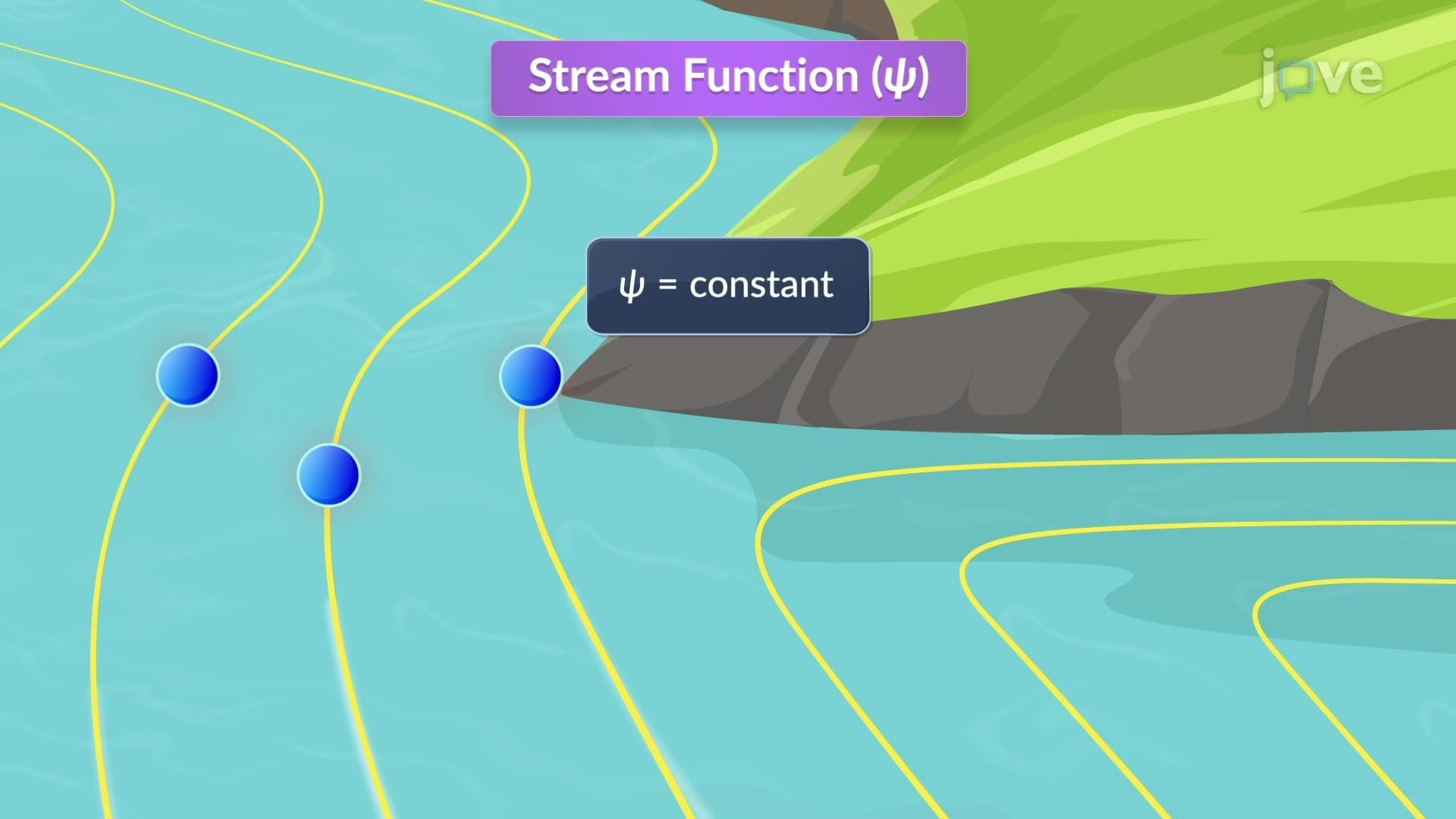

Video Summary: What Is Stream Function
Have you ever wondered how engineers predict water flow around a bridge pier or how meteorologists track hurricane paths? Irrotational flow analysis relies on a powerful mathematical tool called the stream function. This concept transforms complex two-dimensional fluid motion into elegant streamline patterns, like those seen in NASA's wind tunnel tests for aircraft design. The stream function automatically satisfies mass conservation while simplifying velocity calculations through streamlines that trace particle paths. Watch the full video on JoVE Coach to master this concept with expert-led visuals and step-by-step explanations.
The stream function represents one of fluid mechanics' most elegant mathematical tools, transforming the complexity of two-dimensional flow analysis into intuitive visual patterns. In irrotational flow systems, where fluid particles don't rotate about their own axes, the stream function becomes particularly powerful for engineering analysis and design applications.
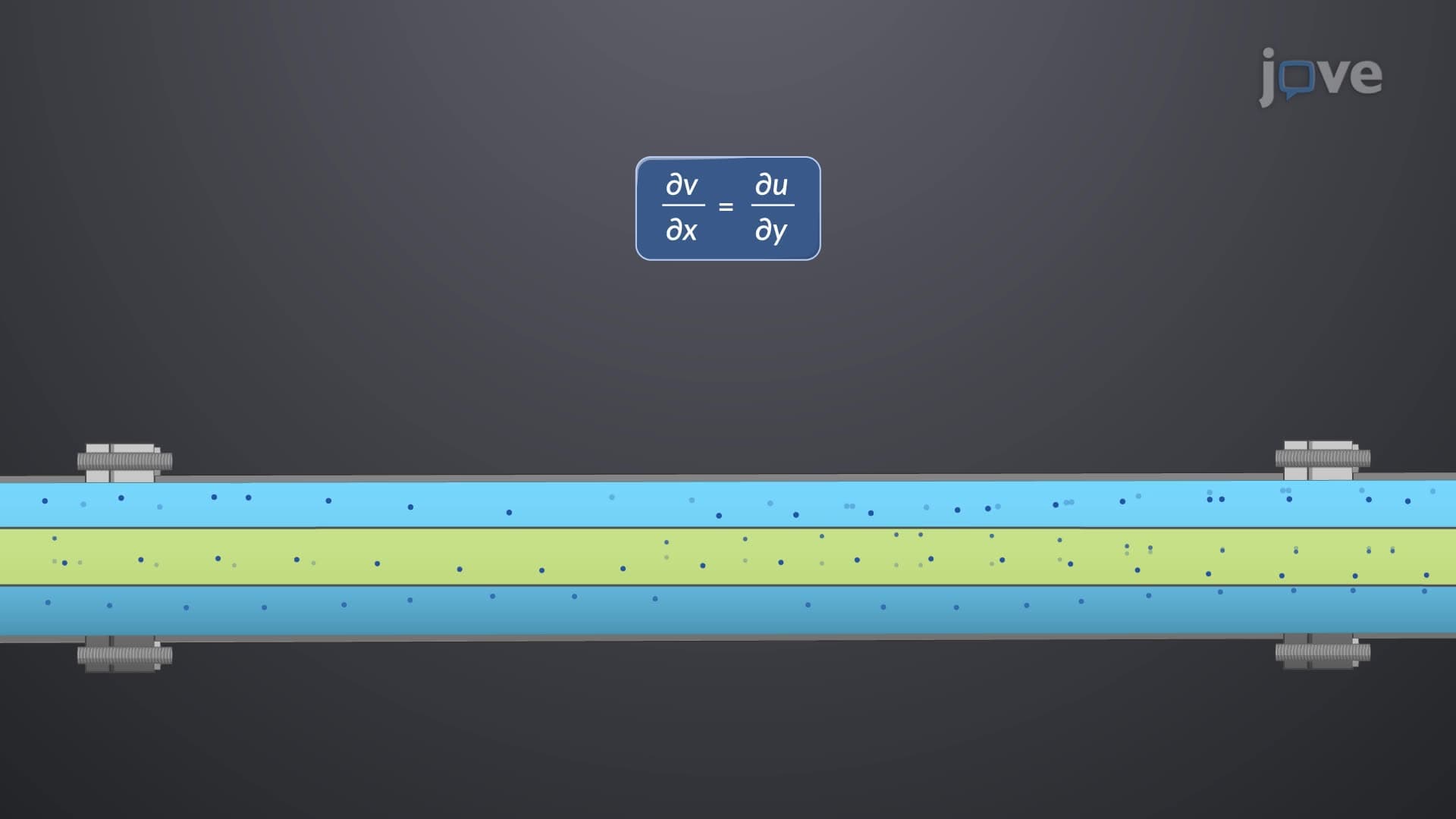
The stream function ψ (psi) connects directly to velocity components through partial derivatives. For horizontal velocity u and vertical velocity v, the relationships are u = ∂ψ/∂y and v = -∂ψ/∂x. This mathematical structure automatically ensures that the continuity equation ∂u/∂x + ∂v/∂y = 0 is satisfied, guaranteeing mass conservation without additional constraints. Students preparing for AP Physics C or college fluid mechanics courses will encounter these relationships frequently in problem-solving scenarios.
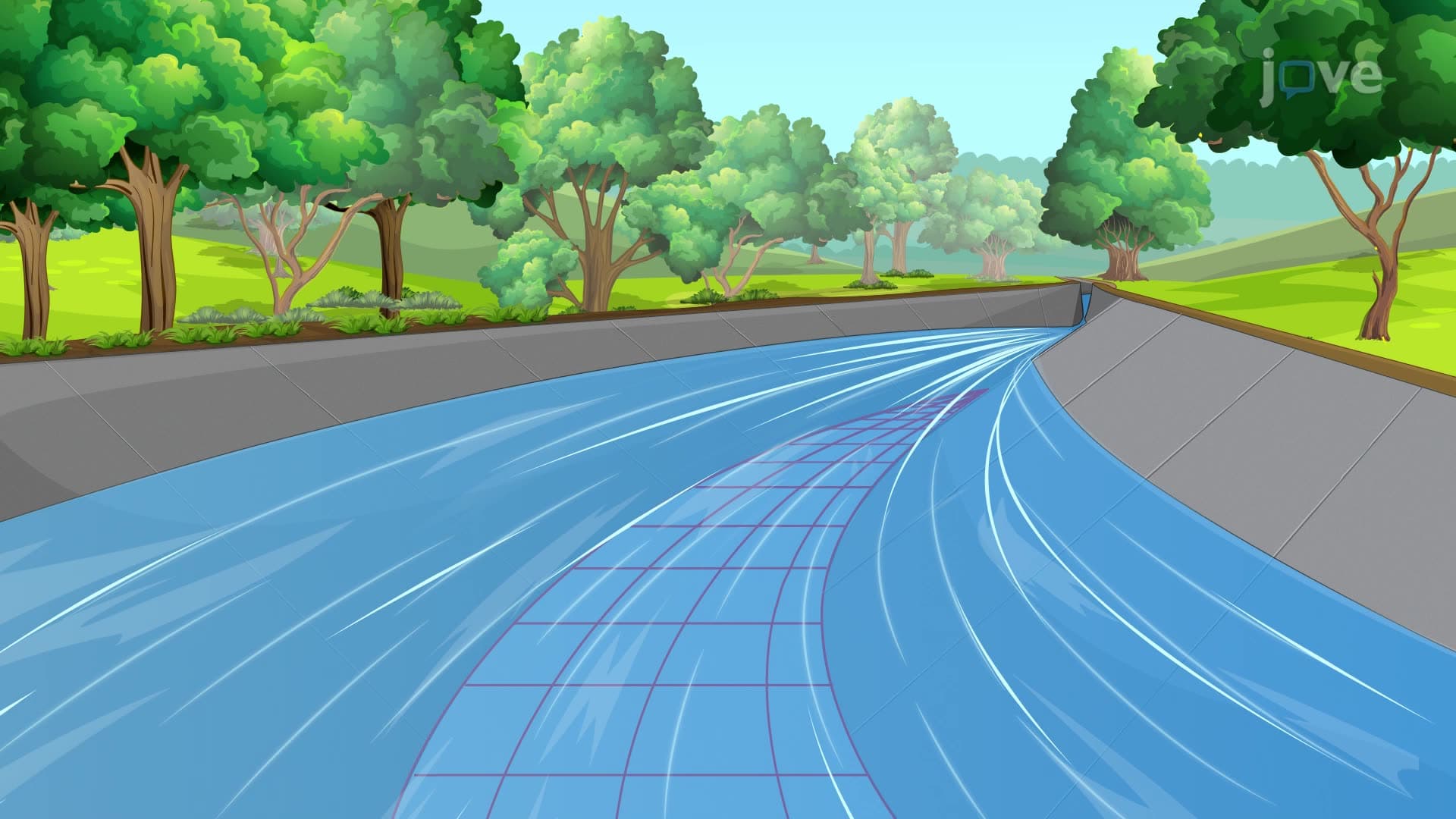
Streamlines represent curves where the stream function remains constant, creating a visual map of fluid particle trajectories. These lines never intersect and provide immediate insight into flow behavior. For example, when analyzing airflow over aircraft wings at Boeing's wind tunnel facilities, engineers use streamline patterns to identify regions of acceleration, deceleration, and potential flow separation. The spacing between streamlines indicates velocity magnitude-closer lines mean higher velocities.
The stream function's most valuable feature lies in flow rate calculations. The difference between stream function values at two streamlines equals the volume flow rate per unit depth between them. This property proves invaluable in designing hydraulic systems, from irrigation channels in California's Central Valley to cooling systems in nuclear power plants. Engineering students studying for the Fundamentals of Engineering (FE) exam regularly encounter stream function problems involving flow around cylinders, through orifices, and past obstacles.
In irrotational flow conditions, the stream function pairs with the velocity potential to create a complete analytical framework. This combination enables engineers to solve complex flow problems using conformal mapping techniques, particularly useful in aerospace applications and groundwater hydrology studies conducted by USGS researchers across the United States.
Related Micro-courses