Loading video…


 10 Concepts
 7.3K views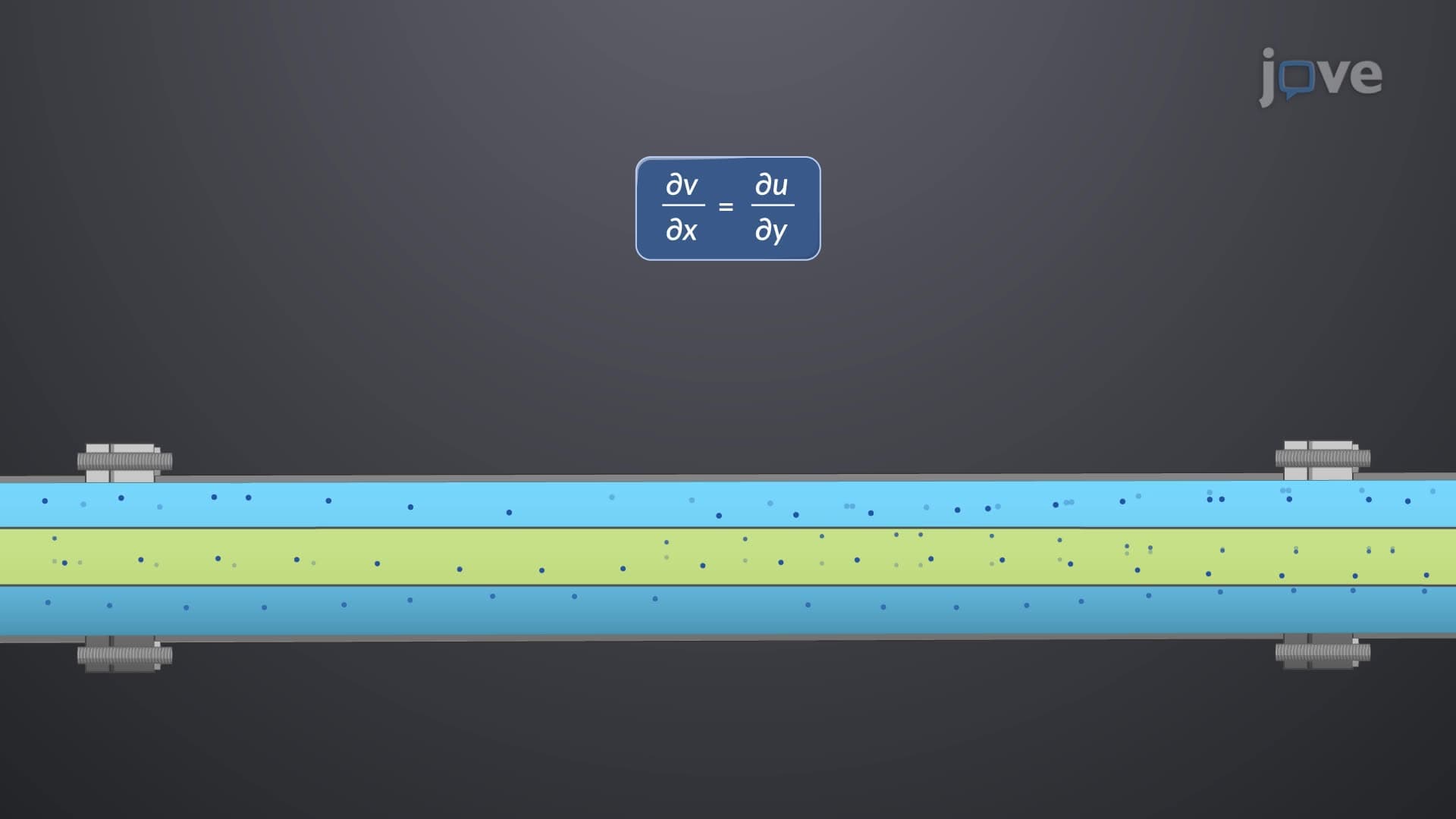

Video Summary: What Is Velocity Potential
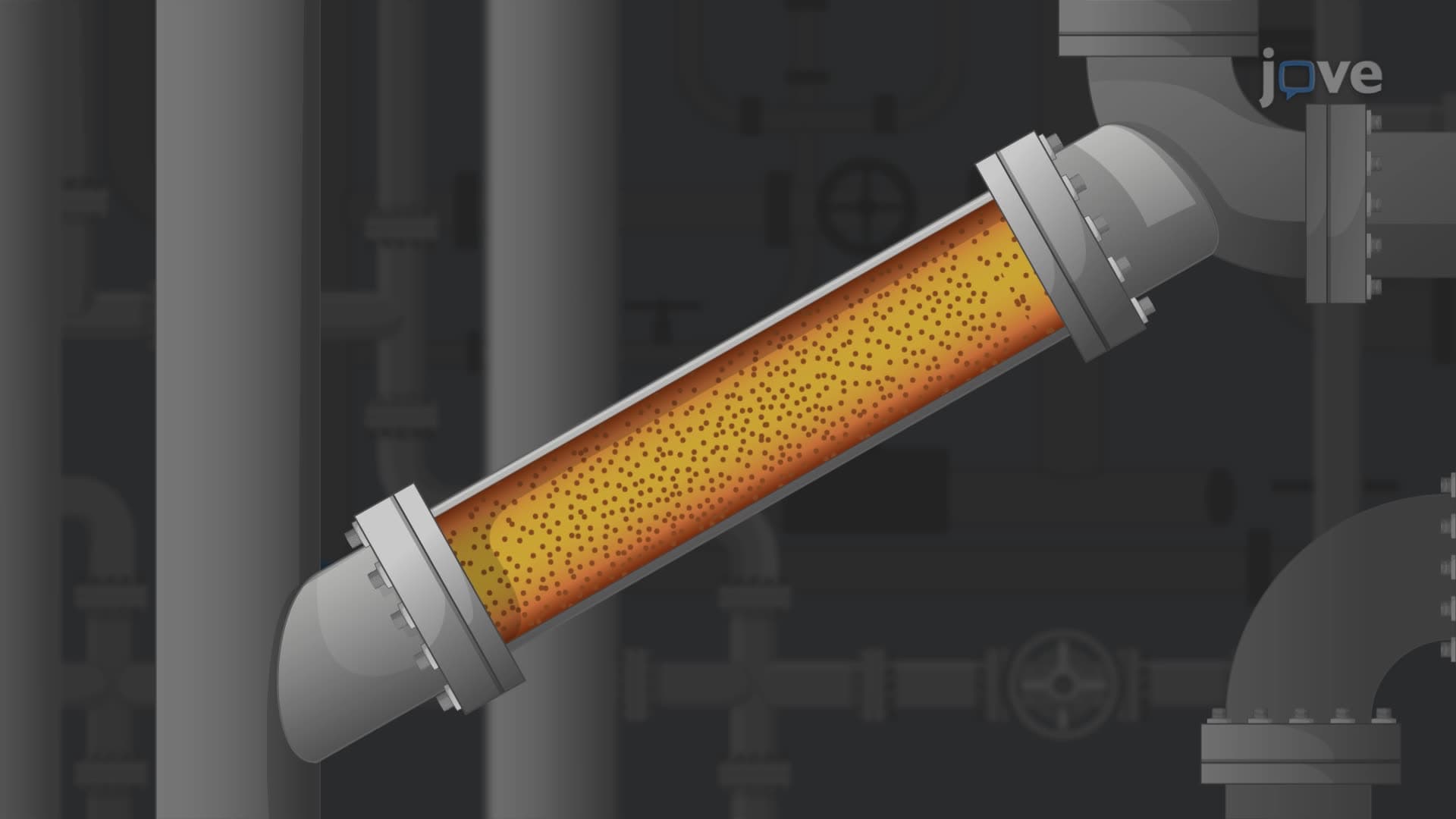
Did you know that the smooth flow of water through the massive pipelines at Hoover Dam follows mathematical principles that can predict every particle's movement? Plane potential flows describe these elegant fluid motions where velocity potential-a scalar function whose gradient gives the velocity field-governs irrotational flow behavior. Engineers at facilities like the Tennessee Valley Authority use velocity potential calculations to optimize water flow through turbines and cooling systems. Watch the full video on JoVE Coach to master this concept with expert-led visuals and step-by-step explanations.
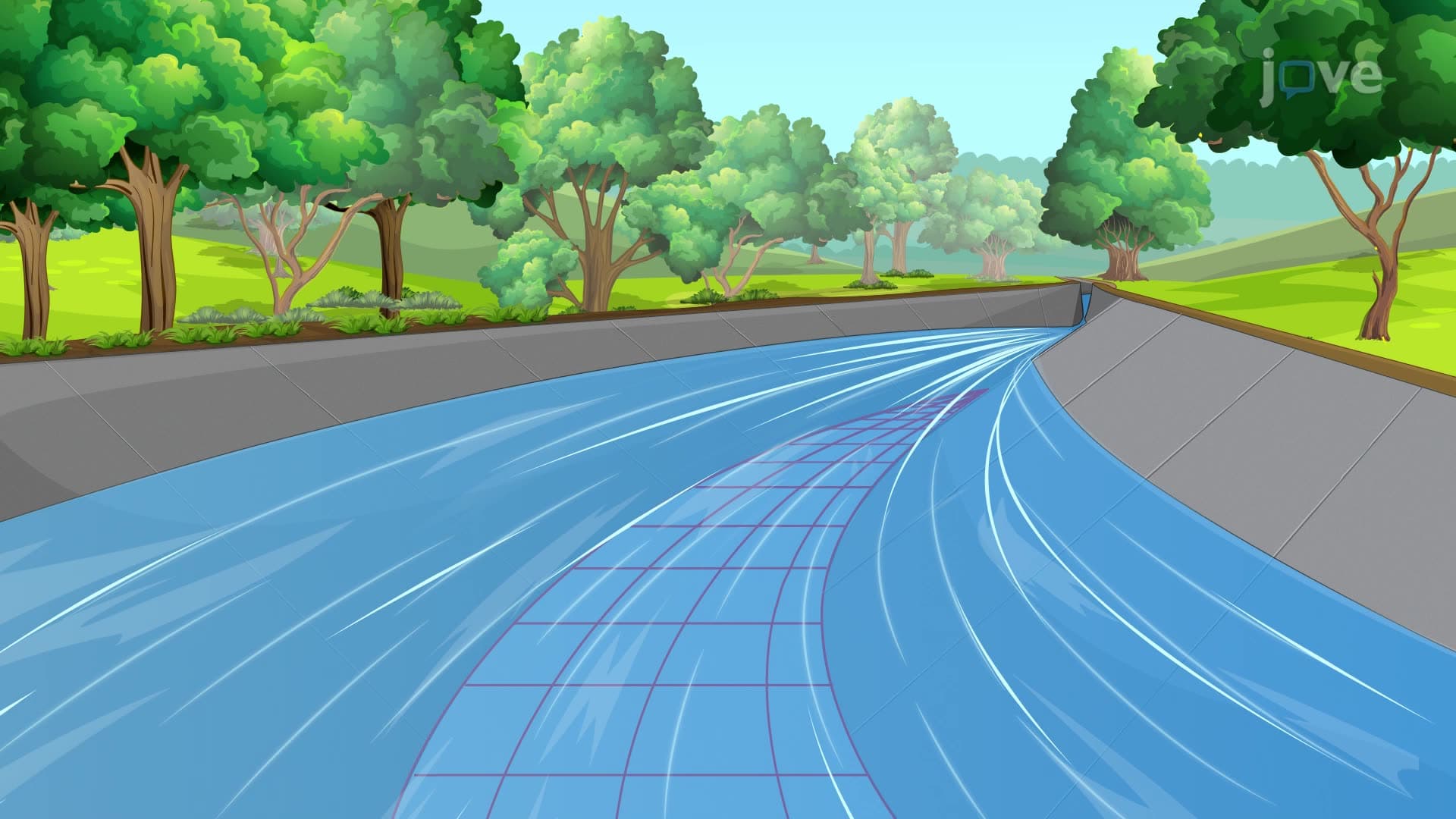
Velocity potential represents one of the most elegant concepts in fluid mechanics, providing a mathematical framework for describing smooth, predictable fluid flows. When water flows through a pipeline or air moves over an aircraft wing under ideal conditions, the motion can be characterized by a scalar function φ (phi) called the velocity potential. The beauty lies in its simplicity: once you know this single function, you can determine the velocity at any point by taking its gradient: V = ∇φ.
Plane potential flows occur when fluid motion satisfies three crucial conditions: the flow must be irrotational (no spinning fluid elements), incompressible (constant density), and inviscid (frictionless). These conditions might seem restrictive, but they accurately describe many real-world scenarios, from water flowing through large-diameter pipes at treatment plants to air flowing around streamlined objects at moderate speeds.
The mathematical elegance emerges when we apply the continuity equation (mass conservation) to incompressible flow. Since ∇ · V = 0 for incompressible flow, and V = ∇φ, we get ∇ · (∇φ) = ∇²φ = 0. This is Laplace's equation, a fundamental partial differential equation that governs countless physical phenomena beyond fluid mechanics.
Engineers encounter several types of plane potential flows in practice. Uniform flow represents the simplest case, where φ = U·x for flow with constant velocity U in the x-direction. Doublet flows model flow around circular cylinders, while source and sink flows represent fluid injection or removal. These basic solutions combine through superposition to model complex geometries like airfoils or building layouts in wind studies.
At facilities like NASA's wind tunnels, researchers use potential flow theory as a starting point for more complex analyses. While real flows include viscous effects near surfaces, the potential flow solution provides the "outer flow" that drives the entire pattern.
Students preparing for AP Physics C: Mechanics or college fluid mechanics courses frequently encounter velocity potential problems. The MCAT occasionally includes fluid dynamics questions where understanding potential flow concepts helps solve problems involving blood flow in idealized vessels. Engineering students at institutions like MIT or Stanford use these principles in courses ranging from aerodynamics to hydraulic engineering.
The key insight for problem-solving: identify whether the flow satisfies the three conditions for potential flow existence, then apply appropriate boundary conditions to solve Laplace's equation. This systematic approach transforms complex-looking fluid problems into manageable mathematical exercises.
Related Micro-courses