Loading…
Loading video…

36,660 views
Ever wonder how a water treatment plant transforms murky wastewater into crystal-clear drinking water? The answer lies in coagulation chemistry basics, where microscopic particles clump together like magnets attracting metal. This process removes harmful contaminants from millions of gallons processed daily at facilities like the Chicago Water Treatment Plant. Coagulation transforms suspended particles into larger clusters that can be easily filtered out, making our tap water safe to drink. Watch the full video on JoVE Coach to master this concept with expert-led visuals and step-by-step explanations.
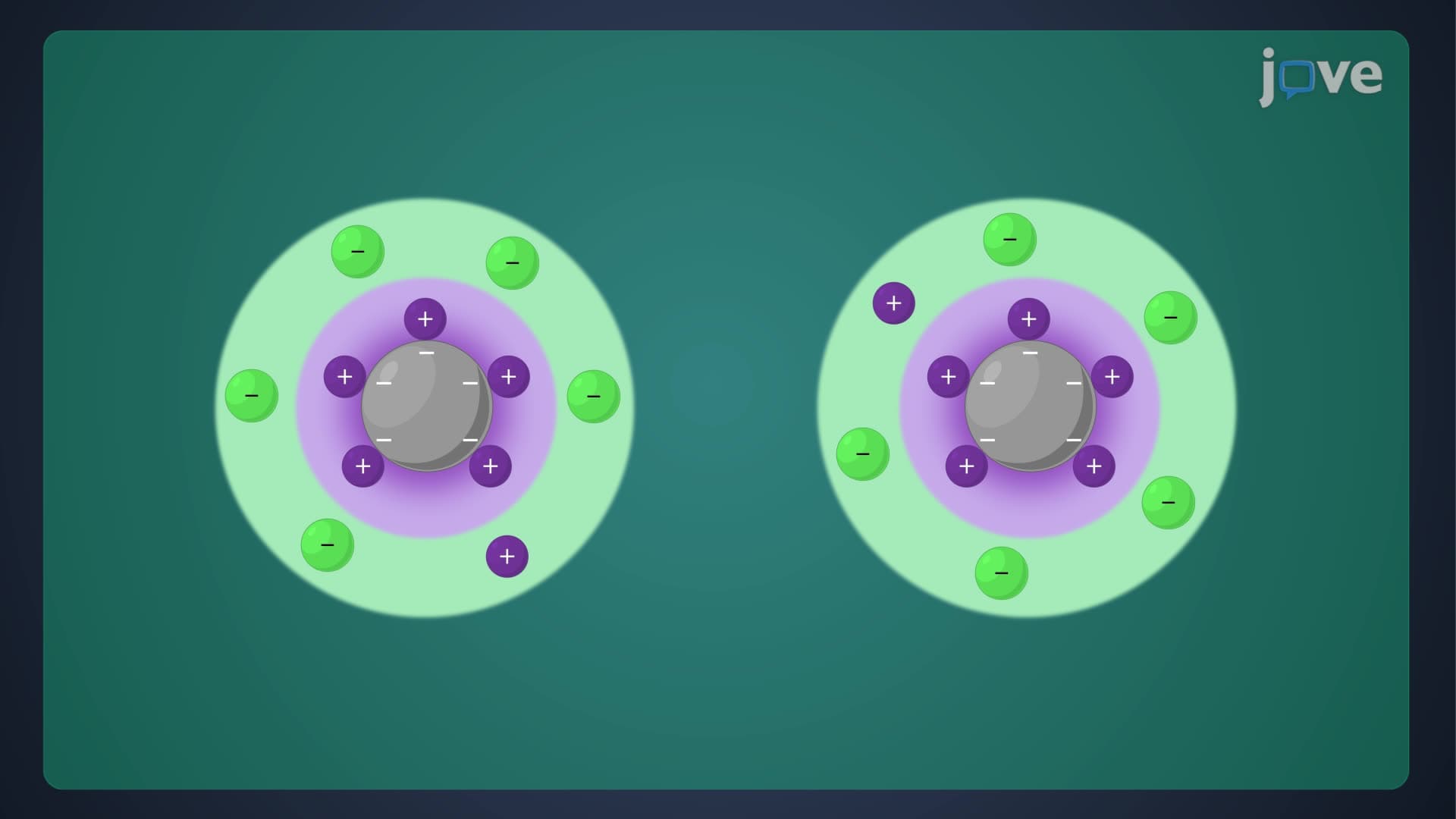
Coagulation chemistry basics revolve around overcoming the natural stability of colloidal systems. In water treatment facilities across the United States, from Los Angeles to New York City, engineers exploit fundamental principles of surface chemistry to remove contaminants. Colloidal particles, typically 1-1000 nanometers in size, remain suspended due to electrostatic repulsion between similarly charged surfaces. This coagulation of colloidal particles process breaks down when we introduce chemical coagulants that neutralize surface charges.
The electrical double layer surrounding each colloidal particle creates a repulsive barrier preventing aggregation. When metal salts like aluminum sulfate (alum) or ferric chloride enter the system, they undergo hydrolysis reactions producing positively charged hydroxide complexes. These species adsorb onto negatively charged particle surfaces, reducing the zeta potential—a critical parameter measured in water quality laboratories nationwide. Students preparing for AP Chemistry exams should recognize this as an application of Le Chatelier's principle, where adding electrolytes shifts the equilibrium toward particle destabilization.
How coagulation works in chemistry involves multiple simultaneous mechanisms. Charge neutralization occurs first, followed by sweep flocculation where metal hydroxide precipitates physically entrap particles. The colloid coagulation process progresses through distinct stages: initial destabilization creates microflocs (10-100 micrometers), which then aggregate into macroflocs (100+ micrometers) suitable for removal. This two-step process explains why water treatment plants use separate rapid-mix and slow-mix basins, optimizing contact time and shear forces for maximum efficiency.
Municipal water treatment plants like those operated by the Metropolitan Water District of Southern California process billions of gallons daily using coagulation technology. The process removes not only turbidity-causing particles but also pathogens, heavy metals, and organic pollutants. Understanding electrolyte coagulation principles helps environmental engineers optimize chemical dosing, reducing treatment costs while meeting EPA drinking water standards. This knowledge proves essential for students pursuing careers in environmental engineering, public health, or water resources management.
Frequently Asked Questions
Coagulation is a chemical process that destabilizes colloidal particles by neutralizing their surface charges, allowing them to aggregate into larger, settleable flocs. Unlike physical filtration that merely screens particles, coagulation chemically alters particle interactions to promote natural aggregation. This makes it highly effective for removing submicron particles that would pass through conventional filters, explaining why virtually all municipal water treatment facilities rely on coagulation as their primary clarification step.
AP Chemistry questions often test coagulation through colligative properties, equilibrium calculations, and intermolecular forces concepts. Students might calculate the amount of coagulant needed based on charge balance equations or predict optimal pH conditions for hydroxide precipitation. Practice problems frequently involve analyzing graphs showing turbidity removal versus coagulant dose, requiring interpretation of experimental data and application of chemical principles to real-world water treatment scenarios.
The MCAT emphasizes coagulation's role in both chemistry and biological systems, particularly blood clotting mechanisms and protein aggregation. Test-takers should understand how electrostatic interactions control particle stability, the relationship between pH and coagulation efficiency, and how coagulation relates to protein denaturation. Questions often connect these principles to physiological processes like thrombosis or pathological protein aggregation in neurodegenerative diseases.
Major US water utilities like the New York City Department of Environmental Protection use coagulation to treat surface water from reservoirs and rivers. Operators add aluminum or iron-based coagulants while monitoring turbidity, pH, and temperature to optimize treatment efficiency. The process typically achieves 90-95% removal of suspended particles, meeting EPA turbidity standards of less than 0.3 NTU for filtered water, ensuring safe drinking water for millions of Americans daily.
Coagulation builds on fundamental concepts like ionic bonding, pH, and equilibrium that students learn in introductory chemistry courses. While the molecular-level mechanisms involve advanced surface chemistry, the basic principles become accessible when explained through familiar examples like oil-water separation or blood clotting. Most students successfully grasp coagulation concepts after mastering prerequisite topics including acids/bases, solubility rules, and basic thermodynamics.
Focus on understanding the underlying mechanisms rather than memorizing facts—practice drawing the electrical double layer model and explaining how coagulants neutralize particle charges. Create concept maps linking coagulation to related topics like precipitation reactions, Le Chatelier's principle, and colligative properties. Work through quantitative problems involving coagulant dosing calculations and pH optimization, as these frequently appear on standardized exams and college chemistry tests.
Advanced topics include flocculation kinetics, coagulation modeling using population balance equations, and specialized applications like enhanced coagulation for organic matter removal. Students interested in environmental engineering should explore membrane filtration, advanced oxidation processes, and water quality monitoring techniques. Those pursuing materials science might investigate nanoparticle synthesis through controlled coagulation or sol-gel processing methods used in ceramic and pharmaceutical manufacturing.
Related Micro-courses
Related Subjects
 Chemistry 21 micro-courses›
 Organic Chemistry 21 micro-courses›