Loading…
Loading video…

36,660 views
Ever wondered how water treatment plants remove billions of particles from drinking water every day? Filtration chemistry basics involve the physical separation of solid particles from liquids using specialized media, a fundamental technique used everywhere from municipal water systems in cities like Los Angeles to laboratory analysis at UCLA. The efficiency of What is Filtration depends on particle size, with larger particles being easier to separate. Watch the full video on JoVE Coach to master this concept with expert-led visuals and step-by-step explanations.
What is Filtration represents one of the most fundamental separation techniques in analytical chemistry, relying on physical barriers to separate solid particles from liquid solutions. This process occurs when a mixture passes through a porous medium that allows the liquid (filtrate) to pass while retaining solid particles (residue). The filtration technique in chemistry serves as a cornerstone method taught in high school AP Chemistry courses and college-level analytical chemistry programs across the United States.
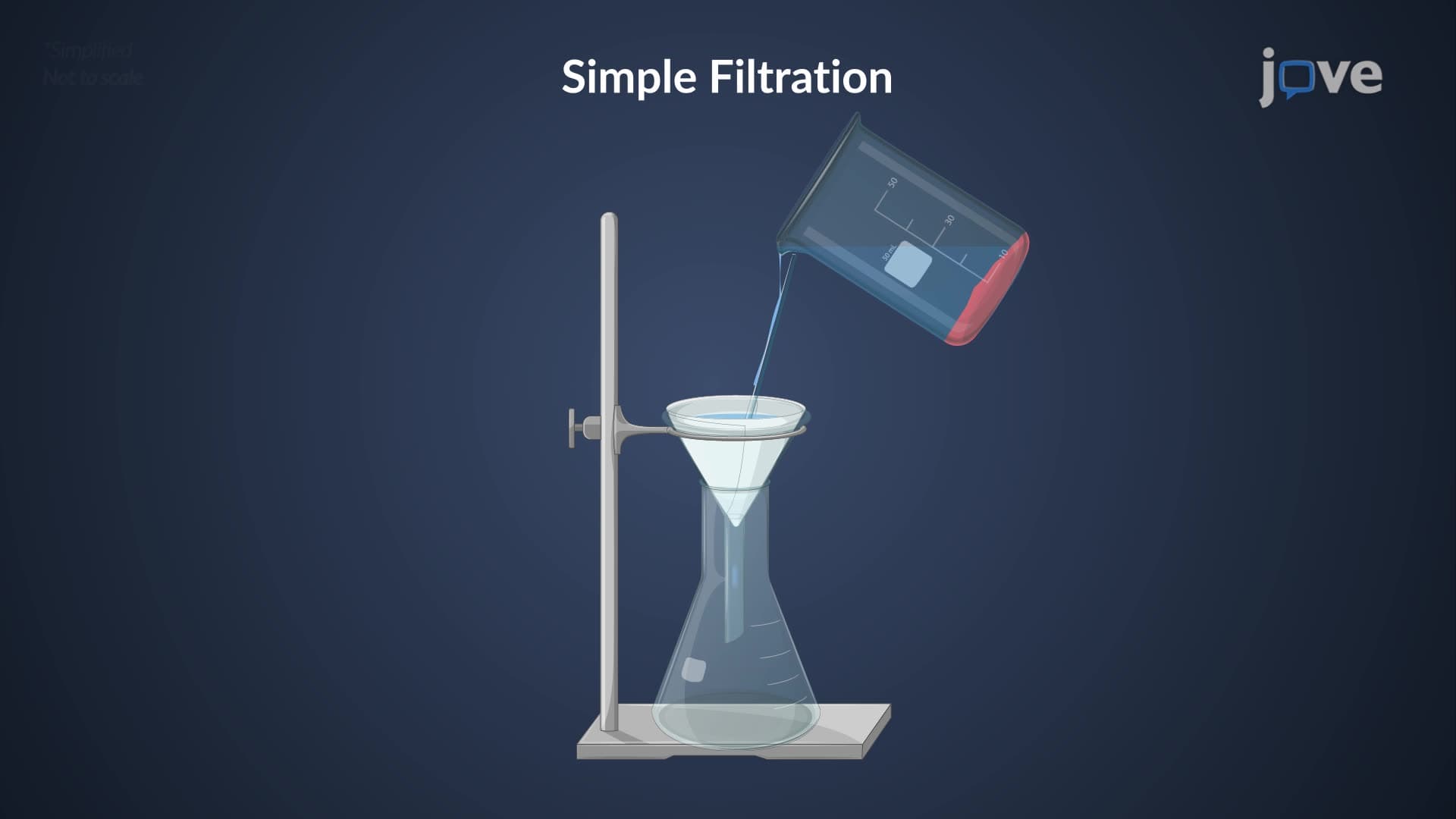
The gravity filtration method represents the simplest approach to particle separation, utilizing gravitational force to pull liquid through filter paper. Students at institutions like MIT and Stanford commonly encounter this technique in introductory chemistry labs. The process begins with allowing precipitates to settle naturally, followed by careful decantation using a glass rod to minimize particle disturbance. Filter paper selection becomes critical here – qualitative papers work for general separations, while quantitative ashless papers enable precise mass measurements required for gravimetric analysis.
When how filtration works in analytical chemistry requires enhanced efficiency, the vacuum filtration technique provides superior results. This method employs Buchner funnels connected to vacuum pumps, creating pressure differentials that accelerate liquid flow. Universities like University of California Berkeley extensively use this technique in undergraduate analytical chemistry courses, particularly when dealing with fine precipitates or large sample volumes. The vacuum system dramatically reduces filtration time while providing more complete separation.
Filtration precipitate separation appears frequently on standardized exams including the MCAT, AP Chemistry tests, and college midterms. Students preparing for medical school entrance exams encounter filtration problems involving kidney function, where glomerular filtration removes waste products from blood. Environmental chemistry applications include wastewater treatment at facilities like the Hyperion Water Reclamation Plant in Los Angeles, where multiple filtration stages remove contaminants. The analytical filtration procedure also plays crucial roles in pharmaceutical manufacturing, where companies like Pfizer and Johnson & Johnson rely on precise filtration for drug purification and quality control.
Frequently Asked Questions
Filtration is a physical separation method that removes solid particles from liquids using porous barriers like filter paper. It's essential for isolating pure compounds, recovering precipitates for analysis, and preparing samples for further testing. This technique appears in virtually every chemistry laboratory and forms the foundation for more advanced separation methods.
Both exams test filtration through separation problems, laboratory procedure questions, and real-world applications like kidney function. AP Chemistry often includes filtration in free-response questions about experimental design, while the MCAT connects filtration to biological systems and analytical techniques. Understanding equipment selection and procedural steps helps answer these questions correctly.
Gravity filtration uses natural gravitational force and works well for coarse precipitates and qualitative analysis. Vacuum filtration employs suction to accelerate the process, making it ideal for fine particles, quantitative work, and large sample volumes. Most college analytical chemistry courses teach both methods since each serves specific experimental needs.
Municipal water treatment plants use multi-stage filtration including sand filters, activated carbon, and membrane systems to remove contaminants. For example, New York City's water treatment facilities process over one billion gallons daily using various filtration techniques. Industrial applications include pharmaceutical manufacturing, food processing, and environmental cleanup operations.
No, filtration concepts build on basic physical science principles that most high school students already know. Understanding particle size, liquid flow, and physical separation provides sufficient background. The mathematical calculations involved use simple ratios and percentages typically covered in algebra courses.
Practice drawing and labeling filtration setups, memorize equipment names and functions, and work through calculation problems involving recovery percentages. Create comparison charts between gravity and vacuum methods, and connect filtration to real-world examples like medical applications or environmental processes for better retention.
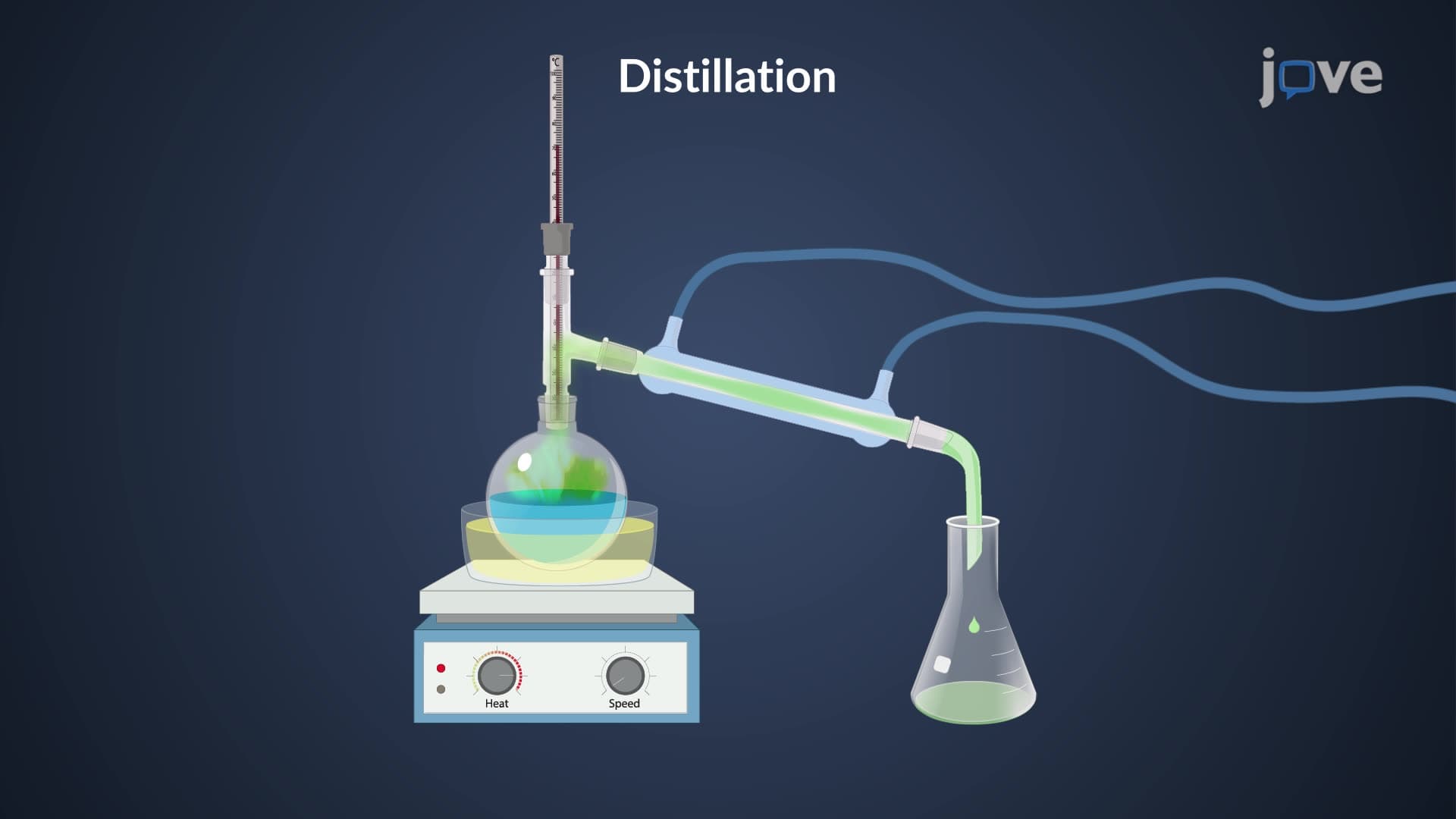
Advanced topics include membrane filtration, chromatography principles, crystallization techniques, and distillation methods. These separation techniques often work together in complex analytical procedures, and understanding their relationships helps in advanced chemistry courses and professional applications.
Related Micro-courses
Related Subjects
 Chemistry 21 micro-courses›
 Organic Chemistry 21 micro-courses›