Loading…
Loading video…

16,906 views
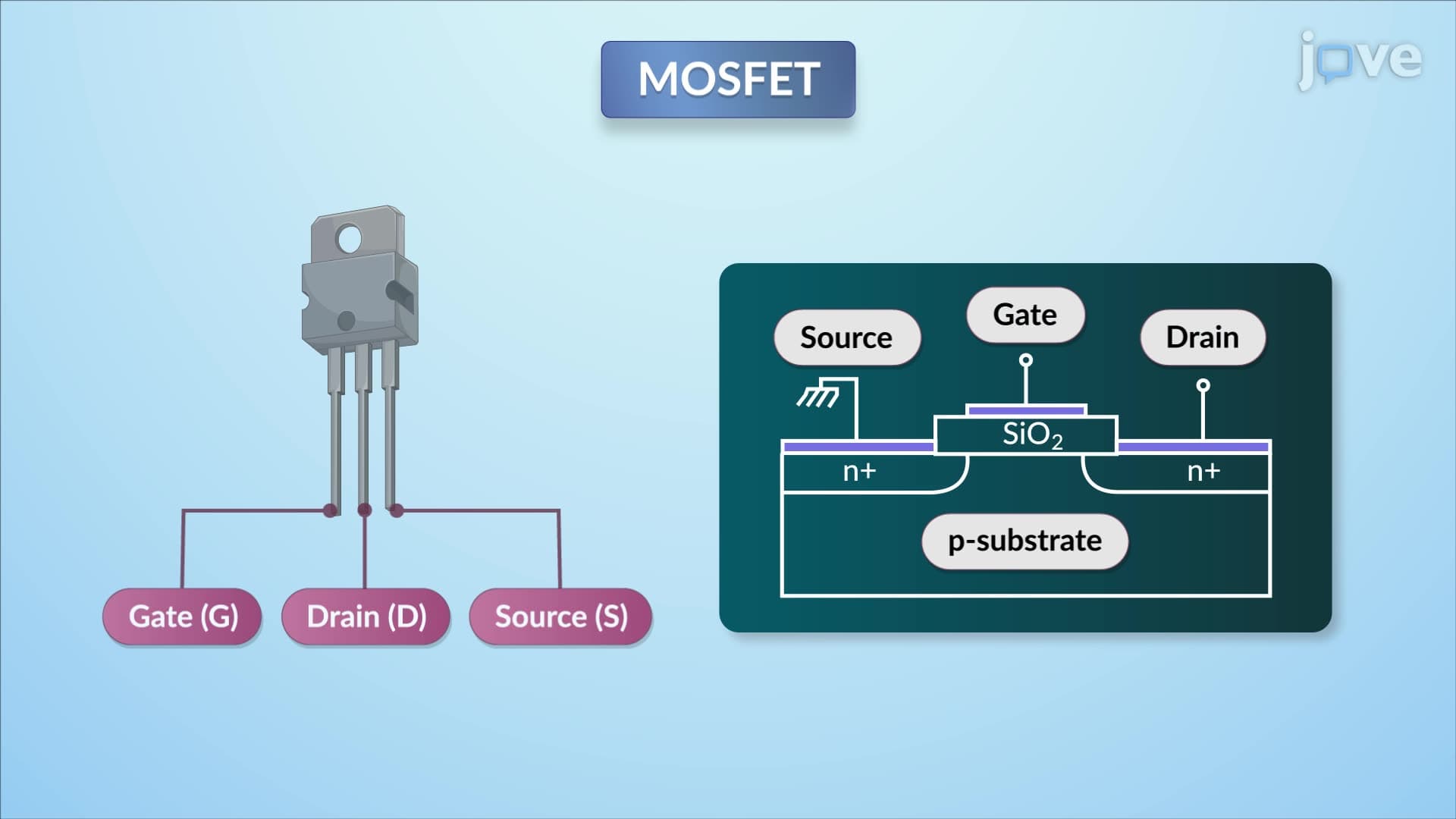
Your smartphone's memory stores billions of bits of data using tiny electronic switches called MOSFET devices. A MOSFET (Metal-Oxide-Semiconductor Field-Effect Transistor) is a three-layer electronic component that controls electrical current flow by applying voltage to its gate electrode. Intel's latest processors contain over 100 billion MOSFETs working together to process information at lightning speed. Watch the full video on JoVE Coach to master this concept with expert-led visuals and step-by-step explanations.
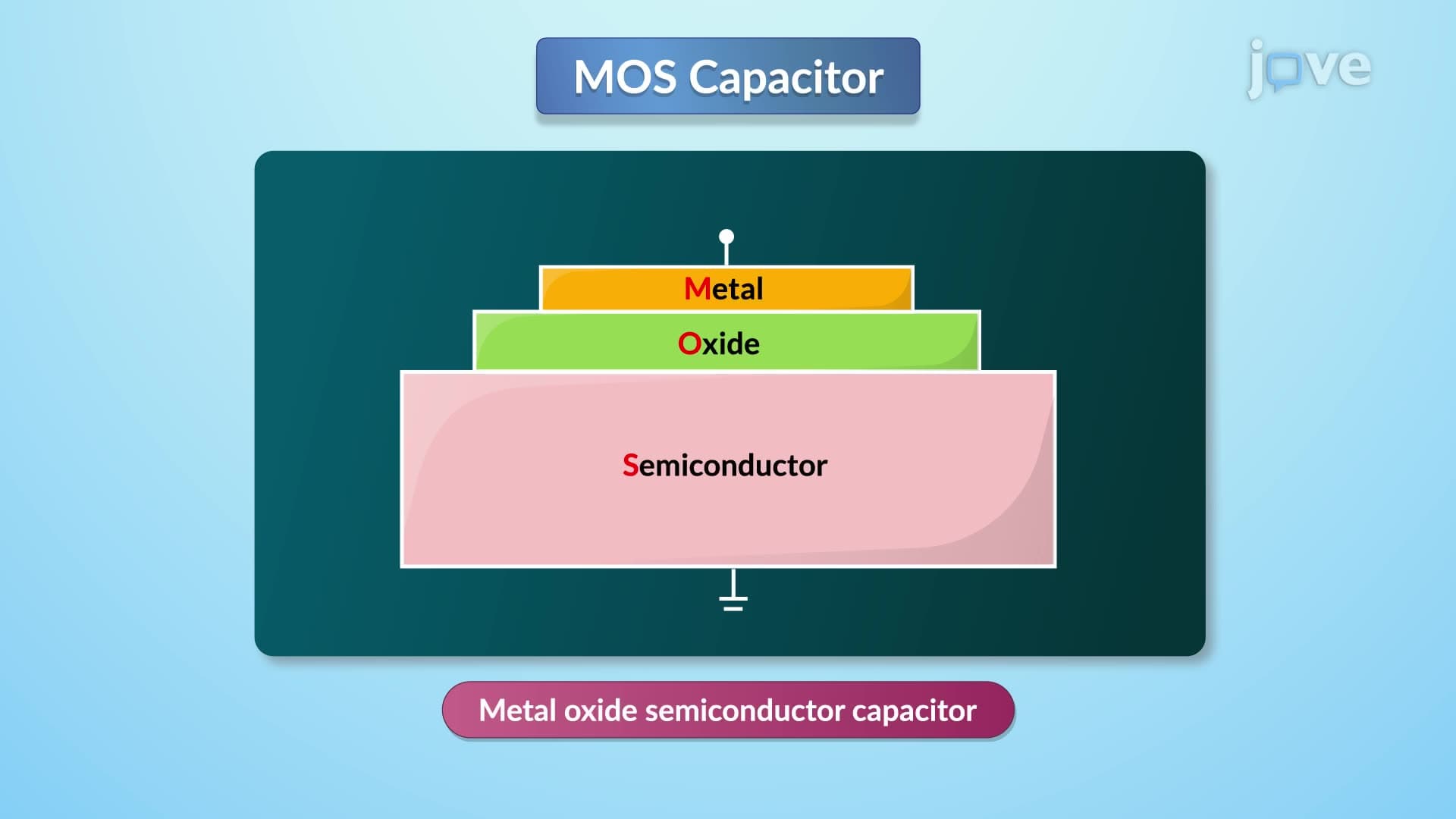
A MOS capacitor forms the heart of modern semiconductor technology, serving as the basic building block for MOSFETs that power everything from your laptop's processor to your car's electronic control systems. This elegant three-layer structure consists of a metal gate electrode, an insulating oxide layer (typically silicon dioxide), and a semiconductor substrate (usually silicon). The genius of this design lies in its ability to control electrical properties without physical contact between the control element and the conducting channel.
The magic happens when you apply different voltages to the gate electrode. At zero volts, the device remains in equilibrium with no current flow. Apply a negative voltage, and you create an accumulation region where positive charge carriers (holes) gather near the semiconductor surface, making the device behave like a conventional parallel-plate capacitor. This principle appears frequently on AP Physics exams when students analyze capacitor charging and energy storage.
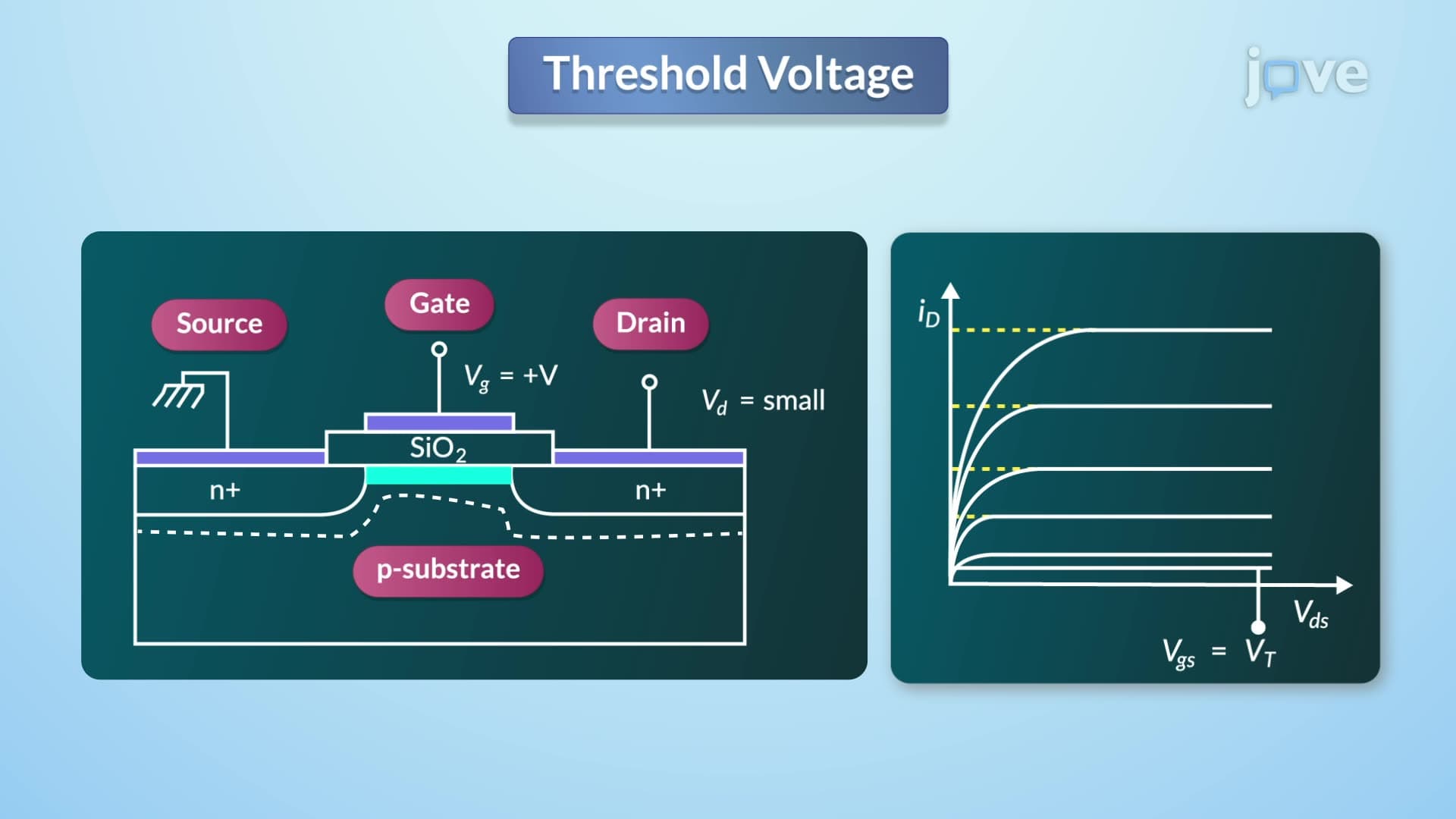
When you switch to positive gate voltage, the physics becomes more interesting. Holes get repelled deeper into the substrate, creating a depletion region - essentially a zone depleted of mobile charge carriers. This region acts like an additional capacitor in series with the oxide layer, reducing the overall capacitance. Push the voltage even higher, and you reach the inversion threshold where electrons become the dominant charge carriers near the surface, forming what engineers call an inversion layer.
Understanding MOS capacitors becomes crucial when studying how American tech giants like Apple, Google, and Microsoft design their products. Dynamic Random Access Memory (DRAM), found in every computer manufactured by companies like Micron Technology in Idaho, relies on MOS capacitor charge storage. Each memory bit consists of a tiny MOS capacitor that stores electrical charge to represent binary data (1 or 0). The challenge lies in the transient nature of this stored charge - it gradually leaks away, requiring periodic refresh cycles every few milliseconds to maintain data integrity.
This refresh requirement explains why your computer's RAM loses all data when power gets disconnected, unlike flash memory drives that use a more complex MOS structure to trap charge for years without power. College-level electrical engineering courses at institutions like MIT and Stanford extensively cover these applications, preparing students for careers in America's semiconductor industry.
Frequently Asked Questions
A MOS capacitor is a voltage-controlled semiconductor device with metal, oxide, and semiconductor layers that can change its electrical properties based on applied gate voltage. Unlike regular capacitors that simply store charge, MOS capacitors can switch between different operating modes (accumulation, depletion, inversion) making them essential components in transistors and memory devices.
MOS capacitor questions commonly appear on AP Physics C exams testing capacitance calculations and electric field concepts. College electrical engineering courses use MOS capacitors to teach semiconductor physics, making this knowledge essential for ABET-accredited engineering programs and professional engineering licensing exams.
MCAT physics sections occasionally feature semiconductor devices in research passages, testing your understanding of electric fields, charge separation, and capacitance principles. Strong MOS capacitor fundamentals help you quickly analyze experimental setups involving electronic medical devices and bioelectric measurements.
Every smartphone, laptop, and smart TV manufactured by companies like Apple, Dell, and Samsung contains millions of MOS capacitors in their processor chips and memory systems. Your car's engine control unit, GPS navigation, and even smart home devices rely on these components for data processing and storage.
Basic algebra and understanding of electric fields from high school physics provides sufficient foundation for grasping MOS capacitor principles. The conceptual understanding matters more than complex calculations, making this topic accessible to students in grades 10-12 with solid physics fundamentals.
Create voltage-vs-behavior charts showing accumulation, depletion, and inversion regions, then practice drawing charge distribution diagrams for different gate voltages. Focus on connecting the physics concepts to real applications like computer memory, which helps retention during high-pressure exam situations.
Study MOSFET transistor operation, CMOS logic gates, and semiconductor device fabrication processes used by American chip manufacturers like Intel and AMD. These topics prepare you for advanced electrical engineering coursework and potential careers in the US semiconductor industry.
Related Micro-courses


Related Subjects
 Civil Engineering 30 micro-courses›Mechanical Engineering 28 micro-courses›