- Microeconomics
- Market Equilibrium
Micro-courses:20

Market Equilibrium
1. Market Equilibrium
2. Surplus and Shortages
3. The Mathematics of Equilibrium
4. Effect of Shift in Demand Curve on Market Equilibrium

5. Effect of Shift in Supply Curve on Market Equilibrium
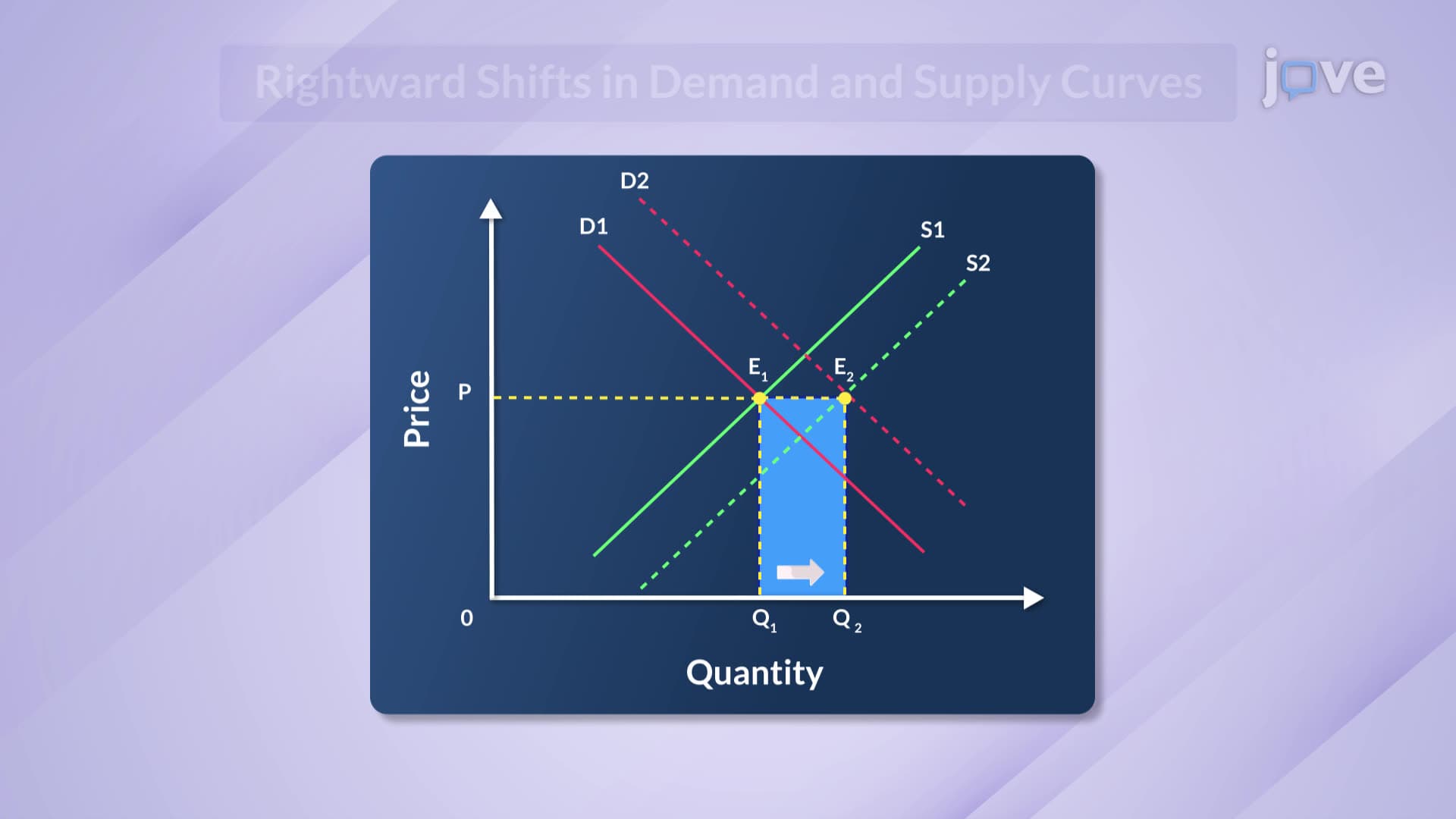
6. Simultaneous Shifts in Demand and Supply Curves I
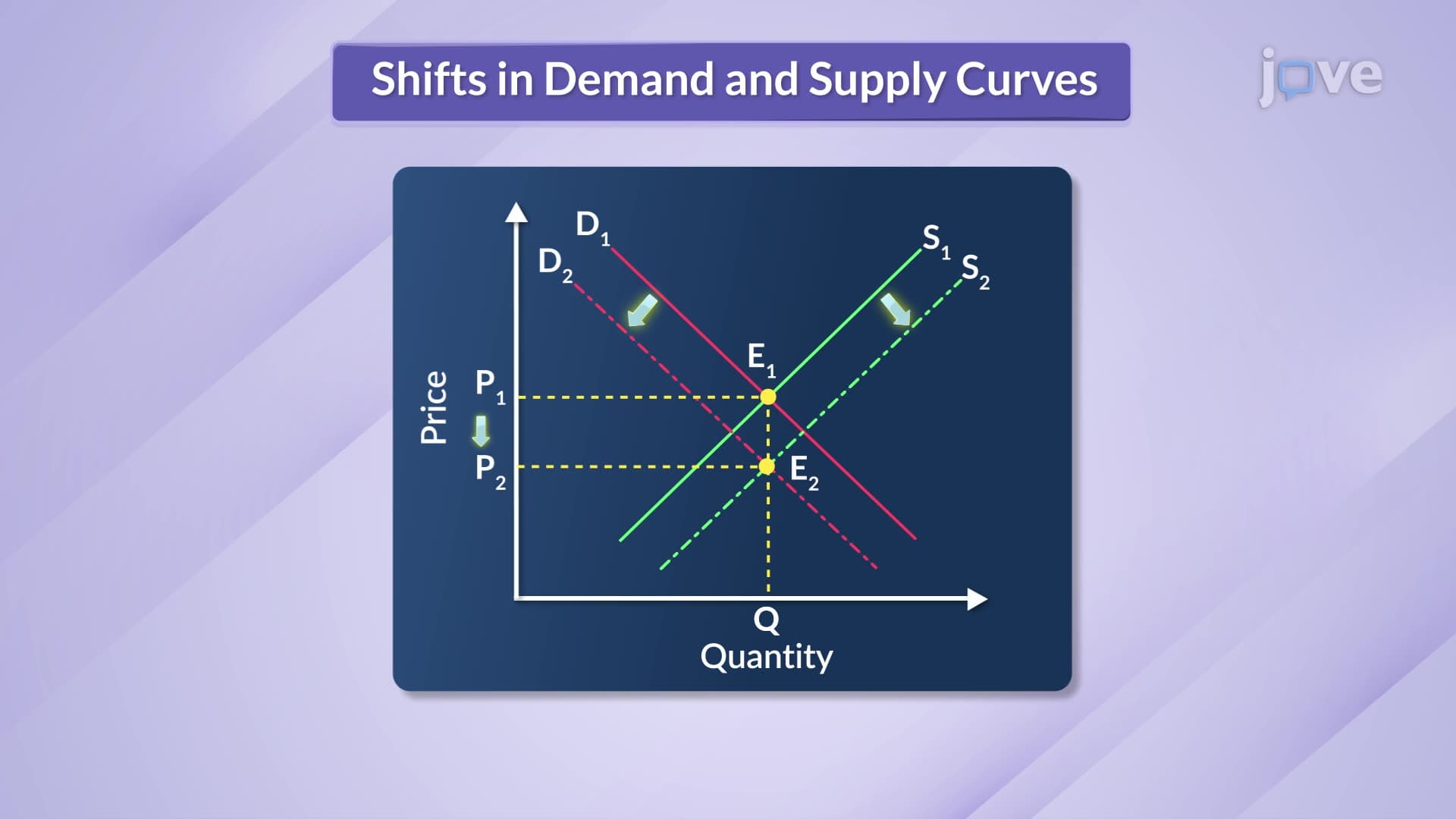
7. Simultaneous Shifts in Demand and Supply Curves II
8. Price Gouging
Market equilibrium occurs when supply and demand curves intersect, determining the price and quantity where markets clear. This JoVE Coach course explores equilibrium dynamics through practical US examples like sugar and bicycle markets, examining how shifts in supply and demand affect prices, quantities, and market outcomes including shortages, surpluses, and price adjustments during emergencies.
- Understand how market equilibrium is determined through the intersection of supply and demand curves
- Identify equilibrium price and quantity using mathematical equations and graphical analysis
- Analyze the causes and effects of market shortages and surpluses on consumer and producer behavior
- Explore how shifts in demand curves impact equilibrium price and quantity in real markets
- Examine the effects of supply curve shifts on market outcomes and pricing decisions
- Apply concepts to simultaneous shifts in both demand and supply curves moving in the same direction
- Understand market dynamics when demand and supply shift in opposite directions
- Evaluate price gouging scenarios and their relationship to supply demand equilibrium during emergencies
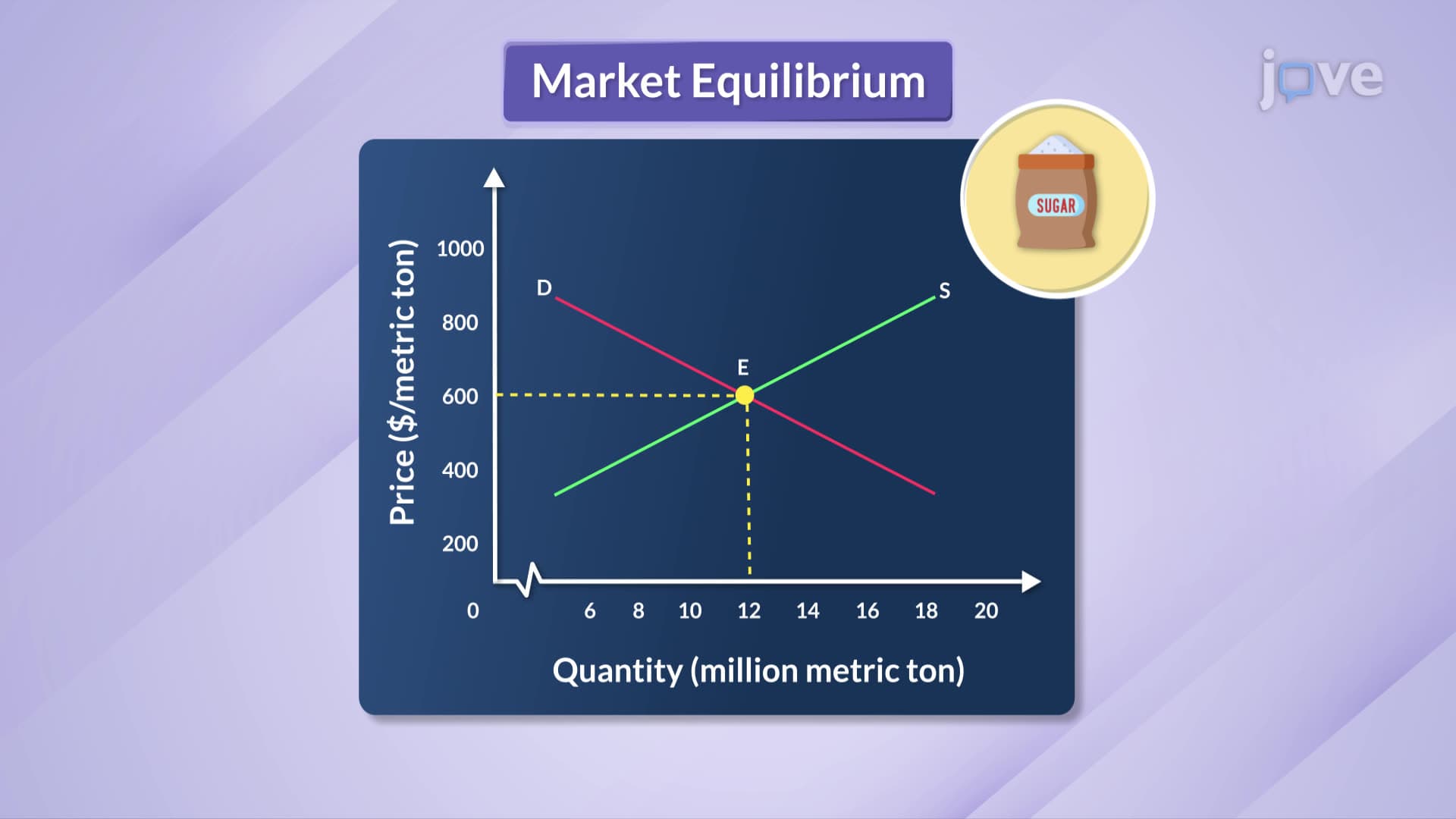
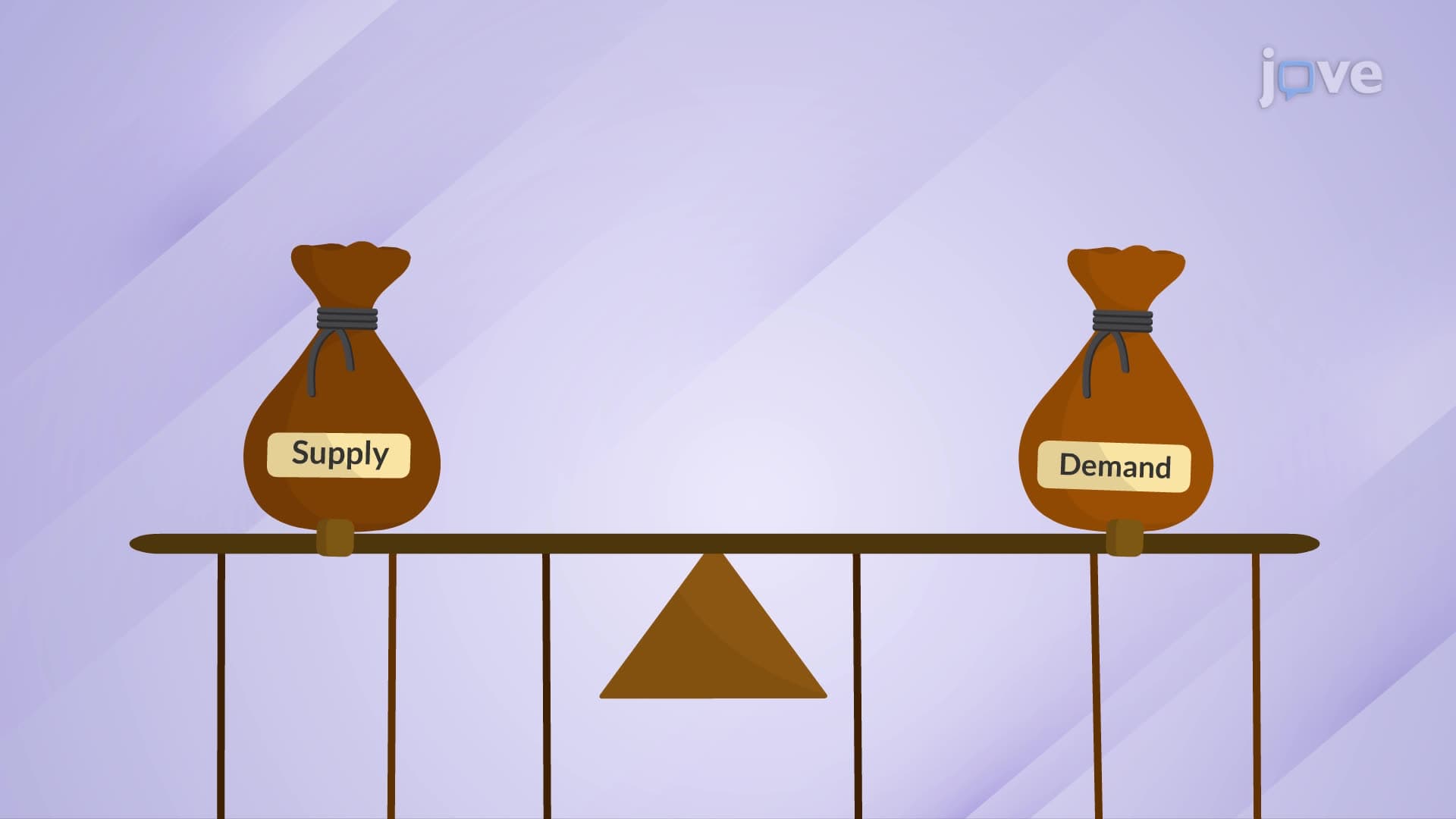
1. Fundamentals of Market Equilibrium and Price Determination Market equilibrium represents the balance point where quantity supplied equals quantity demanded, creating the market-clearing price. At this intersection, both buyers and sellers achieve satisfaction - consumers purchase desired quantities while producers sell their intended output. Using the US sugar market example, when supply and demand curves meet at $600 per ton with 12 million metric tons traded, this establishes equilibrium. The market-clearing mechanism ensures efficient resource allocation, as any deviation from equilibrium triggers natural corrective forces that restore balance through price adjustments.
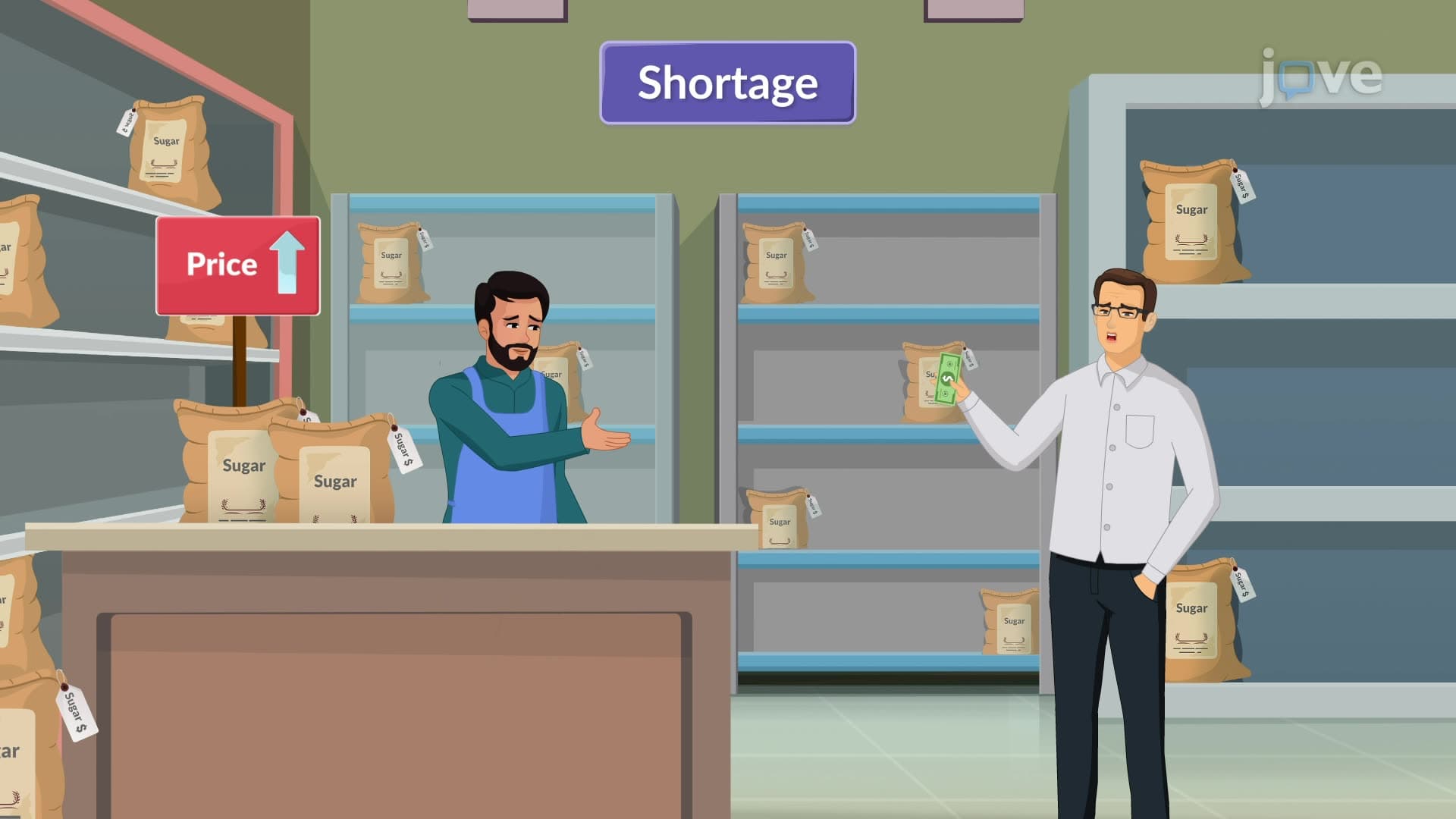
2. Understanding Market Imbalances: Shortages and Surpluses Market disequilibrium creates either shortages or surpluses that activate self-correcting mechanisms. Shortages occur when demand exceeds supply at current prices, like sugar priced below equilibrium at $400 per ton, causing buyers to compete and bid prices upward. Surpluses develop when supply exceeds demand, such as sugar priced above equilibrium at $800 per ton, forcing sellers to reduce prices to clear inventory. These imbalances naturally resolve through price adjustments, demonstrating how competitive markets maintain stability and efficient resource distribution.
3. Mathematical Models for Equilibrium Analysis How market equilibrium is determined mathematically involves setting quantity demanded equal to quantity supplied using linear equations. For the sugar market example, if Qd = 20 - 0.013P and Qs = -8 + 0.033P, equilibrium occurs where 20 - 0.013P = -8 + 0.033P, solving for P = $600. Substituting back yields equilibrium quantity of 12 million metric tons. This mathematical approach provides precise equilibrium calculations, enabling economists and businesses to predict market outcomes and make informed pricing decisions based on quantitative analysis.
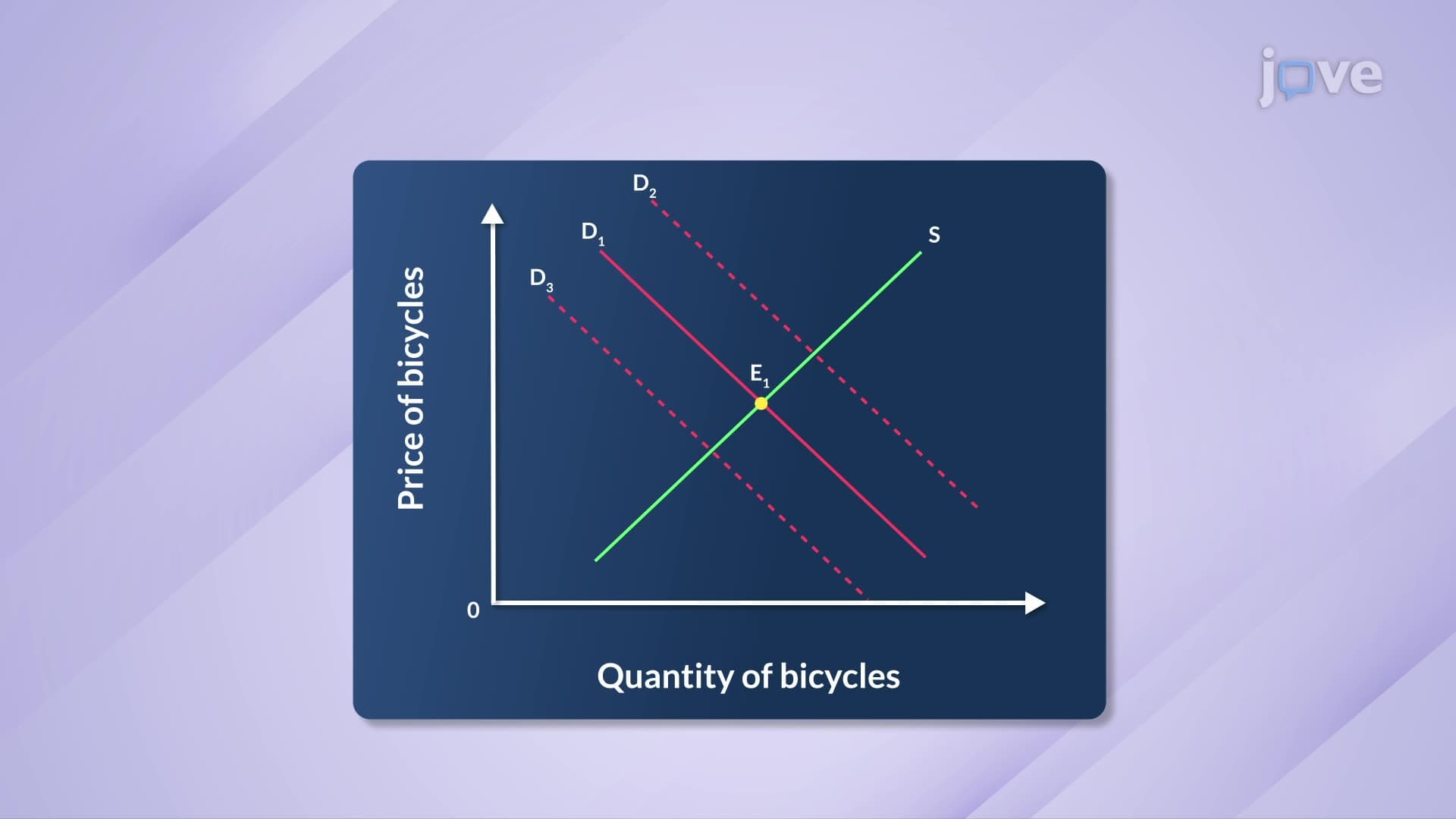
4. Demand Shifts and Market Adjustments Demand curve shifts significantly impact equilibrium price and quantity while supply remains constant. In US bicycle markets, fitness trends increasing cycling popularity shift demand rightward, creating shortages at original prices and driving both price and quantity higher. Conversely, safety concerns shifting demand leftward create surpluses, reducing both equilibrium price and quantity. These shifts demonstrate how external factors like consumer preferences, income changes, or social trends influence market outcomes, requiring businesses to adapt pricing and production strategies accordingly.
5. Supply Changes and Economic Impacts Supply curve shifts affect equilibrium through production cost changes, technology improvements, or regulatory modifications. Government subsidies for US bicycle manufacturing shift supply rightward, creating surpluses that reduce prices while increasing quantities sold. Alternatively, steel shortages shift supply leftward, causing shortages that raise prices and decrease quantities. These examples illustrate how production factors, resource availability, and government policies influence market equilibrium, affecting both consumer welfare and producer profitability across different economic sectors.
6. Simultaneous Market Shifts in Same Direction When demand and supply curves shift simultaneously in the same direction, equilibrium quantity changes predictably while price effects depend on relative shift magnitudes. During economic prosperity in US automobile markets, increased consumer confidence shifts demand right while manufacturing improvements shift supply right, definitively increasing equilibrium quantity. However, equilibrium price may rise, fall, or remain constant depending on whether demand or supply shifts more significantly, requiring careful analysis of both market forces.
7. Opposite Direction Market Shifts and Price Effects Simultaneous opposite shifts create definite price changes while quantity effects remain uncertain. In gasoline car markets, improved fuel efficiency technology increases demand (rightward shift) while environmental regulations increase production costs, decreasing supply (leftward shift). This combination guarantees higher equilibrium prices as reduced supply cannot meet increased demand. The quantity effect depends on relative shift magnitudes, demonstrating complex market interactions requiring sophisticated analysis to predict outcomes accurately.
8. Price Gouging and Emergency Market Dynamics Emergency situations disrupt normal supply demand equilibrium, often leading to price gouging when sellers exploit sudden demand spikes or supply shortages. After natural disasters like tornadoes, water demand skyrockets while supply may be limited, causing prices to jump from $1 to $10 per bottle. While higher prices can help ration scarce resources and prevent hoarding, they disproportionately burden lower-income consumers. Many US states have implemented anti-price gouging laws to protect consumers during emergencies while maintaining market function.
Frequently Asked Questions
At the intersection point, market equilibrium is achieved where quantity demanded equals quantity supplied. This creates the equilibrium price (market-clearing price) and equilibrium quantity. At this point, all buyers who want to purchase at that price can do so, and all sellers who want to sell at that price can sell their desired quantity, resulting in market satisfaction with no shortages or surpluses.
Set the demand equation equal to the supply equation (Qd = Qs), then solve for price (P). Substitute this equilibrium price back into either equation to find equilibrium quantity. For example, if Qd = 100 - 2P and Qs = 20 + 3P, then 100 - 2P = 20 + 3P, solving gives P = $16. Substituting back: Q = 100 - 2(16) = 68 units.
Common questions include calculating equilibrium from given supply and demand equations, predicting effects of curve shifts on price and quantity, analyzing consumer and producer surplus changes, identifying shortage and surplus conditions, and explaining market adjustment mechanisms. Practice graphing equilibrium changes and understanding the relationship between shifts and movements along curves.
Prices may remain elevated due to price stickiness, where sellers resist lowering prices quickly. This can occur due to menu costs (expense of changing prices), long-term contracts, psychological pricing strategies, or imperfect information. Eventually, competitive pressure typically forces prices down to eliminate surpluses, but this adjustment process may take time depending on market structure and external factors.
Market equilibrium affects everyday purchases from gasoline prices responding to supply disruptions, to concert ticket pricing based on artist popularity, to housing markets where home prices adjust based on inventory levels. During COVID-19, mask and sanitizer shortages created higher prices until supply increased. Understanding these concepts helps you anticipate price changes and make informed purchasing decisions.
While mathematical calculations provide precision, the core concepts are intuitive and can be understood graphically. Focus first on understanding the logical relationships: when demand exceeds supply, prices rise; when supply exceeds demand, prices fall. Once you grasp these principles visually through graphs, the mathematical component becomes much more manageable and simply provides numerical confirmation of conceptual understanding.
Practice drawing supply and demand graphs repeatedly, starting with basic equilibrium then adding shifts. Create flashcards linking cause-and-effect relationships (e.g., "increased income → demand shifts right → higher price and quantity"). Work through numerical problems step-by-step, and connect abstract concepts to current events like gas price changes or housing market trends to reinforce learning through real-world applications.
Understanding simultaneous shifts provides foundation for studying market efficiency, consumer and producer surplus analysis, elasticity effects on equilibrium changes, and macroeconomic concepts like aggregate supply and demand. These skills also prepare you for analyzing complex scenarios in international trade, labor economics, and policy analysis where multiple market forces interact simultaneously to determine outcomes.
This microcourse includes 8 concept videos that walk you through the building blocks of Microeconomics. Each video is short, about 1 minute, so you can cover a full topic during a coffee break or between classes. The full sequence starts with Market Equilibrium and ends with Price Gouging.
The playlist moves from big-picture ideas to the precise vocabulary used in Microeconomics. Early videos introduce Market Equilibrium, Surplus and Shortages, and The Mathematics of Equilibrium. The middle of the series focuses on Effect of Shift in Supply Curve on Market Equilibrium, Simultaneous Shifts in Demand and Supply Curves I, and Simultaneous Shifts in Demand and Supply Curves II. The final stretch covers Price Gouging.
The natural next step is Consumer Behavior. From there, you can move to Producer Behavior, Costs, and Perfect Competition. Once you finish those, the full Microeconomics curriculum of 20 microcourses on JoVE Coach opens up, taking you from foundational concepts to advanced systems.
Related Subjects


