- Microeconomics
- Oligopoly
Micro-courses:20

Oligopoly

1. Oligopoly Competition
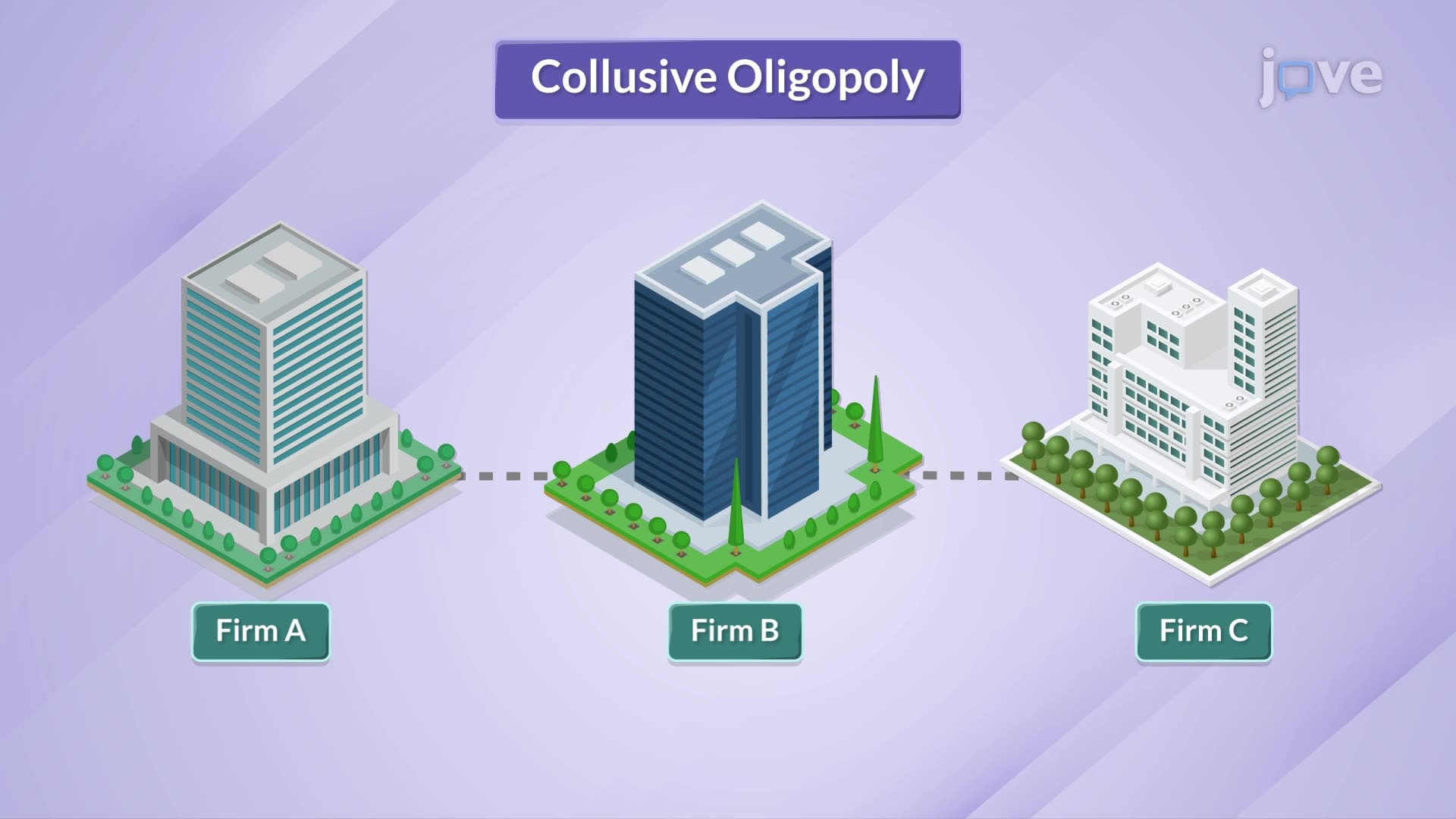
2. Type of Oligopoly: Collusive

3. Type of Oligopoly: Non-Collusive

4. Oligopoly and its Unfair Practices

5. Public Policy under Oligopoly: Antitrust Laws
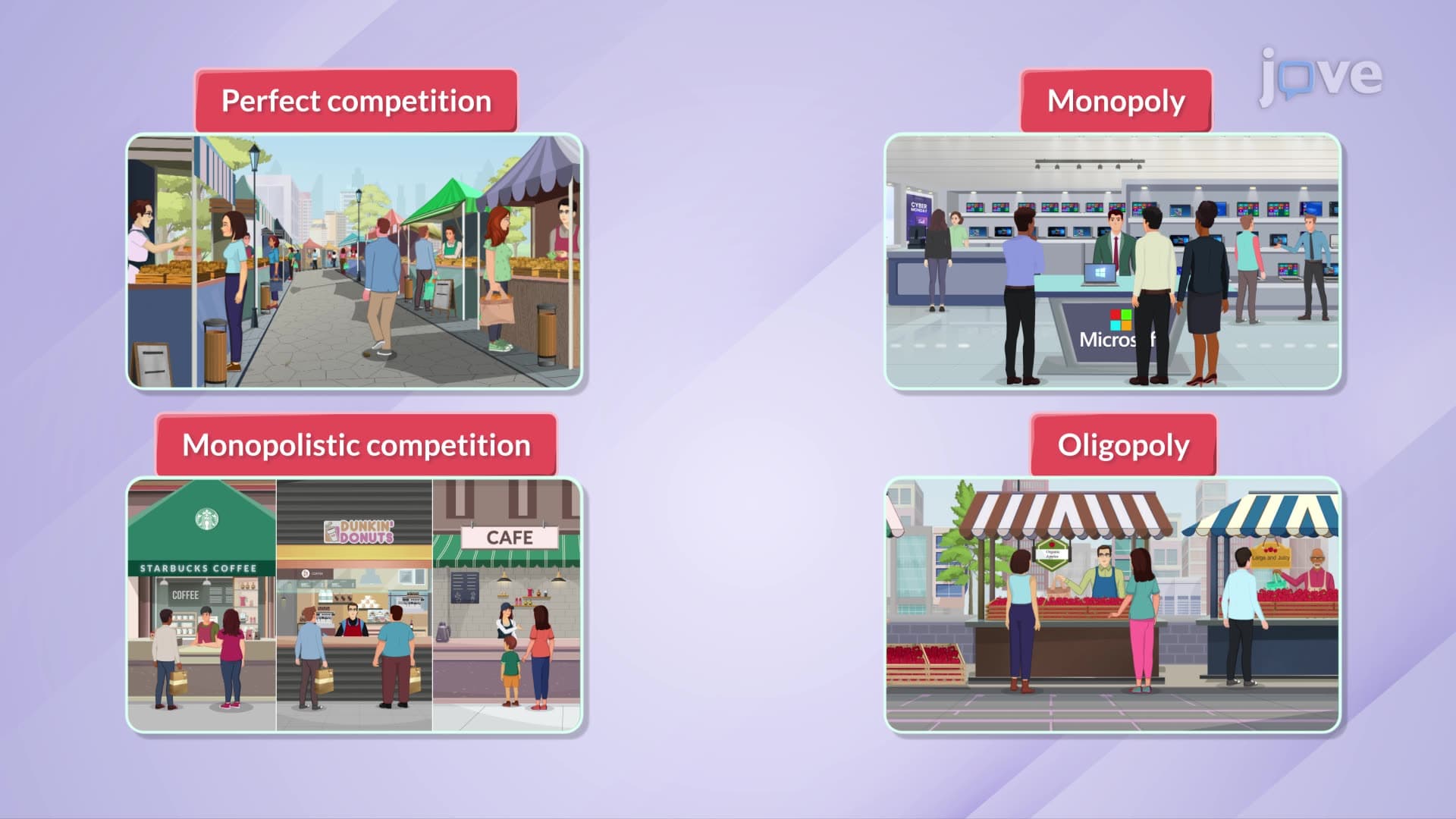
6. Differentiating Types of Markets

7. Bertrand Competition

8. Nash Equilibrium of a Bertrand Oligopoly

9. Cournot Competition
10. Equilibrium in a Cournot Oligopoly

11. Stackelberg Competition

12. Stackelberg and First Mover Advantage

13. Differentiated Goods: Bertrand Competition
14. Equilibrium in a Differentiated-Products Bertrand Market
Oligopoly represents a market structure where a few large firms dominate an industry, creating unique competitive dynamics through oligopoly strategy interdependence. Understanding how firms in oligopoly markets interact is essential for analyzing real-world industries like telecommunications, airlines, and automotive manufacturing. JoVE Coach's comprehensive course explores various oligopoly models, from collusive cartels to competitive frameworks, providing crucial insights into market behavior and regulatory responses.
- Understand the fundamental characteristics of oligopoly markets and barriers to entry
- Identify differences between collusive and non-collusive oligopoly strategies
- Learn how game theory principles apply to oligopolistic competition
- Explore Nash equilibrium concepts in Bertrand, Cournot, and Stackelberg models
- Analyze the role of product differentiation in competitive strategies
- Apply antitrust law principles to oligopolistic market practices
- Understand first-mover advantages and strategic decision-making
- Examine real-world examples of oligopolistic behavior in US industries
1. Market Structure Fundamentals Oligopoly markets feature few sellers with substantial market share, high barriers to entry, and significant interdependence among firms. Unlike perfect competition with many sellers or monopoly with one dominant firm, oligopolies create unique strategic interactions. The US airline industry exemplifies this structure, where major carriers like American, Delta, and United dominate routes and pricing decisions. Entry barriers include massive capital requirements, regulatory approval, and established customer loyalty. This concentration enables firms to influence market outcomes while remaining sensitive to competitors' actions, creating complex strategic relationships that distinguish oligopolies from other market structures.
2. Collusive vs. Non-Collusive Behavior Oligopolies can operate through either cooperative or competitive strategies. Collusive oligopolies, exemplified by OPEC's oil price coordination, involve firms working together to set prices, divide markets, or restrict output to maximize joint profits. However, such arrangements often violate US antitrust laws. Non-collusive oligopolies, like the smartphone competition between Apple and Samsung, feature independent decision-making where firms compete through pricing, innovation, and product differentiation. While collusion can stabilize prices and profits, it typically leads to higher consumer prices and reduced innovation, explaining why US regulatory authorities actively monitor and prosecute anti-competitive practices.
3. Game Theory and Strategic Interaction Game theory provides essential tools for understanding oligopolistic decision-making, particularly through Nash equilibrium concepts. In oligopolistic markets, firms must consider competitors' likely responses when making strategic choices about pricing, output, or investment. The Nash equilibrium represents a stable outcome where no firm benefits from unilaterally changing its strategy. For example, in airline route competition, carriers must anticipate rivals' pricing responses when setting ticket prices. This interdependence creates strategic complexity absent in other market structures, where firms either face no competition (monopoly) or have negligible individual market impact (perfect competition).
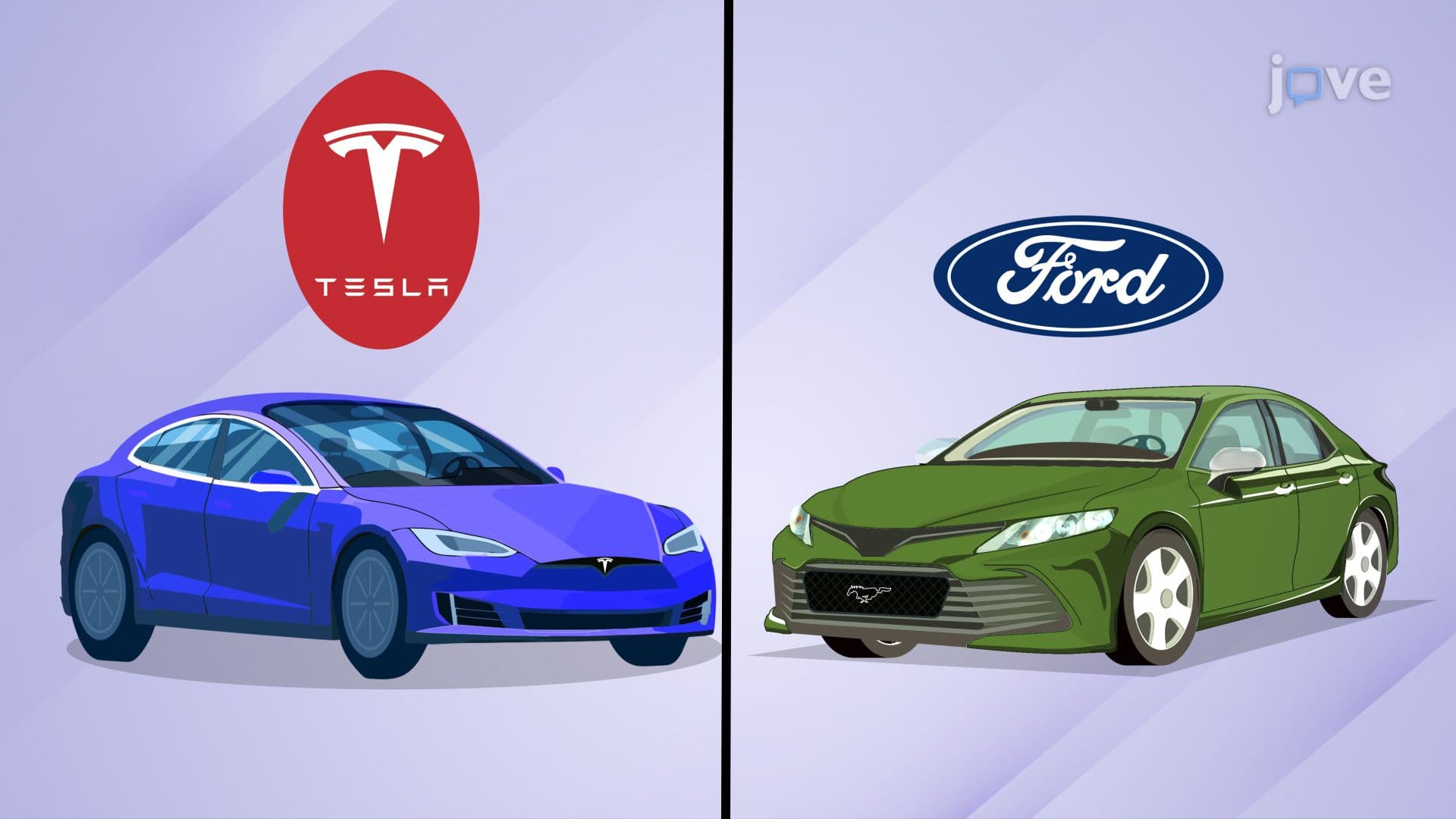
4. Bertrand Competition and Price Wars The Bertrand model explains how oligopolistic firms compete primarily on price when selling identical or similar products. In this framework, firms undercut each other's prices until reaching marginal cost, eliminating economic profits. US retail gasoline markets often demonstrate Bertrand-like competition, where nearby stations match or slightly undercut competitors' prices. However, when products are differentiated—like Tesla's premium electric vehicles versus Ford's mass-market offerings—firms gain pricing power and can maintain profit margins. The degree of product differentiation directly influences the intensity of price competition and firms' ability to sustain above-marginal-cost pricing.
5. Quantity Competition: Cournot Model The Cournot model examines oligopolistic competition based on output decisions rather than pricing. Firms simultaneously choose production quantities, assuming competitors' output remains fixed. This leads to a Nash equilibrium where each firm produces one-third of the competitive market output in a two-firm scenario. US steel production or aircraft manufacturing exemplify industries where capacity decisions precede pricing, making Cournot analysis relevant. The model demonstrates how oligopolistic output typically falls between monopolistic (lower output, higher prices) and competitive levels (higher output, lower prices), providing insights into market efficiency and consumer welfare implications.
6. Sequential Competition: Stackelberg Model The Stackelberg model analyzes markets where one firm moves first (leader) while others respond (followers), creating first-mover advantages. The leader anticipates followers' reactions and incorporates this knowledge into its initial decision, typically resulting in higher profits than followers achieve. Amazon's early dominance in e-commerce exemplifies first-mover advantages in oligopolistic markets. The leader's timing advantage stems from superior market position, technological innovation, or strategic resources. This model helps explain why established firms often maintain market leadership despite new entrants, highlighting the importance of timing and strategic commitment in oligopolistic competition.
7. Antitrust Policy and Market Regulation US antitrust laws, beginning with the Sherman Act of 1890, specifically target anti-competitive oligopolistic practices. These regulations prohibit price-fixing agreements, market division schemes, predatory pricing designed to eliminate competitors, and tying arrangements that force consumers to purchase unwanted products. The Microsoft Internet Explorer case and various airline route allocation investigations demonstrate active antitrust enforcement. Modern regulatory approaches balance preventing consumer harm against allowing legitimate competitive strategies and business efficiencies. Understanding these legal frameworks helps explain why some oligopolistic behaviors persist while others face prosecution, shaping how firms structure their competitive strategies.
Frequently Asked Questions
While both market structures involve few firms with some pricing power, oligopoly features significant interdependence where each firm's actions substantially affect competitors. Monopolistic competition involves many firms with differentiated products but minimal individual market impact. In oligopolies like US wireless carriers, Verizon's pricing directly influences AT&T's strategy, while in monopolistic competition like local restaurants, one establishment's prices have negligible effects on distant competitors.
Concentrate on game theory matrices, Nash equilibrium identification, and distinguishing between different oligopoly models (Bertrand, Cournot, Stackelberg). Practice analyzing kinked demand curves, understanding prisoner's dilemma scenarios, and explaining why firms might choose cooperation versus competition. AP exams frequently test your ability to predict outcomes in two-firm scenarios and explain the role of barriers to entry in maintaining oligopolistic market structures.
In basic Bertrand competition with identical products and costs, firms undercut each other until price equals marginal cost. For differentiated products, use reaction functions where each firm's optimal price depends on the competitor's price. Set up profit maximization conditions for both firms, solve the system of equations simultaneously, and find the intersection point of reaction curves. This intersection represents the Nash equilibrium where neither firm wants to change its strategy unilaterally.
Several factors prevent cartel formation: US antitrust laws impose severe penalties including criminal prosecution, individual firms have incentives to cheat on agreements to gain market share, monitoring compliance is difficult and expensive, and new entry may occur if prices become too high. Additionally, firms may have different cost structures or strategic objectives, making agreement difficult. Even successful cartels like OPEC face internal tensions and cheating that limit their effectiveness.
US airlines demonstrate route-specific oligopolies and hub concentration, while wireless carriers (Verizon, AT&T, T-Mobile) show product differentiation and strategic interdependence. The automotive industry illustrates both domestic competition (Ford, GM) and international rivalry. Tech companies like Google, Apple, and Microsoft compete across multiple markets, showing how oligopolies can exist in related industries. Credit card networks (Visa, Mastercard) exemplify network effects in oligopolistic markets.
Oligopoly requires understanding strategic interaction and game theory, making it more complex than perfect competition or monopoly. However, the concepts become manageable when you focus on step-by-step analysis: identify the number of firms, determine whether they compete on price or quantity, recognize if products are differentiated, and apply the appropriate model. Practice with simple two-firm scenarios before advancing to more complex situations involving multiple players or sequential decision-making.
Start by identifying the market structure characteristics (number of firms, product differentiation, barriers to entry), then determine which model applies (Bertrand for price competition, Cournot for quantity competition, or Stackelberg for sequential moves). Draw relevant graphs including reaction curves or payoff matrices as appropriate. Always explain the economic intuition behind mathematical results, such as why firms might earn zero economic profit in Bertrand competition or why first-movers gain advantages in Stackelberg models.
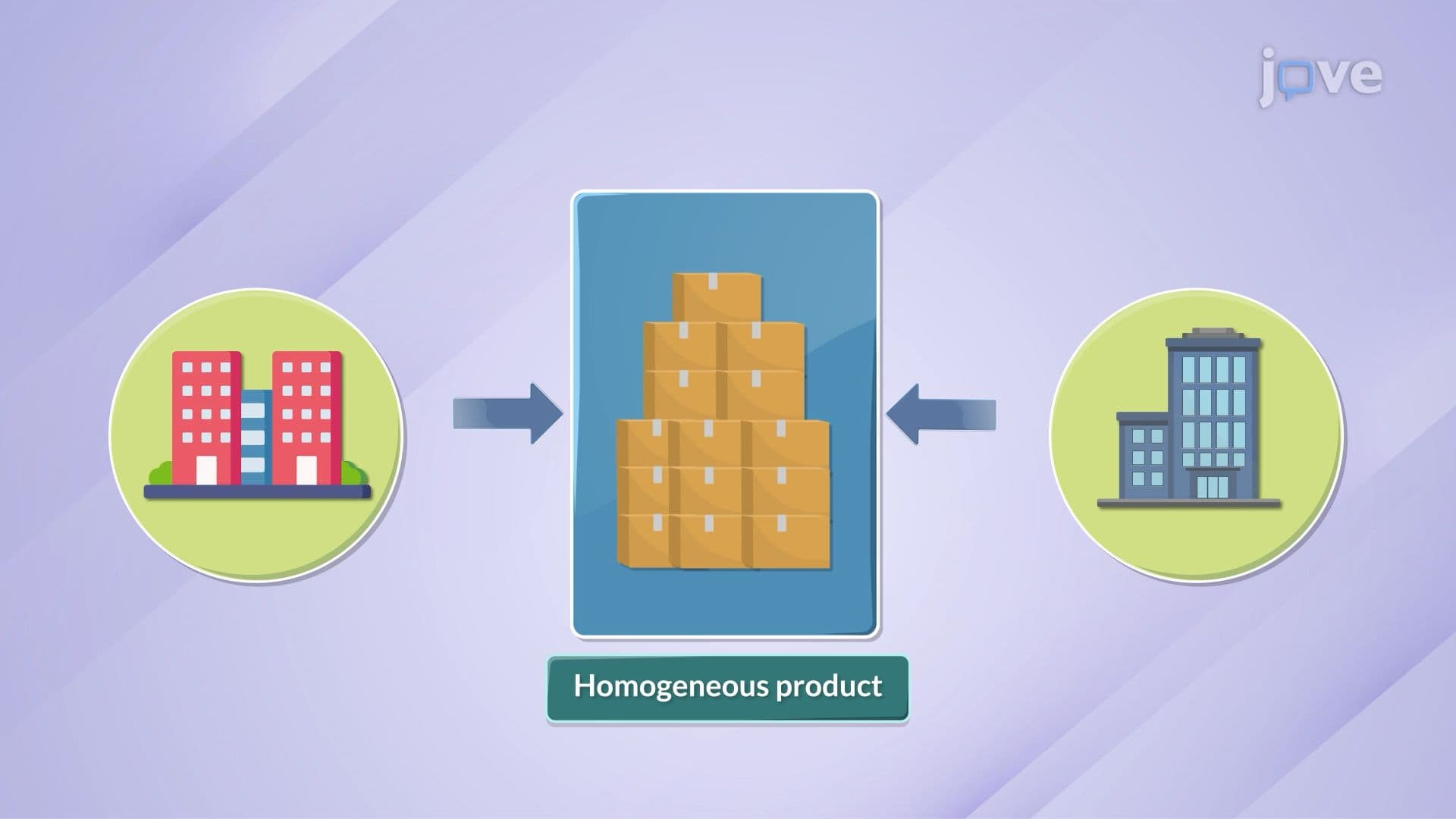
Product differentiation reduces direct substitutability between competitors' offerings, allowing firms to maintain higher prices and profit margins. In homogeneous product markets like basic steel, price competition drives profits toward zero. However, differentiated products like luxury automobiles or premium smartphones enable firms to charge above marginal cost. The degree of differentiation directly correlates with pricing power—highly differentiated products face less intense price competition, while similar products force firms into aggressive price competition resembling Bertrand outcomes.
This microcourse includes 14 concept videos that walk you through the building blocks of Microeconomics. Each video is short, about 1 minute, so you can cover a full topic during a coffee break or between classes. The full sequence starts with Oligopoly Competition and ends with Equilibrium in a Differentiated-Products Bertrand Market.
The playlist moves from big-picture ideas to the precise vocabulary used in Microeconomics. Early videos introduce Oligopoly Competition, Type of Oligopoly: Collusive, and Type of Oligopoly: Non-Collusive. The middle of the series focuses on Public Policy under Oligopoly: Antitrust Laws, Differentiating Types of Markets, and Bertrand Competition. The final stretch covers Nash Equilibrium of a Bertrand Oligopoly, Cournot Competition, Equilibrium in a Cournot Oligopoly, Stackelberg Competition, Stackelberg and First Mover Advantage, Differentiated Goods: Bertrand Competition, and Equilibrium in a Differentiated-Products Bertrand Market.
The natural next step is Consumer Surplus, Producer Surplus, and Market Efficiency. From there, you can move to Analysis of Competitive Markets, General Equilibrium Theory and Welfare Economics, and Economics for Labor Markets. Once you finish those, the full Microeconomics curriculum of 20 microcourses on JoVE Coach opens up, taking you from foundational concepts to advanced systems.
Related Subjects


