Loading subject page…
- Microeconomics
- Consumer Surplus, Producer Surplus, and Market Efficiency
Microeconomics
All Micro-courses:20

1.
Introduction to Microeconomics
10 Concepts
2.
Demand and its Elasticities
21 Concepts
3.
Supply and its Elasticities
12 Concepts
4.
Market Equilibrium
8 Concepts
5.
Consumer Behavior
22 Concepts
6.
Producer Behavior
20 Concepts
7.
Costs
14 Concepts
8.
Perfect Competition
12 Concepts
9.
Monopoly
11 Concepts
10.
Monopolistic Competition
7 Concepts
11.
Oligopoly
14 Concepts
12.
Consumer Surplus, Producer Surplus, and Market Efficiency
8 Concepts
13.
Analysis of Competitive Markets
11 Concepts
14.
General Equilibrium Theory and Welfare Economics
22 Concepts
15.
Economics for Labor Markets
21 Concepts
16.
Externalities and Public Goods
21 Concepts
17.
Asymmetric Information and Moral Hazard
15 Concepts
18.
Game Theory
22 Concepts
19.
Behavioral Economics
9 Concepts
20.
Uncertainty
6 Concepts
Consumer Surplus, Producer Surplus, and Market Efficiency
 8 Concepts
 1.4K Views
 Popular topics
Concepts: 8

01:15
232 views
01:22
282 views

01:27
186 views

01:22
213 views

01:28
100 views

01:29
120 views
01:21
163 views

01:25
146 views
Consumer surplus represents the difference between what consumers are willing to pay and what they actually pay for goods and services. This fundamental concept in welfare economics surplus helps measure market efficiency alongside producer surplus, which captures the benefit sellers receive above their minimum acceptable price. Together, these concepts form the foundation for understanding how markets allocate resources efficiently in the US economy, from college cafeteria pricing to major commodity markets. JoVE Coach provides comprehensive video lessons exploring these economic principles through real-world applications.
- Understand the concept of consumer surplus and how it measures buyer benefits in market transactions
- Learn to calculate producer surplus as the difference between market price and minimum selling price
- Identify consumer and producer surplus graphically using supply and demand curves
- Explore how shifts in supply and demand curves affect both types of economic surplus
- Analyze the relationship between market equilibrium and total economic welfare
- Apply surplus concepts to evaluate market efficiency in perfectly competitive markets
- Understand how underproduction and overproduction create deadweight loss
- Learn how consumer and producer surplus measure market efficiency through total surplus maximization
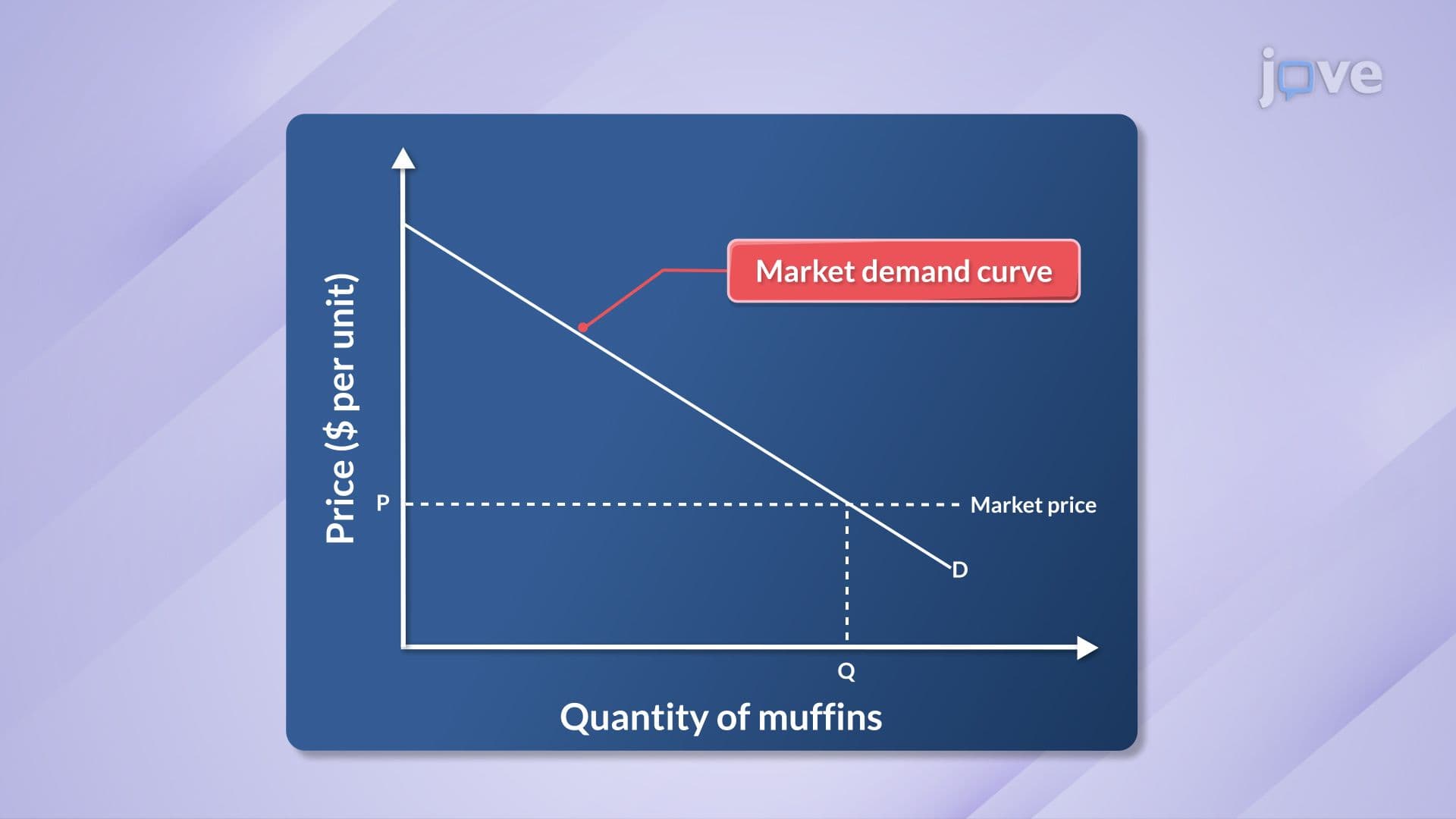
1. Consumer Surplus Fundamentals: Consumer surplus measures the monetary value of satisfaction consumers gain when paying less than their maximum willingness to pay. Using examples like college students purchasing cafeteria muffins, this concept demonstrates how Nancy's $2 surplus (willing to pay $5, actual price $3) represents additional consumer welfare. The graphical representation shows consumer surplus as the triangular area above market price and below the demand curve, with the triangle's base representing quantity sold and height showing the difference between the demand choke price and market price.
2. Producer Surplus Mechanics: Producer surplus captures the benefit producers receive when selling above their minimum acceptable price, determined by marginal cost in perfectly competitive markets. For instance, a coffee machine manufacturer with marginal costs of $110, $120, $130, and $140 selling at a market price of $150 earns producer surplus on each unit. Graphically, producer surplus appears as the area above the supply curve and below market price, bounded by the quantity sold and extending from the supply choke price.
3. Supply and Demand Curve Shifts: Market changes significantly impact both consumer and producer surplus distributions. When sugar prices increase candy production costs, the supply curve shifts left, reducing consumer surplus due to higher prices and lower quantities. Conversely, health consciousness reducing ice cream demand shifts the demand curve left, definitively reducing producer surplus while creating ambiguous effects on consumer surplus. These shifts demonstrate how external factors redistribute economic welfare between market participants in American consumer markets.
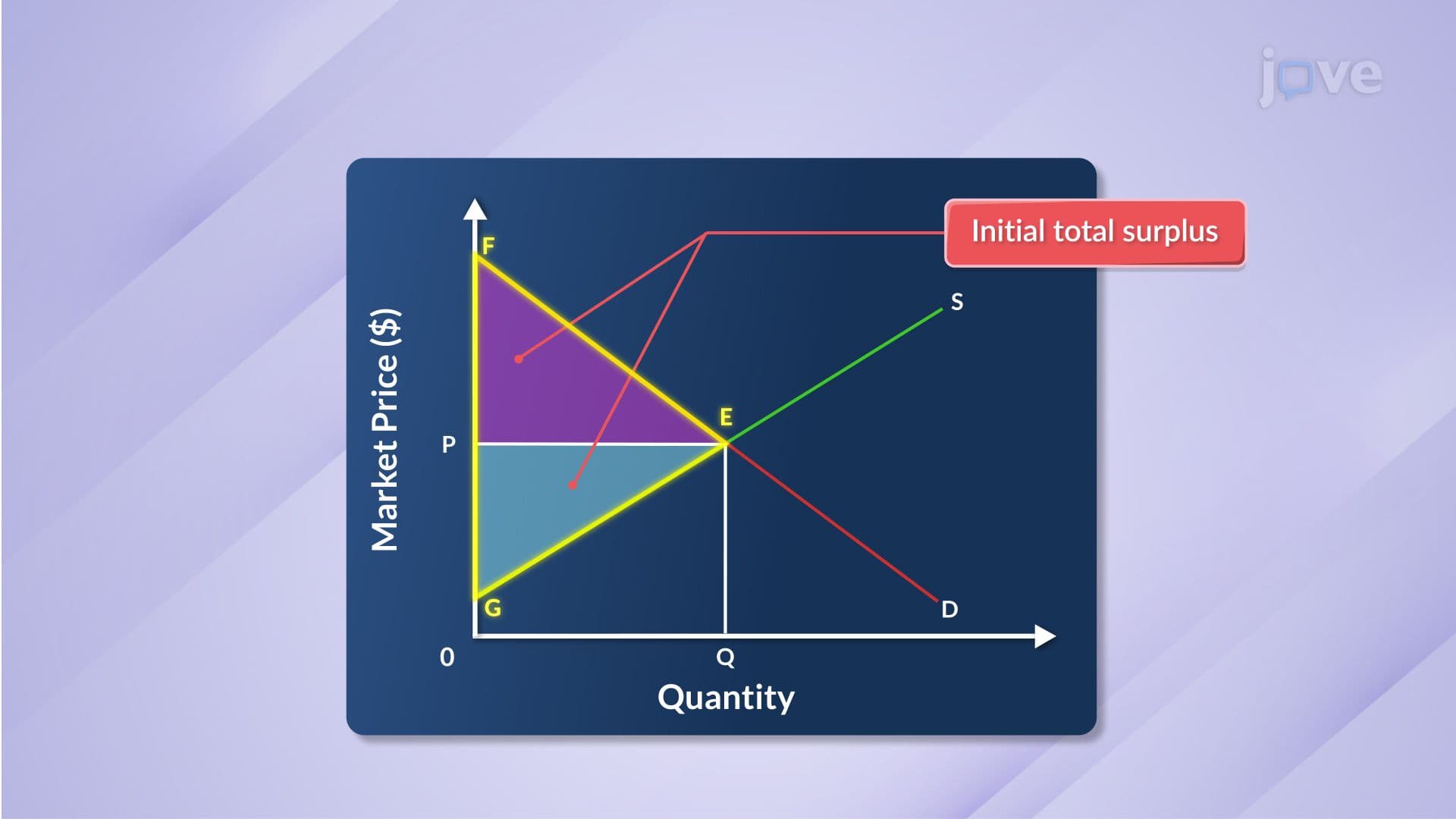
4. Market Efficiency and Deadweight Loss: Perfect competition achieves maximum total surplus (consumer plus producer surplus) at equilibrium where supply equals demand. Underproduction at quantity Q1 creates deadweight loss by excluding willing consumers and producers from beneficial transactions. Similarly, overproduction beyond equilibrium generates inefficiency as marginal costs exceed consumer valuations. This principle explains why government interventions like price ceilings or floors often reduce overall economic welfare, making free market equilibrium the most efficient allocation mechanism for maximizing societal benefits.