Loading subject page…

- Physics
- Fluid Mechanics
- Density and Archimedes' Principle
Micro-course: Fluid Mechanics
201,012 views
Learn key concepts and earn your certificate.



Density and Archimedes' Principle

00:00
01:05
Video Summary: What Is Density and Archimedes Principle
Ever wonder why cruise ships weighing thousands of tons float while a small stone sinks? The answer lies in density and Archimedes principle, fundamental physics concepts that explain buoyancy in fluids. When the USS Gerald R. Ford aircraft carrier displaces 100,000 tons of seawater, it demonstrates how fluid density determines whether objects float or sink. This principle governs everything from submarine ballast systems to hot air balloons rising through the atmosphere. Watch the full video on JoVE Coach to master this concept with expert-led visuals and step-by-step explanations.
- Understand what is density and Archimedes principle and how they work together to determine buoyancy in fluids
- Identify the relationship between fluid density, displaced volume, and buoyant force magnitude
- Analyze how the submerged fraction of floating objects relates to density ratios between object and fluid
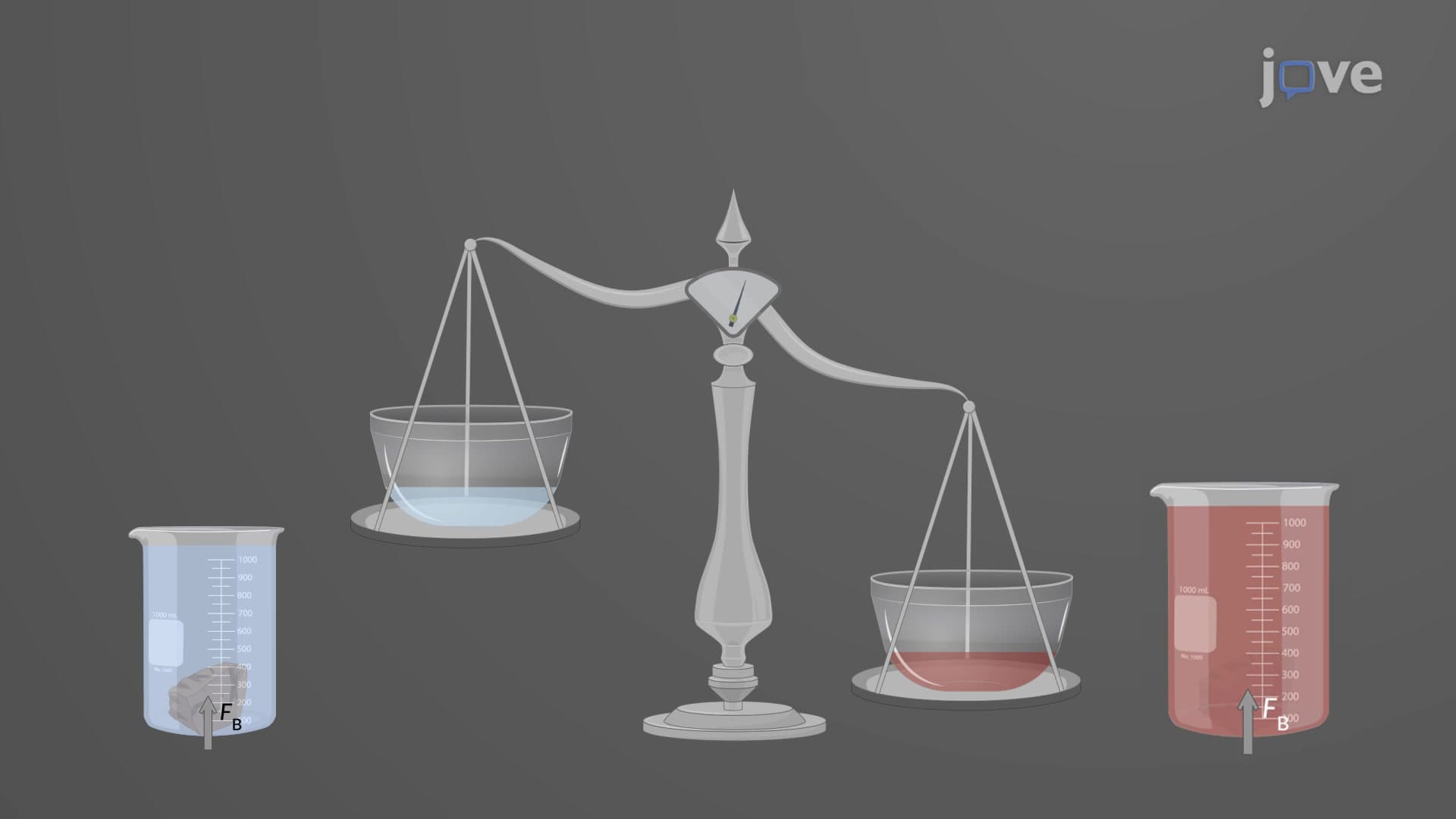
- Compare buoyant forces in fluids of different densities and predict resulting object behavior
- Apply Archimedes principle to calculate buoyant forces and determine whether objects will float or sink
- Evaluate real-world applications of density and buoyancy in engineering and natural phenomena
- Recognize how changes in fluid density affect the equilibrium position of floating objects
- Explore the mathematical relationships governing displacement, mass, and volume in buoyant systems
Understanding Density and Archimedes Principle Fundamentals
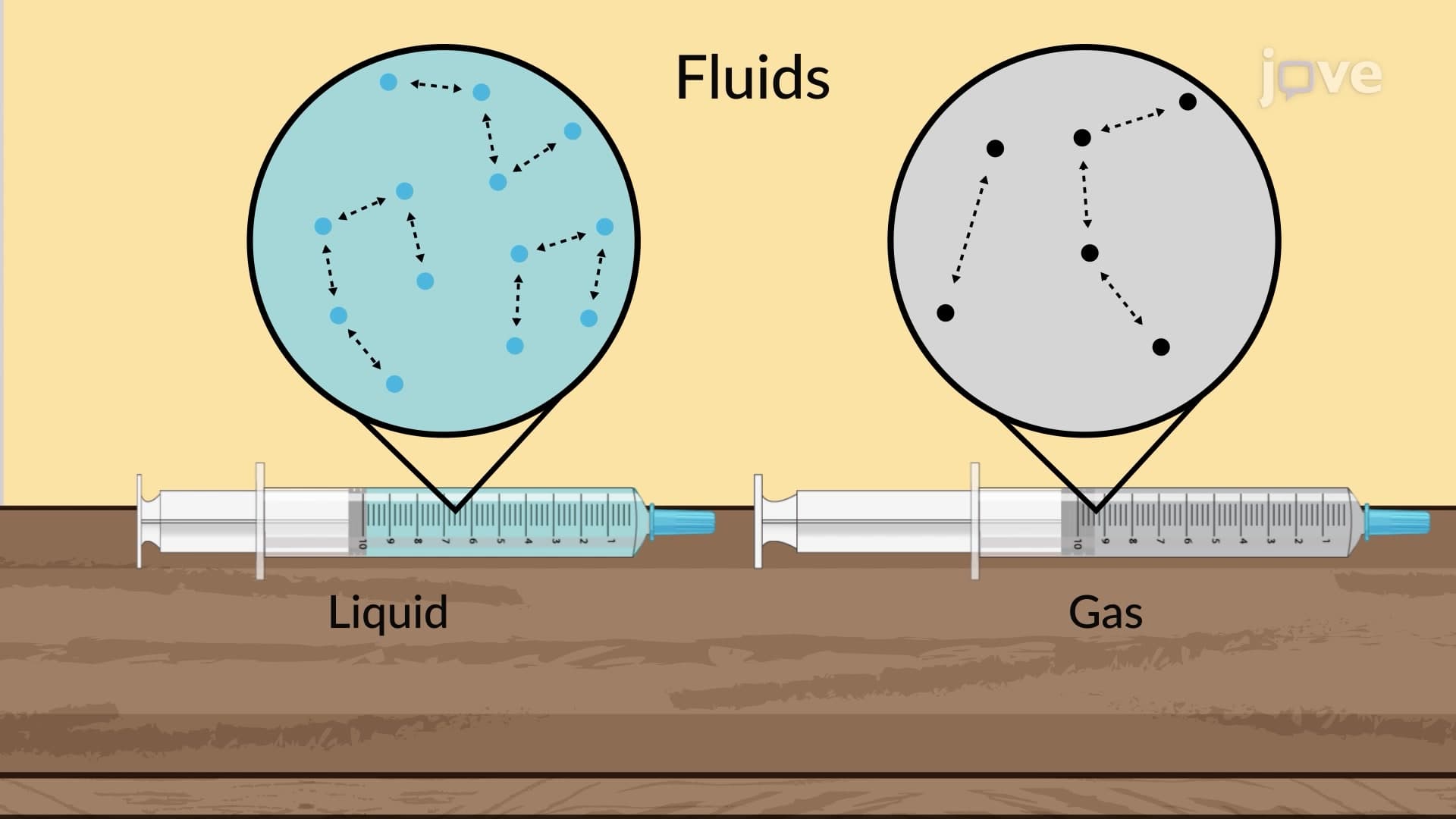
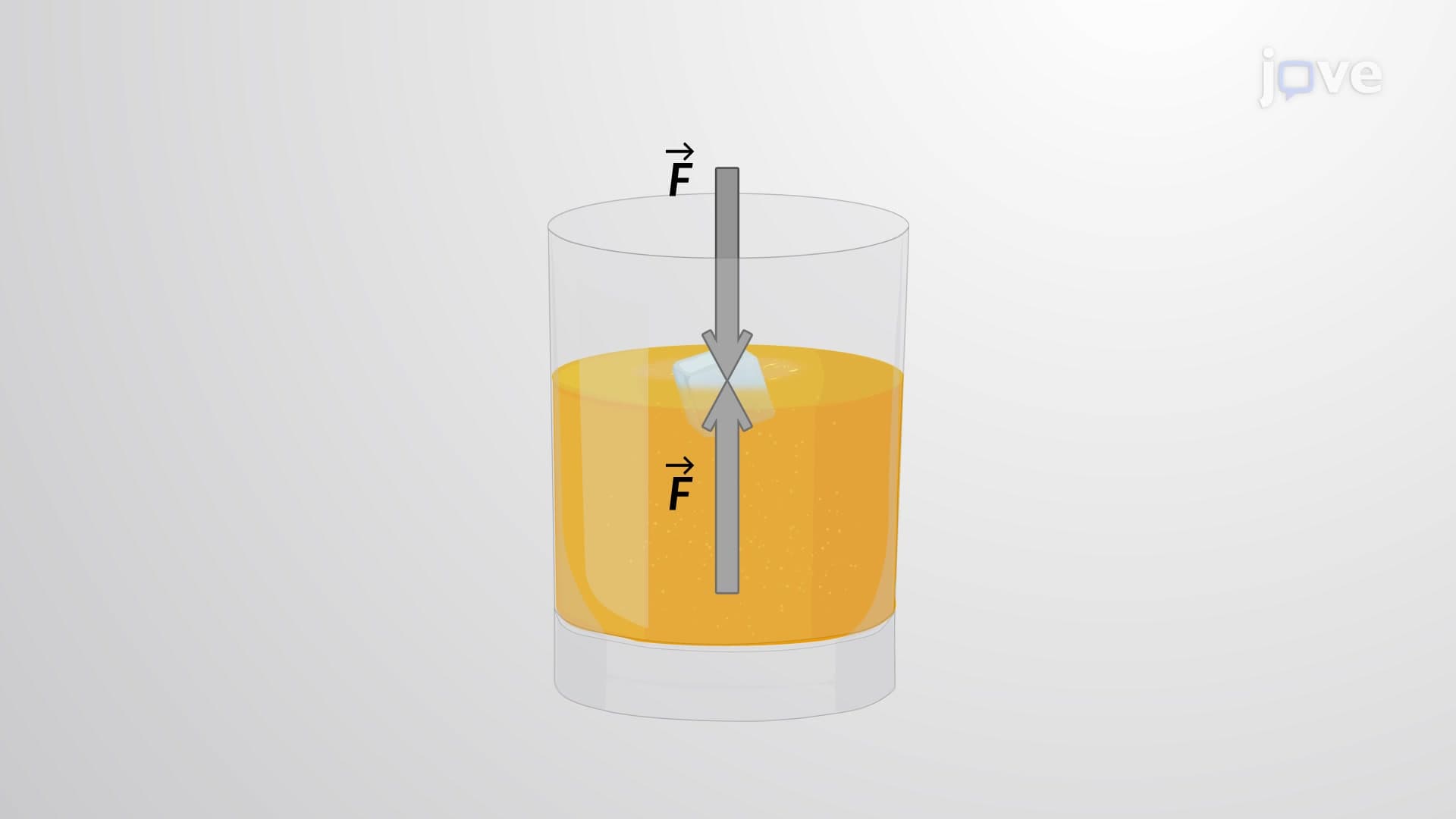
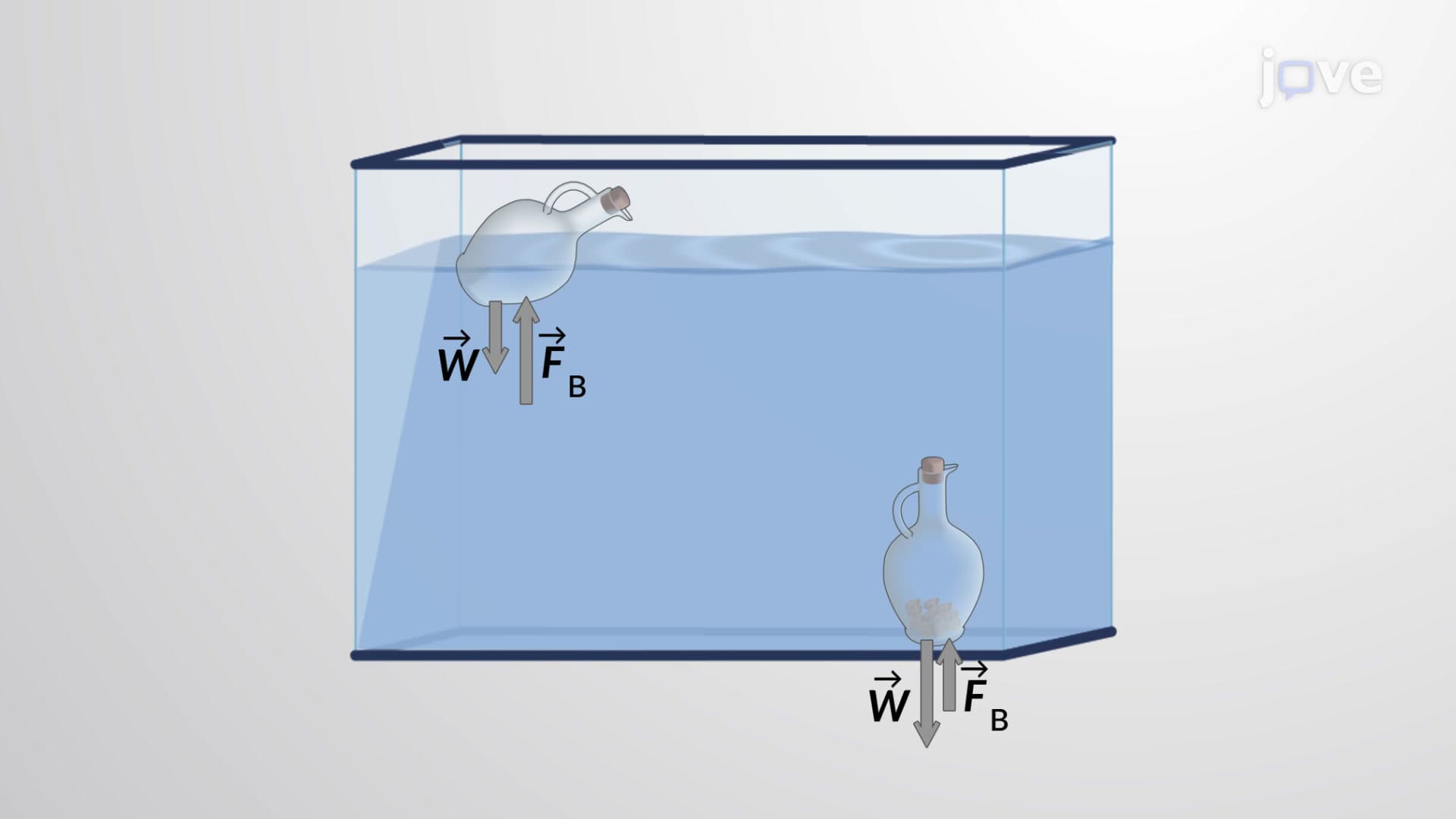
Density and Archimedes principle form the cornerstone of fluid mechanics, explaining why objects behave differently when immersed in various fluids. Density, defined as mass per unit volume (ρ = m/V), determines how much matter occupies a given space. Archimedes principle states that any object immersed in a fluid experiences an upward buoyant force equal to the weight of the displaced fluid.
This relationship becomes crucial for AP Physics students tackling buoyancy problems and college engineering majors studying fluid dynamics. The principle applies universally, from analyzing why icebergs float with only 10% visible above water to understanding how submarines control their depth by adjusting ballast tank density.
The Mathematics Behind Buoyant Force
The buoyant force equation, F(buoyant) = ρ(fluid) × V(displaced) × g, reveals the direct relationship between fluid density and buoyancy. When an object floats in equilibrium, the buoyant force equals the object's weight: ρ(fluid) × V(submerged) × g = ρ(object) × V(total) × g.
This simplifies to the submerged fraction: V(submerged)/V(total) = ρ(object)/ρ(fluid). Students preparing for MCAT physics sections frequently encounter this relationship, as it explains why human bodies float more easily in saltwater pools than freshwater lakes-seawater's higher density (1.025 g/cm³) compared to freshwater (1.0 g/cm³) increases buoyant force.
Real-World Applications in Engineering and Nature
American naval architecture demonstrates Archimedes principle at massive scales. The USS Missouri battleship, despite weighing 45,000 tons, floats because its hull design displaces an equivalent weight of seawater. The ship's average density remains less than water due to internal air spaces.
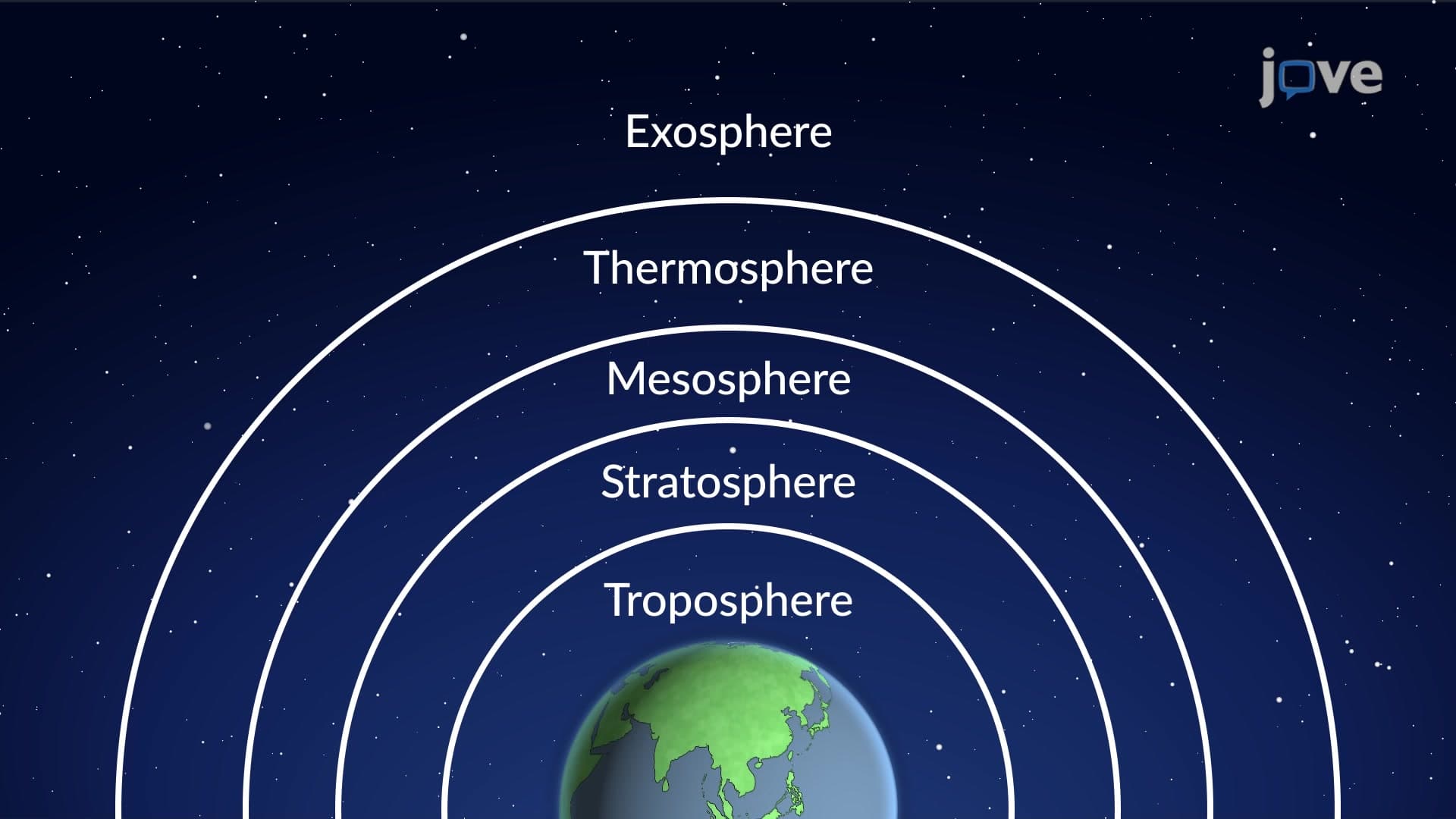
Similarly, hot air balloons rise when heated air inside (density ≈ 0.95 kg/m³) becomes less dense than surrounding cool air (density ≈ 1.2 kg/m³). Commercial pilots rely on these density principles when calculating aircraft weight and balance for safe flight operations.
Advanced Applications in Medical and Industrial Settings
Medical professionals utilize density principles in procedures like lumbar punctures, where cerebrospinal fluid density differences help identify pathological conditions. Industrial applications include oil separation processes, where different petroleum products separate based on density gradients, and quality control testing where specific gravity measurements ensure product consistency in manufacturing facilities across the United States.
Frequently Asked Questions
Density measures how much mass fits in a given volume, while Archimedes principle explains that objects in fluids experience upward forces equal to the weight of fluid they displace. Together, they determine whether objects float, sink, or remain suspended. These concepts explain everything from why ships float to how hot air balloons rise.
AP Physics 1 frequently tests these concepts through buoyancy calculations, floating object problems, and fluid pressure scenarios. Expect questions involving density ratios, submerged fractions, and buoyant force calculations. The College Board emphasizes real-world applications like ship design and atmospheric phenomena in free-response questions.
MCAT physics sections include buoyancy in biological systems, such as calculating lung capacity effects on human flotation or analyzing density changes in blood components during centrifugation. Questions often combine these principles with pressure concepts and fluid flow in circulatory systems.
US Navy submarines adjust their average density by flooding or emptying ballast tanks with seawater. When tanks fill with water, the submarine's density increases, causing it to sink. Compressed air forces water out to decrease density and surface. This precise density control allows submarines to achieve neutral buoyancy at specific depths.
Basic algebra suffices for most applications-you'll primarily work with ratios, proportions, and simple equations like density = mass/volume. High school students can master these concepts with solid arithmetic and introductory physics math skills. More complex calculus applications appear in advanced fluid dynamics courses.
Practice identifying object and fluid densities from data tables, then systematically apply buoyant force equations. Create density comparison charts for common materials and fluids. Work through graduated problems starting with simple floating objects, progressing to multi-fluid systems and partially submerged scenarios found in standardized tests.
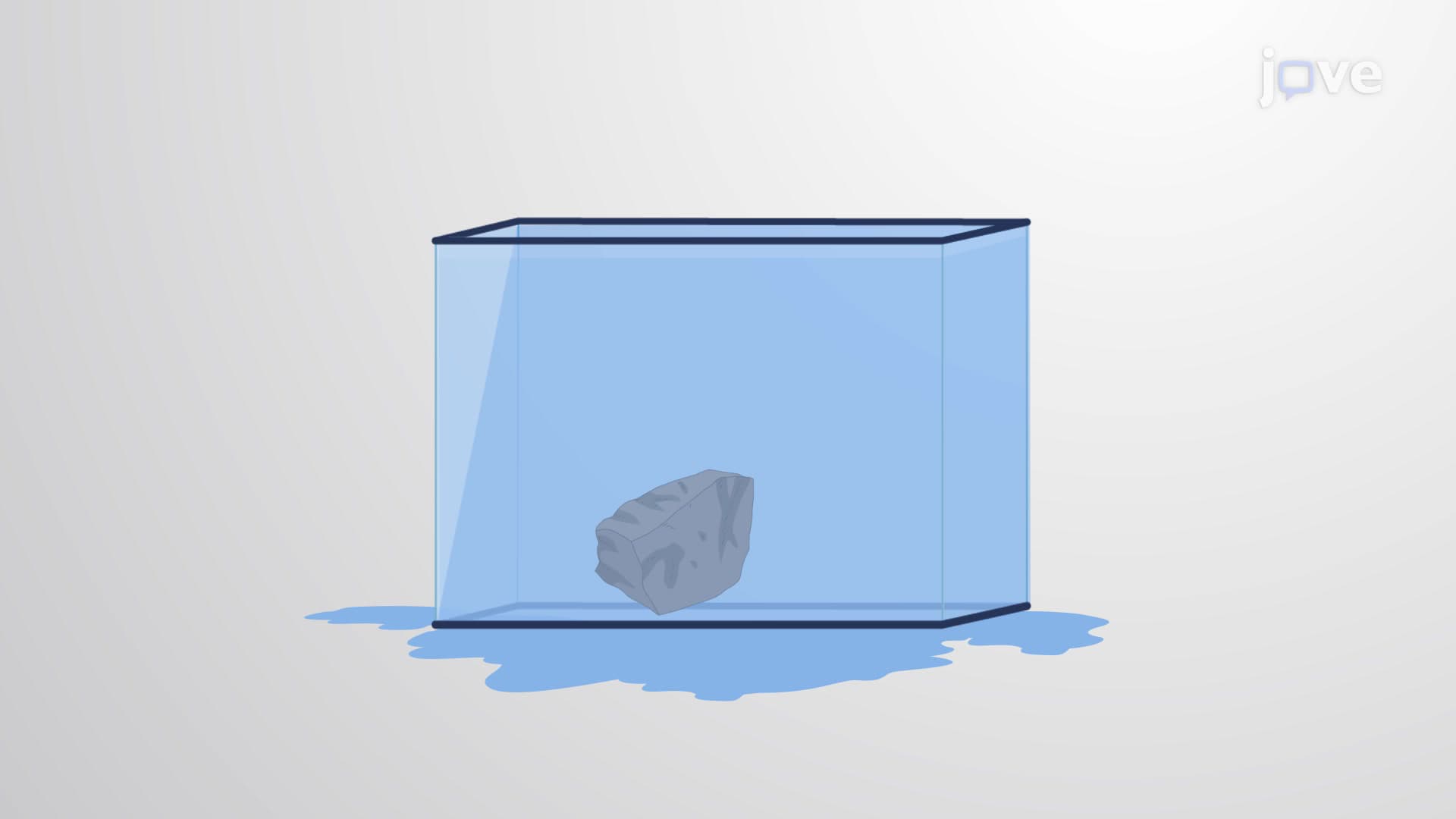
Ice density (0.92 g/cm³) is less than water (1.0 g/cm³) but greater than ethanol (0.79 g/cm³). When object density exceeds fluid density, the object sinks because buoyant force cannot support its weight. This demonstrates how the same object behaves differently in various fluids based on relative density values.
These fundamentals lead to studying fluid mechanics, thermodynamics, and transport phenomena in chemical engineering programs. Advanced applications include designing separation processes, analyzing mixing operations, and understanding multiphase flow systems in petrochemical refineries and pharmaceutical manufacturing facilities throughout the United States.
Related Micro-courses


