Loading video…


 24 Concepts
 201K views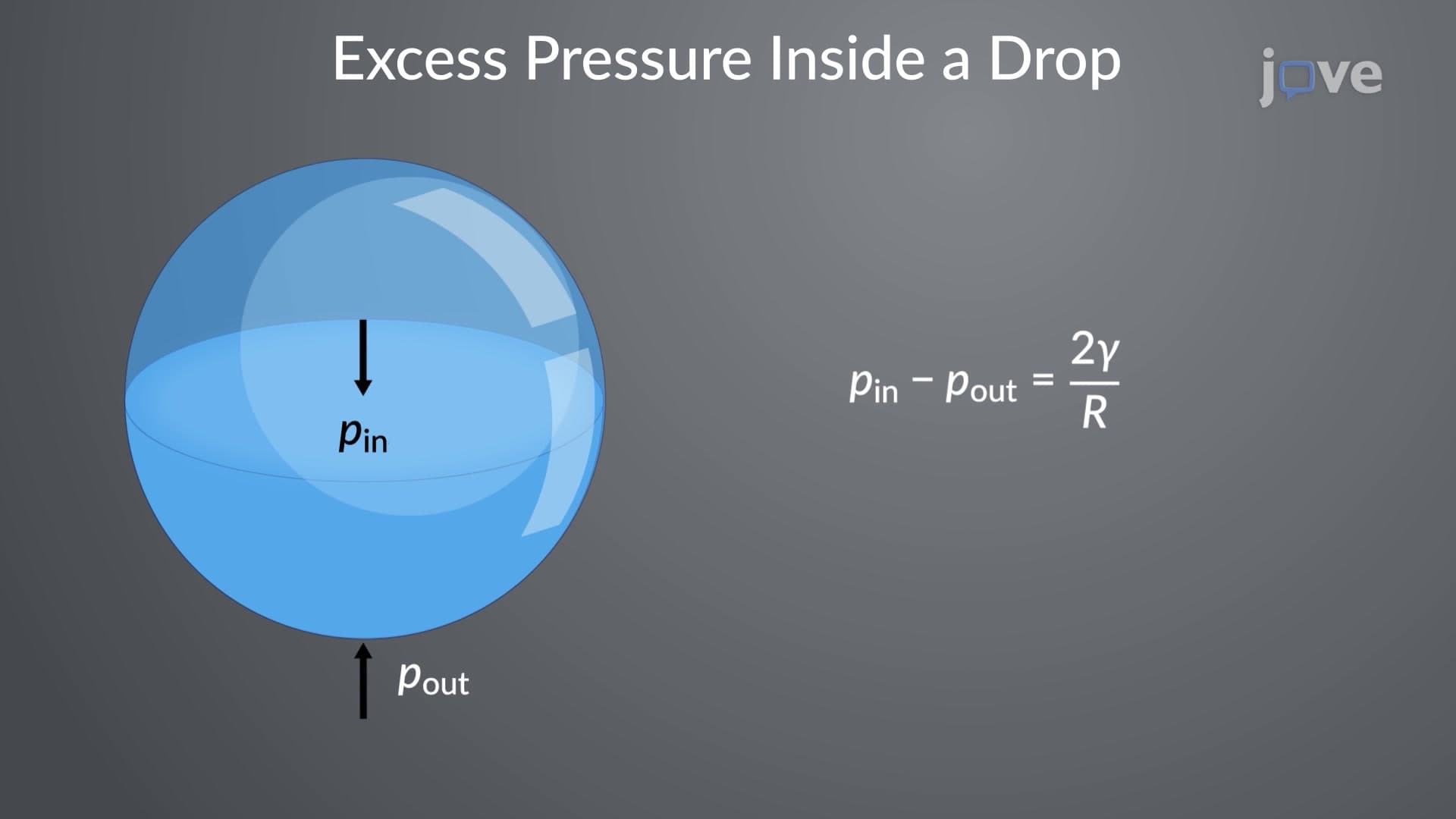

Video Summary: Excess Pressure Inside a Drop Explained
Ever wonder why raindrops hold their perfect spherical shape as they fall from Seattle's cloudy skies? The excess pressure inside a drop creates a fascinating balance of forces that keeps liquid drops intact despite gravity and air resistance. This pressure difference occurs when surface tension forces compete with internal liquid pressure and external air pressure in droplets ranging from morning dew to pharmaceutical aerosols used in US hospitals. Watch the full video on JoVE Coach to master this concept with expert-led visuals and step-by-step explanations.
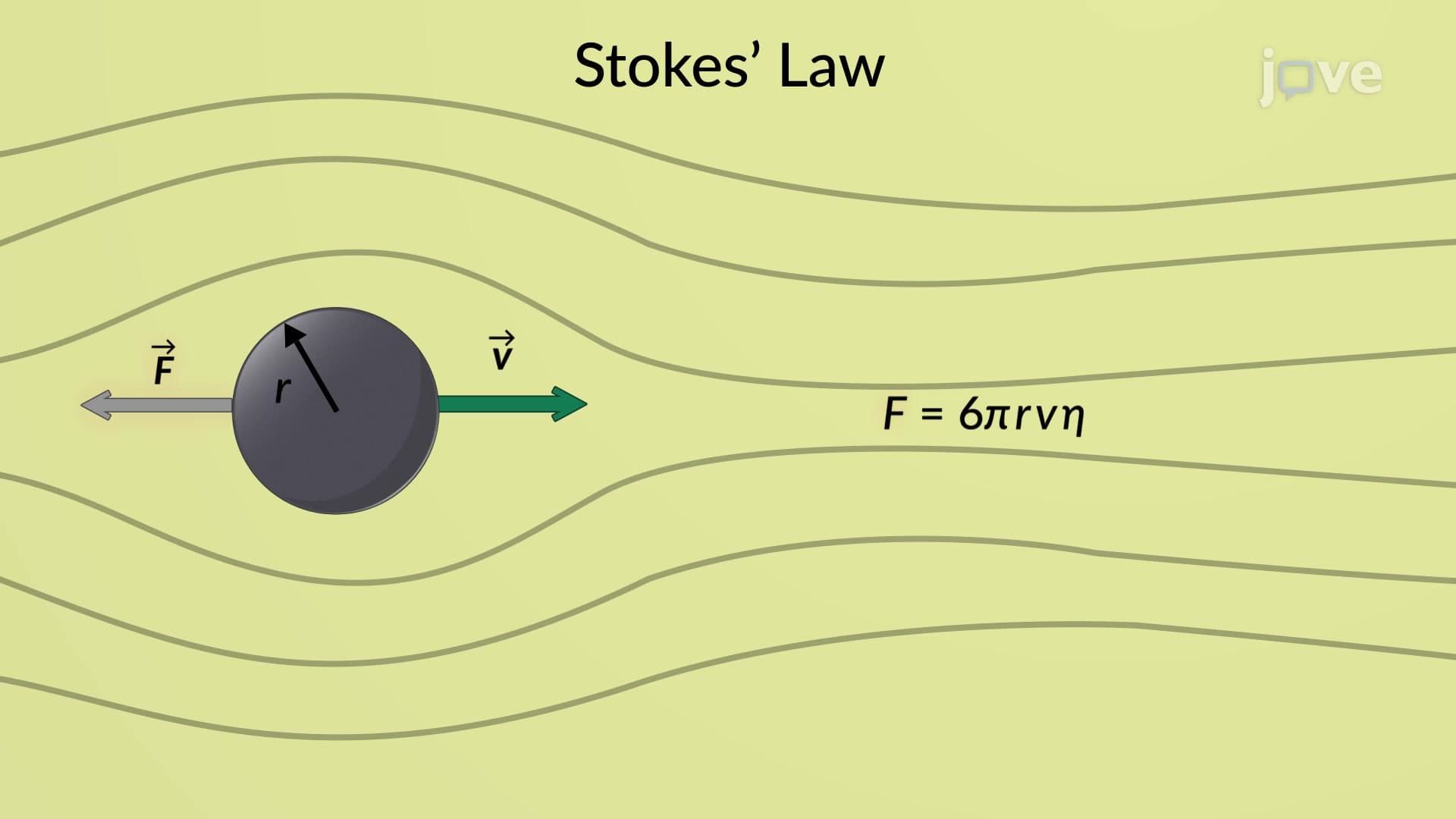
The physics behind excess pressure inside a drop reveals why tiny liquid spheres maintain their shape against external forces. When we examine a spherical drop, we discover that the pressure inside exceeds the external air pressure by a measurable amount. This pressure difference, known as excess pressure, results from surface tension acting along the curved liquid-air interface.
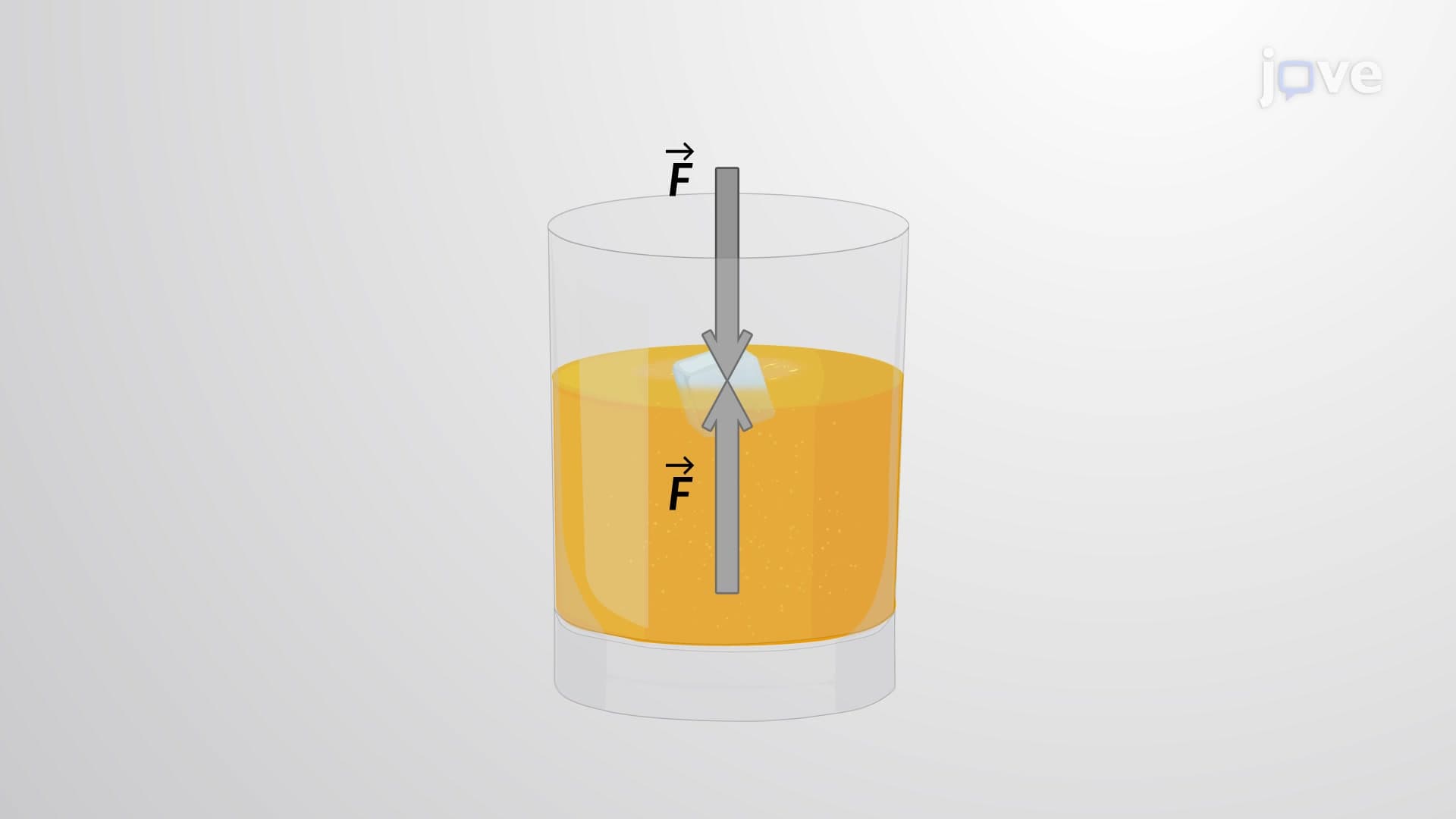
Surface tension creates an inward force that attempts to minimize the drop's surface area, naturally forming a sphere-the shape with the minimum surface area for a given volume. Consider two hemispheres of a liquid drop: surface tension forces pull these hemispheres together, while internal liquid pressure pushes outward and external air pressure pushes inward. At equilibrium, these competing forces balance perfectly.
The mathematical expression for this balance leads to the Young-Laplace equation: ΔP = 2γ/R, where ΔP represents excess pressure, γ is surface tension, and R is the drop radius. This fundamental relationship appears frequently on AP Physics exams and college-level thermodynamics courses, making it essential for students preparing for standardized tests.
Two primary variables control excess pressure magnitude in liquid drops. First, surface tension strength directly influences pressure difference-mercury drops exhibit much higher excess pressure than water drops of identical size due to mercury's superior surface tension properties. This principle explains why mercury forms nearly perfect spheres on glass surfaces in laboratory settings across US universities.
Second, drop radius inversely affects excess pressure. Smaller drops experience dramatically higher internal pressures, which explains why fine mist sprayers used in agricultural applications across states like California create more uniform coatings than larger droplet systems. Medical nebulizers exploit this same principle to deliver medications efficiently to patients' respiratory systems.
The excess pressure concept extends beyond simple drops to air bubbles and soap bubbles. Air bubbles trapped in liquids follow identical principles, with higher internal pressure than surrounding liquid pressure. Soap bubbles present more complex scenarios because they possess two surfaces-inner and outer-each contributing to total excess pressure, resulting in ΔP = 4γ/R for soap bubbles versus 2γ/R for simple drops.
Related Micro-courses