Loading video…


 24 Concepts
 201K views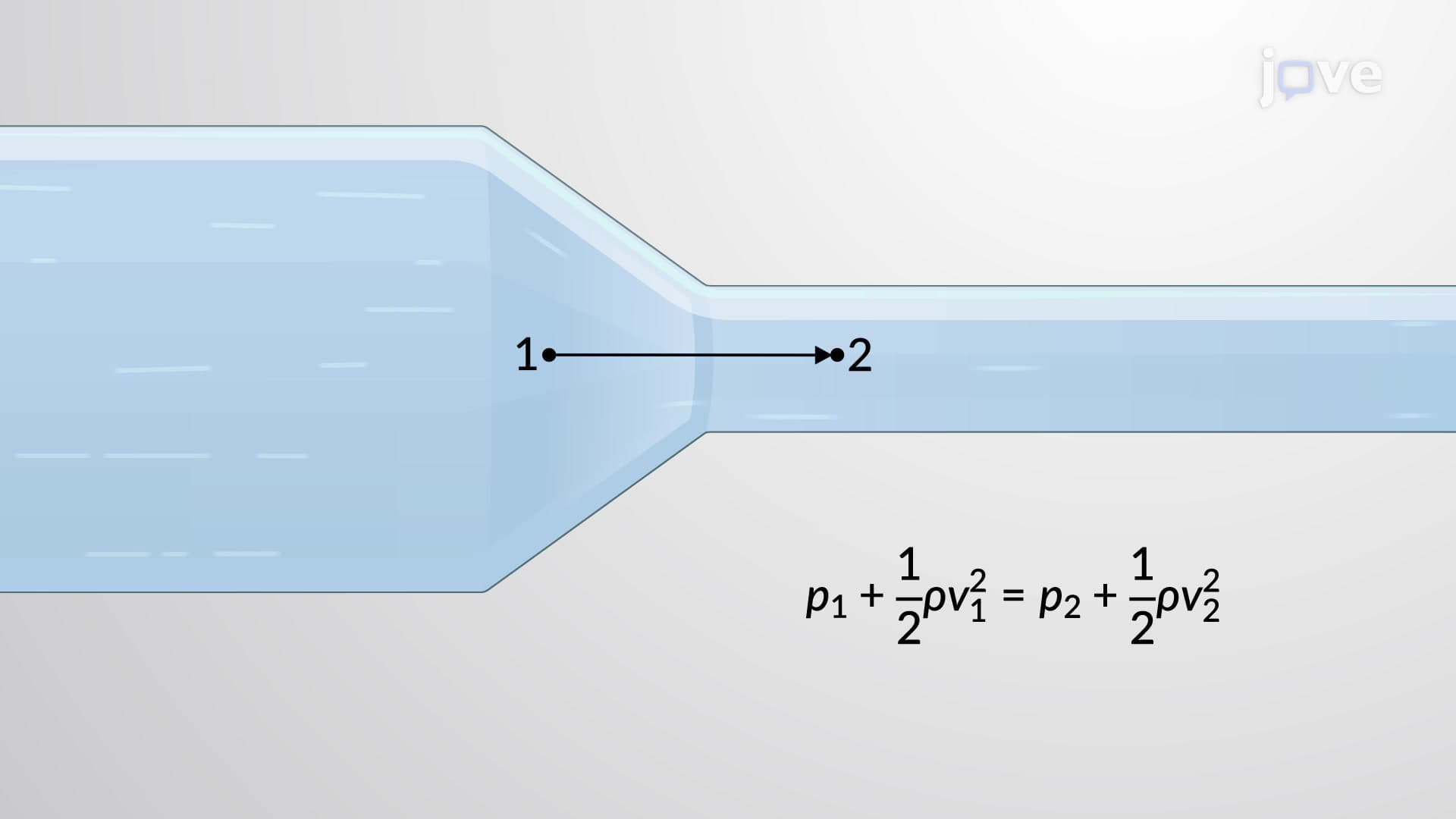

Video Summary: What Is Bernoullis Principle
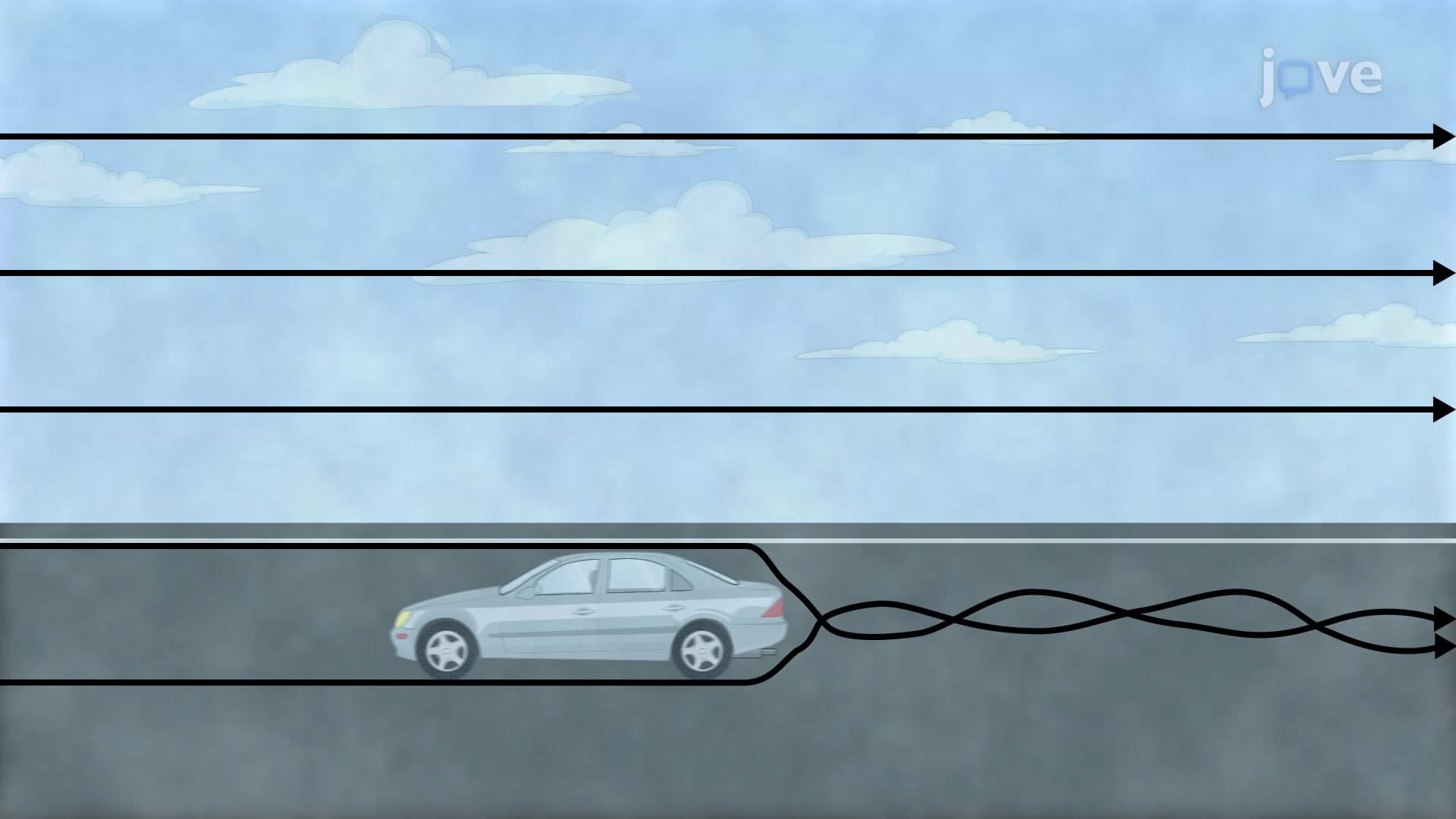
Why does a baseball curve through the air, and how do airplane wings generate lift? Bernoulli's principle explains these phenomena by describing how fluid speed and pressure relate inversely-when fluid velocity increases, pressure decreases. This fundamental concept governs everything from the Venturi effect in carburetors to blood flow through arteries. NASCAR drivers experience Bernoulli's principle firsthand when drafting reduces air pressure behind leading cars. Watch the full video on JoVE Coach to master this concept with expert-led visuals and step-by-step explanations.
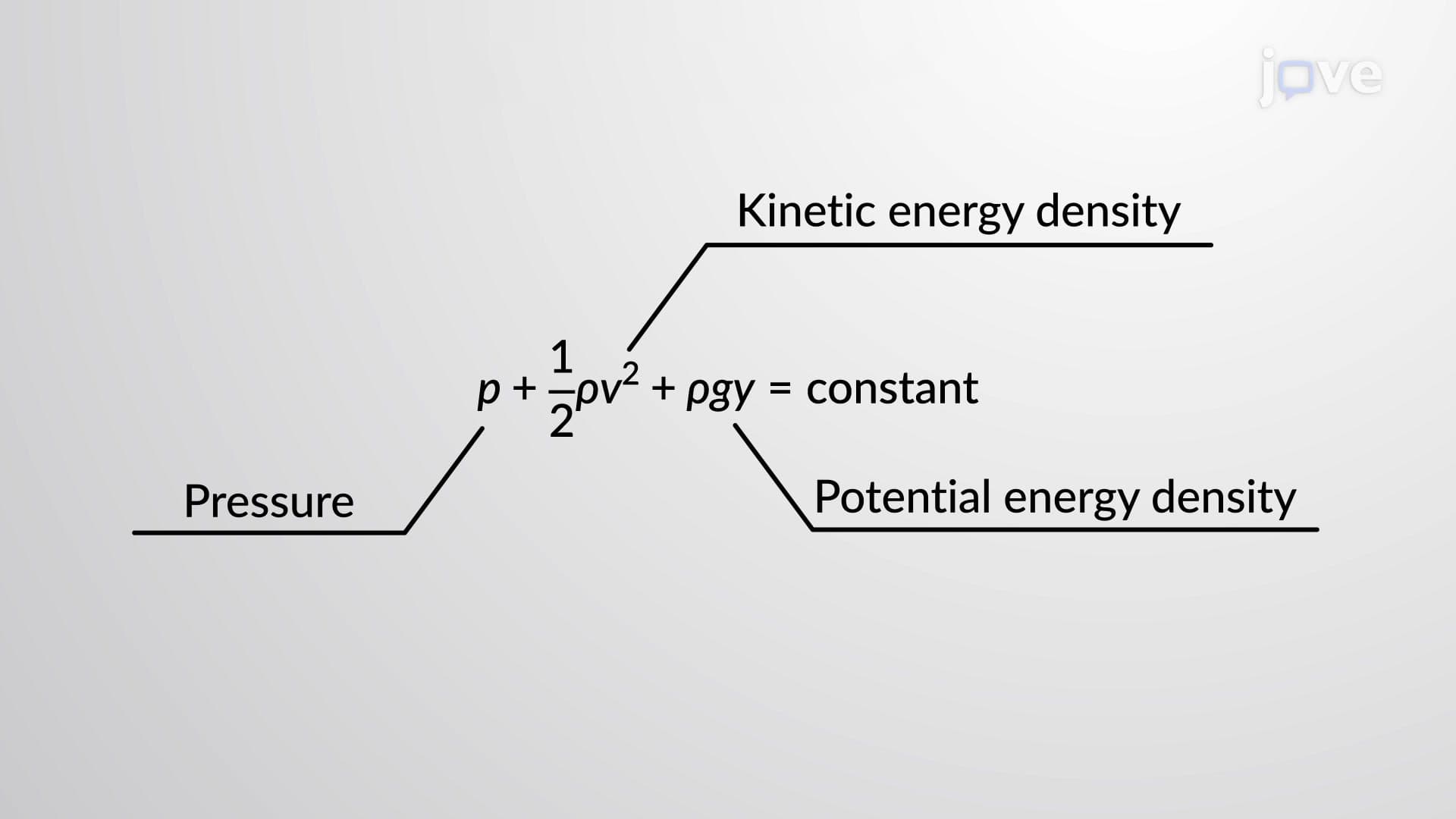
Bernoulli's principle represents one of fluid mechanics' most elegant and practical concepts. At its core, this principle states that in a flowing fluid, points of higher speed correspond to lower pressure, while points of lower speed correspond to higher pressure. This inverse relationship stems from energy conservation-as a fluid's kinetic energy increases (higher velocity), its pressure energy must decrease to maintain total energy balance.
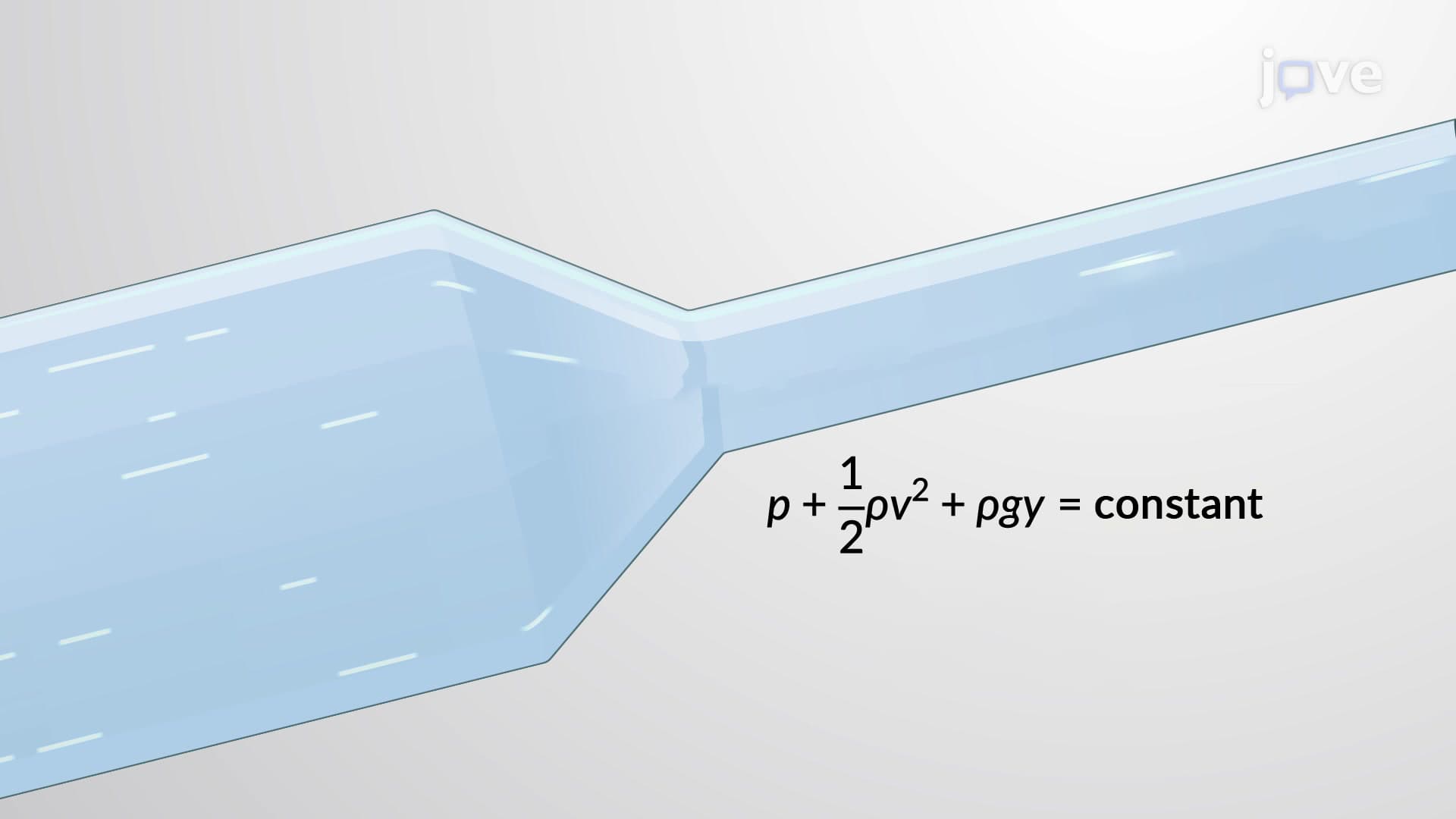
The bernoulli's principle definition emerges from Bernoulli's equation, which applies to incompressible fluids in steady, laminar flow. When considering horizontal flow where gravitational potential energy remains constant, the full Bernoulli equation simplifies to focus solely on the kinetic-pressure relationship. This simplified form, known specifically as Bernoulli's principle, demonstrates that P + (1/2)ρv² = constant along a streamline, where P represents pressure, ρ is fluid density, and v is velocity.
What is bernoulli's principle in detail becomes clear through practical applications. In automotive engineering, carburetors use Venturi tubes that narrow airflow, increasing velocity and decreasing pressure to draw fuel into the air stream. Similarly, HVAC systems in American buildings employ Bernoulli's principle for efficient air circulation. Medical applications include understanding blood flow through arteries-narrowed vessels (stenosis) increase blood velocity while decreasing pressure, affecting cardiovascular health.
Students encounter Bernoulli's principle across multiple educational levels. AP Physics courses extensively cover fluid mechanics applications, while college engineering programs delve deeper into quantitative problem-solving. MCAT preparation requires understanding physiological applications, particularly cardiovascular and respiratory systems. The principle frequently appears in SAT Subject Tests and college midterm examinations, often combined with continuity equation problems where A₁v₁ = A₂v₂ relates cross-sectional areas and velocities at different streamline points.
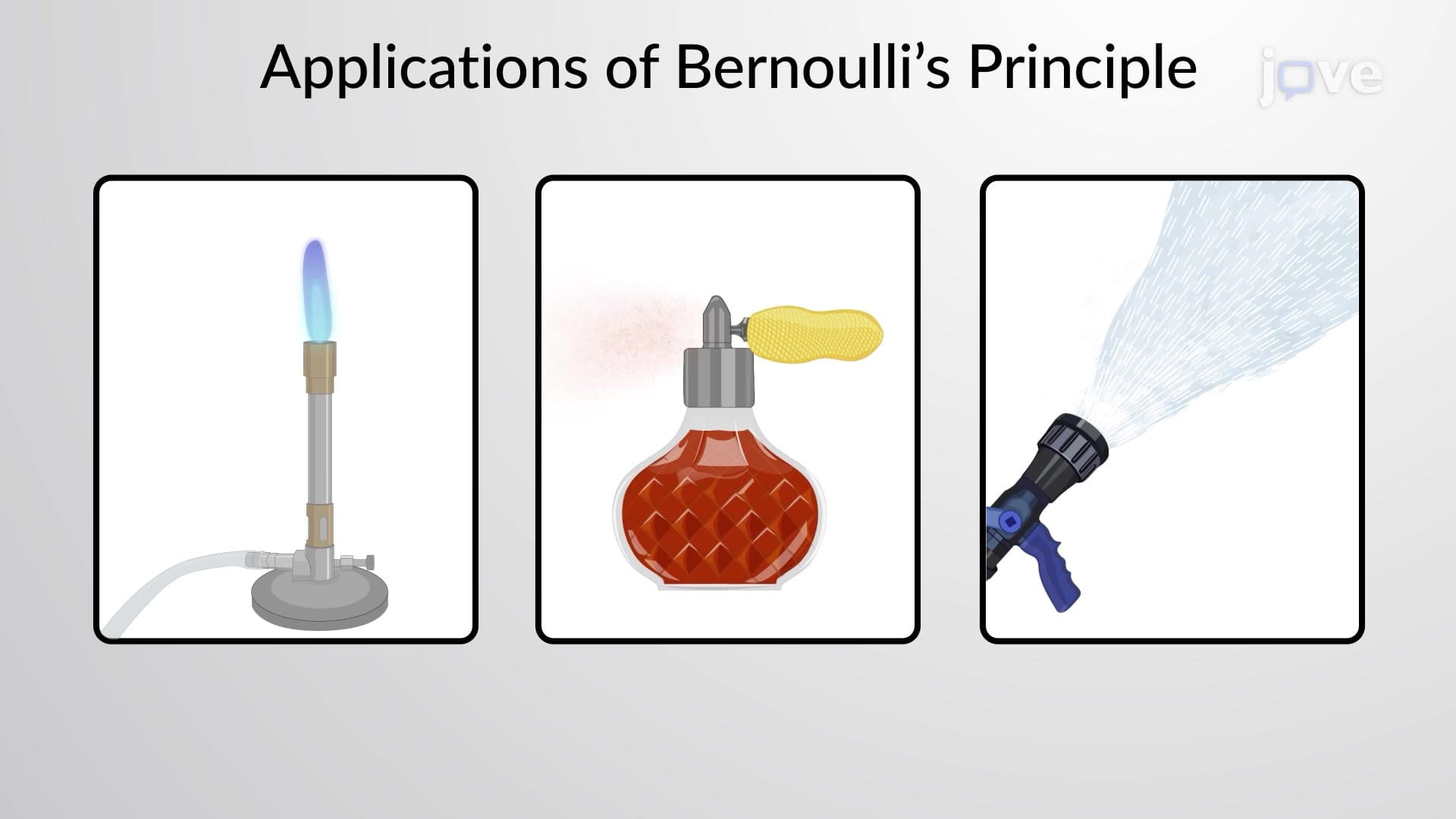
The entrainment process, where high-velocity fluids draw nearby fluids into motion, exemplifies Bernoulli's principle in action. Bunsen burners demonstrate this perfectly-natural gas flowing through narrow orifices creates low-pressure zones that entrain surrounding air, enabling complete combustion. Paint sprayers and perfume atomizers operate similarly, using compressed air streams to entrain liquid droplets for fine dispersion.
Related Micro-courses