Loading subject page…

- Physics
- Fluid Mechanics
- Equation of Continuity
Micro-course: Fluid Mechanics
201,012 views
Learn key concepts and earn your certificate.





Equation of Continuity


00:00
01:12
Video Summary: What Is Equation of Continuity
Ever wonder why water rushes out faster when you partially cover a garden hose with your thumb? The equation of continuity explains this fascinating phenomenon that governs fluid flow everywhere around us. This fundamental physics principle describes how fluids behave when flowing through pipes, blood vessels, or even the Colorado River flowing through the Grand Canyon. The What is Equation of Continuity concept reveals why mass flow rate remains constant in steady fluid systems. Watch the full video on JoVE Coach to master this concept with expert-led visuals and step-by-step explanations.
- Understand the What is Equation of Continuity principle and how it governs fluid flow in closed systems
- Identify the relationship between cross-sectional area, fluid velocity, and mass flow rate in incompressible fluids
- Analyze how the continuity equation applies to both compressible and incompressible fluid scenarios
- Apply the mathematical formula A₁v₁ = A₂v₂ to solve real-world fluid dynamics problems
- Recognize the conservation of mass principle underlying the equation of continuity
- Compare mass flow rate and volume flow rate concepts in different fluid types
- Evaluate practical applications in plumbing systems, blood circulation, and industrial pipe networks
- Explore the connection between steady flow conditions and constant fluid properties at specific points
Understanding the Equation of Continuity Fundamentals
The equation of continuity represents one of the most elegant demonstrations of mass conservation in fluid mechanics. At its core, this principle states that for any steady flow system, the mass entering must equal the mass exiting-no fluid mysteriously appears or disappears. This concept becomes particularly powerful when analyzing how fluids behave in pipes, tubes, and natural channels throughout the United States, from the massive Hoover Dam spillways to the intricate network of water mains beneath New York City.
Mathematical Framework and Volume Flow Rate
The mathematical beauty of the equation of continuity lies in its simplicity. Volume flow rate (Q) equals the cross-sectional area (A) multiplied by fluid velocity (v), expressed as Q = Av. When we consider mass flow rate, we incorporate fluid density (ρ), giving us mass flow rate = ρAv. For incompressible fluids like water-which maintains constant density-this relationship simplifies beautifully. Students preparing for AP Physics exams frequently encounter problems where A₁v₁ = A₂v₂, demonstrating that as pipe diameter decreases, fluid velocity must increase proportionally.
Real-World Applications in Engineering and Biology
The equation of continuity governs countless systems students encounter daily. In cardiovascular physiology, blood flow through arteries, capillaries, and veins follows these exact principles-crucial knowledge for pre-med students tackling the MCAT. Civil engineers designing water distribution systems in cities like Los Angeles or Chicago rely on continuity equations to ensure adequate water pressure reaches every neighborhood. Even meteorologists use these principles to understand how air masses move through mountain passes in the Rocky Mountains.
Practical Problem-Solving for Academic Success
College physics courses and standardized exams consistently test continuity equation applications through quantitative problems. Students might calculate water velocity changes as it flows from a 6-inch main pipe into a 2-inch residential connection, or determine blood flow rates in vessels of different diameters. The key insight is recognizing that steady flow means constant mass flow rate-a principle that appears in everything from MCAT passages about circulatory systems to AP Physics free-response questions about industrial fluid systems.
Frequently Asked Questions
The equation of continuity states that in steady fluid flow, the mass flow rate remains constant throughout the system. This means fluid cannot accumulate or disappear at any point, so what flows in must equal what flows out. It's like water flowing through a garden hose-the same amount entering one end must exit the other end.
AP Physics regularly tests continuity through problems involving pipes with changing diameters or fluid flow calculations. Students typically solve for velocity changes when cross-sectional area varies, using A₁v₁ = A₂v₂ for incompressible fluids. These problems often combine with Bernoulli's equation in complex scenarios involving pressure and energy conservation.
MCAT passages frequently feature blood flow through vessels of different diameters, requiring continuity equation applications. Test-takers analyze how blood velocity changes in arteries versus capillaries, often connecting fluid dynamics to cardiovascular physiology. These problems test both physics knowledge and biological understanding of circulatory systems.
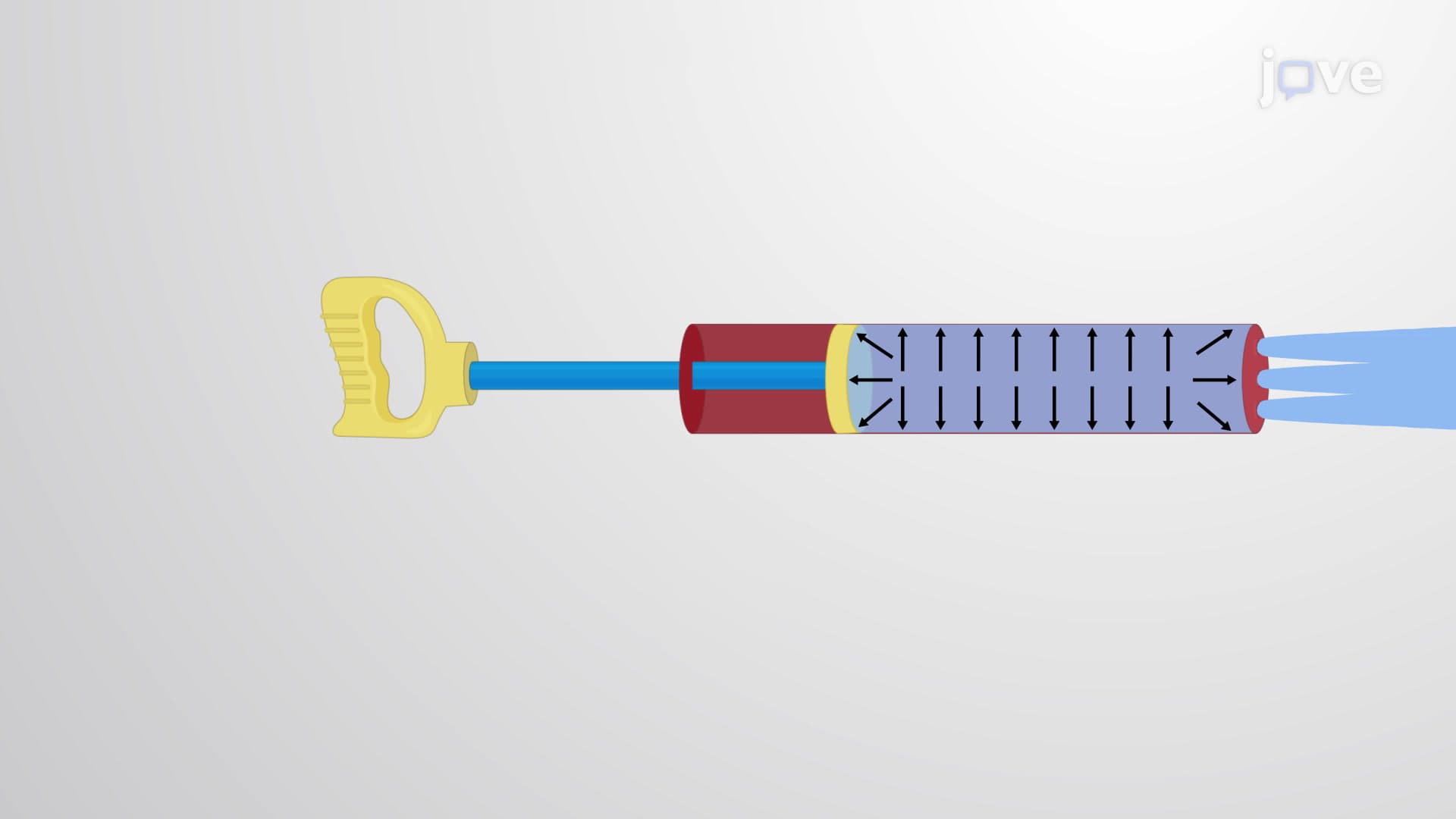
When you partially block the hose opening, you reduce the cross-sectional area available for water flow. Since the same volume of water must exit per second (continuity principle), the velocity must increase to maintain constant flow rate. This demonstrates A₁v₁ = A₂v₂ in action-smaller area means higher velocity.
No calculus is required for basic continuity equation applications in high school or introductory college physics. The fundamental relationship A₁v₁ = A₂v₂ uses only algebra and proportional reasoning. However, advanced fluid dynamics courses may derive the equation using calculus-based conservation principles.
Focus on identifying steady flow scenarios and recognizing when cross-sectional area changes affect velocity. Practice unit conversions between different area measurements and velocity units. Create a systematic approach: identify known variables, apply A₁v₁ = A₂v₂, and solve algebraically while checking that your answer makes physical sense.
Civil engineers apply continuity principles when designing water distribution systems for cities like Houston or Seattle, ensuring adequate pressure throughout the network. Chemical engineers use these concepts in pipeline design for oil refineries and manufacturing plants. Biomedical engineers consider continuity when developing artificial heart valves and blood flow devices.
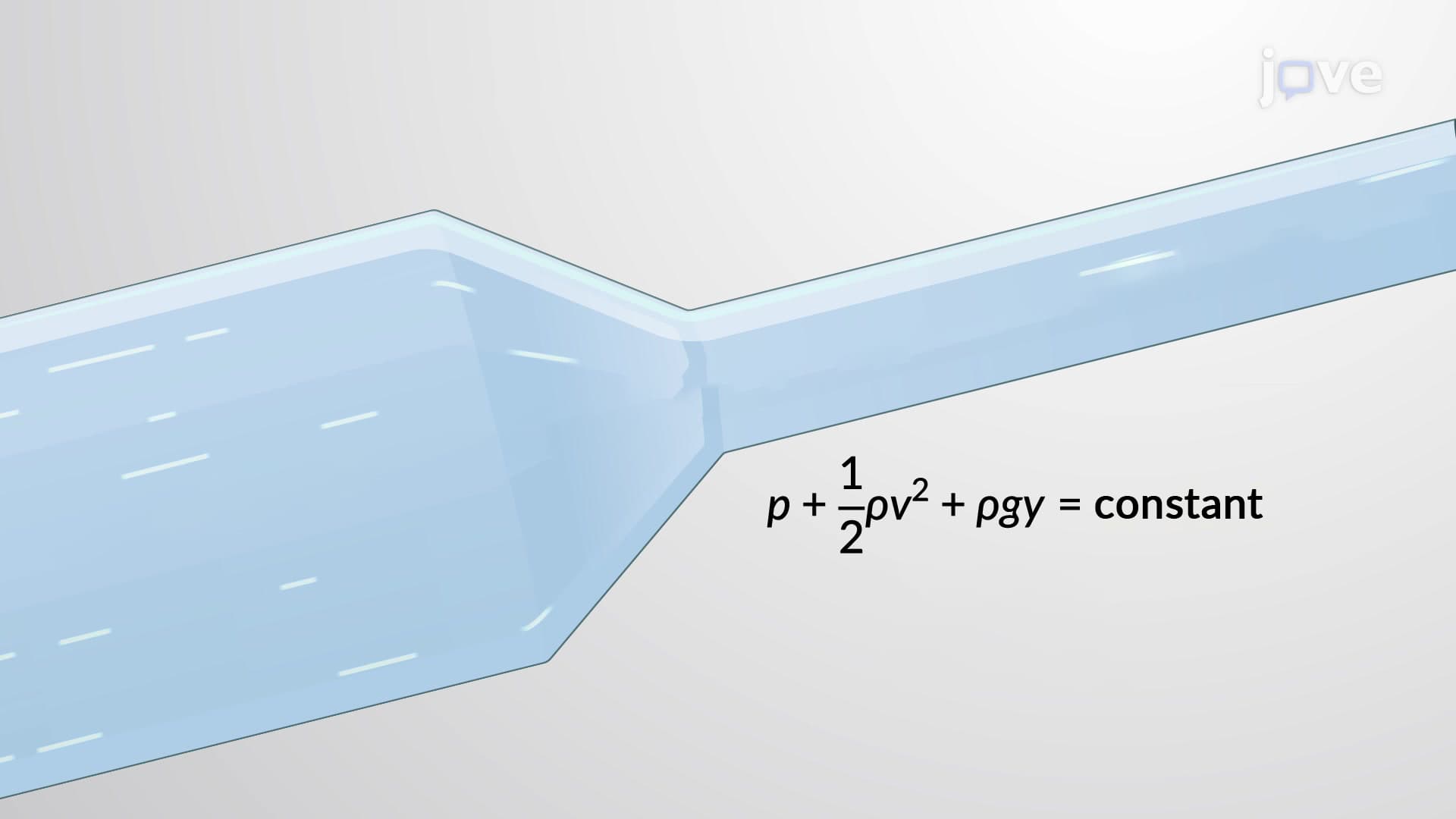
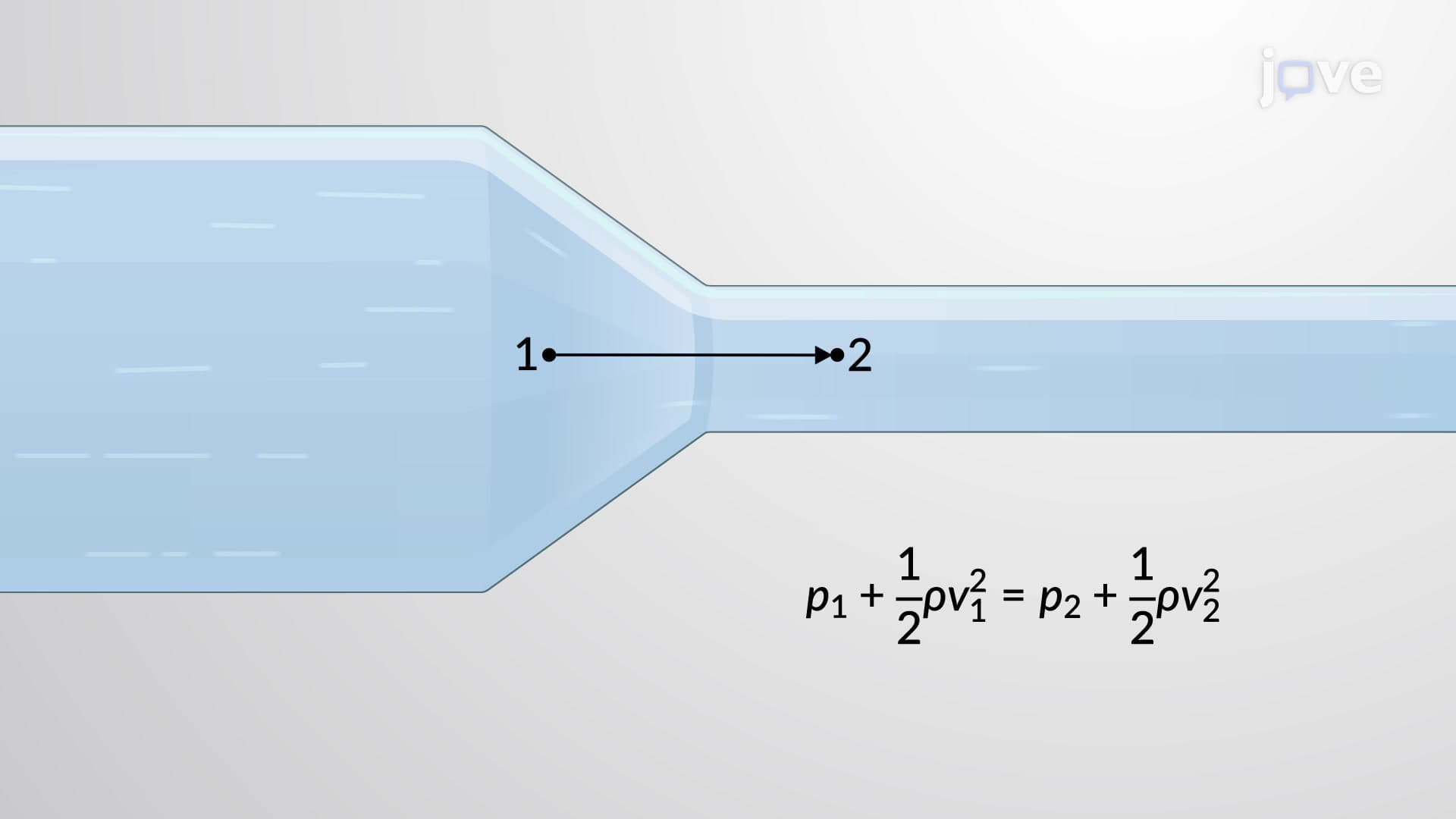
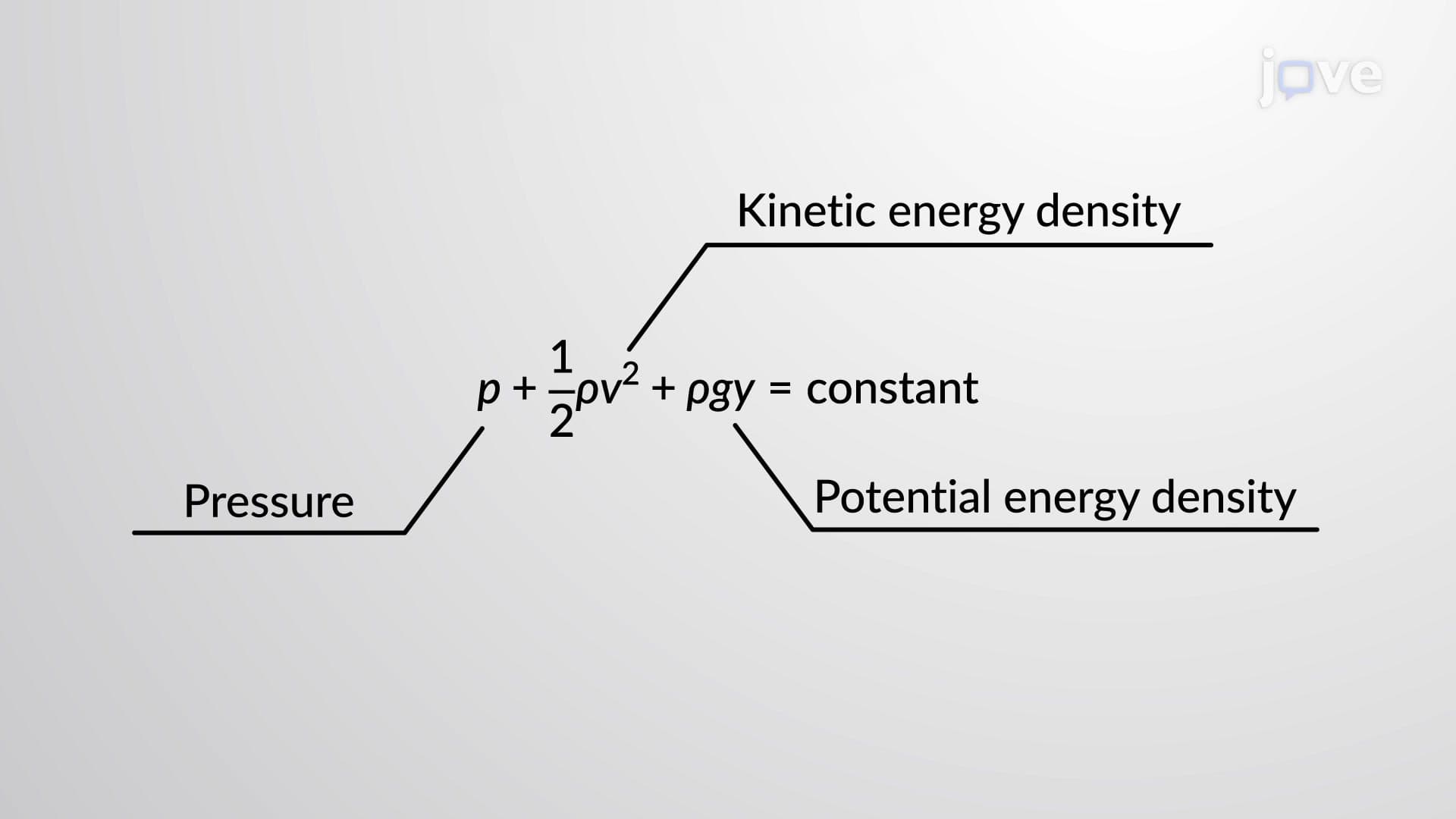
After mastering continuity, students typically study Bernoulli's equation, which combines continuity with energy conservation in fluid flow. Advanced courses explore compressible flow, turbulence, and computational fluid dynamics. These concepts appear in aerospace engineering, meteorology, and advanced physics courses dealing with plasma and gas dynamics.
Related Micro-courses


