Loading…
Loading video…
154,401 views
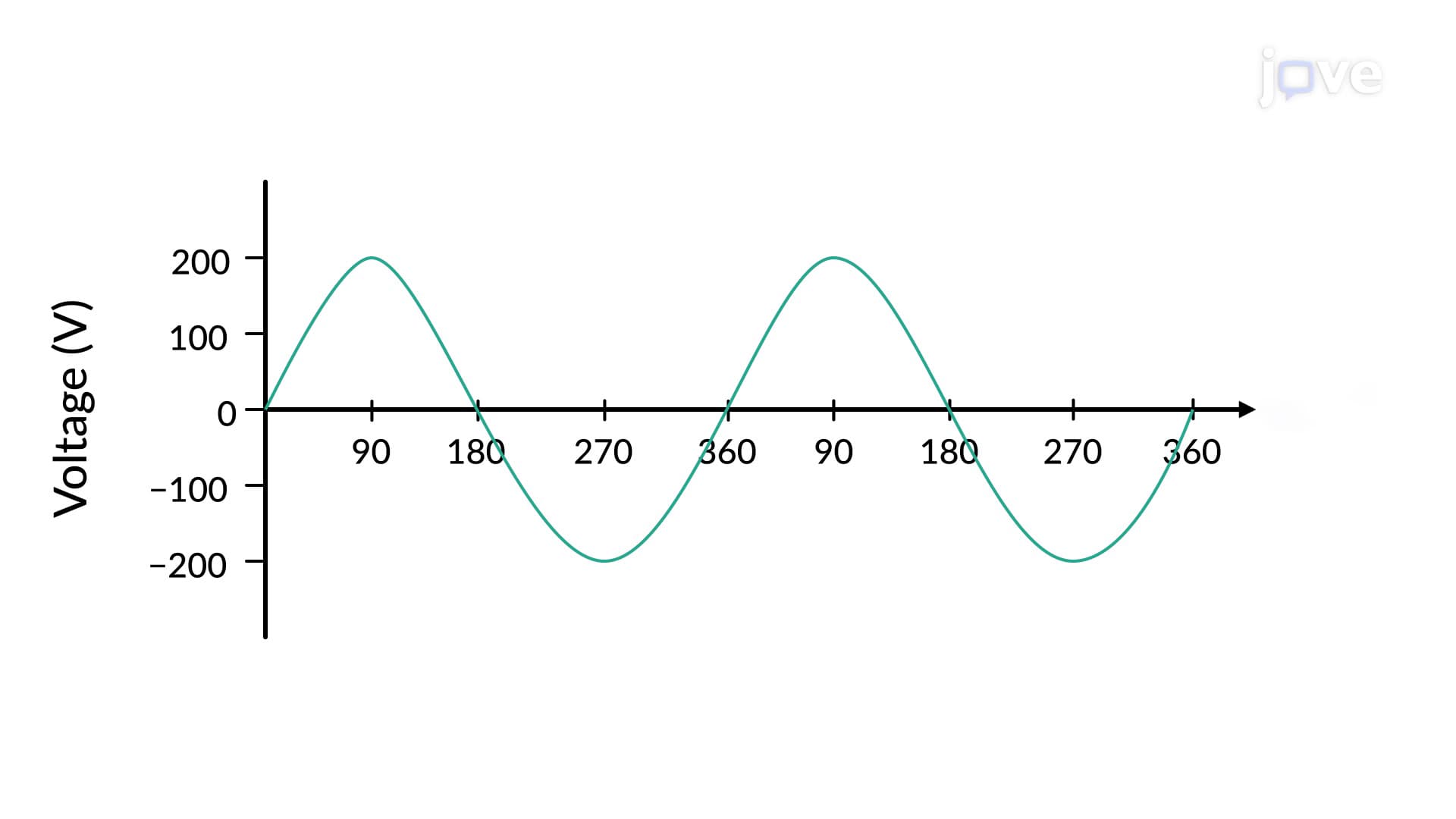
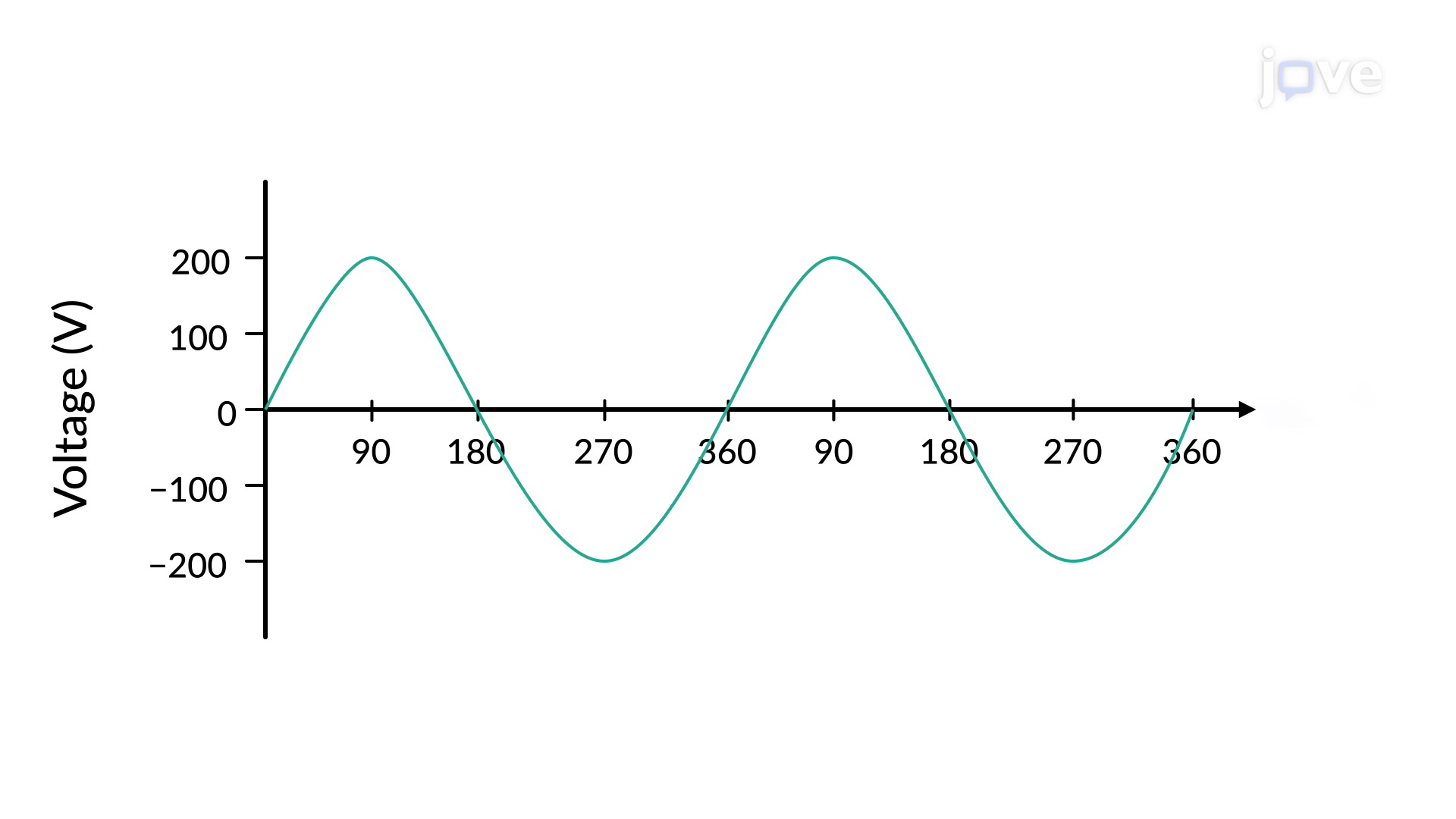
Ever wonder how your smartphone charger converts alternating current from the wall outlet into a steady voltage? The root mean square (RMS) is the mathematical tool that makes this possible, transforming oscillating electrical values into meaningful averages. In US power grids, household AC voltage alternates between +170V and -170V, but we describe it as 120V RMS—the effective value that does real work. Watch the full video on JoVE Coach to master this concept with expert-led visuals and step-by-step explanations.
Root mean square represents a specialized averaging technique crucial for handling datasets containing both positive and negative values. Unlike simple arithmetic means that can cancel out opposing values, RMS preserves the magnitude of all data points by squaring them first, ensuring no information is lost in the averaging process.
The mathematical foundation involves three distinct steps: squaring each data value, calculating the arithmetic mean of these squared values, then extracting the square root of that mean. This process, also called the quadratic mean, transforms the problem of averaging positive and negative numbers into a purely positive domain where traditional averaging works effectively.
In American electrical engineering, RMS calculations are fundamental to power systems. The US electrical grid operates on 60 Hz alternating current, where voltage continuously oscillates between positive and negative peaks. Standard household outlets deliver 120V RMS, derived from peak voltages of approximately 170V. This RMS value represents the equivalent DC voltage that would produce the same heating effect in a resistive load.
Power companies across states like California and Texas use RMS measurements for billing calculations. When your electric meter reads kilowatt-hours, it's measuring power based on RMS voltage and current values, not instantaneous peaks that would dramatically overestimate actual energy consumption.
Students preparing for AP Physics C examinations frequently encounter RMS problems in alternating current circuits. The College Board expects students to distinguish between peak, average, and RMS values in AC analysis. Similarly, undergraduate engineering programs at institutions like MIT and Stanford emphasize RMS calculations in introductory electrical engineering courses.
The SAT Subject Test in Physics (when offered) included RMS voltage problems, typically requiring students to convert between peak and RMS values using the relationship: RMS = Peak ÷ √2. This conversion factor of approximately 0.707 appears consistently across standardized assessments.
Statistically, RMS values exhibit unique properties that distinguish them from other measures of central tendency. The root mean square always equals or exceeds the arithmetic mean for any dataset—a principle known as the RMS-AM inequality. This relationship becomes particularly important in signal processing applications where engineers analyze waveforms with varying amplitudes and frequencies.
Frequently Asked Questions
Root mean square is a specialized averaging method used when your dataset contains both positive and negative values or when you need to preserve the magnitude of variations. Use RMS when dealing with alternating quantities like AC voltage, signal analysis, or any situation where positive and negative values might cancel each other out in a regular average. It's essential in electrical engineering, physics, and advanced statistics courses.
The AP Physics C exam regularly tests RMS concepts in AC circuit analysis problems. You'll typically need to convert between peak and RMS voltages using the factor √2, calculate power dissipation in resistive loads, or analyze oscillating waveforms. The College Board expects students to understand that household "120V" refers to RMS voltage, not peak voltage. Practice problems often involve transformers, generators, and power calculations.
Your home receives 120V RMS from the electrical grid, but the actual voltage oscillates between +170V and -170V (peak values). The RMS value represents the equivalent steady DC voltage that would produce the same heating effect in appliances. This is why your toaster works consistently despite the voltage constantly changing direction 120 times per second in the US 60 Hz system.
Root mean square builds directly on fundamental algebra skills you already know: squaring numbers, adding them up, dividing, and taking square roots. If you can handle these basic operations, you can master RMS calculations. The concept becomes clearer when you practice with real examples like calculating RMS voltage or analyzing datasets. Start with simple numerical examples before moving to complex applications.
Yes, RMS concepts appear in MCAT physics sections, particularly in questions about alternating current, power calculations, and statistical analysis of experimental data. The MCAT expects you to apply RMS principles to biological systems like nerve impulses or medical device functioning. Understanding RMS also strengthens your data interpretation skills for research passages throughout the exam.
US engineers rely on RMS calculations daily in power system design, audio equipment testing, and vibration analysis. For example, Tesla engineers use RMS current measurements to design charging stations, while Boeing applies RMS to analyze aircraft engine vibrations. Electrical engineers at companies like General Electric use RMS values to specify transformer ratings and ensure power grid stability across different states.
Build on your RMS foundation by exploring standard deviation (which uses similar squaring principles), complex numbers in AC analysis, and Fourier transforms for advanced signal processing. These concepts naturally extend RMS principles into more sophisticated mathematical tools used in engineering and advanced physics courses at universities like Caltech and Carnegie Mellon.
Related Micro-courses


Related Subjects
 Physics 33 micro-courses›
 Math Fundamentals 11 micro-courses›