Loading…
Loading video…

173,200 views

Did you know that predicting election outcomes, quality control in manufacturing, and even determining your chances of passing a multiple-choice exam all rely on the same mathematical principle? Binomial probability distribution models scenarios with fixed trials and two possible outcomes per trial, like a pharmaceutical company testing drug effectiveness across 100 patients or calculating the likelihood of getting exactly 7 correct answers on a 10-question true/false quiz. This fundamental binomial probability distribution concept appears throughout statistics courses and standardized tests. Watch the full video on JoVE Coach to master this concept with expert-led visuals and step-by-step explanations.
Binomial probability distribution serves as one of the most practical probability models in statistics, appearing frequently in AP Statistics, college-level courses, and professional certifications. This distribution applies when you have exactly two possible outcomes (success/failure) across multiple independent trials with constant probability.
For a scenario to follow binomial probability distribution, four critical conditions must be met. First, you need a fixed number of trials (n) - whether testing 50 light bulbs or surveying 200 voters. Second, each trial must have exactly two outcomes: success or failure, pass or fail, heads or tails. Third, the probability of success (p) remains constant across all trials - crucial for maintaining statistical validity. Finally, trials must be independent, meaning one outcome doesn't influence another.
Consider the FDA approving new medications: if a drug has a 70% success rate, binomial probability distribution helps predict outcomes across patient groups. Manufacturing quality control provides another example - if 95% of smartphones pass inspection, companies use this distribution to calculate defect probabilities in production batches. College admissions officers analyzing standardized test performance, medical researchers studying treatment effectiveness, and polling organizations predicting election results all rely on binomial distribution principles.
The binomial probability formula P(X = x) = C(n,x) × p^x × q^(n-x) determines exact probabilities for specific outcomes. Here, C(n,x) represents combinations, calculating how many ways you can arrange x successes among n trials. This formula appears extensively in standardized exams like the AP Statistics test and college statistics courses, making mastery essential for academic success.
Students preparing for the MCAT encounter binomial distribution in research methodology questions, while nursing students see it in NCLEX questions about treatment protocols. The graphical representation - typically bell-shaped for large samples - helps visualize probability distributions and connects to normal approximation concepts taught in advanced statistics courses.
Frequently Asked Questions
Binomial probability distribution models situations with repeated trials having exactly two outcomes, like flipping coins or testing products. It calculates the probability of getting a specific number of successes across all trials. This distribution requires fixed trials, constant success probability, and independent outcomes.
AP Statistics frequently tests binomial distribution through multiple-choice and free-response questions involving real scenarios. Students must identify when conditions are met, calculate probabilities using the formula, and interpret results. Practice problems often involve quality control, medical studies, or survey sampling with specific success rates.
MCAT Biological and Biochemical Foundations sections include research methodology questions using binomial distribution. These problems typically involve clinical trial analysis, genetic inheritance patterns, or experimental design validation. Understanding this concept helps analyze research studies and interpret statistical significance in medical contexts.
Hospital emergency departments use binomial distribution to predict patient outcomes and staffing needs. If 80% of chest pain patients receive normal EKG results, administrators can calculate probabilities for different patient volumes. This helps optimize resource allocation and ensures adequate staffing for various scenarios throughout different shifts.
Binomial probability distribution builds on basic probability concepts taught in Algebra II and Pre-Calculus courses. Students familiar with combinations, basic probability rules, and simple algebraic manipulation can successfully master this topic. The key is recognizing when the four conditions apply and practicing formula applications with real examples.
Focus on understanding each component rather than rote memorization: combinations C(n,x) count arrangements, p^x represents success probability, and q^(n-x) represents failure probability. Practice with varied examples helps internalize the formula structure. Create mnemonics connecting formula parts to real scenarios for better retention during high-pressure exam situations.
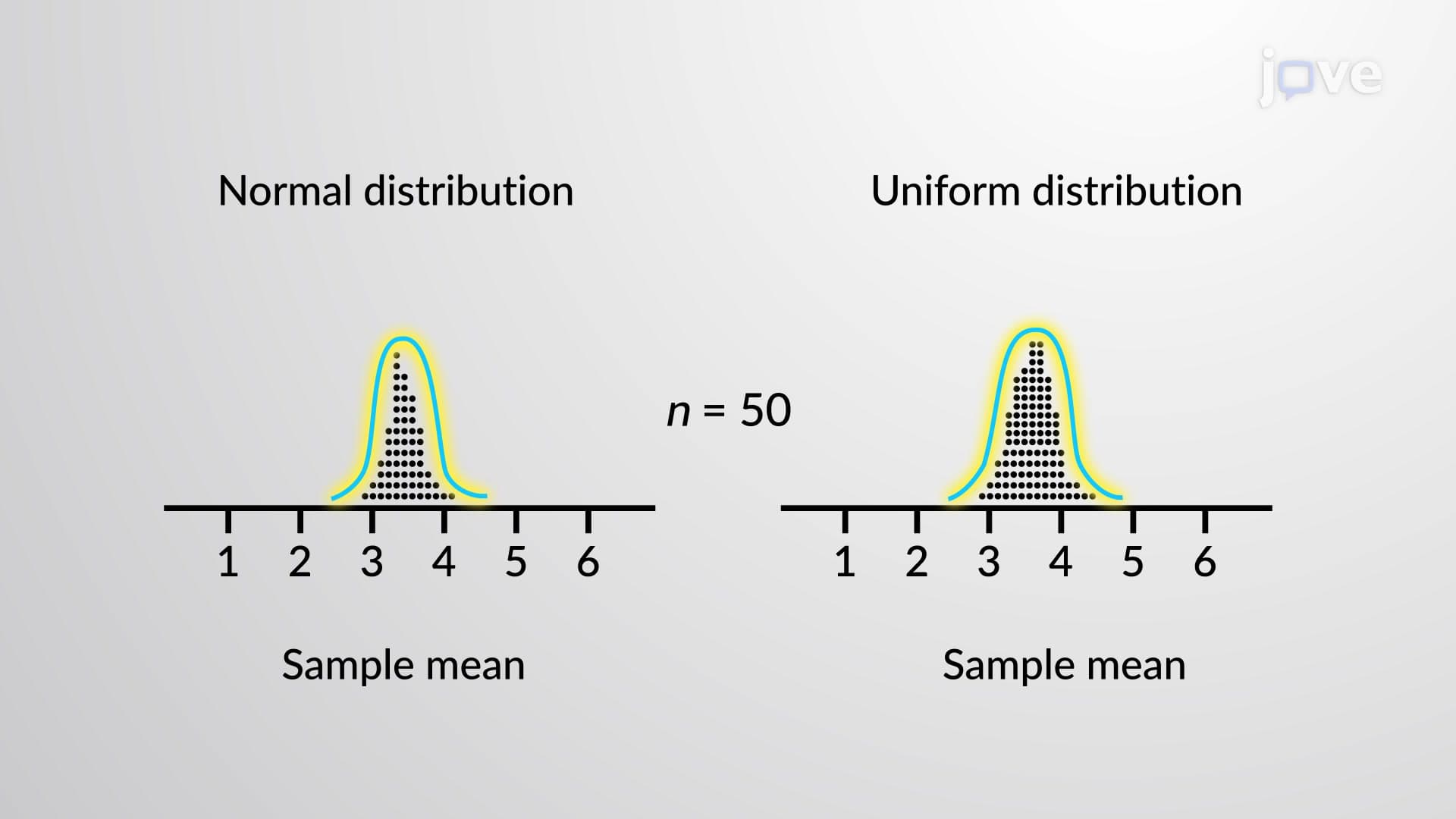
When sample sizes become large (typically n ≥ 30 with np ≥ 5 and nq ≥ 5), binomial distribution approximates normal distribution through the Central Limit Theorem. This connection appears in AP Statistics and college courses, enabling easier calculations for large datasets. Understanding this relationship prepares students for advanced statistical inference concepts.
Quality assurance engineers, biostatisticians, market researchers, and clinical trial coordinators regularly apply binomial distribution concepts. Insurance actuaries use it for risk assessment, while pharmaceutical researchers analyze drug efficacy data. Finance professionals apply these principles in investment risk modeling and portfolio management decisions.
Related Micro-courses
Related Subjects
 Physics 33 micro-courses›
 Math Fundamentals 11 micro-courses›