Loading…
Loading video…
173,200 views
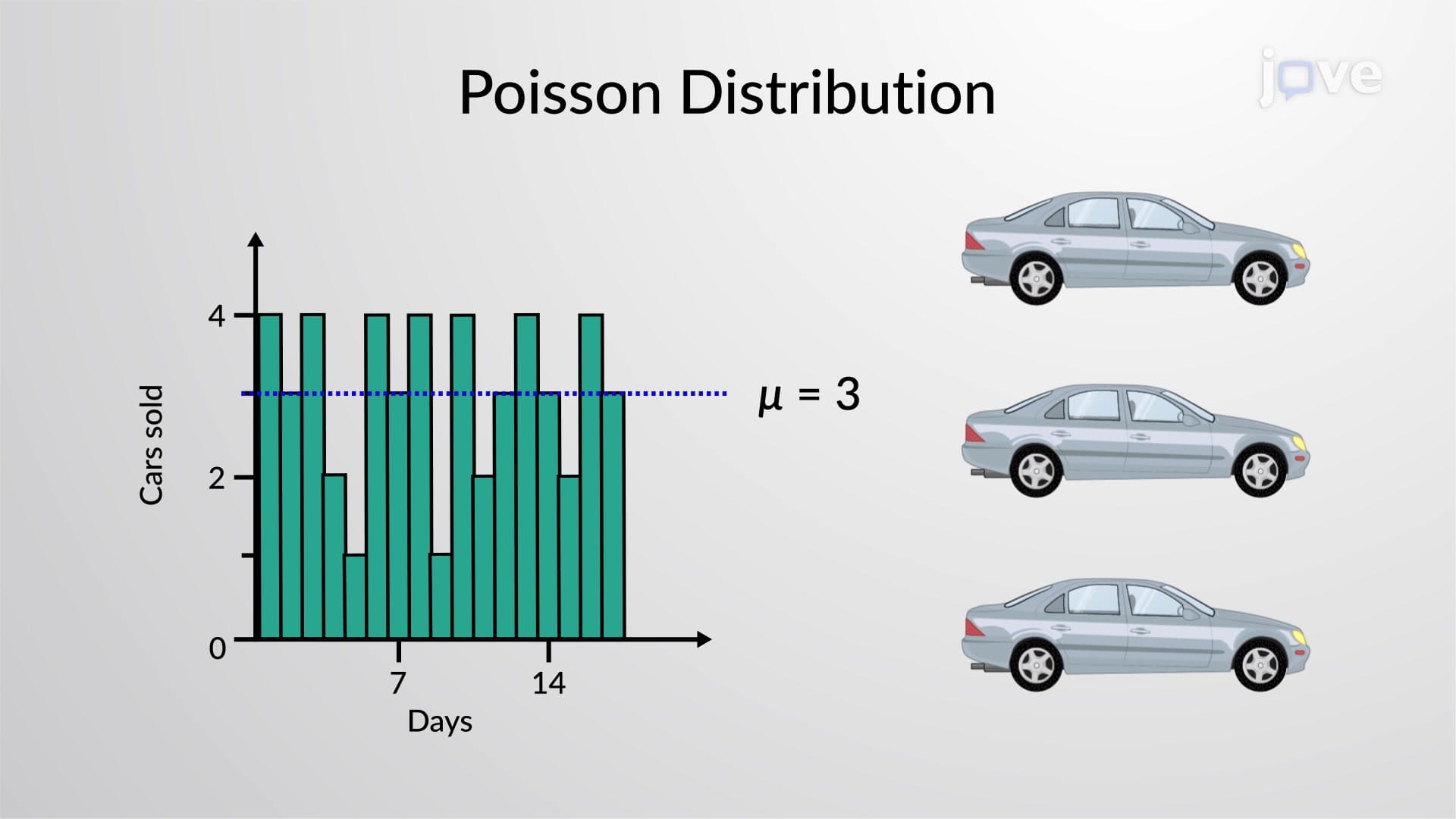
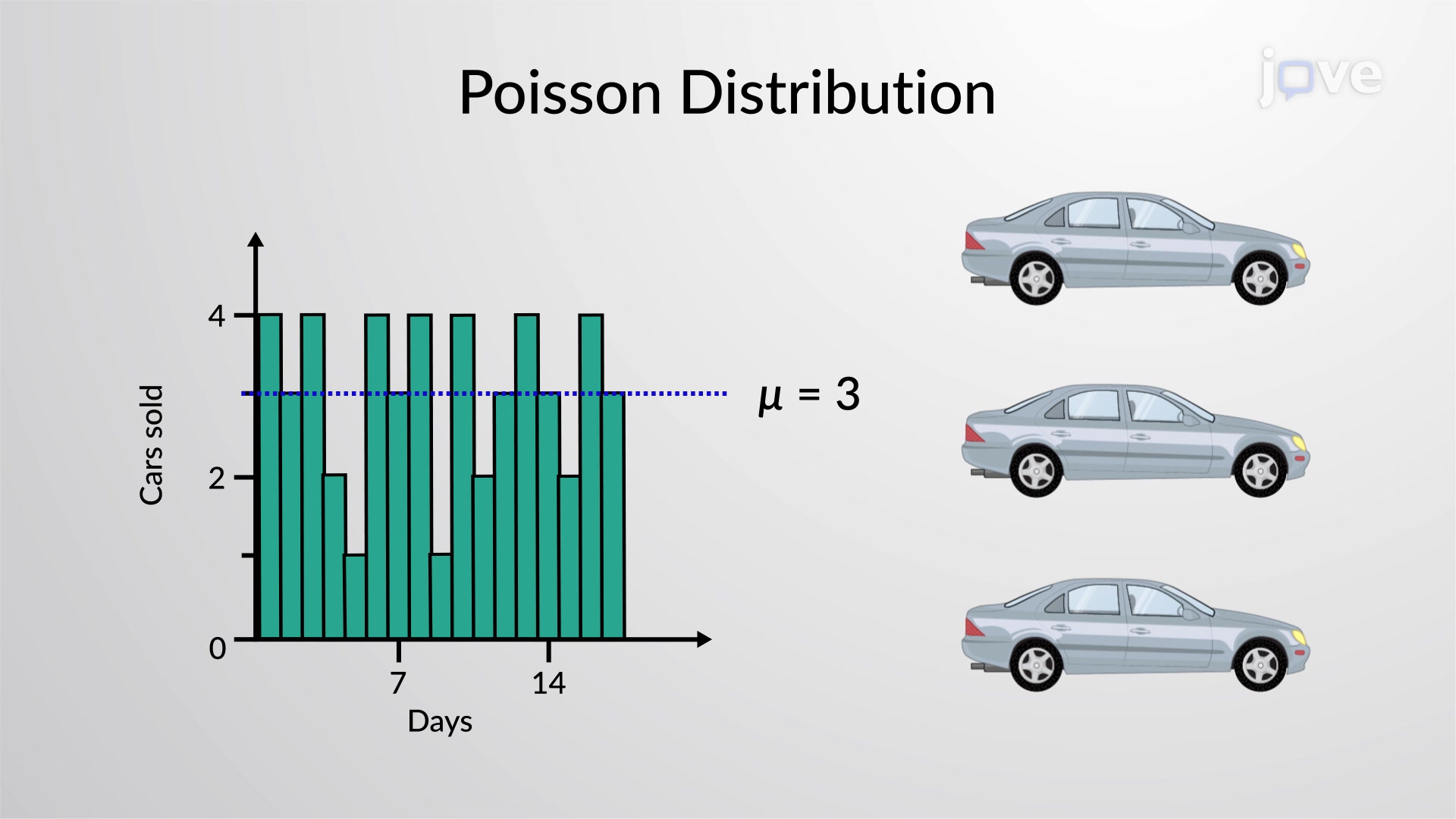
Did you know that the number of 911 emergency calls received by a dispatch center in New York City follows a predictable mathematical pattern? The Poisson probability distribution is a powerful statistical tool that models the frequency of rare events occurring over fixed intervals of time, space, or volume. This discrete probability distribution helps predict scenarios like the number of customer arrivals at a McDonald's drive-through per hour or defective smartphones in a batch of 1,000 units. Unlike other distributions, the Poisson probability distribution depends only on the average rate of occurrence, making it invaluable for quality control and resource planning. Watch the full video on JoVE Coach to master this concept with expert-led visuals and step-by-step explanations.
The Poisson probability distribution serves as a cornerstone of statistical modeling for rare events occurring over continuous intervals. Named after French mathematician Siméon Denis Poisson, this distribution excels at predicting the frequency of independent events when you know the average occurrence rate but cannot predict exact timing.
The Poisson distribution's elegance lies in its single parameter λ (lambda), representing both the mean and variance. The probability formula P(X = k) = (λ^k × e^(-λ)) / k! calculates the likelihood of exactly k events occurring. For example, if a Seattle coffee shop averages 15 customers per hour (λ = 15), you can calculate the probability of serving exactly 18 customers in any given hour.
This mathematical relationship makes the Poisson distribution particularly valuable for AP Statistics students and college undergraduates studying probability theory. The standard deviation equals √λ, creating a predictable relationship between central tendency and spread that appears frequently on standardized exams.
American businesses leverage Poisson distributions extensively. Amazon uses it for inventory management, predicting daily returns at fulfillment centers. Hospital emergency departments in cities like Chicago apply Poisson models to staff scheduling, knowing that trauma cases arrive randomly but with measurable average rates. Quality control engineers at Boeing utilize Poisson distributions to model defect rates in aircraft manufacturing.
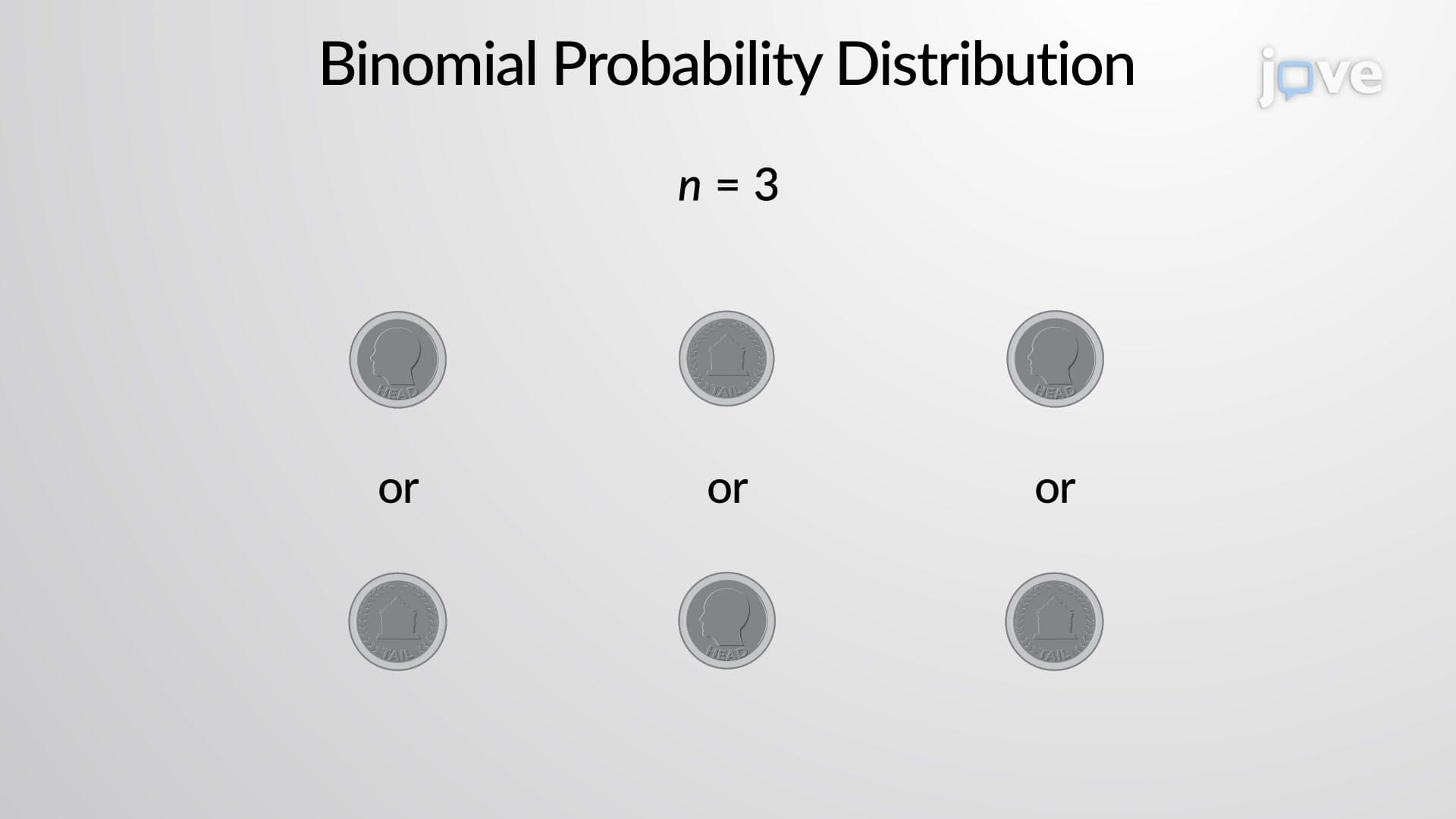
Unlike binomial distributions that require fixed sample sizes and success probabilities, Poisson distributions model unlimited occurrences over continuous intervals. This distinction proves crucial for students preparing for college statistics courses, where understanding distribution selection impacts problem-solving accuracy. The Poisson assumption of independence means past events don't influence future probabilities—a key concept tested on MCAT quantitative sections.
Students encounter Poisson distributions in various academic contexts, from AP Statistics free-response questions to college probability courses. Success requires recognizing trigger words like "average rate," "rare events," and "over time intervals." Practice problems often involve calculating cumulative probabilities or determining appropriate λ values from real-world scenarios, skills essential for quantitative sections of graduate school entrance exams.
Frequently Asked Questions
The Poisson probability distribution models the number of rare, independent events occurring over fixed intervals like time, space, or volume. Use it when events happen randomly at a known average rate, such as manufacturing defects per batch, website crashes per month, or customer calls per hour. It's perfect for scenarios where you know the mean occurrence but events are unpredictable individually.
AP Statistics frequently tests Poisson distributions in free-response questions involving real-world scenarios like traffic accidents or equipment failures. College probability courses emphasize formula applications and parameter estimation. Expect questions asking you to calculate specific probabilities, determine appropriate λ values, or compare Poisson with binomial distributions.
Binomial distributions require fixed trials and constant success probability, while Poisson distributions model unlimited events over continuous intervals with known average rates. MCAT quantitative sections test this distinction through medical scenarios—use binomial for fixed patient samples with known disease rates, Poisson for emergency room arrivals or mutation occurrences over time.
Google applies Poisson models to predict server crashes and user query spikes, helping maintain search reliability. Netflix uses them for content recommendation systems, modeling user interaction rates across different time periods. Manufacturing companies like General Motors employ Poisson distributions for quality control, predicting defective parts per production run to optimize inspection processes.
No advanced calculus is required for basic Poisson distribution concepts. High school algebra and an understanding of exponentials (e^x) suffice for formula applications. The mathematical foundation builds on factorial notation and basic probability principles covered in Algebra 2 and Pre-Calculus courses. Focus on pattern recognition and real-world applications rather than complex derivations.
Create a formula sheet with P(X = k) = (λ^k × e^(-λ)) / k! and practice identifying λ from word problems. Work through 10-15 varied scenarios daily, focusing on real-world applications like customer arrivals or system failures. Use graphing calculators to visualize how changing λ affects distribution shape, and memorize that mean equals variance for quick problem verification.
Poisson distributions provide foundational knowledge for complex statistical modeling including queuing theory, reliability engineering, and epidemiological studies. This concept appears in advanced courses like biostatistics, operations research, and econometrics. Mastering Poisson distributions now prepares you for graduate-level applications in fields like public health, finance, and data science.
Engineering majors use Poisson distributions for reliability analysis and quality control systems. Business and economics students apply them in operations research and risk management. Biology and pre-med majors encounter Poisson models in genetics, epidemiology, and clinical research. Computer science students use them for network analysis and algorithm performance modeling.
Related Micro-courses
Related Subjects
 Physics 33 micro-courses›
 Math Fundamentals 11 micro-courses›