Loading…
Loading video…

173,200 views

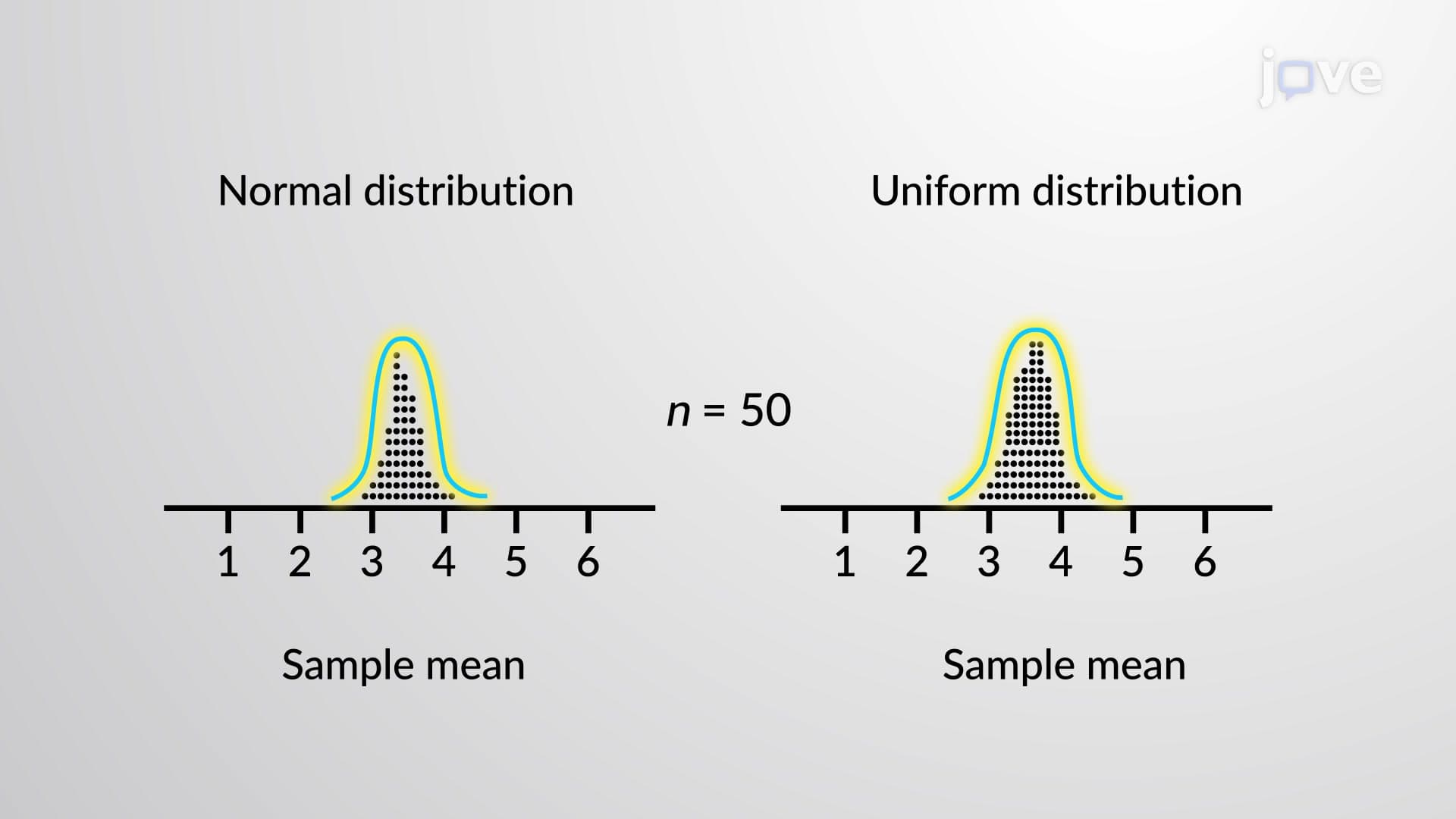
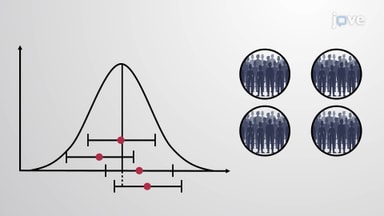
Ever wonder how pollsters predict election results from surveying just 1,000 Americans out of 330 million? Sampling distribution is the statistical foundation that makes this possible. When researchers repeatedly take samples from a population—like surveying different groups of voters before a presidential election—and calculate sample means, these means form their own predictable pattern. This distribution of sample statistics follows near-normal patterns, with larger sample sizes producing more accurate population estimates. Watch the full video on JoVE Coach to master this concept with expert-led visuals and step-by-step explanations.
A sampling distribution represents the probability distribution of a statistic calculated from all possible samples of a given size drawn from a population. Unlike a single sample that gives us one data point, sampling distribution shows us the pattern of variation we'd expect if we repeated our sampling process thousands of times. This concept forms the theoretical backbone of inferential statistics, enabling researchers to make confident predictions about entire populations based on limited sample data.
The sampling distribution exhibits several predictable characteristics that make statistical inference possible. For sample means, the distribution centers around the true population mean (μ) with standard deviation equal to the population standard deviation divided by the square root of sample size (σ/√n). This relationship, known as the standard error, demonstrates why larger samples produce more precise estimates—the sampling distribution becomes narrower as sample size increases.
Sample variances follow a different pattern, creating right-skewed distributions that approach the population variance as an average. Sample proportions, commonly used in survey research and clinical trials, generate sampling distributions that approximate normal curves when sample sizes meet the np ≥ 5 and n(1-p) ≥ 5 conditions.
Sampling distributions power critical decisions across American institutions. The Bureau of Labor Statistics uses these principles when calculating unemployment rates from monthly surveys of 60,000 households, knowing their sample proportion creates a predictable distribution around the true national rate. Similarly, pharmaceutical companies conducting FDA clinical trials rely on sampling distribution theory to determine appropriate sample sizes for drug efficacy studies.
In quality control, manufacturers like Boeing use sampling distributions to monitor production processes. By repeatedly sampling aircraft components and calculating defect rates, they can detect when production shifts away from acceptable standards. The predictable nature of sampling distributions allows them to set control limits and maintain safety standards.
Sampling distribution mastery proves essential for success on standardized exams. AP Statistics extensively tests these concepts, particularly the Central Limit Theorem's application to sampling distributions of means. College statistics courses build upon this foundation, connecting sampling distributions to confidence interval construction and hypothesis testing procedures.
Pre-med students encounter sampling distributions on the MCAT's Psychological, Social, and Biological Foundations section when analyzing research study designs. Similarly, nursing students face these concepts on the NCLEX-RN when interpreting clinical research findings and evidence-based practice guidelines.
Frequently Asked Questions
A sampling distribution is the pattern formed when you repeatedly take samples from a population and calculate the same statistic (like mean or proportion) from each sample. Instead of one sample giving one number, you get a distribution showing how that statistic varies across many possible samples. This distribution follows predictable patterns that help researchers make accurate inferences about entire populations.
AP Statistics frequently tests sampling distribution through free-response questions involving the Central Limit Theorem and sampling distribution properties. Students must identify when sampling distributions are approximately normal, calculate standard errors, and interpret sampling distribution characteristics. Multiple-choice questions often test recognition of sampling distribution shapes and their relationship to population parameters.
The MCAT tests sampling distribution understanding within research methodology questions, particularly in psychology and sociology passages. Test-takers must recognize how sample size affects sampling distribution precision and interpret confidence intervals derived from sampling distributions. Questions often involve evaluating the validity of research conclusions based on sampling distribution principles.
Pharmaceutical companies rely on sampling distribution theory to design clinical trials with appropriate statistical power. When testing a new diabetes medication, researchers use sampling distribution principles to determine how many patients they need to detect meaningful differences between treatment and control groups. The FDA requires this statistical foundation to approve new medications for American patients.
Sampling distribution concepts are accessible to students with basic algebra and introductory statistics knowledge. While the mathematical proofs require calculus, understanding the practical applications only needs familiarity with means, standard deviations, and normal distributions. High school students in AP Statistics successfully master these concepts through visual demonstrations and real-world examples.
Focus on practicing problems that connect sampling distribution properties to real scenarios rather than memorizing formulas. Create concept maps linking sample size, standard error, and distribution shape. Use online simulation tools to visualize how sampling distributions change with different parameters. Practice identifying when the Central Limit Theorem applies and calculating standard errors for different statistics.
Sampling distribution knowledge directly leads to confidence intervals and hypothesis testing—two fundamental inference procedures. Students should explore how sampling distributions create the theoretical basis for t-tests, z-tests, and proportion tests. Advanced topics include sampling distributions of differences between means and the F-distribution used in ANOVA procedures.
Gallup and other polling organizations use sampling distribution theory to calculate margins of error for their surveys. When they poll 1,500 Americans about presidential approval ratings, they know the sampling distribution of their sample proportion allows them to estimate the true population proportion within ±3 percentage points. This mathematical foundation gives credibility to political polling and helps news organizations report accurate election forecasts.
Related Micro-courses
Related Subjects
 Physics 33 micro-courses›
 Math Fundamentals 11 micro-courses›