Loading video…


 30 Concepts
 9.7K views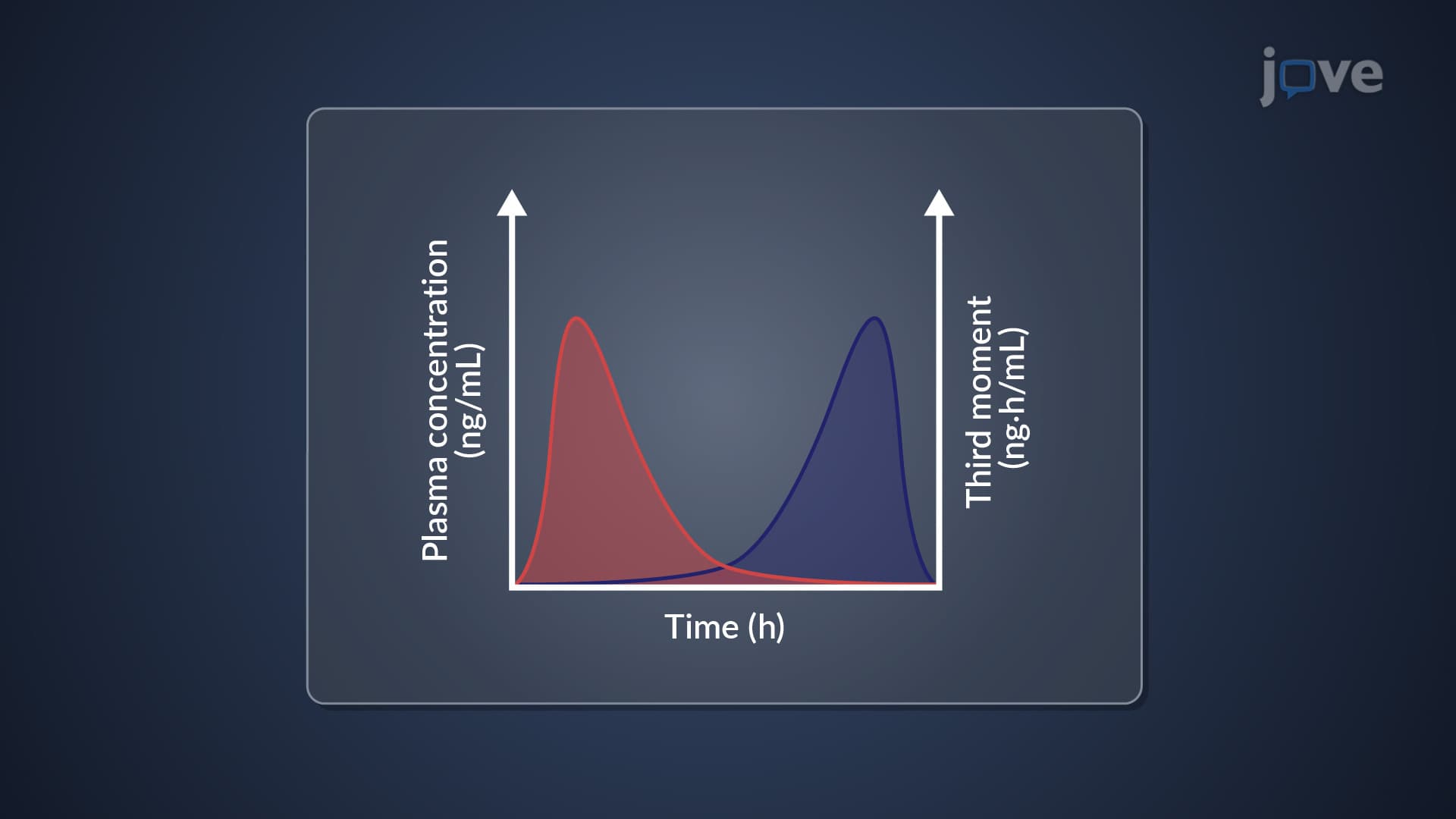

Video Summary: Noncompartmental Analysis Statistical Moment Theory Explained
Ever wondered how the FDA determines safe dosing intervals for medications like acetaminophen (Tylenol)? Noncompartmental analysis statistical moment theory provides the mathematical foundation for understanding how long drugs stay in your body. This powerful approach uses statistical moments to calculate mean residence time (MRT) without complex compartmental modeling. By analyzing moment curves derived from probability density functions, pharmacologists at companies like Pfizer can predict drug behavior and optimize dosing schedules. Watch the full video on JoVE Coach to master this concept with expert-led visuals and step-by-step explanations.
Noncompartmental analysis statistical moment theory represents a sophisticated mathematical approach to pharmacokinetics that doesn't require assumptions about specific body compartments. Unlike traditional compartmental modeling, this method treats the body as a "black box" and focuses on input-output relationships using statistical mathematics.
The foundation of this theory lies in statistical moments, which are mathematical measures that describe different aspects of probability distributions. In pharmacokinetics, these moments reveal crucial information about drug behavior:
The zeroth moment equals the area under the concentration-time curve (AUC), representing total drug exposure. For example, when analyzing ibuprofen pharmacokinetics, the AUC tells us the cumulative amount of drug the body was exposed to over time.
The first moment calculates the mean residence time (MRT), indicating how long drug molecules remain in the body on average. This is critical for determining dosing intervals - medications like extended-release morphine require MRT calculations to ensure therapeutic levels are maintained.
The second moment describes variance, showing how drug elimination varies around the mean. Higher moments reveal distribution skewness and kurtosis, providing insights into complex elimination patterns.
Major pharmaceutical companies like Johnson & Johnson and Merck rely on moment theory for drug development. During clinical trials, researchers use these calculations to optimize dosing regimens and predict drug interactions. The FDA requires comprehensive pharmacokinetic data, often derived from noncompartmental analysis, before approving new medications.
Students preparing for the MCAT encounter moment theory in biochemistry sections, while pharmacy students face detailed calculations on NAPLEX exams. AP Biology and AP Chemistry courses increasingly incorporate pharmacokinetic principles, making this knowledge valuable for college-bound students.
Medical schools like Johns Hopkins and Harvard integrate moment theory into pharmacology curricula, emphasizing its importance in evidence-based medicine. Understanding these concepts provides a foundation for advanced studies in clinical pharmacology, biomedical engineering, and pharmaceutical sciences.
Related Micro-courses