Loading video…


 15 Concepts
 340.6K views

Video Summary: What are Data Collection by Experiments
Did you know that every FDA-approved medication you take went through rigorous data collection by experiments before reaching pharmacy shelves? Data collection by experiments involves manipulating variables in controlled conditions to establish cause-and-effect relationships, like testing how different study environments affect student performance at Stanford University. This systematic approach differs from observational studies because researchers actively control and change specific factors while measuring outcomes. What are data collection by experiments reveals the foundation of scientific discovery across medicine, psychology, and agriculture. Watch the full video on JoVE Coach to master this concept with expert-led visuals and step-by-step explanations.
Data collection by experiments represents the gold standard for establishing causal relationships in scientific research. Unlike observational studies that simply record existing conditions, experimental studies involve deliberate manipulation of one or more variables while controlling for others. This active intervention allows researchers to determine whether changes in the independent variable directly cause changes in the dependent variable.
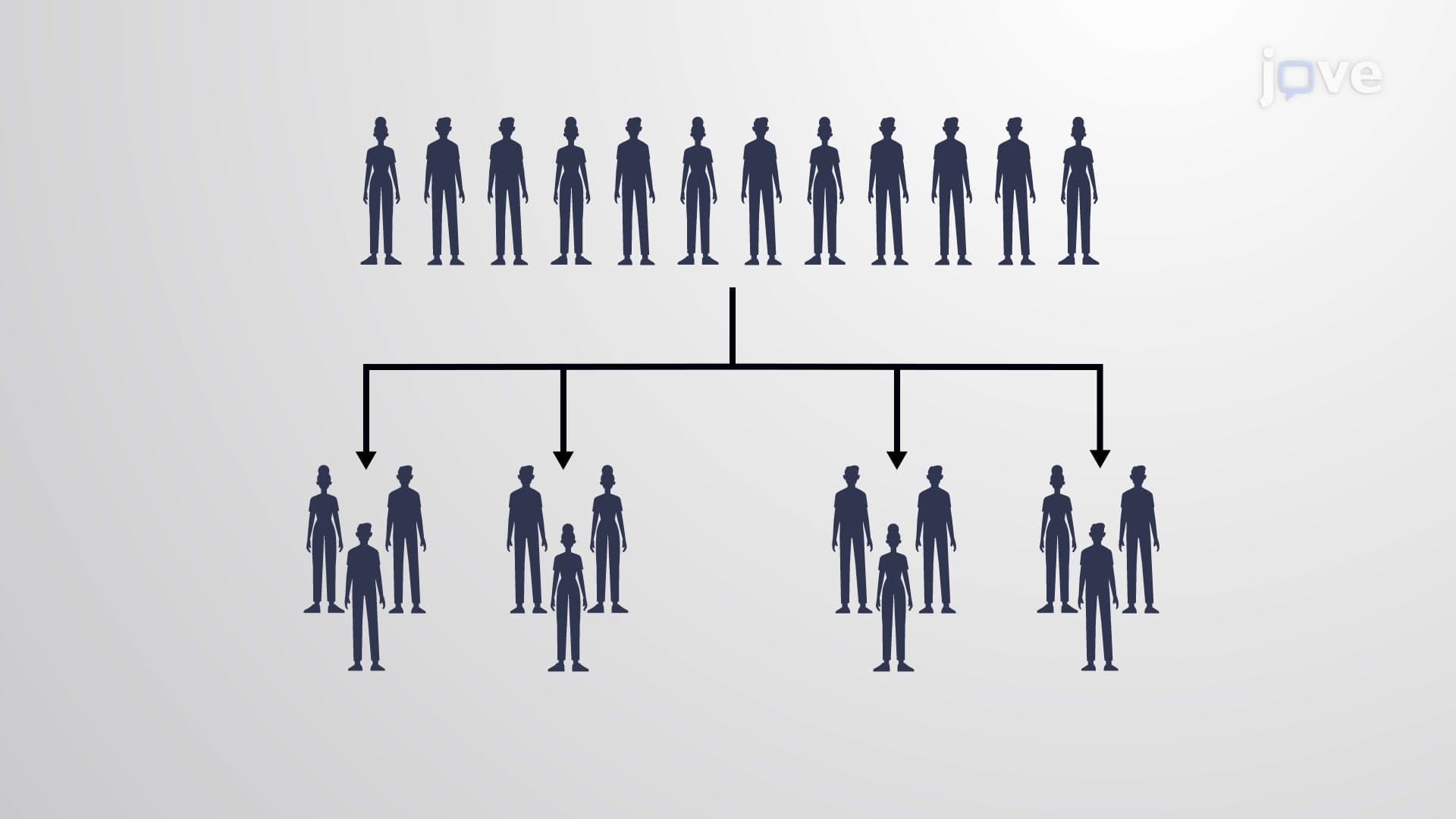
Every well-designed experiment contains several crucial elements. The treatment group receives the experimental intervention, while the control group either receives no treatment or a placebo. Random assignment ensures that participants have an equal chance of being placed in either group, minimizing selection bias. For instance, when testing a new teaching method at the University of Michigan, researchers randomly assign students to either traditional instruction (control) or the new methodology (treatment), then measure learning outcomes.
Variables play distinct roles in experimental design. The independent variable is what researchers manipulate (like dosage of a medication), while the dependent variable is what they measure (like blood pressure reduction). Confounding variables-factors that could influence results-must be controlled through careful experimental design.
Clinical trials exemplify experimental data collection in healthcare. The National Institutes of Health (NIH) requires rigorous experimental protocols before approving new treatments. During COVID-19 vaccine development, pharmaceutical companies conducted randomized controlled trials with thousands of participants across multiple US sites. Half received the vaccine candidate, while the control group received a placebo, allowing researchers to determine vaccine efficacy.
Agricultural research also relies heavily on experimental methods. At Iowa State University, researchers test crop yields by applying different fertilizer treatments to randomly assigned plots while keeping soil conditions, watering, and sunlight exposure constant. This approach has revolutionized American farming productivity.
Students preparing for AP Statistics, AP Psychology, or college-level research methods courses should master experimental design principles. The College Board frequently tests understanding of experimental versus observational studies, proper randomization techniques, and identification of potential confounding variables. Medical school admissions tests like the MCAT emphasize experimental interpretation skills, particularly in analyzing research studies and identifying methodological strengths and weaknesses.
While experiments provide powerful causal evidence, they have limitations. Some research questions cannot be studied experimentally due to ethical constraints-researchers cannot deliberately expose people to harmful substances to study disease causation. Additionally, laboratory conditions may not perfectly reflect real-world scenarios, potentially limiting the generalizability of results.
Related Micro-courses