Loading video…


 15 Concepts
 340.6K views

Video Summary: What Is Stratified Sampling Method
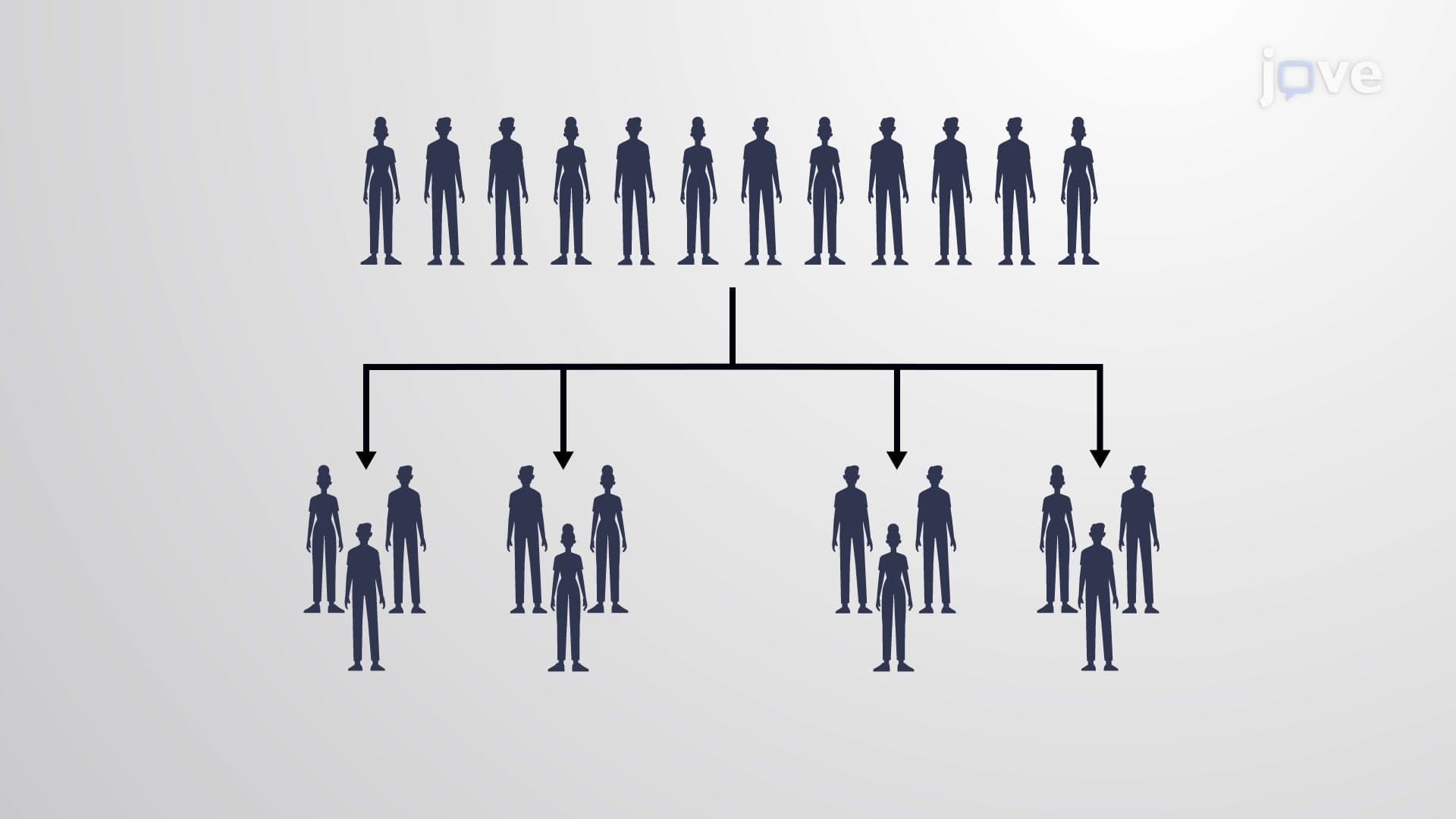
Did you know that polling companies like Gallup can predict election outcomes with just 1,000 voters? The stratified sampling method makes this possible by dividing diverse populations into homogeneous groups called strata, then randomly selecting from each group. For instance, when surveying college students' study habits across the University of California system, researchers might stratify by academic year (freshmen, sophomores, etc.) to ensure accurate representation across all grade levels. Watch the full video on JoVE Coach to master this concept with expert-led visuals and step-by-explanations.
The stratified sampling method represents one of the most powerful probability sampling techniques available to researchers dealing with heterogeneous populations. Unlike simple random sampling, which treats all population members equally, stratified sampling recognizes that populations often contain distinct subgroups with different characteristics that could significantly impact study results.
The foundation of stratified sampling lies in creating meaningful strata-homogeneous subgroups within the larger heterogeneous population. Each stratum must satisfy two critical requirements: mutual exclusivity and exhaustiveness. Mutual exclusivity ensures that each population member belongs to exactly one stratum, preventing double-counting or ambiguous classifications. Exhaustiveness guarantees that every population member fits into at least one stratum, ensuring complete population coverage.
Consider a study examining standardized test performance across American high schools. Researchers might stratify schools by geographic region (Northeast, Southeast, Midwest, Southwest, West), socioeconomic status (low, middle, high income), or school type (public, private, charter). Each school would belong to exactly one category within each stratification variable, and all schools would be classified.
Once strata are established, researchers must determine how many subjects to sample from each stratum. Proportional allocation maintains the same ratio found in the population-if 30% of students are seniors, then 30% of the sample should be seniors. Disproportional allocation intentionally over- or under-samples certain strata, often to ensure adequate representation of smaller but important subgroups or to reduce overall sampling costs.
For AP Statistics students, understanding these allocation methods proves crucial for exam success. The College Board frequently tests students' ability to identify appropriate sampling methods for given scenarios and calculate proper sample sizes for stratified designs.
Stratified sampling excels in numerous practical applications. The U.S. Census Bureau uses geographic stratification when conducting the American Community Survey, ensuring representation from urban, suburban, and rural areas. Medical researchers studying diabetes prevalence might stratify by age groups, recognizing that diabetes risk increases significantly with age.
The primary advantages include reduced sampling error compared to simple random sampling, guaranteed representation of all important subgroups, and the ability to make precise estimates for both the overall population and individual strata. These benefits make stratified sampling particularly valuable for MCAT preparation, where understanding research methodology concepts directly impacts exam performance.
Related Micro-courses