Loading video…


 15 Concepts
 340.6K views

Video Summary: What Is Random Sampling Method
Ever wonder how polling companies predict election outcomes by surveying just 1,000 people out of 330 million Americans? The random sampling method makes this statistical magic possible by giving every population member an equal chance of selection. Unlike biased sampling that might only survey voters in one neighborhood, random sampling ensures your sample truly represents the entire population. From Gallup polls predicting presidential races to FDA clinical trials testing new medications, this foundational statistical technique drives data-driven decisions across America. Watch the full video on JoVE Coach to master this concept with expert-led visuals and step-by-step explanations.
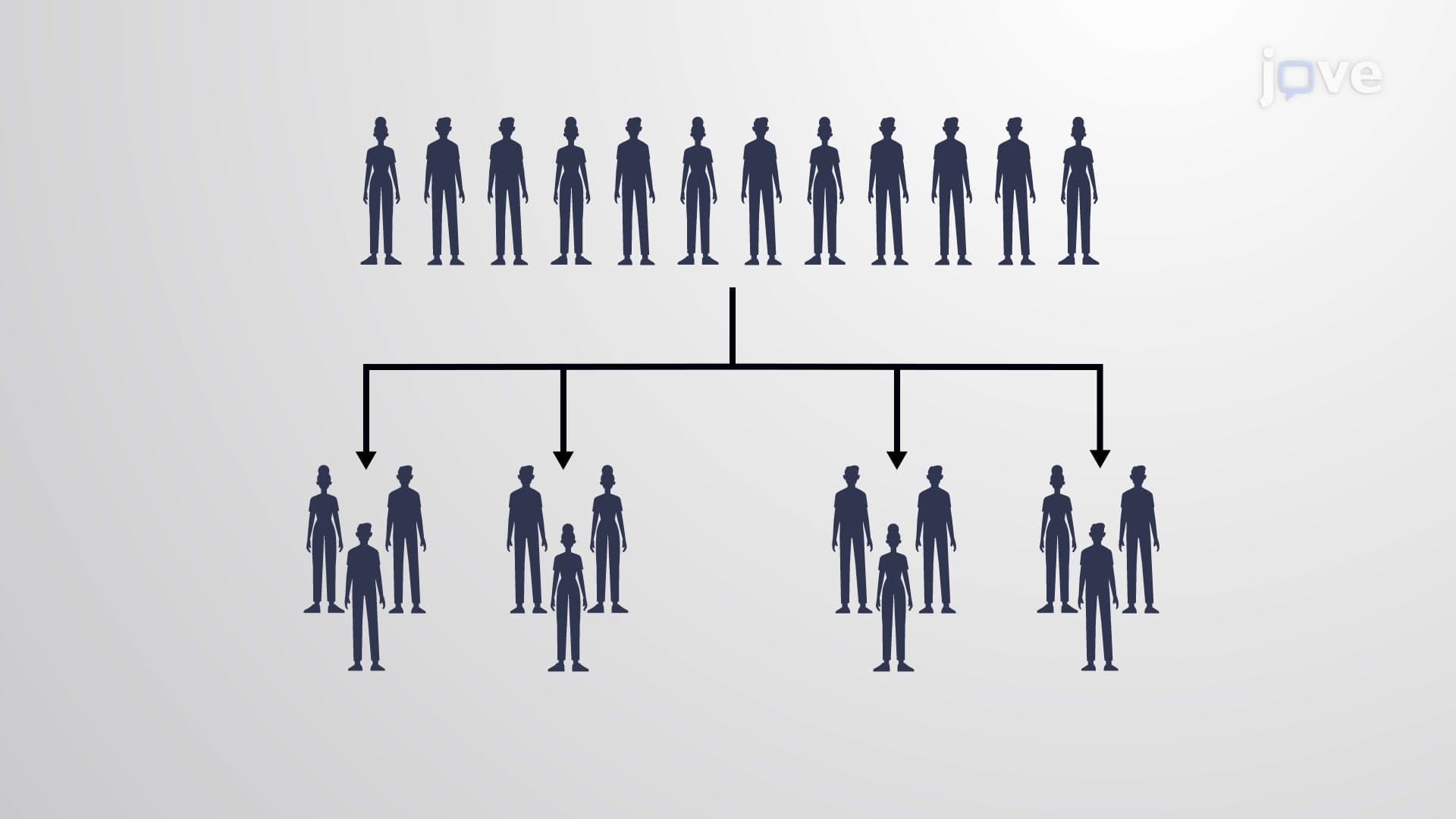
The random sampling method represents one of statistics' most fundamental concepts, serving as the cornerstone for unbiased data collection and reliable statistical inference. This sampling technique ensures that every individual in a target population has an exactly equal probability of being selected for study participation. Unlike convenience sampling (surveying whoever's available) or purposive sampling (handpicking specific individuals), random sampling eliminates researcher bias and produces samples that accurately reflect population characteristics.
Random sampling operates on the principle of equiprobability-each population member shares identical selection chances. When researchers use random sampling method definition in practice, they're applying probability theory where P(selection) = 1/N for every individual, where N equals total population size. This mathematical equality ensures that sample demographics, opinions, and characteristics mirror those of the larger population.
Consider the classic colored ball example: with 20 balls (5 red, 5 blue, 5 green, 5 black), each color has exactly 5/20 = 0.25 probability of selection. This demonstrates perfect randomness-no color receives preferential treatment. Real-world applications include using random number generators to select survey participants from voter registration lists or employing systematic random sampling in clinical trials.
Students encounter random sampling across multiple academic disciplines and standardized exams. AP Statistics extensively covers random sampling method basics, particularly in experimental design and inference units. College-level courses in psychology, sociology, and business research methods emphasize random sampling as the gold standard for generalizable findings. The MCAT tests understanding of random sampling in research methodology sections, while nursing entrance exams like NCLEX incorporate sampling concepts in evidence-based practice questions.
A crucial distinction separates random sampling from broader probability sampling methods. While random sampling requires equal selection probabilities, probability sampling encompasses techniques where selection chances are known but potentially unequal. Stratified random sampling, for example, deliberately oversamples smaller demographic groups to ensure adequate representation, creating unequal but known probabilities.
American institutions rely heavily on random sampling methodology. The U.S. Census Bureau uses random sampling for the American Community Survey, selecting approximately 3.5 million addresses annually. Market research firms like Pew Research Center employ random digit dialing for political polls. Medical researchers conducting FDA-regulated clinical trials must demonstrate random patient selection to ensure regulatory approval. These real-world applications underscore random sampling's critical role in generating trustworthy, actionable data that influences policy, business decisions, and medical treatments.
Related Micro-courses