Loading video…


 16 Concepts
 10.9K views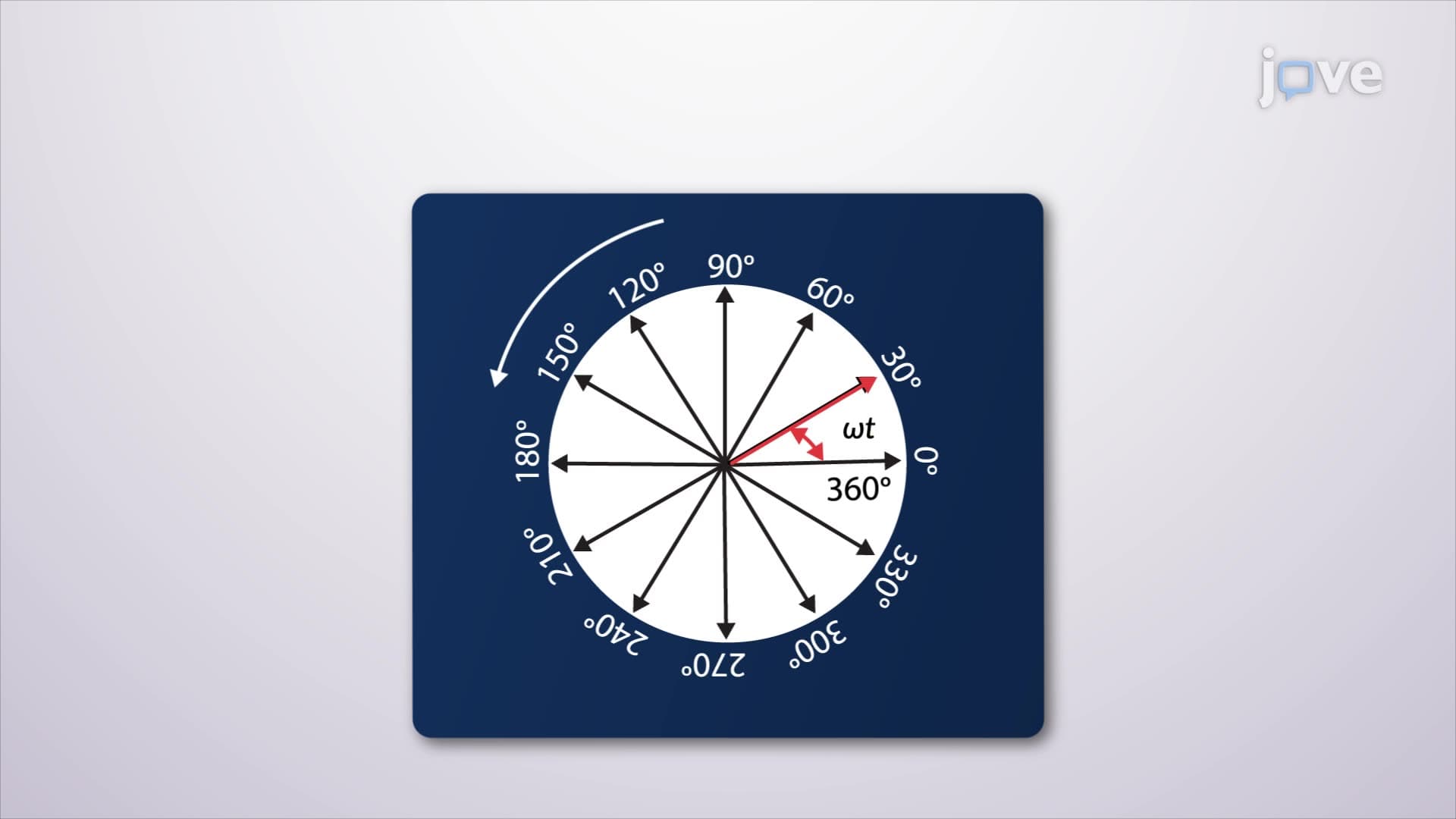

Video Summary: What Is Phasors
Ever wonder how electrical engineers analyze the complex AC power grid that delivers electricity to your home? Phasor arithmetics transforms bewildering sinusoidal waves into manageable mathematical representations, making AC circuit analysis as straightforward as DC circuits. Consider how utility companies like Pacific Gas & Electric must coordinate voltage phases across thousands of miles of transmission lines. What is phasors becomes clear when you understand they're complex number representations that capture both magnitude and phase angle of AC signals. Watch the full video on JoVE Coach to master this concept with expert-led visuals and step-by-step explanations.
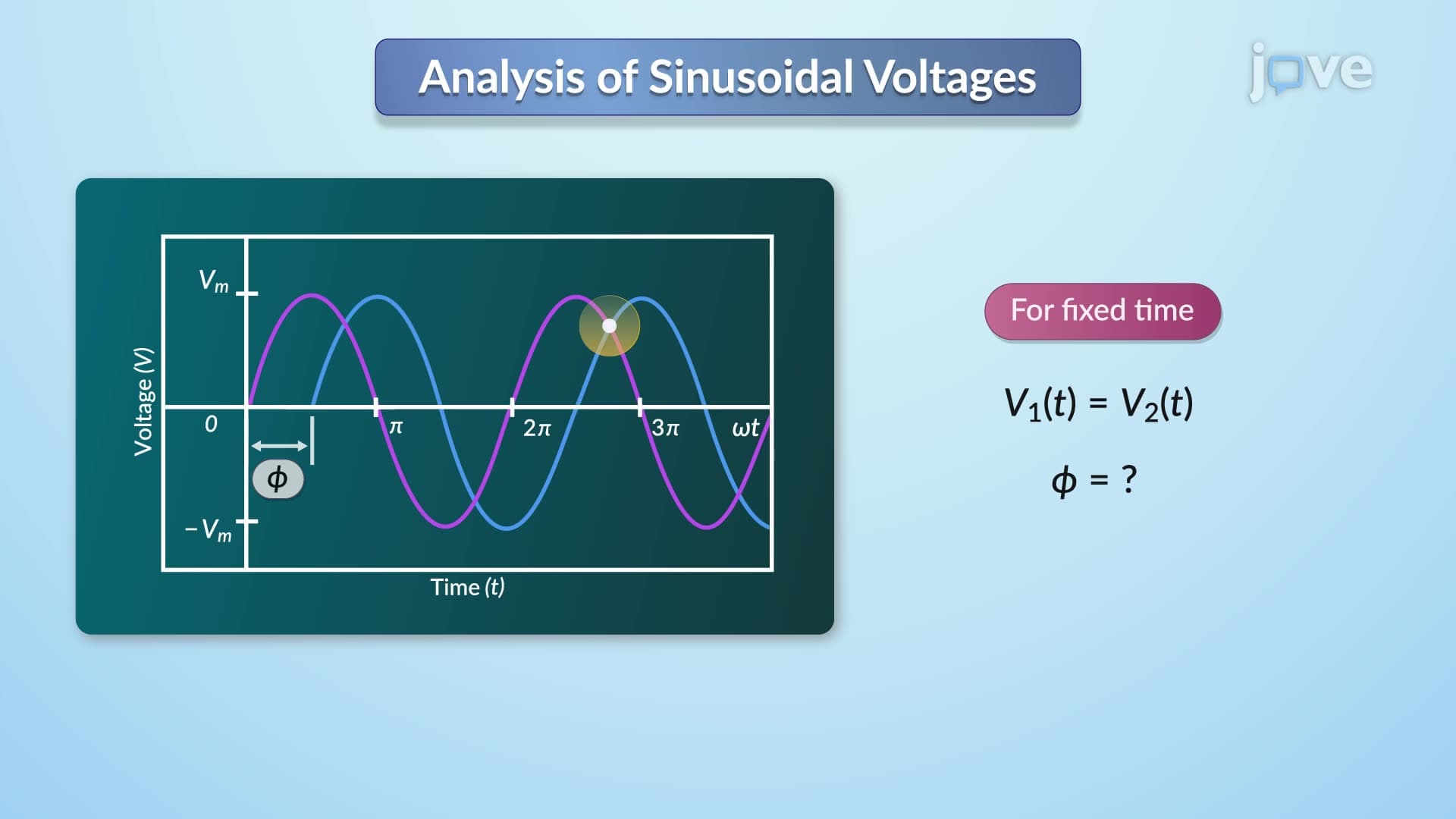
Phasor arithmetics revolutionizes how we approach alternating current circuits by transforming time-varying sinusoids into stationary complex numbers. Unlike DC circuits where voltages and currents remain constant, AC circuits involve continuously changing values that follow sinusoidal patterns. Phasors capture the essential characteristics-amplitude and phase-while eliminating the mathematical complexity of time dependence.
Phasor arithmetics definition encompasses three equivalent mathematical forms. The rectangular form (a + jb) explicitly shows real and imaginary components, making addition and subtraction straightforward. The polar form (r∠θ) directly represents magnitude r and angle θ, ideal for multiplication and division. The exponential form (re^jθ) leverages Euler's identity (e^jθ = cos θ + j sin θ) for advanced mathematical operations.
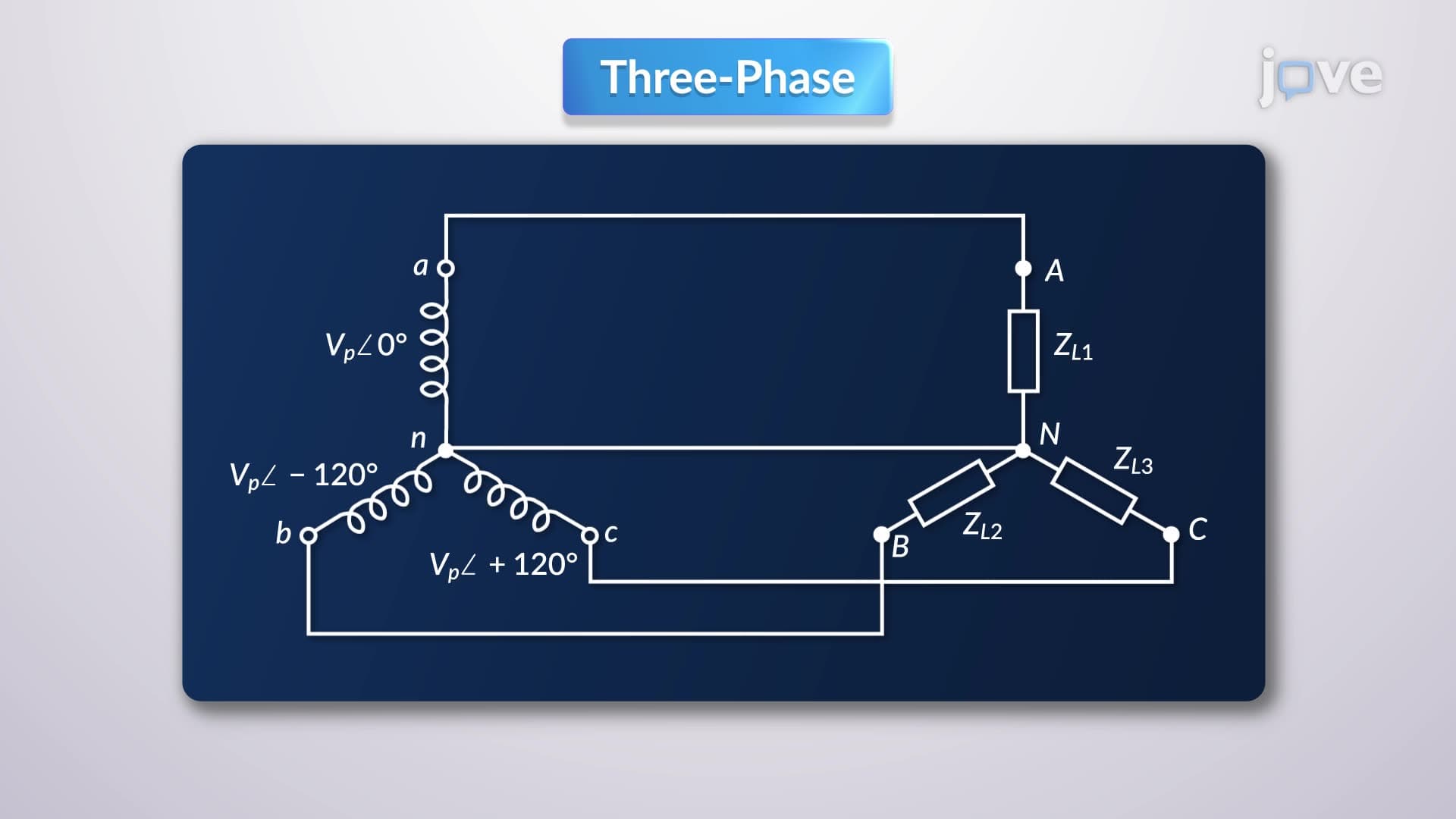
Consider a household voltage of 120V RMS at 60 Hz with 30° phase lead. In polar form, this appears as 169.7∠30° V (using peak amplitude). Students preparing for the AP Physics C exam frequently encounter problems requiring conversion between these forms, particularly when analyzing three-phase power systems used by utilities like ConEd in New York.
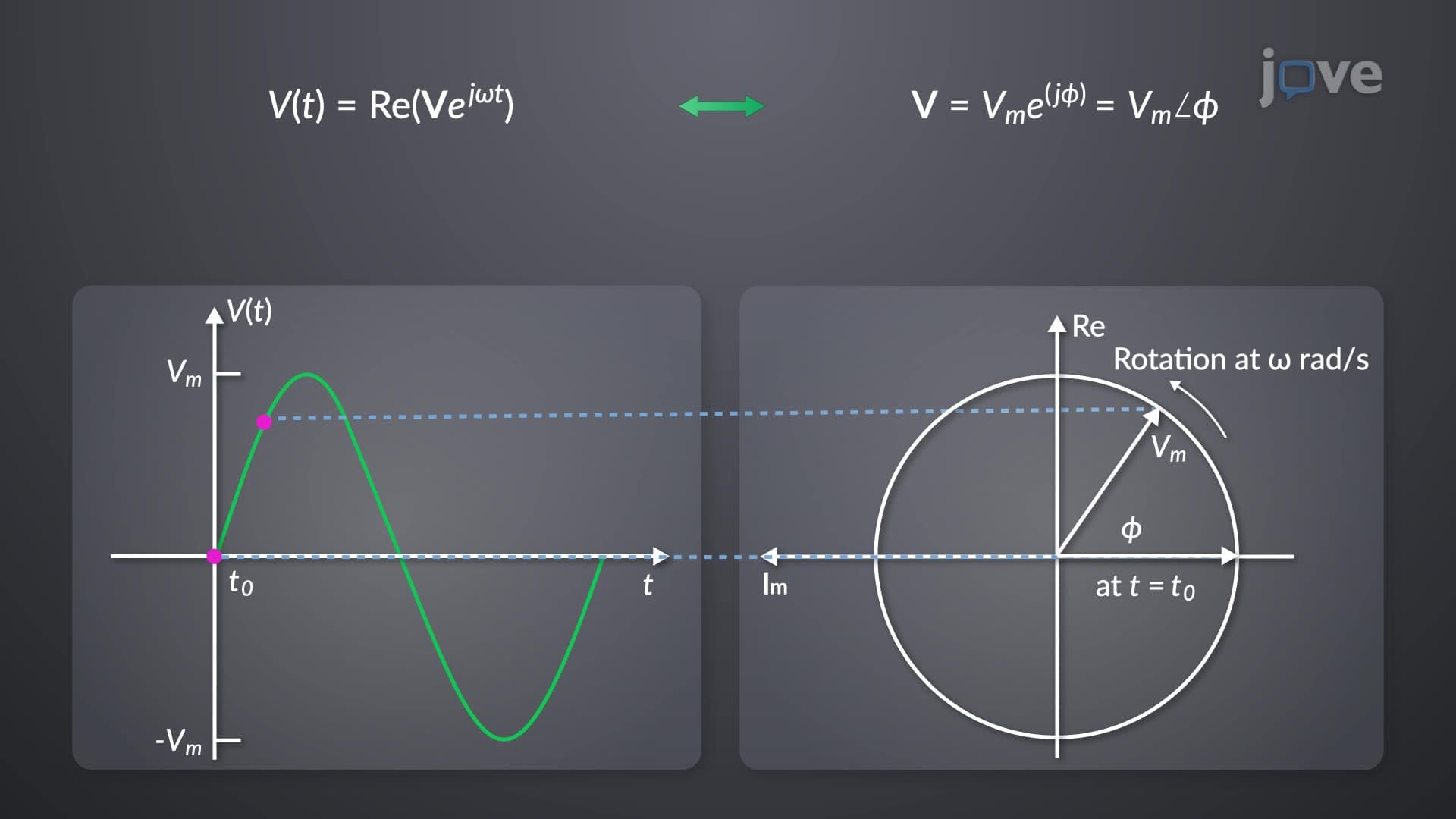
What is phasor arithmetics in detail involves systematic conversion procedures. To obtain a phasor from a sine function, first convert to cosine form using trigonometric identities: sin(ωt + φ) = cos(ωt + φ - 90°). Then express as the real part of a complex exponential: Re[Ae^j(ωt + φ)]. The phasor equals the time-independent portion: Ae^jφ or A∠φ.
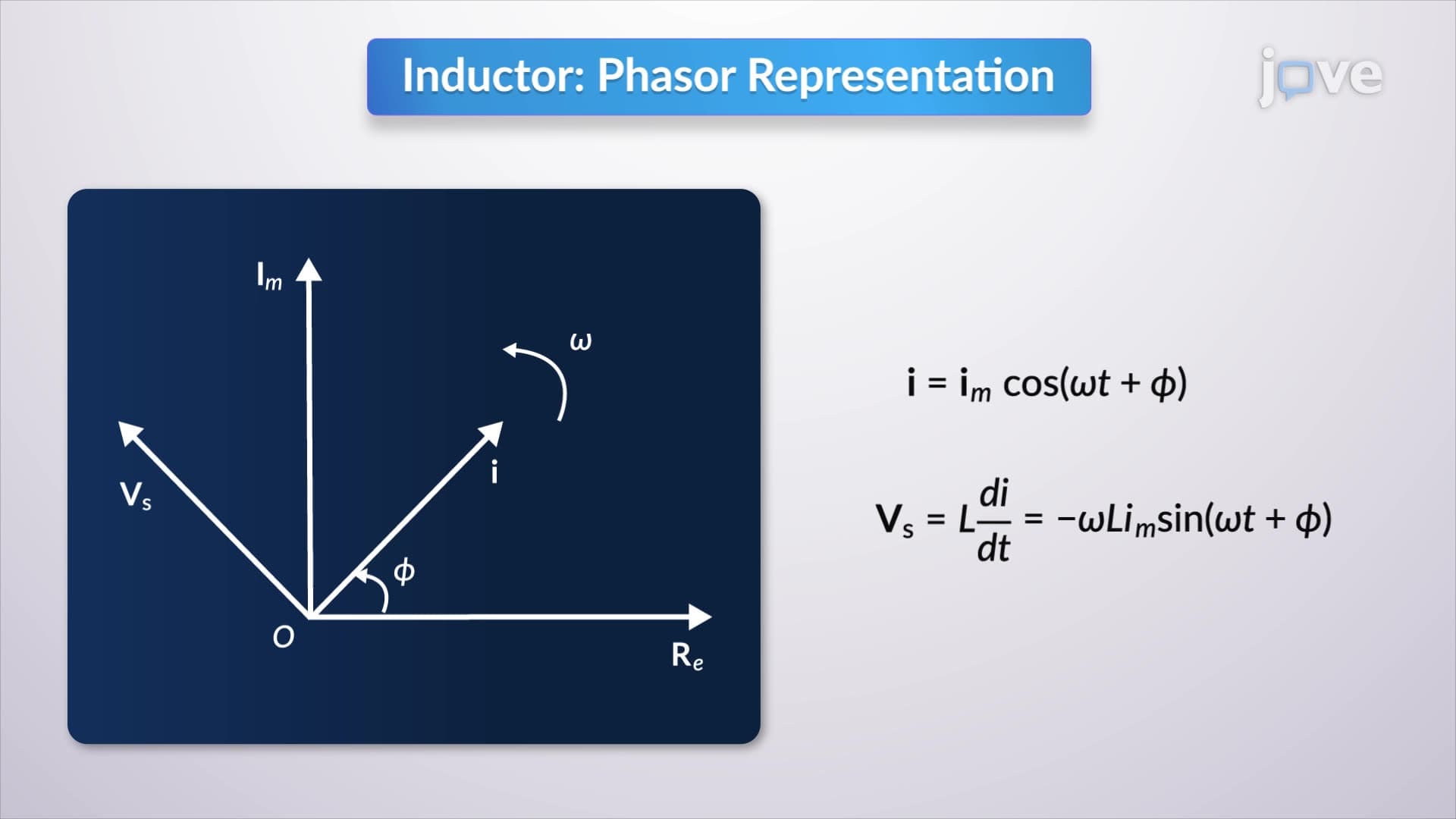
Phasor arithmetics basics include visualization through phasor diagrams. These show phasors as vectors rotating counterclockwise at angular frequency ω. The vector length represents amplitude, while the angle from the positive real axis indicates phase. At any instant, projecting the rotating vector onto the real axis yields the sinusoid's instantaneous value.
This concept proves invaluable in power engineering courses at institutions like MIT and Stanford. Students analyzing three-phase systems for companies like General Electric use phasor diagrams to visualize voltage and current relationships, ensuring proper motor operation and power factor correction.
Related Micro-courses