Loading video…


 20 Concepts
 25.8K views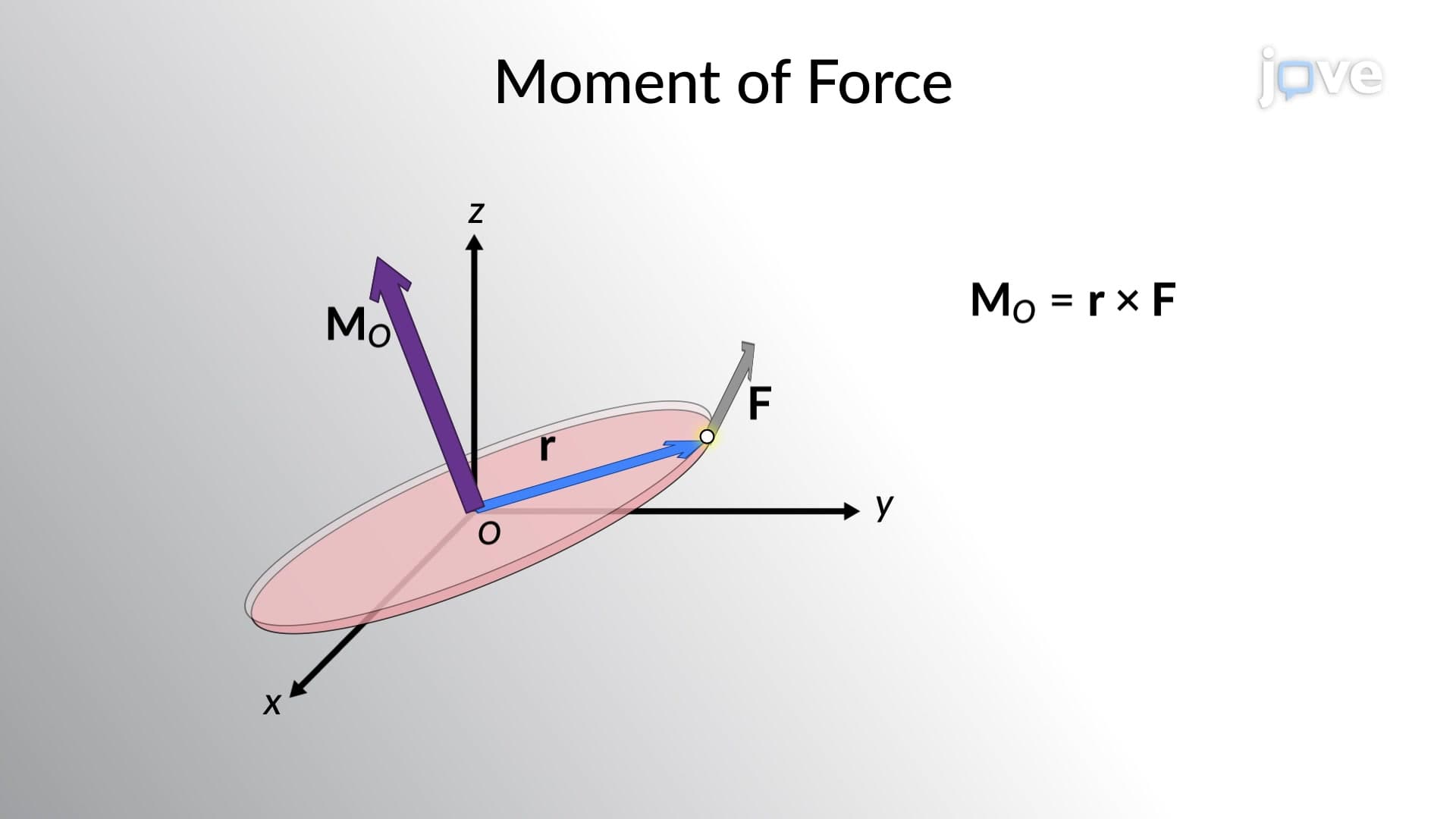

Video Summary: Cartesian Form for Vector Formulation Tutorial
Ever wondered how engineers calculate the exact torque needed to open heavy revolving doors at hospitals or airports? The cartesian form for vector formulation transforms complex 3D rotation problems into manageable mathematical calculations using cross-products and determinants. In this tutorial, you'll explore how a 10-Newton force applied to a revolving door creates a measurable moment about the z-axis, demonstrating the practical power of vector mathematics in mechanical engineering applications. Watch the full video on JoVE Coach to master this concept with expert-led visuals and step-by-step explanations.
The cartesian form for vector formulation represents one of the most powerful tools in engineering mechanics, transforming abstract rotational concepts into concrete mathematical procedures. This approach leverages the determinant structure of cross-products to systematically calculate moments, torques, and angular effects in three-dimensional space.
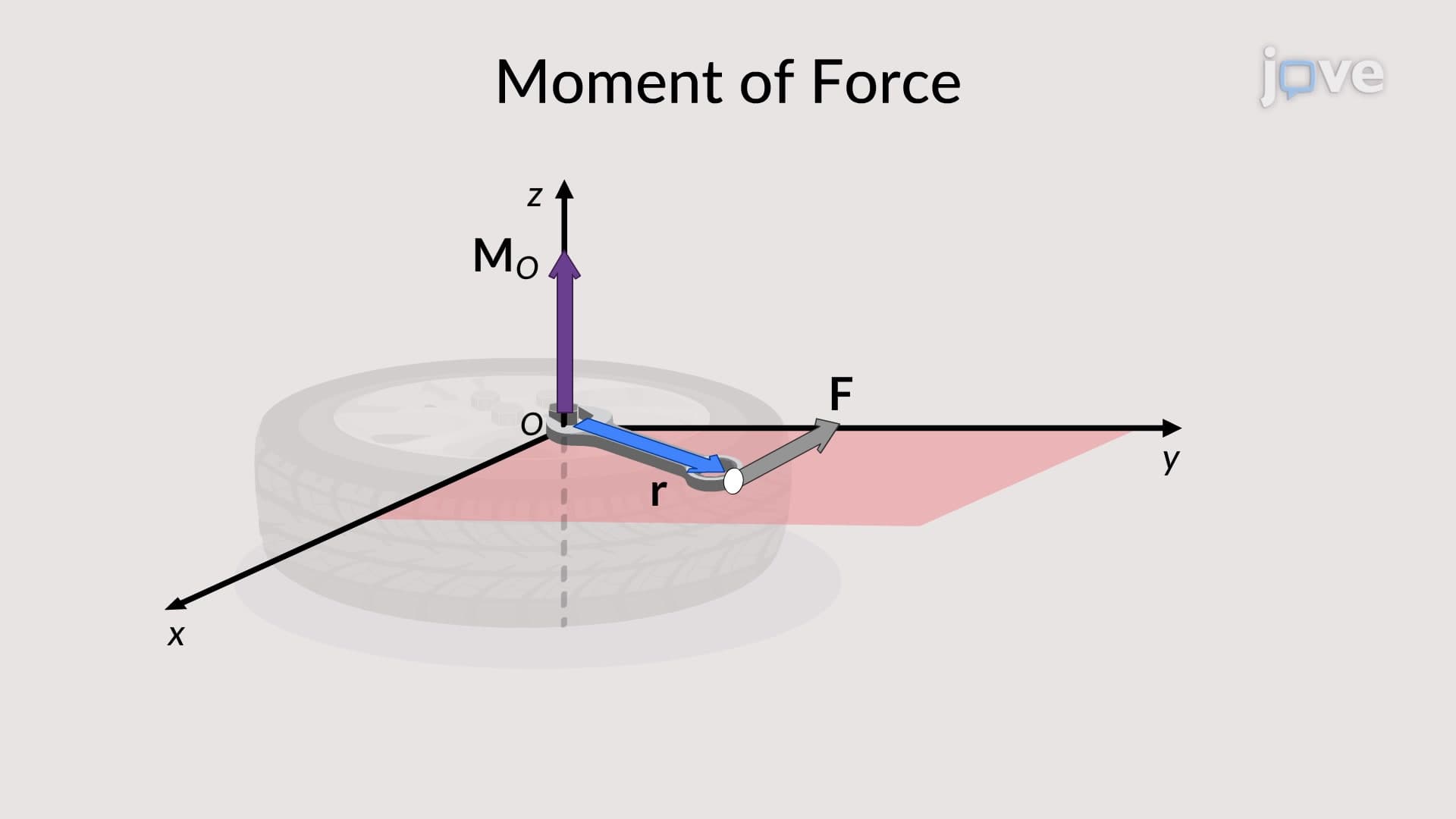
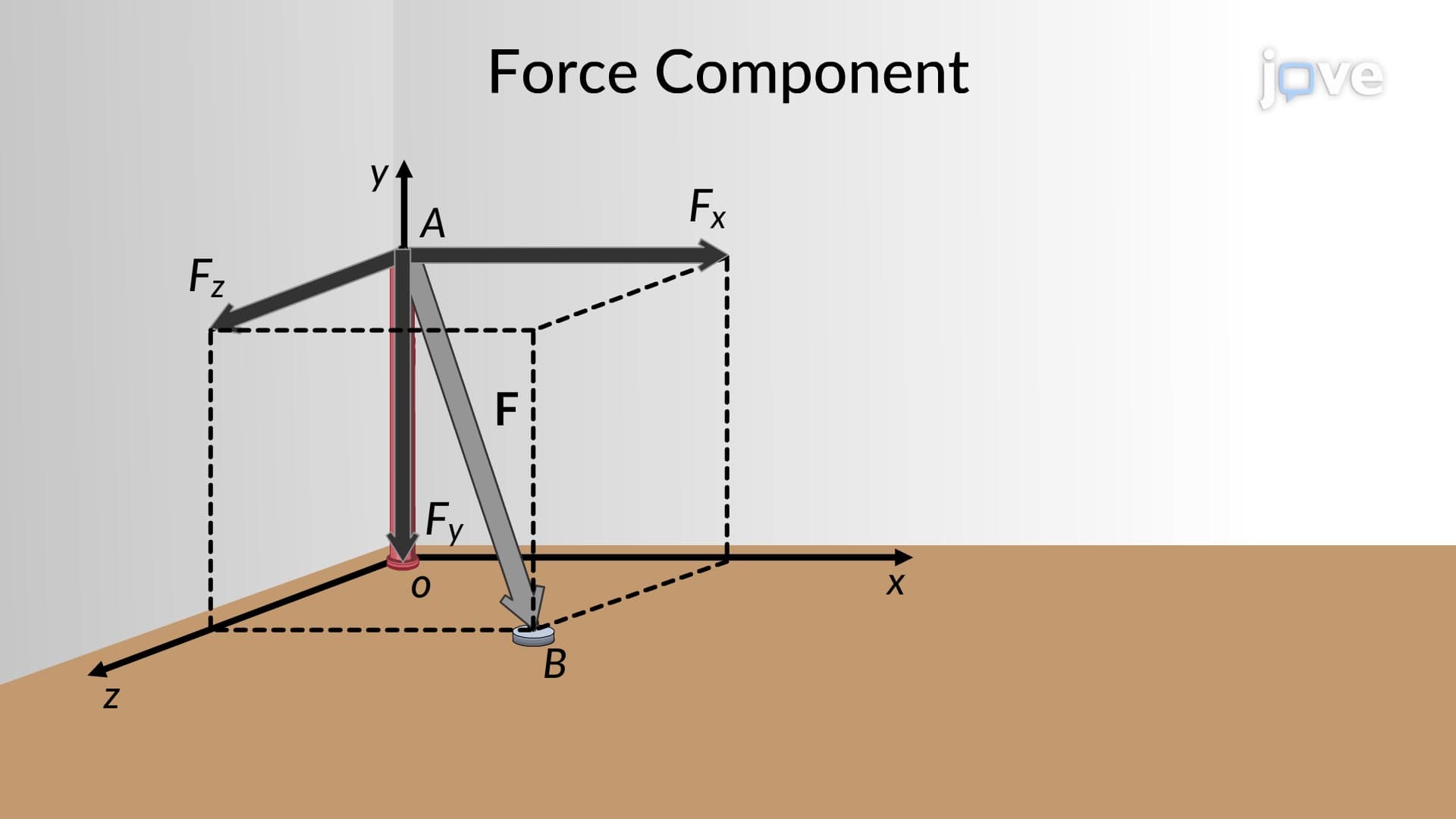
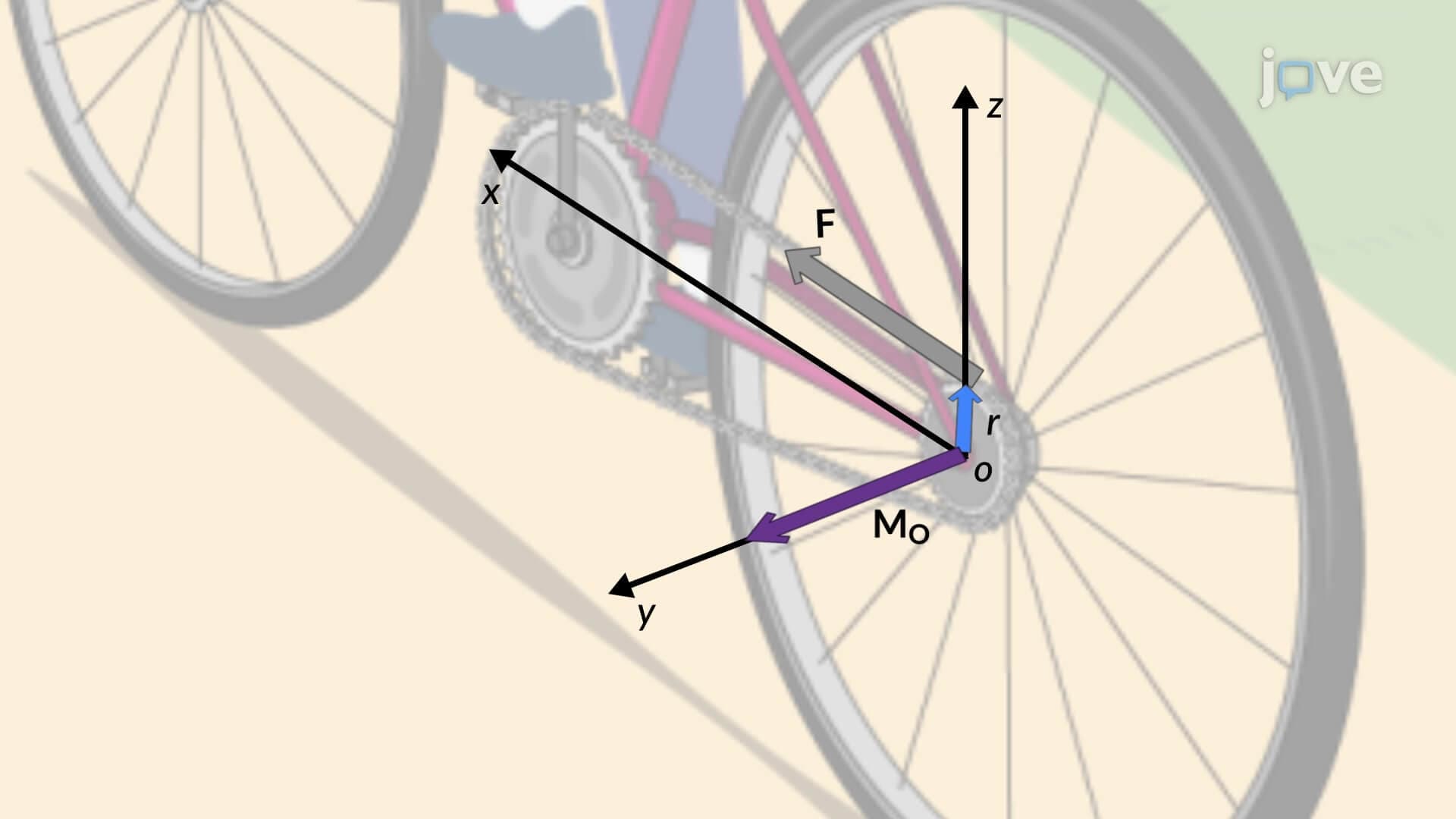
At its foundation, this method recognizes that any moment of force results from the cross-product M = r × F, where r represents the position vector from the axis of rotation to the point of force application, and F represents the applied force vector. The cartesian approach expresses both vectors in component form: r = r(x)i + r(y)j + r(z)k and F = F(x)i + F(y)j + F(z)k, where i, j, and k represent unit vectors along the x, y, and z axes respectively.
The mathematical elegance emerges when organizing these components into a determinant matrix. The top row contains the unit vectors (i, j, k), the middle row holds position vector components, and the bottom row contains force vector components. This systematic arrangement ensures consistent calculation procedures regardless of problem complexity.
Expanding this determinant yields three distinct moment components: M(x) = r(y)×F(z) - r(z)×F(y), M(y) = r(z)×F(x) - r(x)×F(z), and M(z) = r(x)×F(y) - r(y)×F(x). Each component represents the moment contribution about its respective coordinate axis.
Engineering students frequently encounter this concept in statics courses, particularly when analyzing structural joints, mechanical linkages, and rotating machinery. The revolving door example illustrates how force perpendicular to a specific plane simplifies calculations-when force acts only along the x-axis, both F(y) and F(z) equal zero, dramatically reducing computational complexity.
This simplification principle appears regularly on AP Physics C exams and college engineering assessments, where students must quickly identify which vector components contribute to specific moment calculations. Understanding these shortcuts enables efficient problem-solving under time constraints while maintaining mathematical rigor.
Beyond basic moment calculations, the cartesian form for vector formulation extends to angular momentum, gyroscopic effects, and multi-body dynamics. Mechanical engineering students at institutions like MIT, Stanford, and Georgia Tech apply these principles to robotics, aerospace systems, and automotive design projects.
The method's versatility becomes apparent when analyzing complex systems involving multiple forces and varying axis orientations. Professional engineers routinely use computer-aided design software that implements these mathematical relationships, making conceptual understanding crucial for effective technology utilization.
Related Micro-courses