Loading video…


 20 Concepts
 25.8K views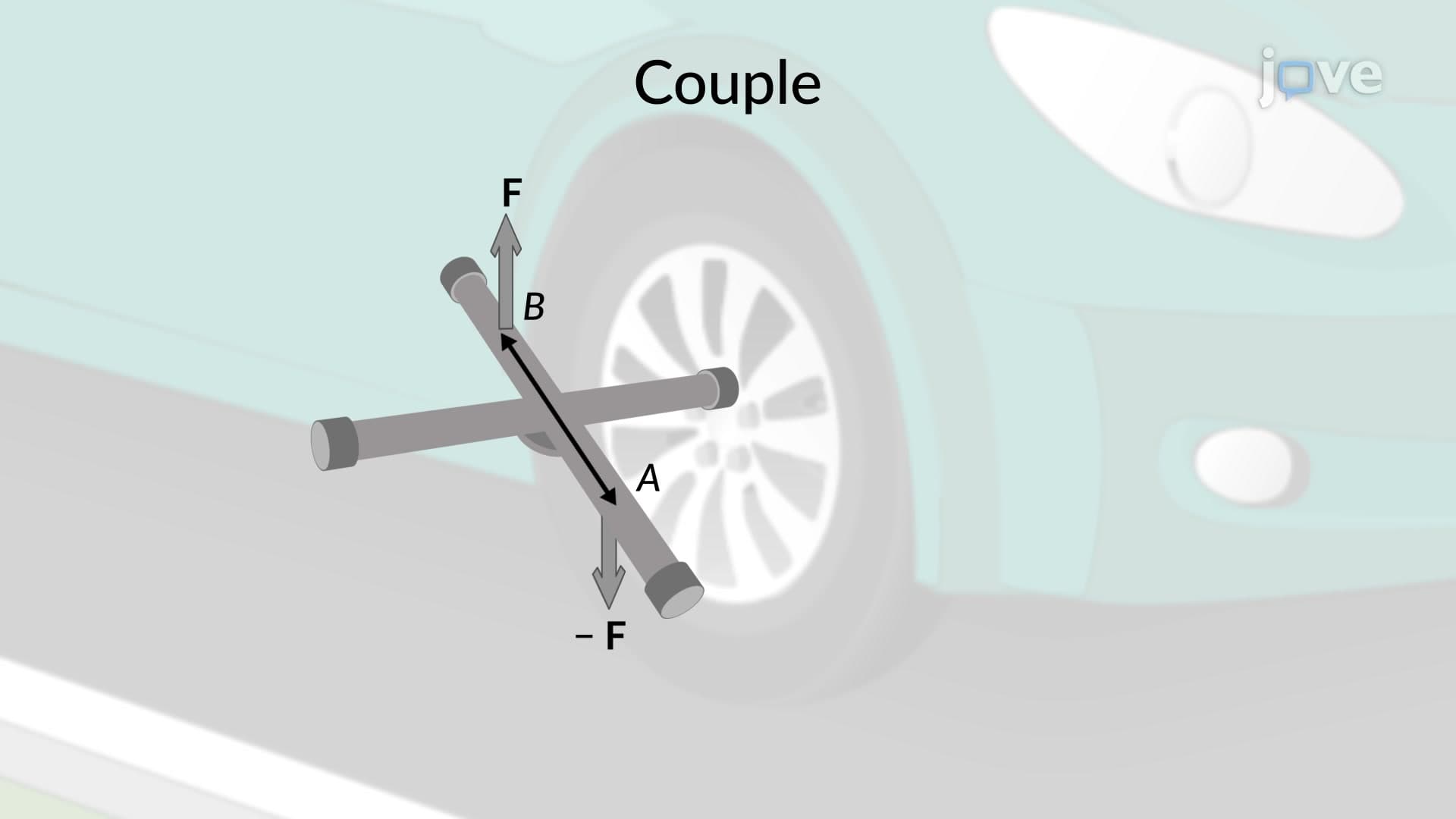

Video Summary: What Is Couple
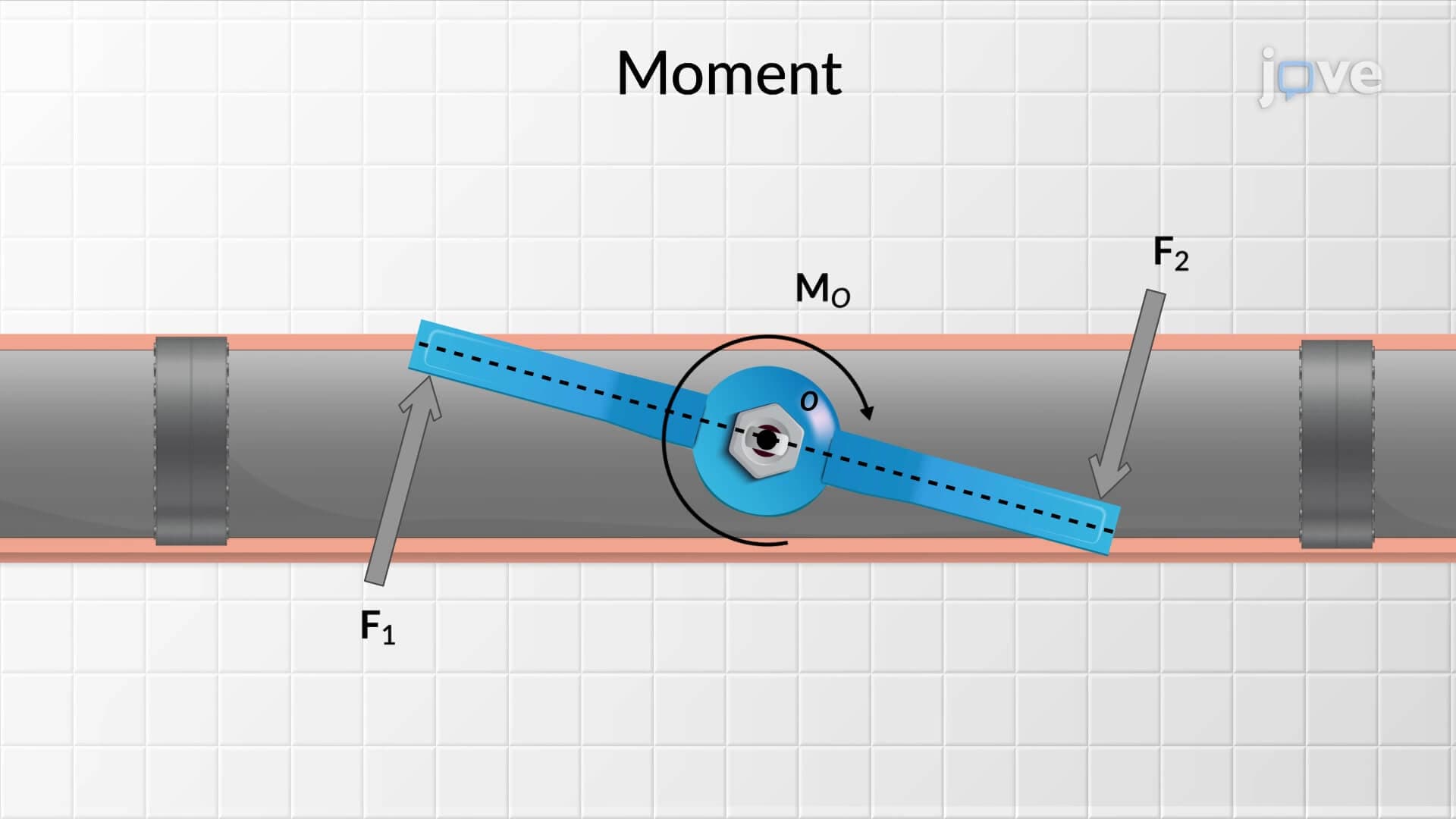
Ever wondered why you need two hands to effectively open a stubborn jar lid? A couple is a pair of parallel forces with equal magnitudes acting in opposite directions, separated by a perpendicular distance. This fundamental physics concept explains the rotational motion we observe when mechanics use lug wrenches to tighten wheel bolts or when engineers design steering systems in Ford vehicles. Unlike single forces, couples create pure rotation without translation, making them essential for understanding rotational mechanics. Watch the full video on JoVE Coach to master this concept with expert-led visuals and step-by-step explanations.
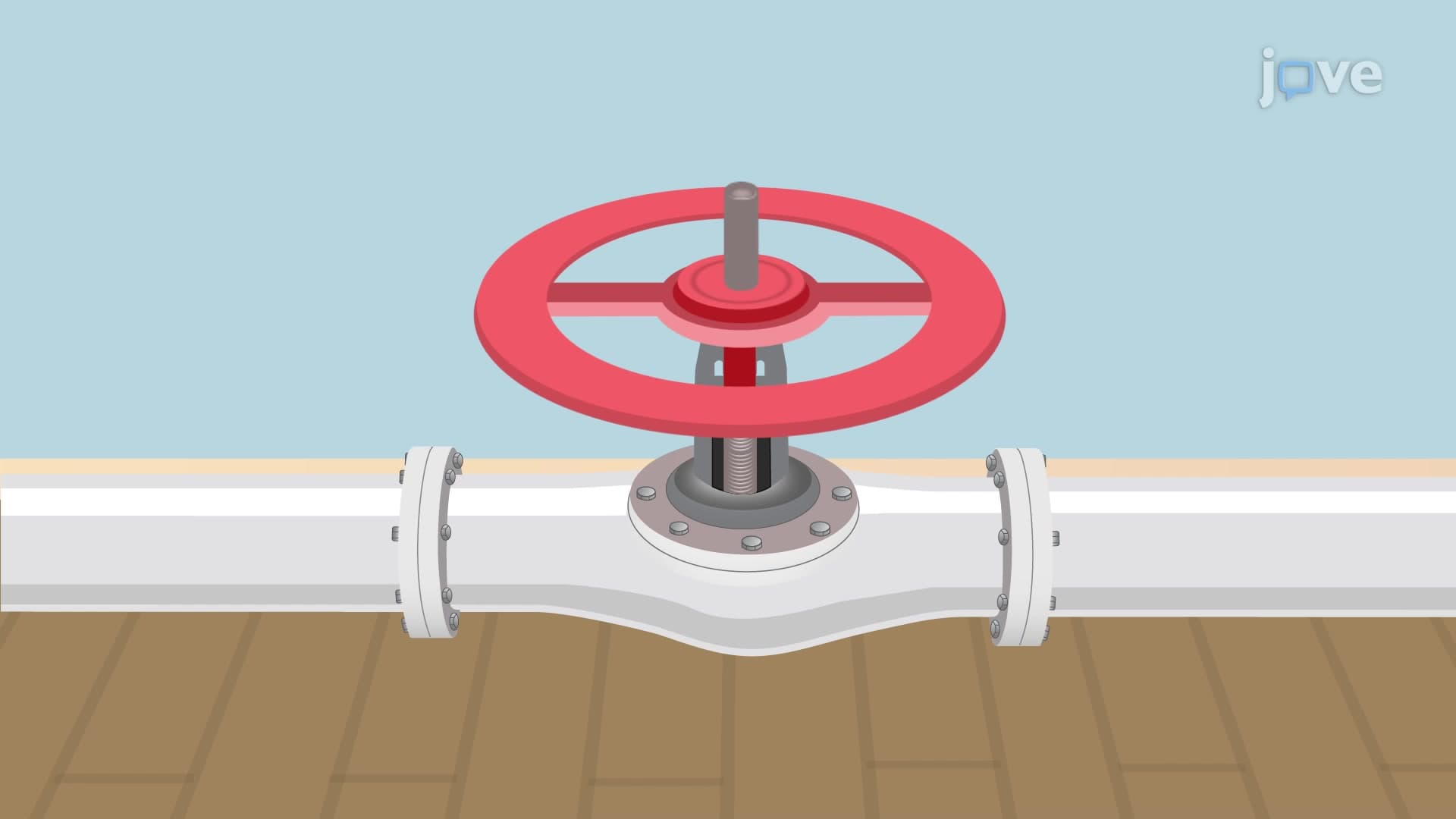
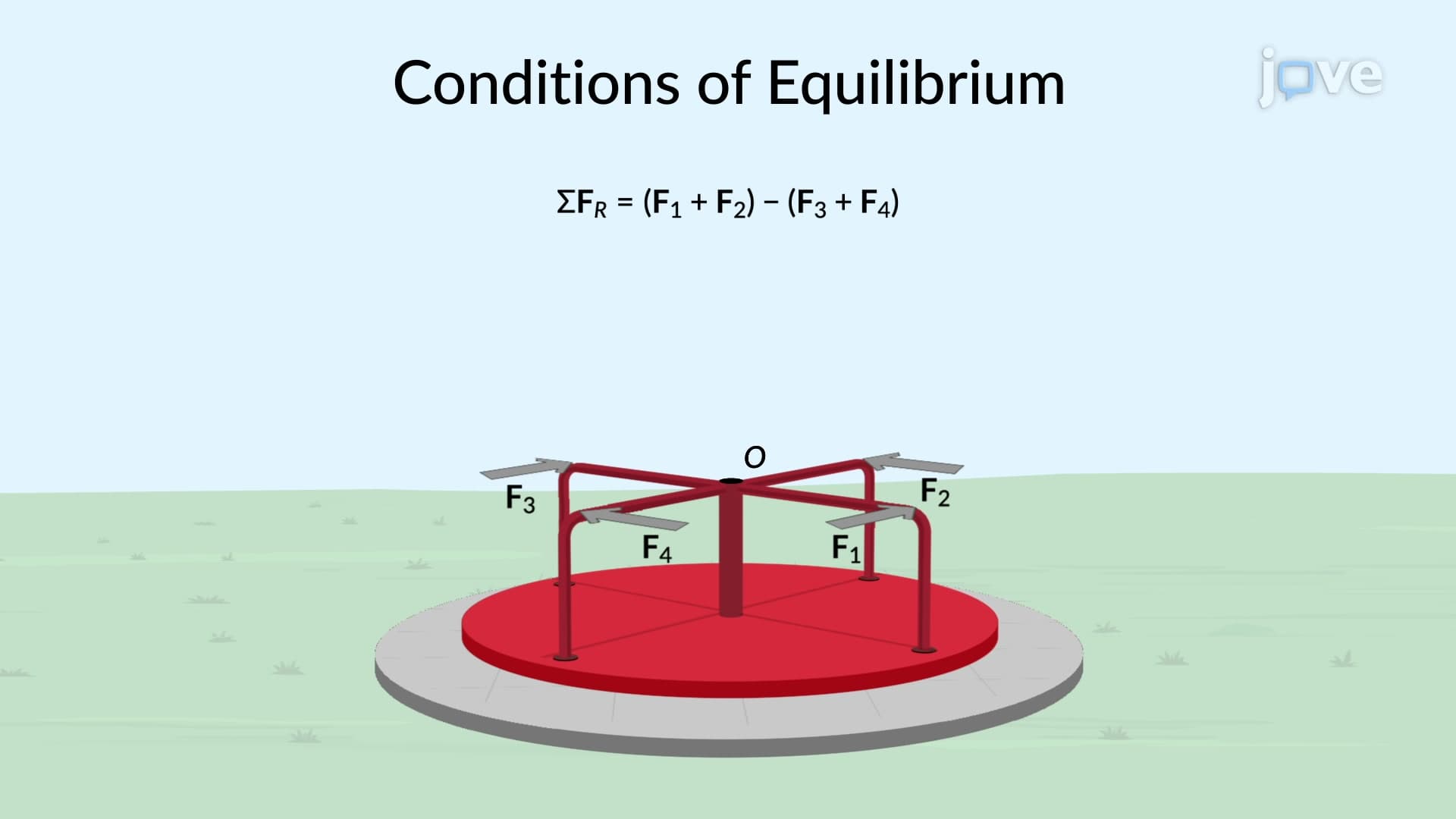
A couple represents one of the most elegant concepts in mechanics, describing a specific arrangement of forces that produces pure rotational motion. Unlike a single force that can both translate and rotate an object, a couple creates only rotation about an axis perpendicular to the plane containing the forces. This unique property makes couples invaluable in engineering applications where controlled rotation is essential.
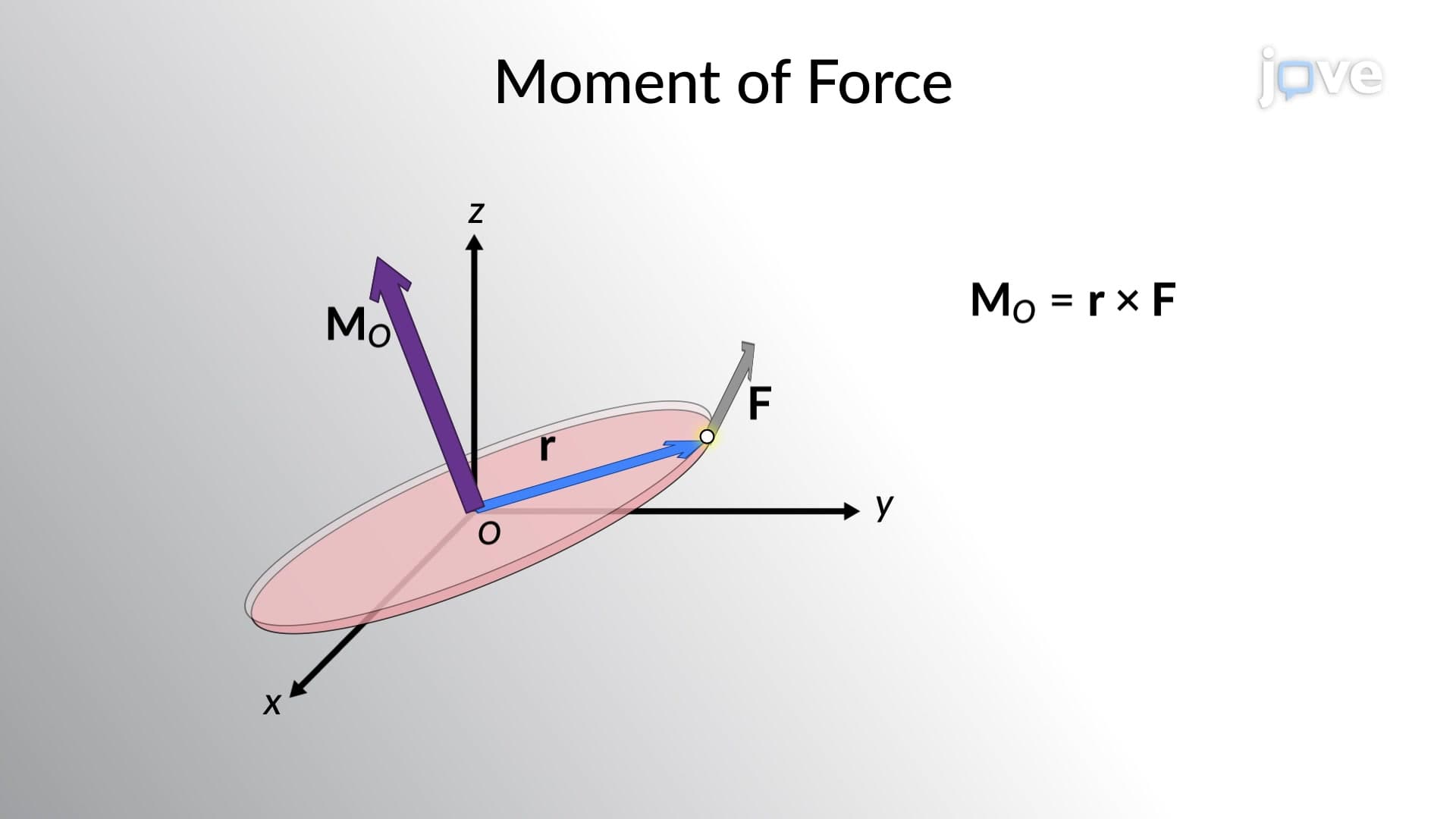
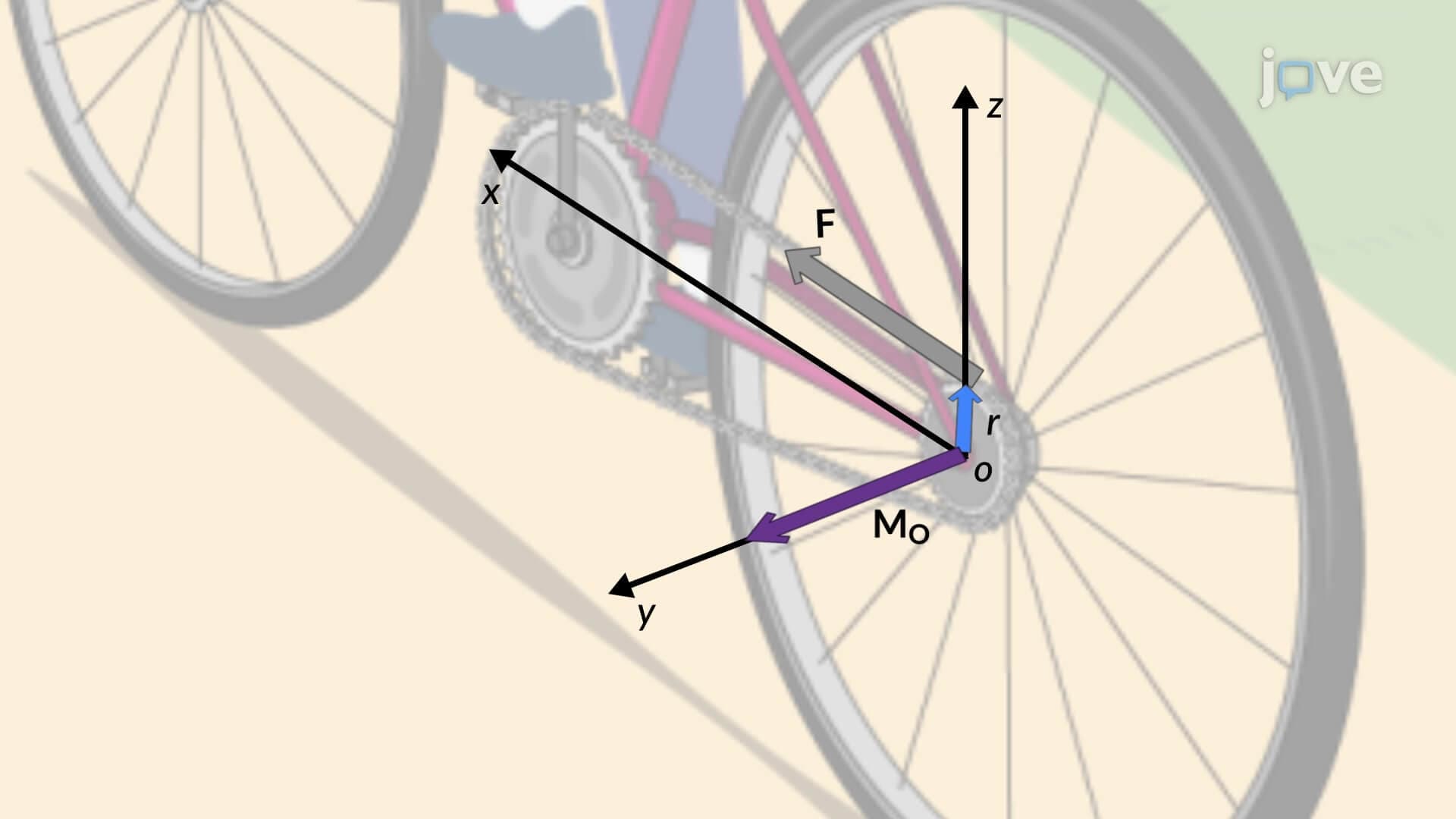
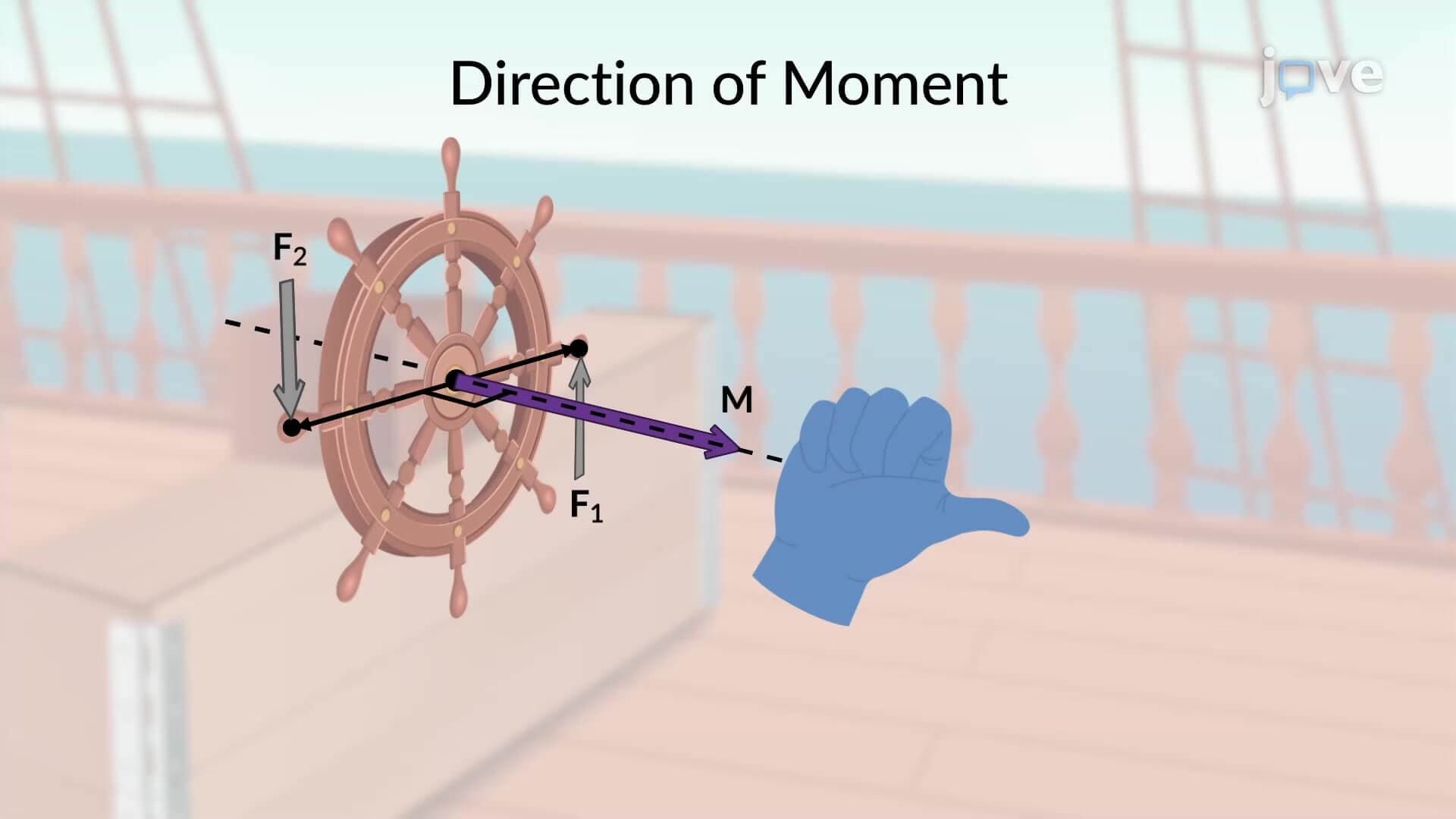
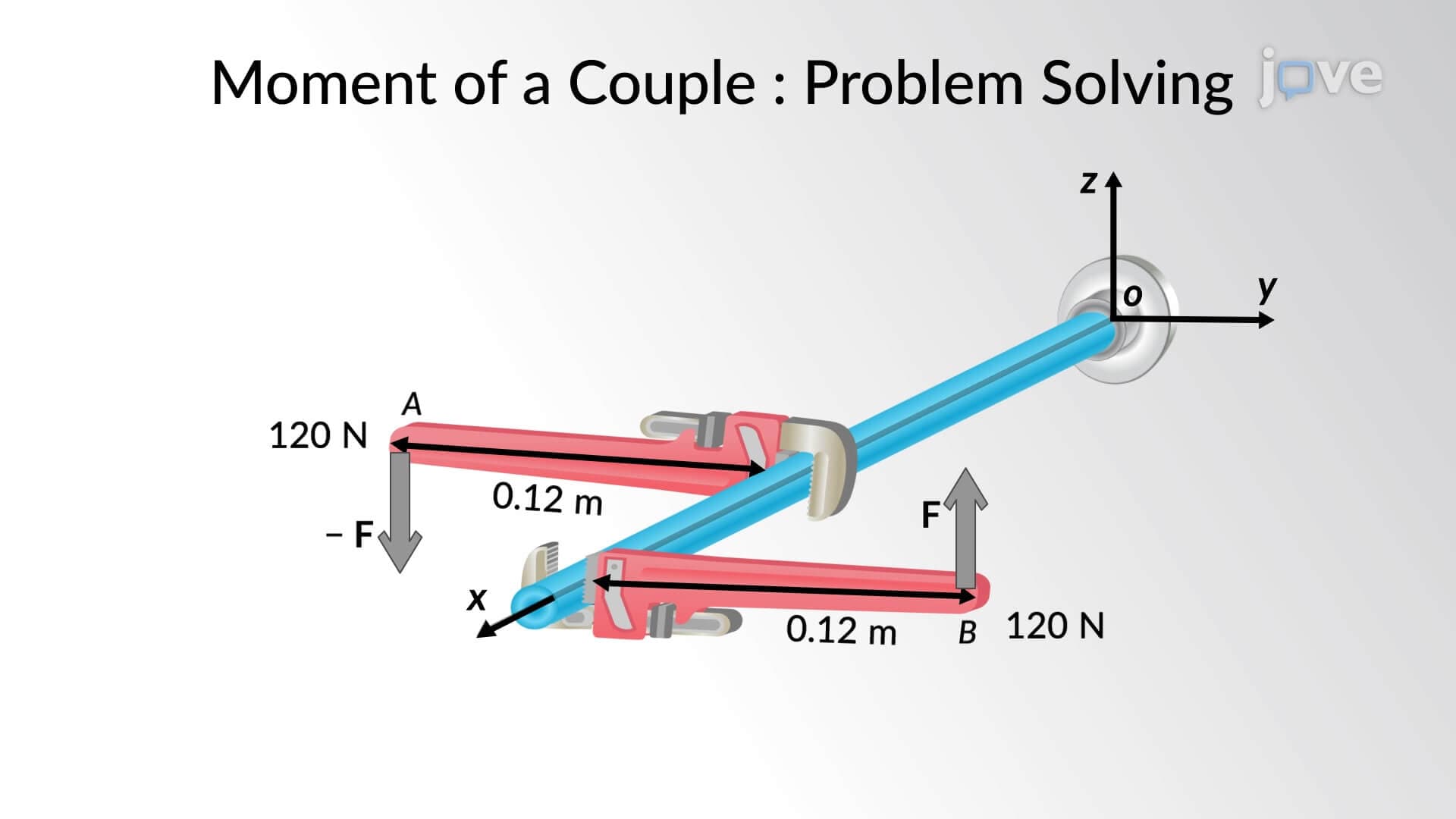
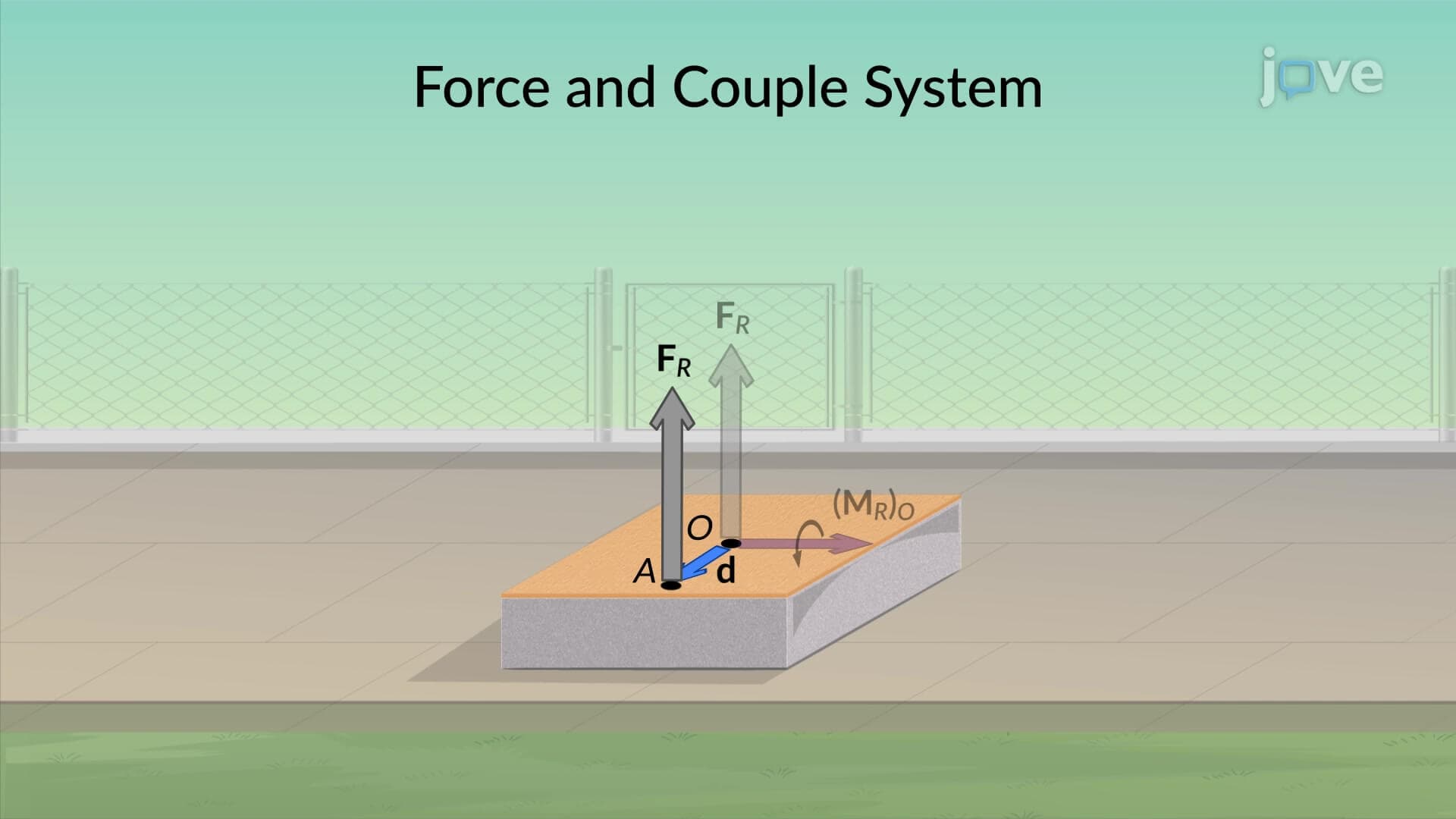
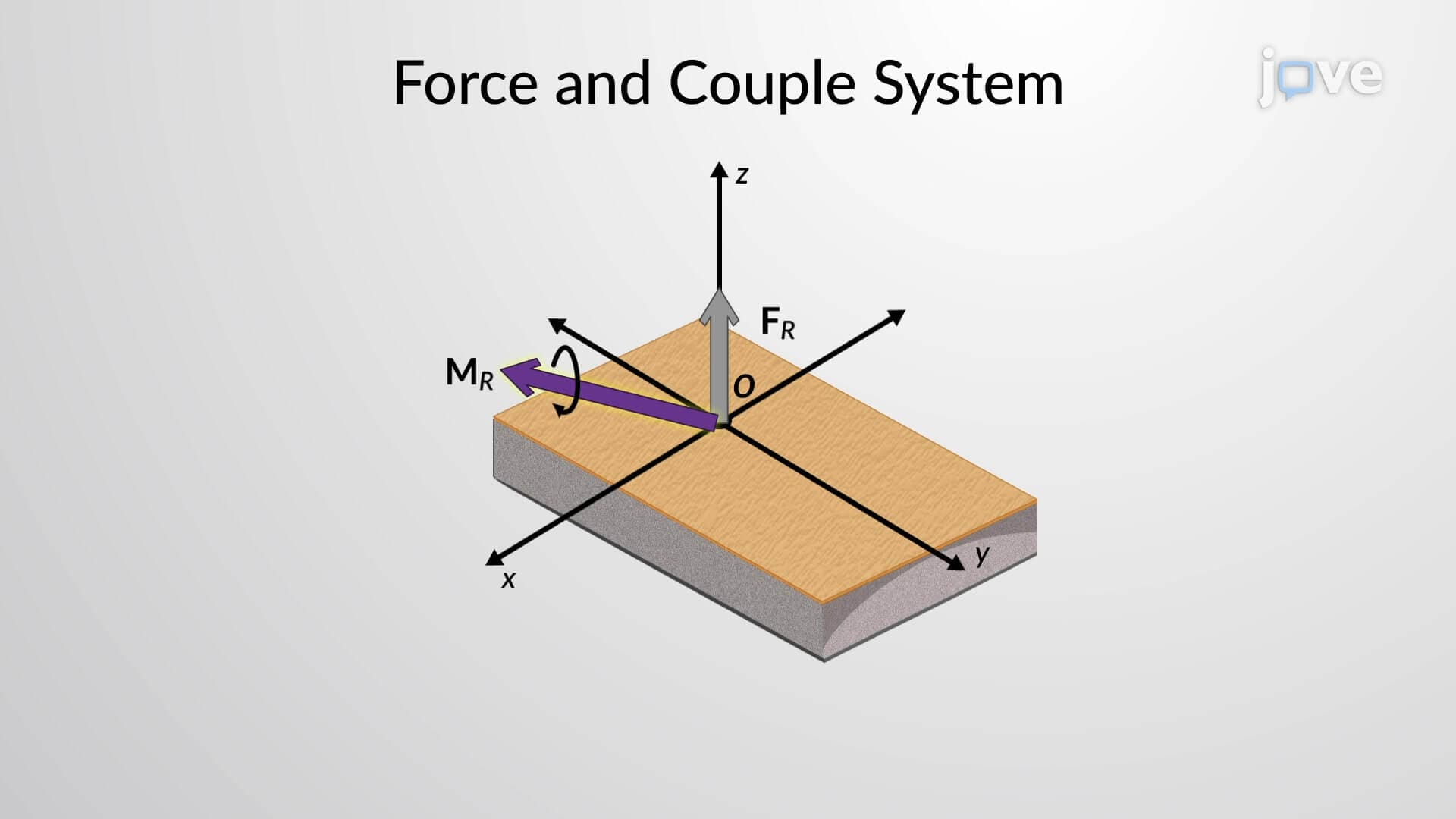
The couple moment quantifies the rotational effect of a couple and equals the magnitude of either force multiplied by the perpendicular distance between their lines of action: M = F × d. More rigorously, using vector analysis, the couple moment equals the sum of moments created by each force about any chosen point. When forces F and -F act at points A and B respectively, the total moment becomes M = rA × F + rB × (-F) = (rA - rB) × F = r × F, where r represents the position vector from the line of action of one force to the other.
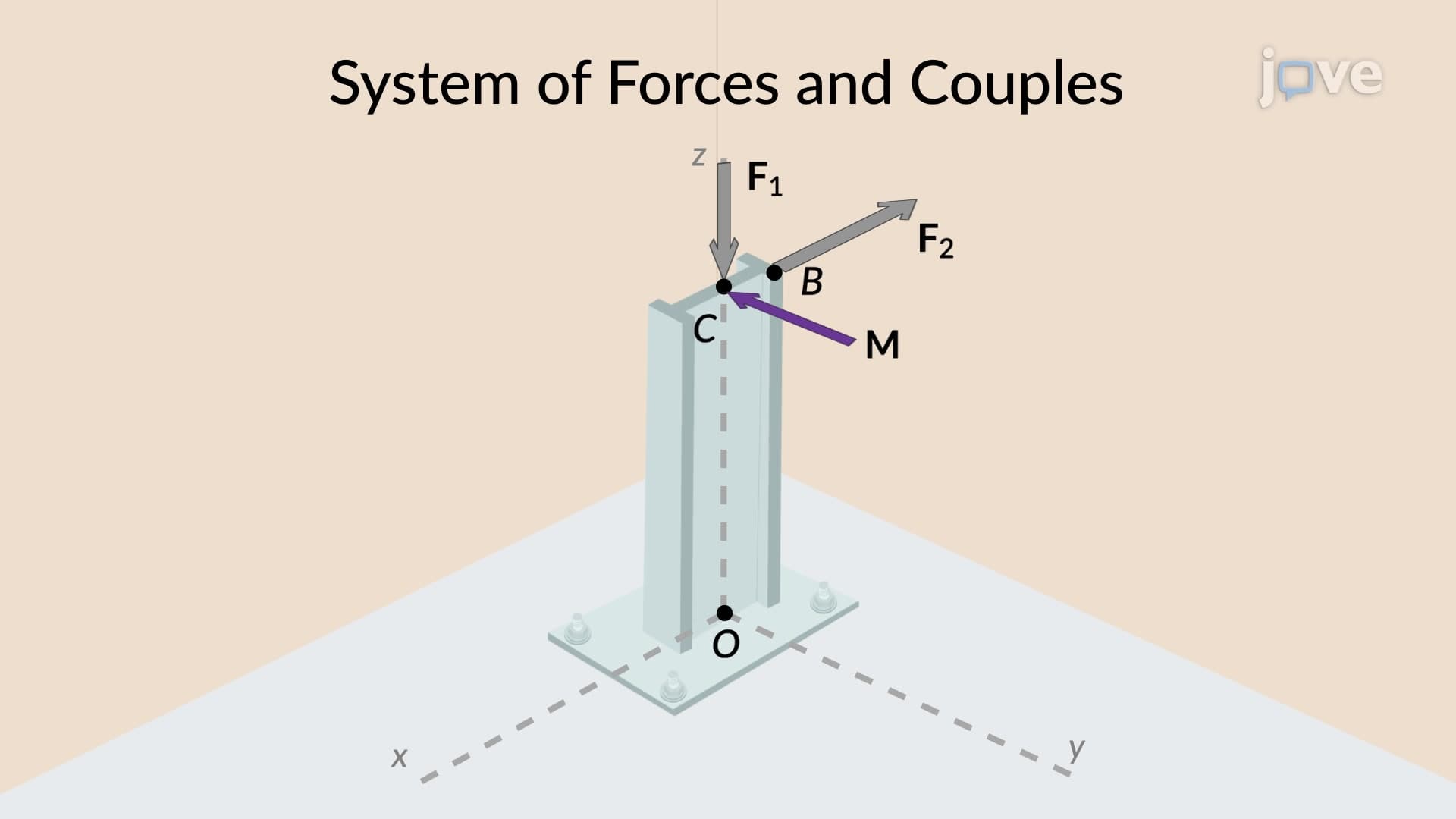
This mathematical elegance reveals why couple moments are considered free vectors, their magnitude and direction remain constant regardless of the reference point chosen for calculation. This property distinguishes couples from ordinary moments, which depend on the moment center location.
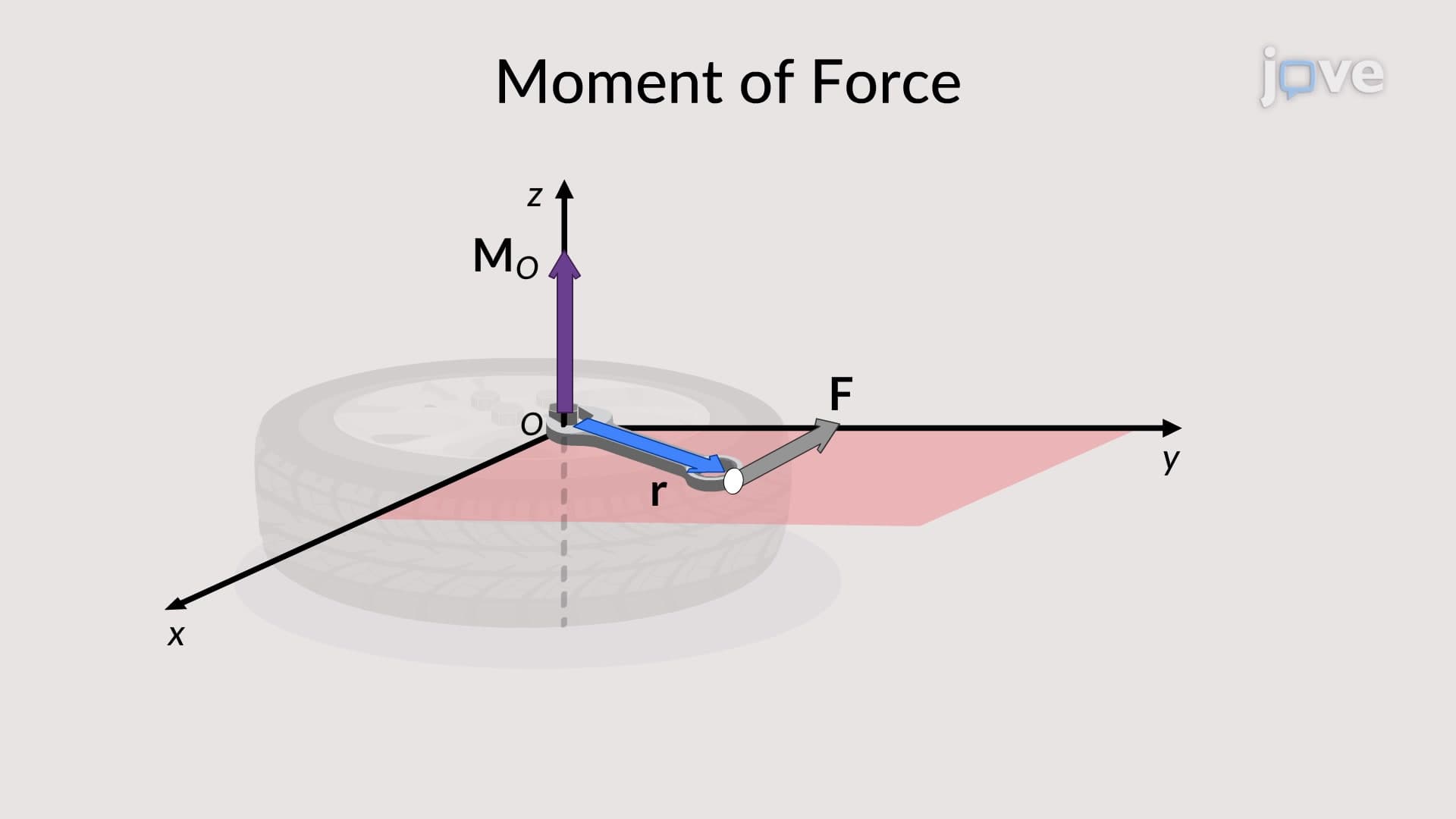
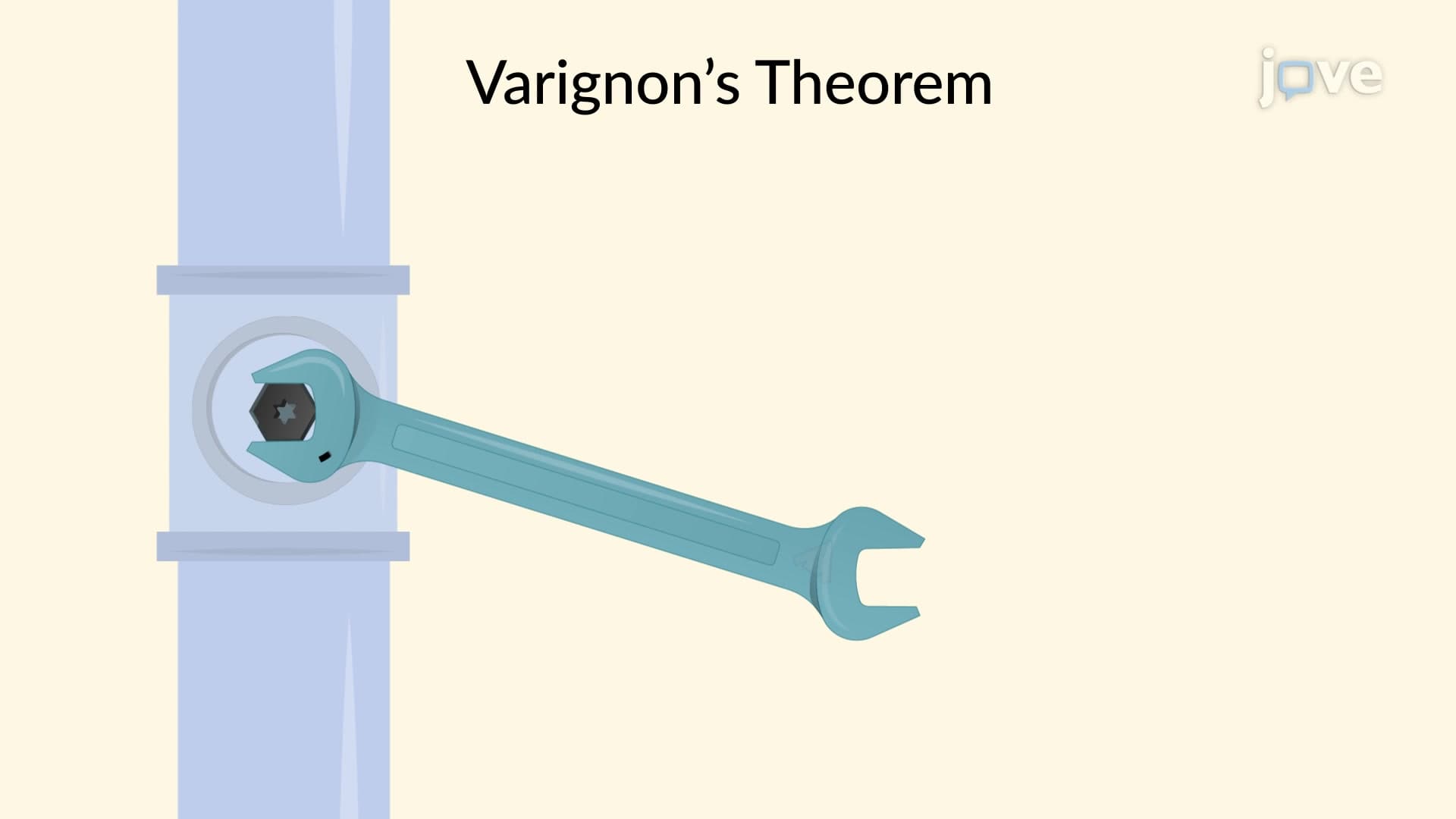
Couples appear throughout American manufacturing and daily life. Automotive technicians rely on lug wrenches that create couples when forces are applied at opposite ends, generating the torque needed to remove wheel bolts. In aerospace applications, Boeing engineers use couples in control surfaces to achieve precise aircraft rotation without unwanted translation. Even simple activities like opening pickle jars or using screwdrivers involve couple principles.
Understanding couples proves crucial for success in AP Physics C: Mechanics, where rotational dynamics problems frequently feature couple analysis. College-level statics courses extensively cover couple applications in structural analysis, while engineering students encounter couples in machine design and robotics coursework. MCAT test-takers benefit from understanding couples when analyzing biomechanical systems, particularly in questions involving joint mechanics and muscle force pairs.
Related Micro-courses