Loading video…


 17 Concepts
 21.8K views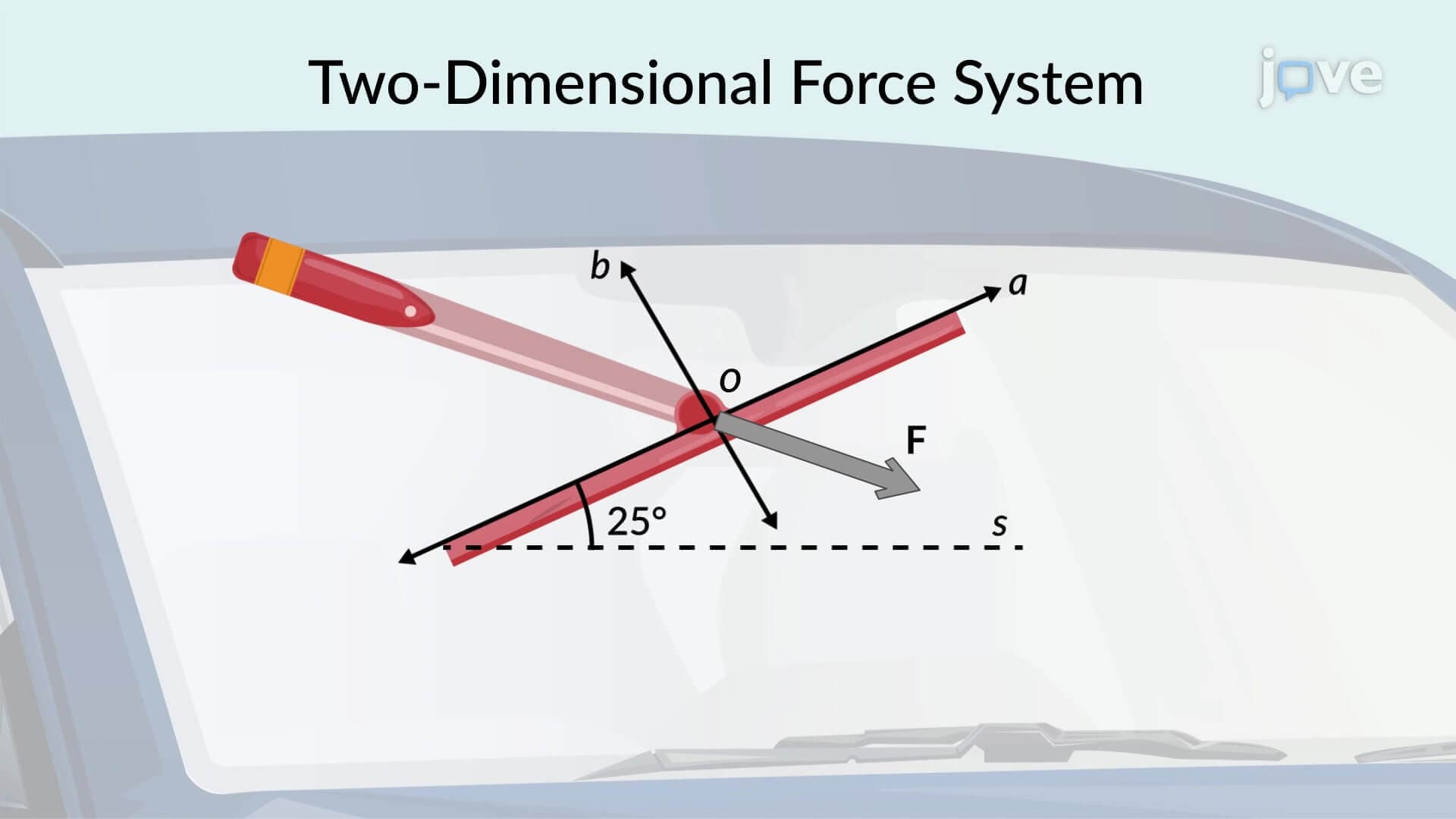

Video Summary: Two Dimensional Force System Problem Solving Explained
Ever wonder how engineers calculate the forces on a NASA rocket's control fins during launch? Two dimensional force system problem solving breaks down complex force interactions into manageable mathematical components. This windshield wiper example demonstrates how forces acting at angles-like those on aircraft control surfaces or bridge supports-can be resolved into perpendicular components for precise engineering calculations. Watch the full video on JoVE Coach to master this concept with expert-led visuals and step-by-step explanations.
Two dimensional force system problem solving forms the cornerstone of statics and dynamics courses taught in high school AP Physics and college engineering programs. This analytical method allows students and engineers to break down complex force interactions into manageable mathematical components, making it possible to solve problems involving everything from bridge trusses to aerospace control systems.
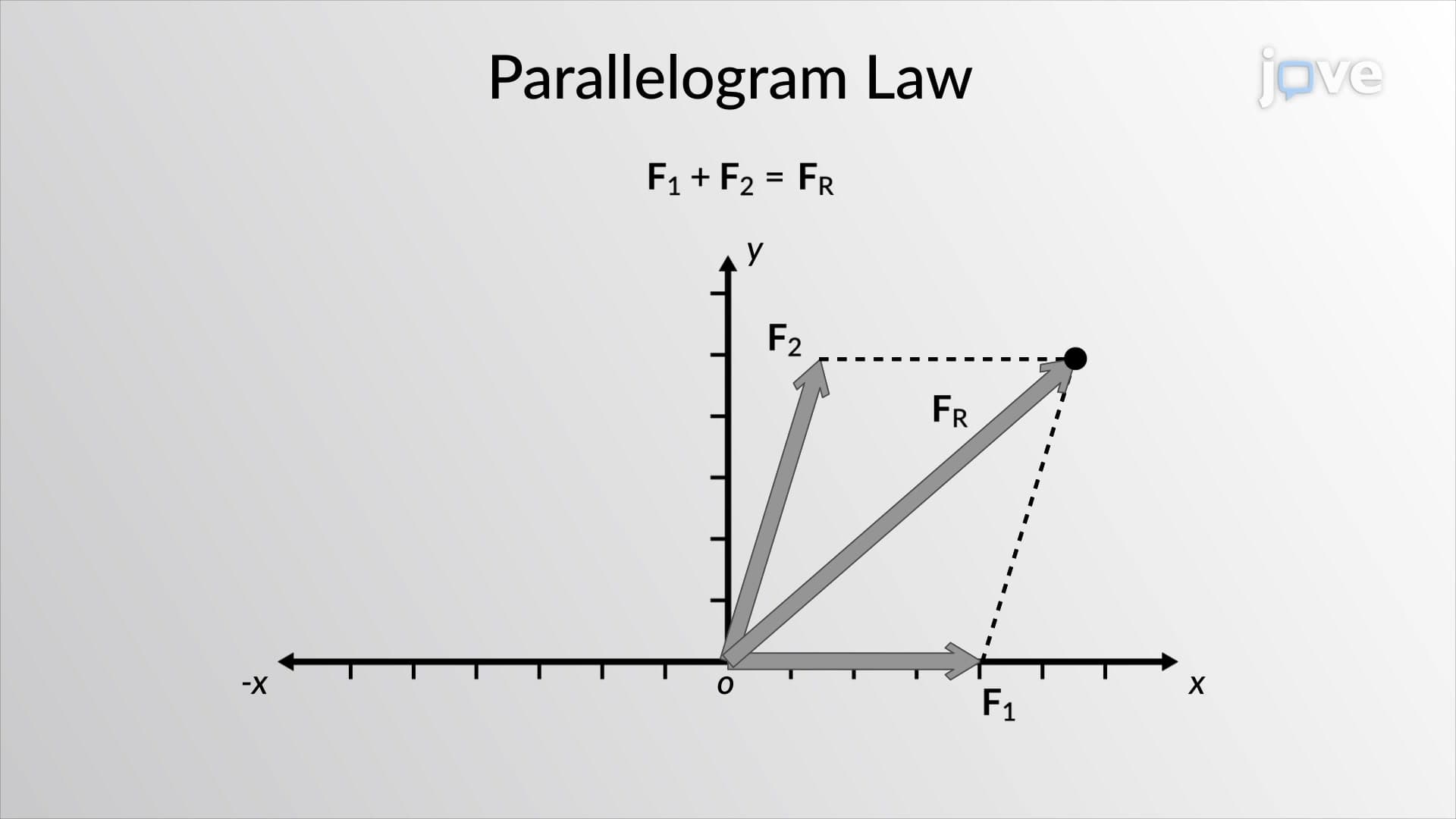
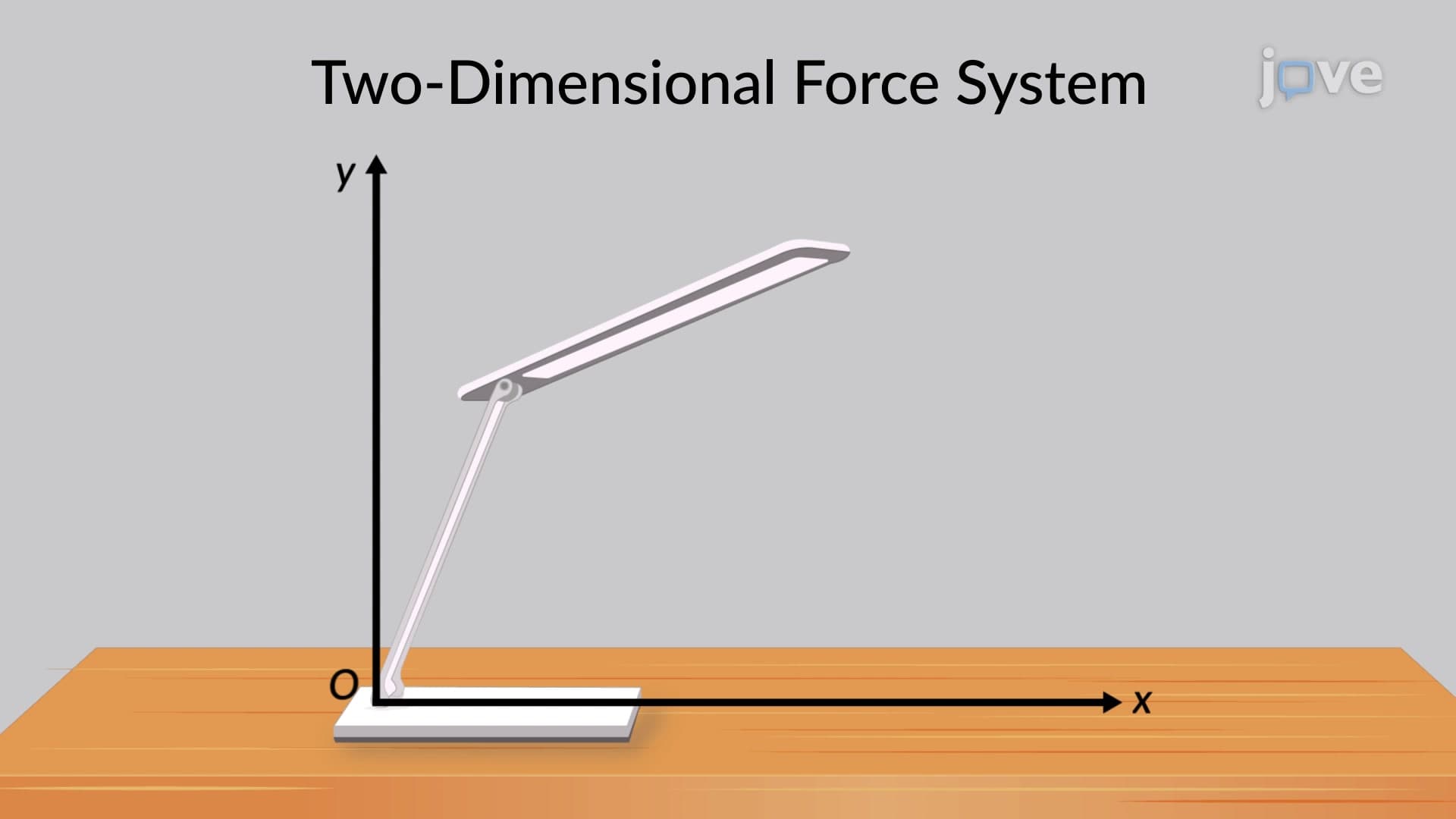
The fundamental principle involves decomposing a force vector into two perpendicular components, typically along x and y axes (or a and b axes as shown in the example). This decomposition relies heavily on trigonometric relationships, where the force components equal the total force magnitude multiplied by the appropriate sine or cosine functions of the angle between the force vector and the reference axis.
In two-dimensional systems, understanding geometric relationships proves crucial for accurate problem solving. The wiper example demonstrates how multiple angles can combine to create the final angle between a force vector and its reference axis. When a wiper sits at 25 degrees to the baseline and the applied force makes a 20-degree angle with a parallel reference line, these angles add together (considering alternate angle properties) to create a 45-degree total angle.
This geometric analysis appears frequently in AP Physics C mechanics problems and college-level statics courses. Students must master the ability to visualize these angle relationships and apply geometric principles like alternate angles, corresponding angles, and angle addition to determine the correct orientation of force vectors.
The mathematical resolution process involves three key steps that appear consistently across standardized exams and engineering applications. First, identify all relevant angles and their geometric relationships. Second, apply trigonometric functions to establish relationships between force components and the total force magnitude. Third, solve algebraically for unknown quantities.
For the given example, knowing that F(a) = 65 N and the total angle is 45 degrees, the force magnitude equals F(a)/cos(45°) = 65/cos(45°) = 65/(√2/2) = 92.02 N. The b-component then equals F × sin(45°) = 92.02 × (√2/2) = 65 N, but negative since it acts in the negative b-direction.
Two-dimensional force analysis finds extensive application in structural engineering, aerospace design, and mechanical systems throughout American industry. Boeing engineers use these principles when analyzing wing loads during flight maneuvers. Civil engineers apply 2D force resolution when designing earthquake-resistant buildings in California. Even automotive engineers rely on these concepts when calculating suspension forces during vehicle cornering.
This mathematical framework also prepares students for advanced courses in engineering mechanics, where three-dimensional force systems and dynamic loading conditions require even more sophisticated analytical approaches. Success in AP Physics, SAT Subject Tests, and college entrance into STEM programs often depends on mastering these fundamental force resolution techniques.
Related Micro-courses