Loading video…


 17 Concepts
 21.8K views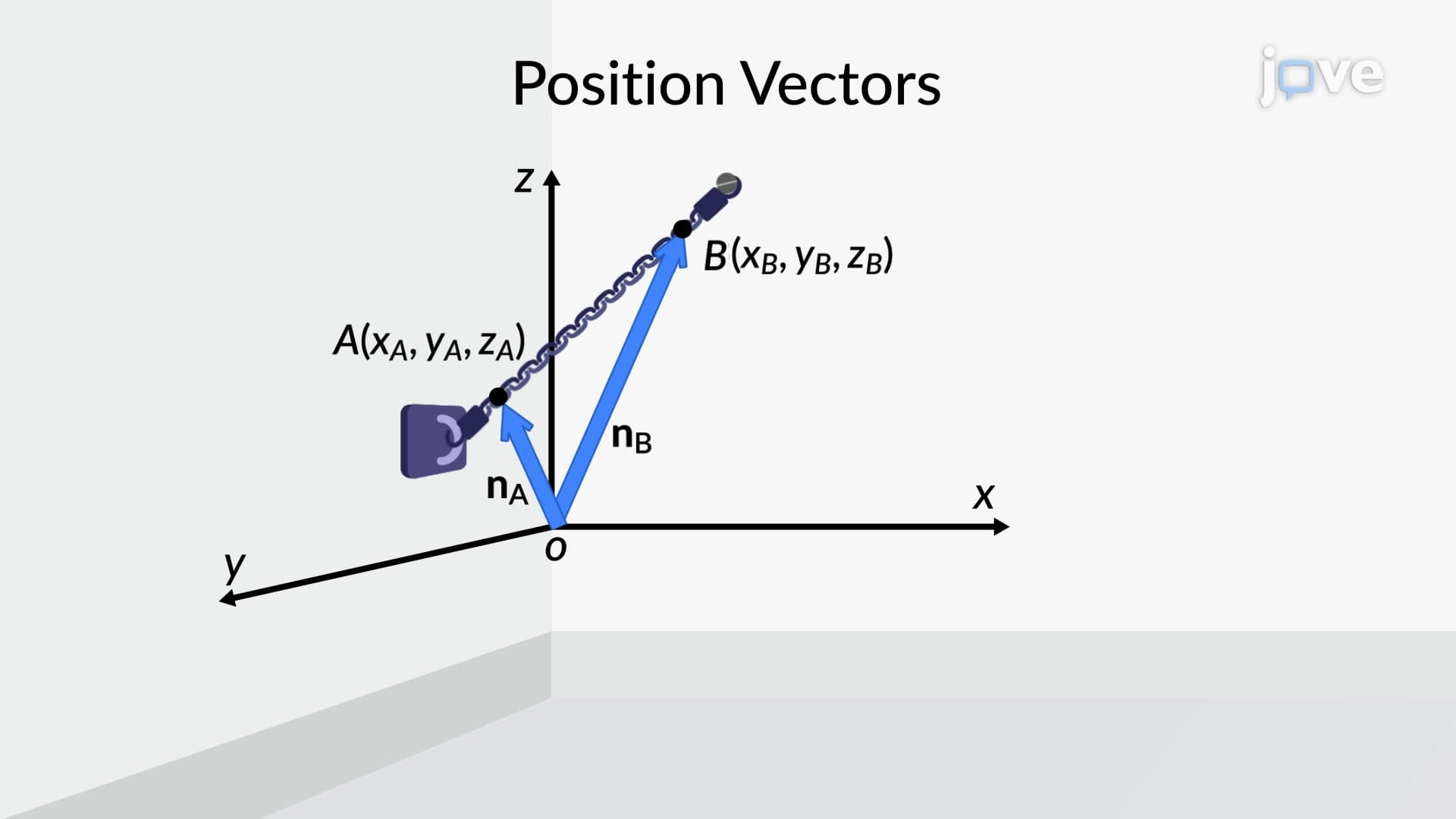

Video Summary: What are Position Vectors
Ever wondered how GPS systems pinpoint your exact location on Earth? Position vectors serve as the mathematical foundation for navigation systems, from smartphone maps to NASA spacecraft tracking. In engineering mechanics and physics, position vectors locate any point in space relative to a fixed reference point, much like how street addresses identify buildings relative to city coordinates. These fundamental mathematical tools connect abstract coordinate geometry with real-world applications in aerospace engineering, robotics, and architectural design. Watch the full video on JoVE Coach to master this concept with expert-led visuals and step-by-step explanations.
Position vectors represent one of the most fundamental concepts in vector mathematics and physics, serving as the bridge between abstract mathematical theory and practical engineering applications. Unlike displacement vectors that describe change in position, position vectors establish absolute location coordinates relative to a fixed reference point called the origin. This distinction proves crucial for students preparing for AP Physics, college-level statics courses, and engineering programs across the United States.
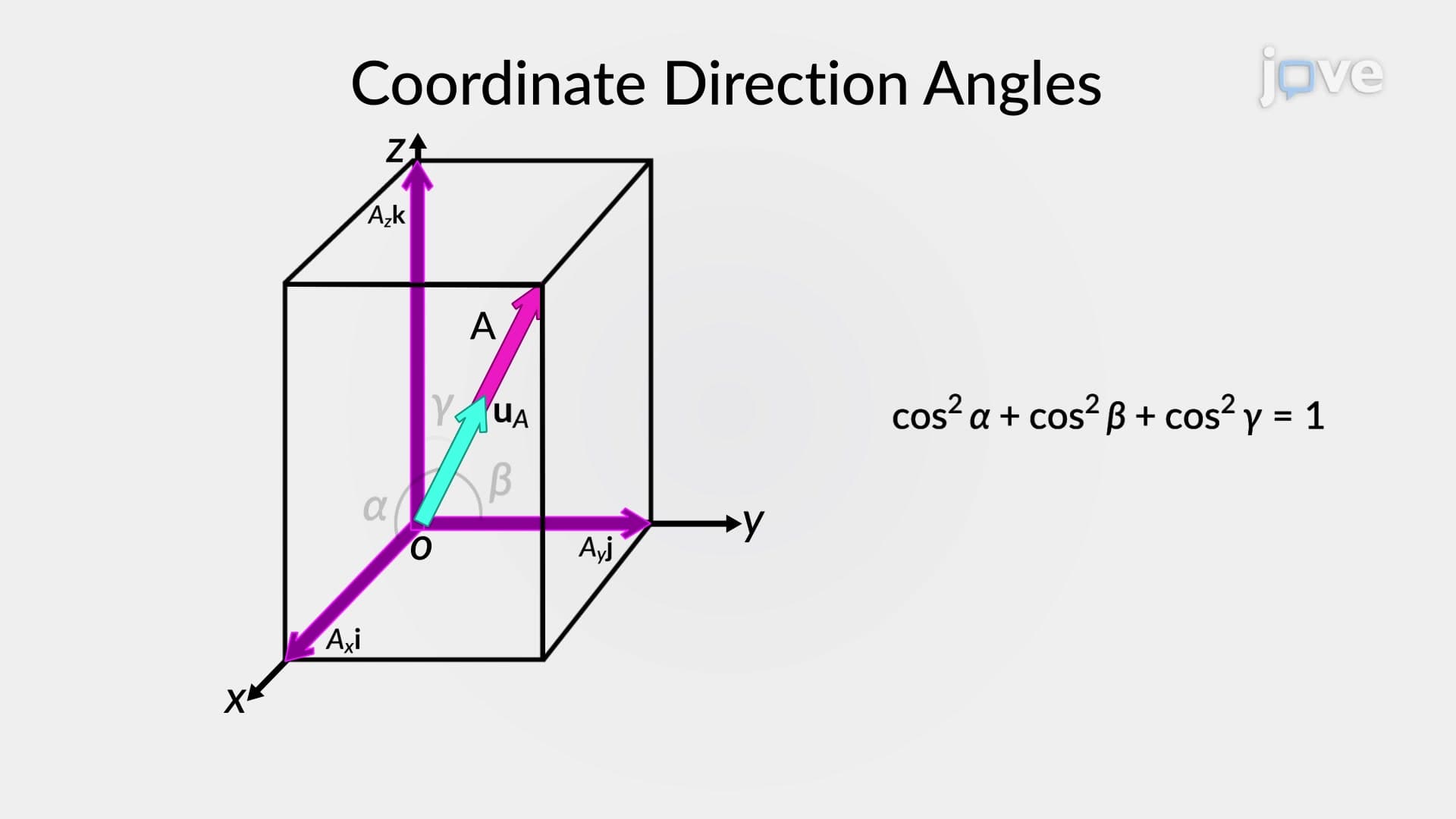
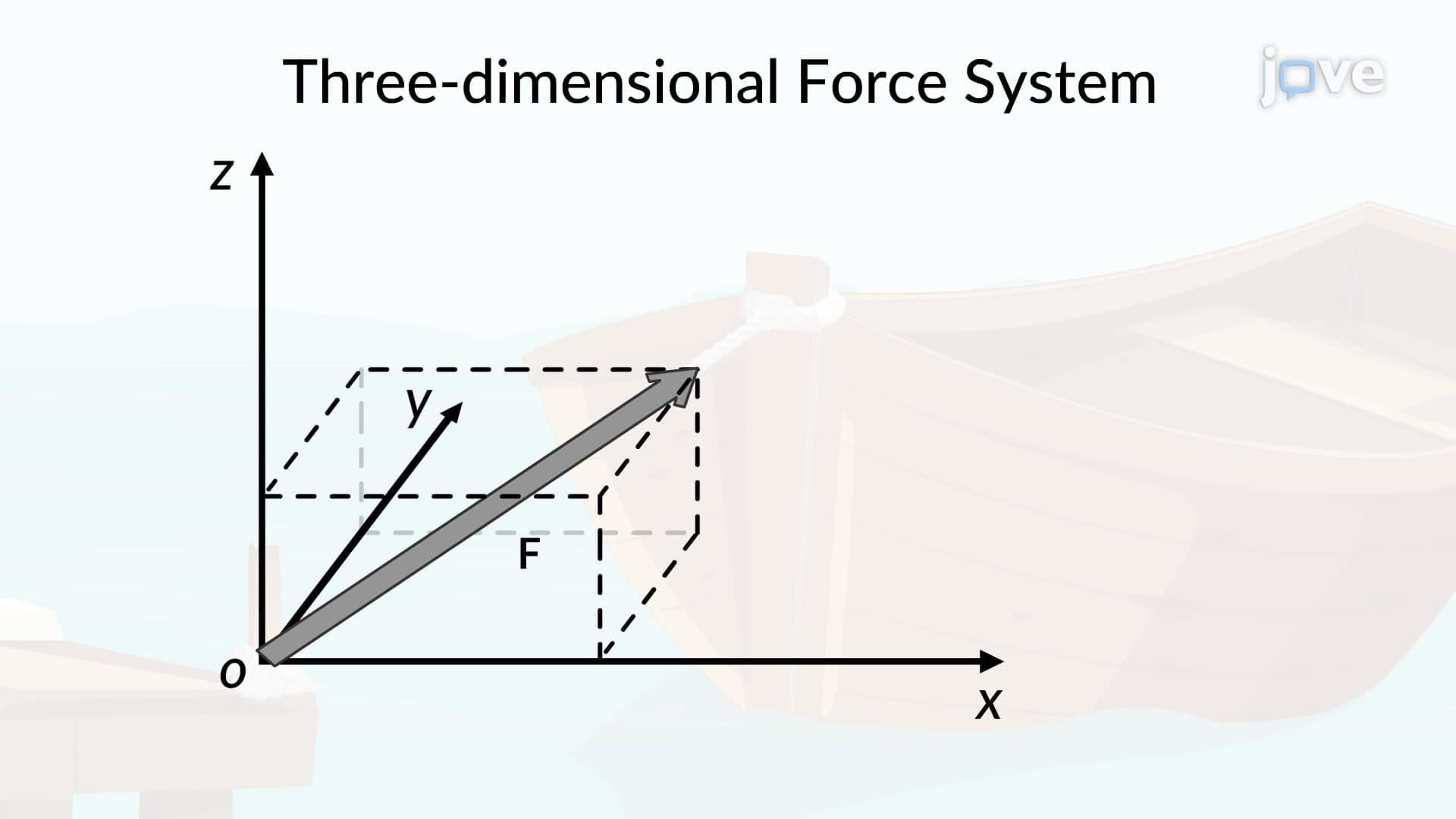
Position vectors in three-dimensional space utilize the Cartesian coordinate system, where any point P can be expressed as r = xi + yj + zk. The unit vectors i, j, and k represent directions along the x, y, and z axes respectively, while x, y, and z denote the scalar components. This mathematical framework appears extensively in AP Calculus BC vector problems and forms the foundation for multivariable calculus courses at institutions like MIT, Stanford, and UC Berkeley.
Consider a practical example: an air traffic controller at Los Angeles International Airport uses position vectors to track aircraft. If the control tower serves as the origin, an airplane's position vector might be r = 5000i + 3000j + 2000k feet, indicating the aircraft is 5,000 feet east, 3,000 feet north, and 2,000 feet above the control tower.
Students often encounter different types of position vectors depending on the coordinate system employed. While Cartesian coordinates prove most common in introductory courses, polar coordinates become essential in advanced physics and engineering applications. The resultant position vector between two points A and B follows the relationship r(AB) = r(B) - r(A), a concept frequently tested on college entrance exams and engineering qualifying examinations.
Position vectors find extensive application in American aerospace, automotive, and construction industries. Boeing engineers use position vectors to design aircraft control systems, while Tesla's autonomous vehicle technology relies on position vector calculations for precise navigation. Construction companies employ these concepts when using surveying equipment to establish building foundations and ensure structural integrity according to US building codes.
Related Micro-courses