Loading video…


 17 Concepts
 21.8K views

Video Summary: What Is Scalar Notation
Ever wondered how NASA engineers calculate the precise thrust needed to launch a rocket? Scalar notation transforms complex force vectors into manageable mathematical components that can be easily calculated and combined. When forces act from multiple directions-like a tug-of-war team pulling northeast while another pulls southeast-scalar notation breaks each force into x and y components using trigonometric functions, allowing engineers to find the resultant force through simple algebraic addition. Watch the full video on JoVE Coach to master this concept with expert-led visuals and step-by-step explanations.
Scalar notation represents a fundamental bridge between vector physics and practical calculations. Unlike vectors, which require both magnitude and direction, scalars are simple numerical values that can be manipulated using basic arithmetic operations. In physics and engineering, scalar notation allows us to decompose complex vector quantities into their component parts along specific coordinate axes.
When dealing with forces, displacements, or other vector quantities, scalar notation transforms a potentially complicated vector problem into straightforward algebraic calculations. This approach proves invaluable in fields ranging from structural engineering to aerospace design, where multiple forces must be analyzed simultaneously.
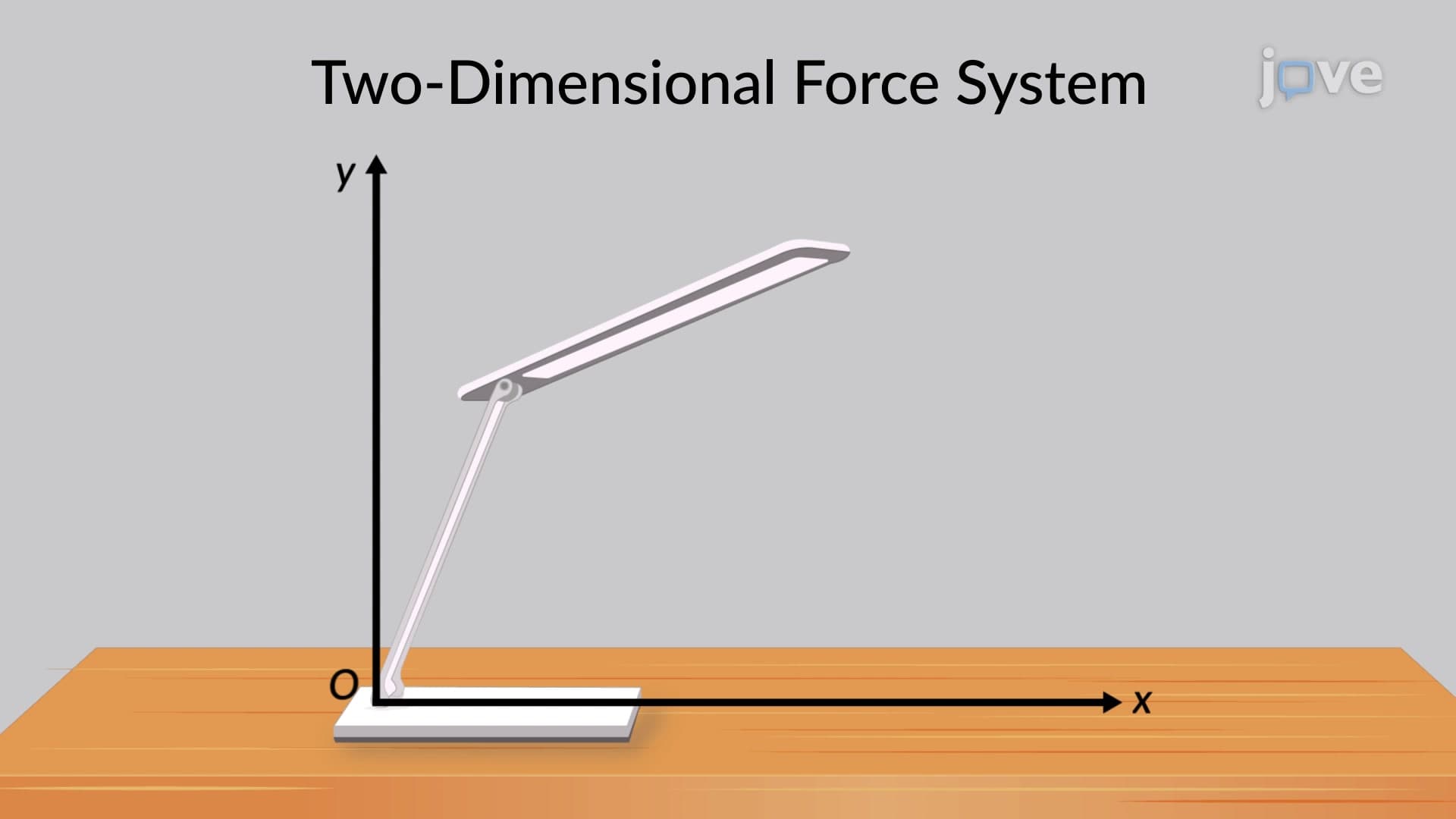
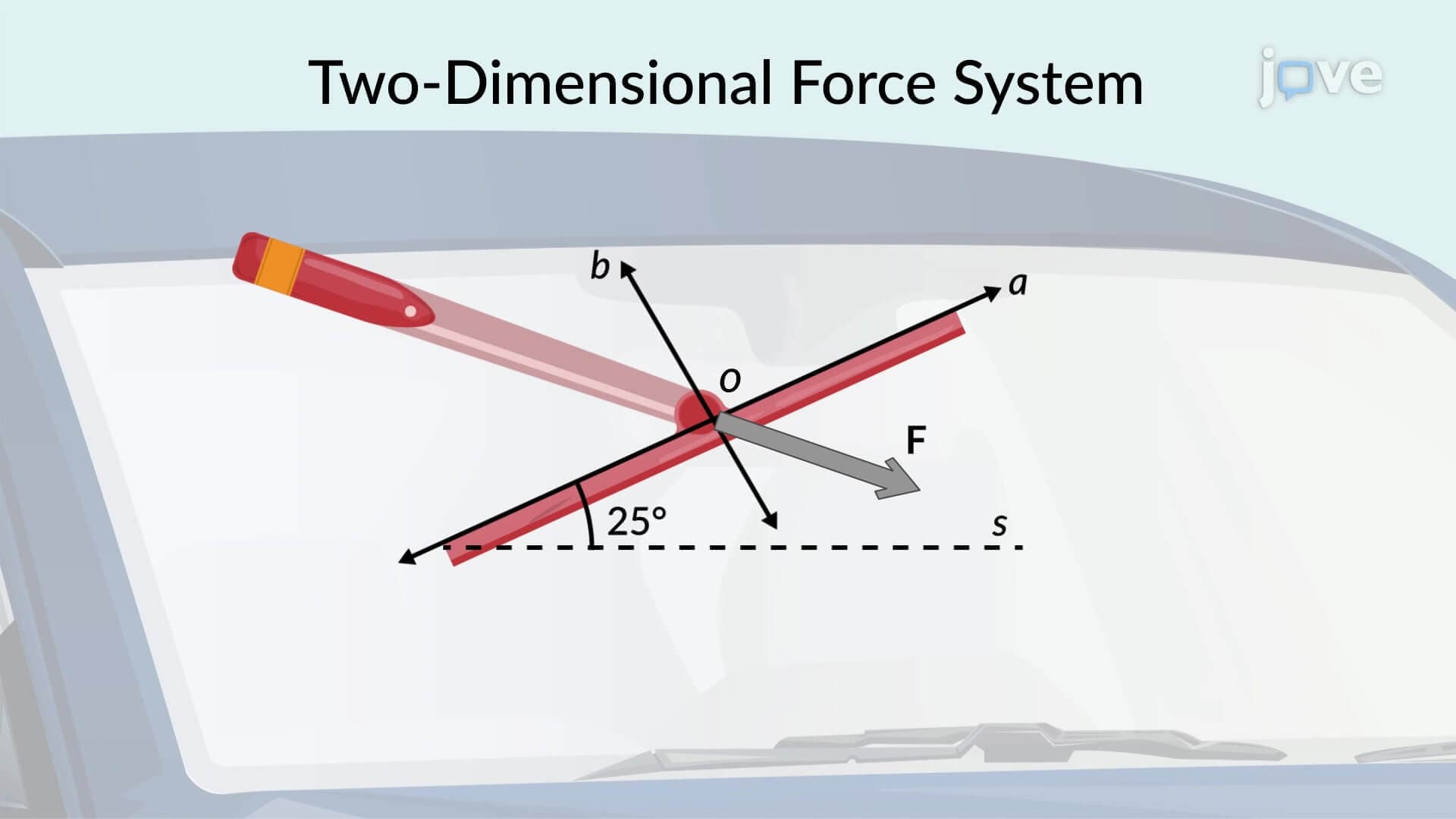
The process of converting vectors to scalar notation involves vector resolution-decomposing a single vector into perpendicular components. Consider a construction crane lifting materials: if the cable tension acts at a 30-degree angle above horizontal, scalar notation separates this single force into horizontal and vertical components.
For a force vector F acting at angle θ above the positive x-axis:
This mathematical relationship stems from right triangle trigonometry, where the vector forms the hypotenuse and its components form the triangle's legs. Understanding these relationships is crucial for AP Physics courses and college-level mechanics.
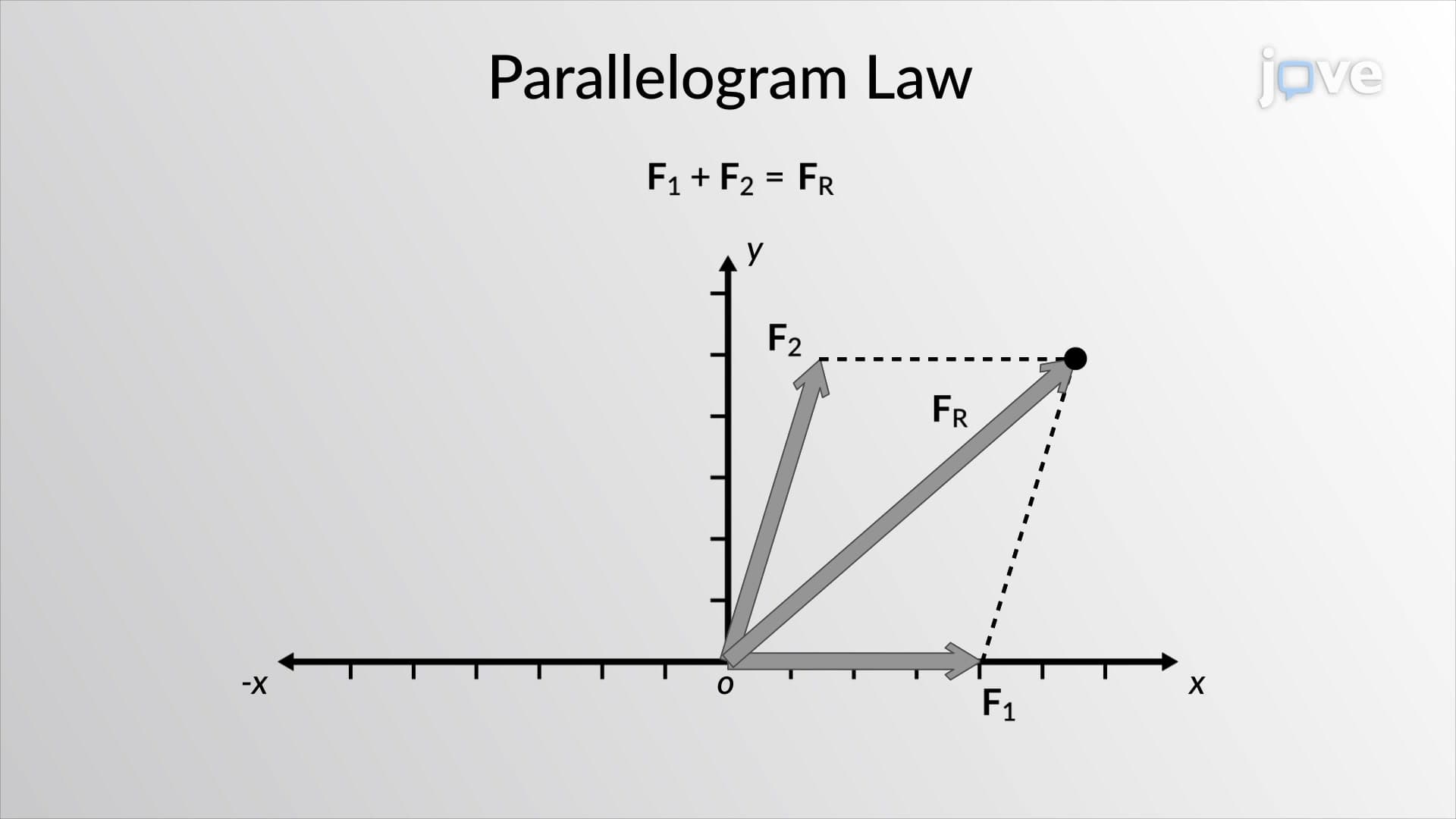
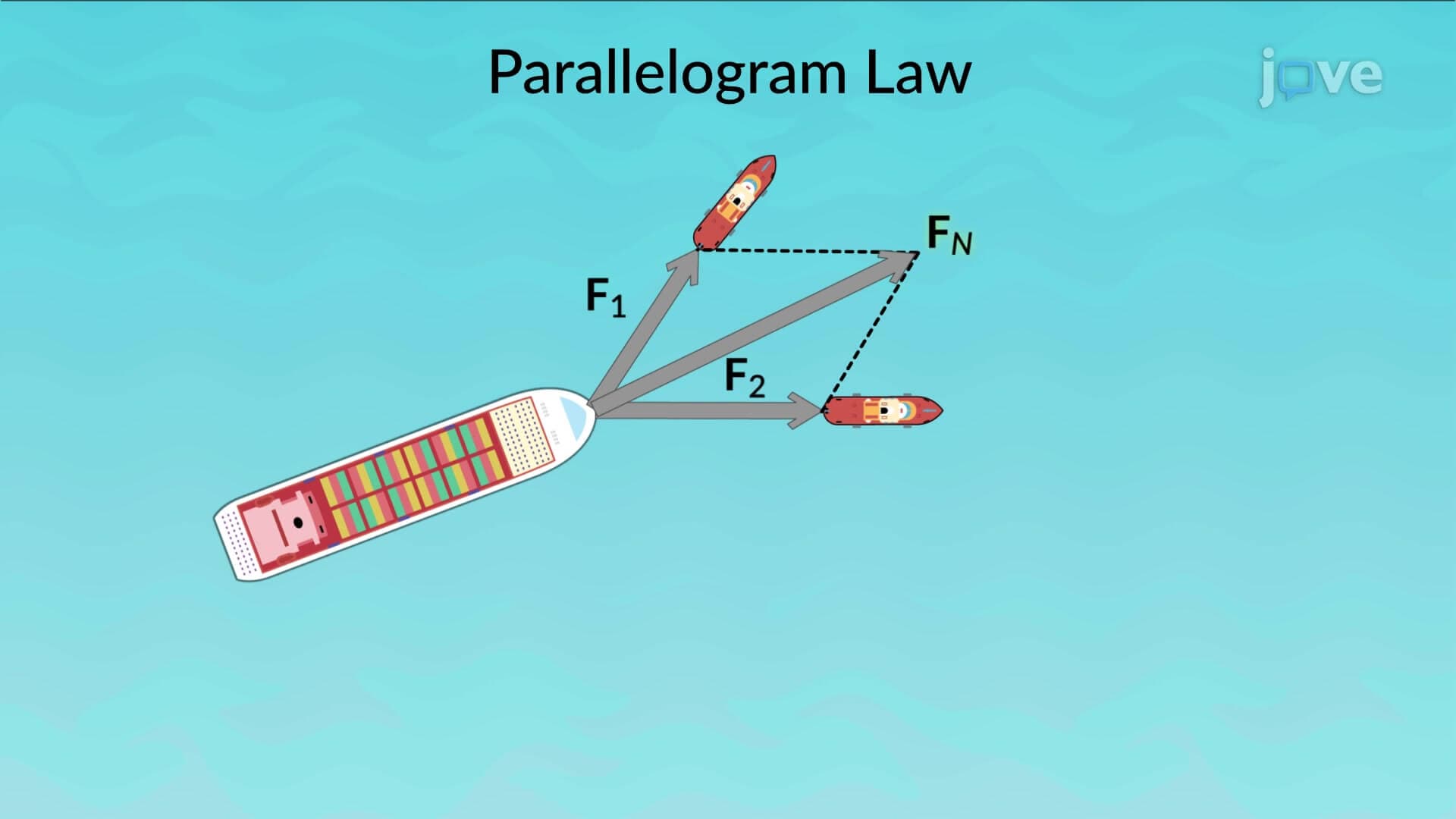
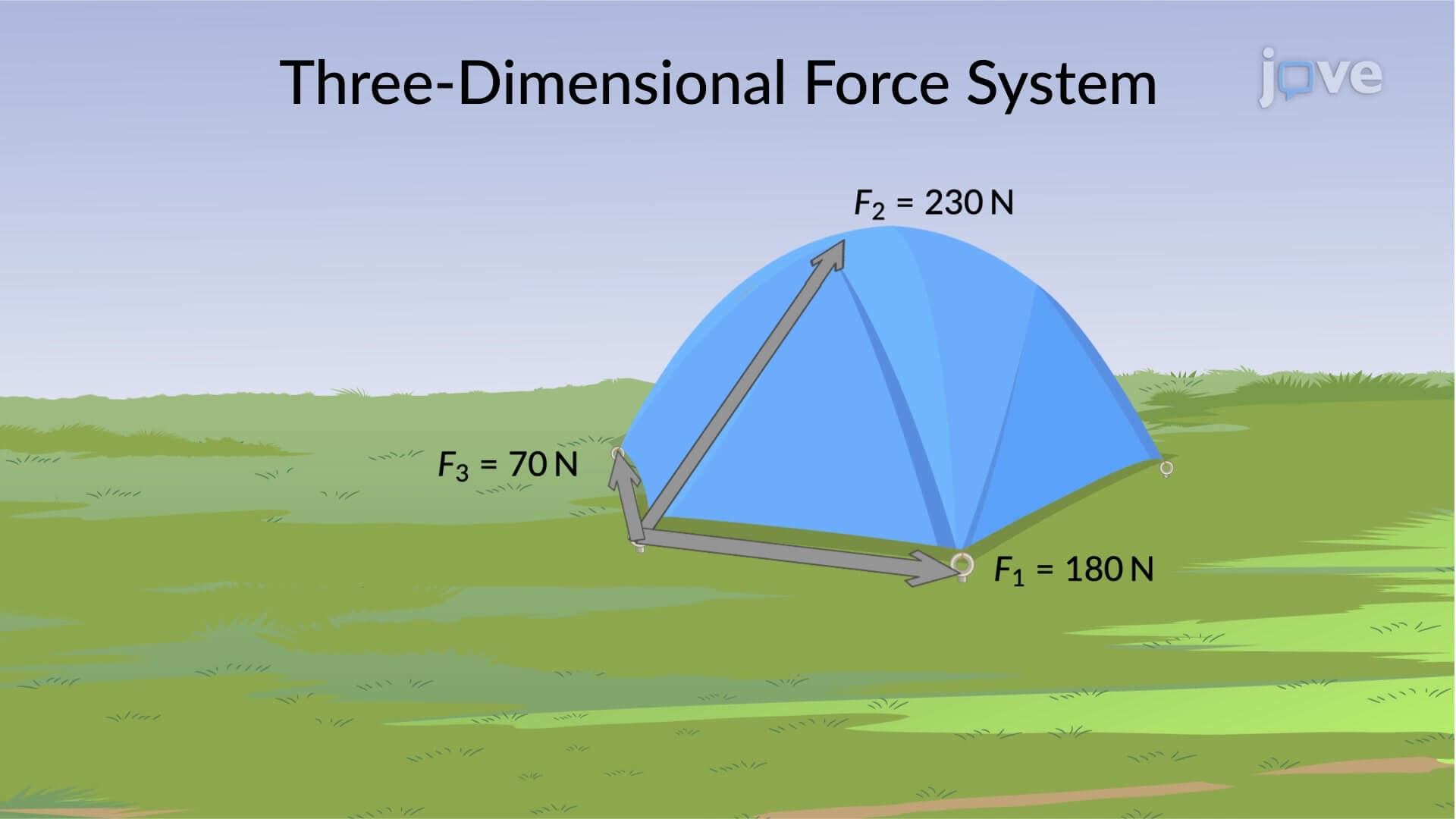
One of scalar notation's greatest advantages lies in resultant force calculation. When multiple forces act on an object simultaneously-like wind and thrust forces on an aircraft-scalar notation enables simple algebraic addition of components.
The process involves three steps: 1. Resolve each force into x and y components 2. Add all x-components algebraically: R(x) = F1(x) + F2(x) + F3(x)... 3. Add all y-components algebraically: R(y) = F1(y) + F2(y) + F3(y)...
The resultant magnitude equals: R = √[R(x)² + R(y)²] The resultant direction: θ = tan⁻¹[R(y)/R(x)]
Scalar notation concepts appear throughout engineering disciplines. Structural engineers use these principles when analyzing building loads, considering wind forces, gravitational loads, and seismic forces simultaneously. Automotive engineers apply scalar notation when designing suspension systems that must handle forces from multiple directions during cornering, braking, and acceleration.
In biomechanics, physical therapists use scalar notation to analyze joint forces during rehabilitation exercises, ensuring patients receive optimal treatment while avoiding injury. These applications demonstrate why mastering scalar notation proves essential for MCAT preparation and engineering coursework.
Related Micro-courses