Loading video…


 17 Concepts
 21.8K views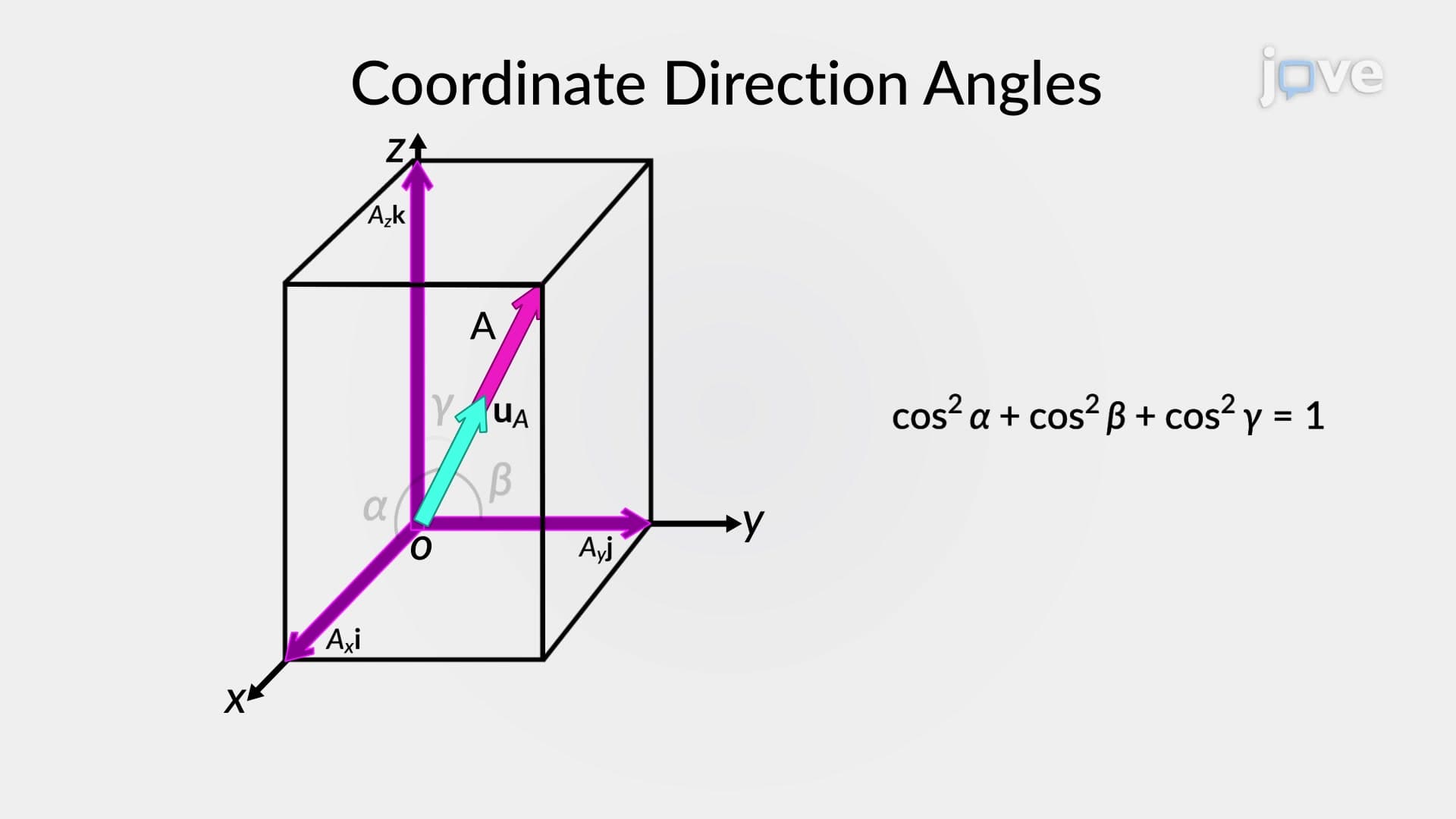

Video Summary: What Is Direction Cosines Vector
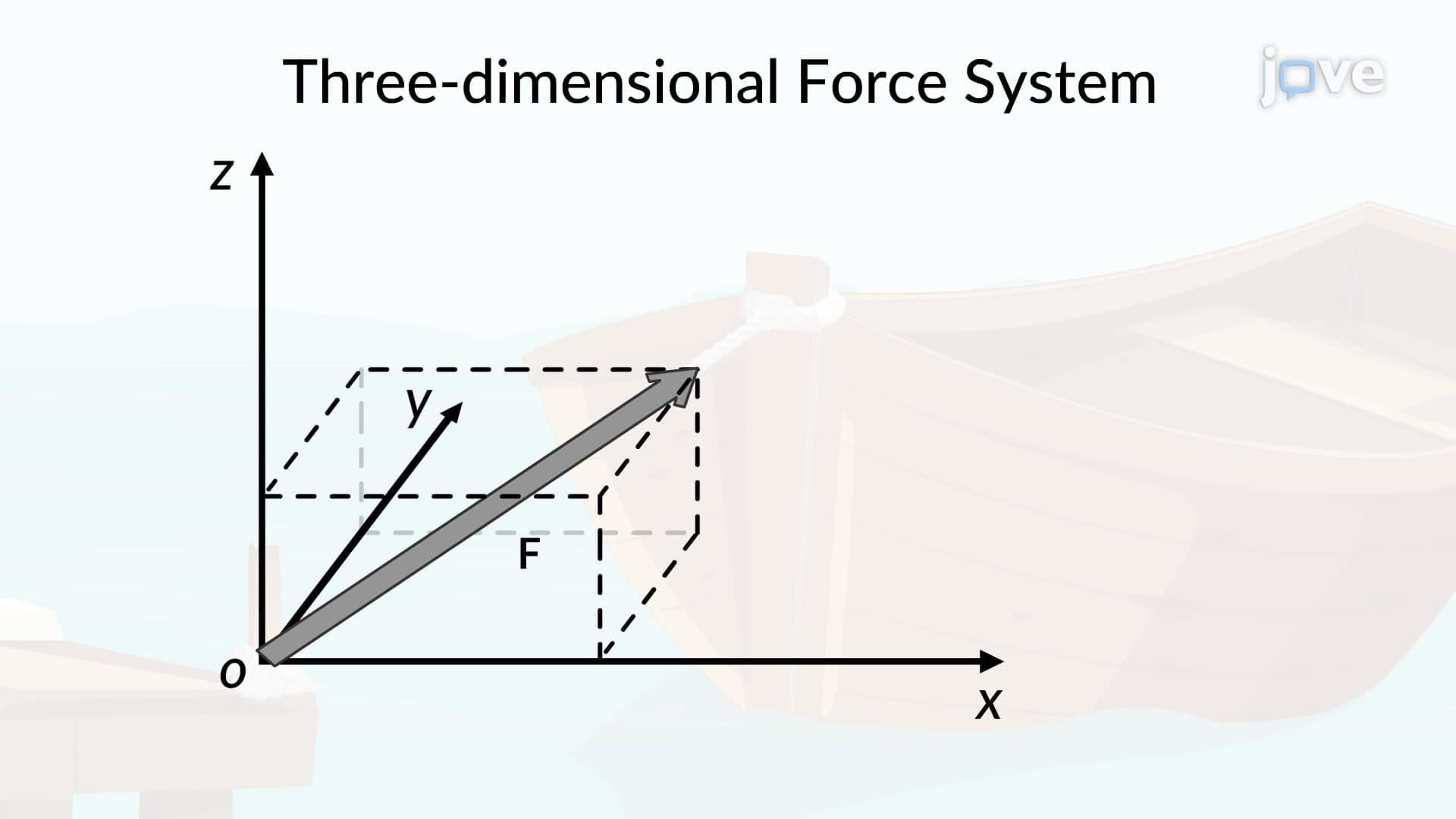
Ever wondered how NASA engineers precisely navigate spacecraft through 3D space? The direction cosines vector provides the mathematical foundation for defining exact orientations in three-dimensional coordinate systems. When Boeing designs aircraft flight paths or SpaceX calculates rocket trajectories, they rely on direction cosines to specify vector directions using coordinate direction angles measured from the positive x, y, and z axes. These cosines form a fundamental relationship where their squares always sum to one. Watch the full video on JoVE Coach to master this concept with expert-led visuals and step-by-step explanations.
The direction cosines vector concept bridges the gap between geometric intuition and analytical precision in three-dimensional vector analysis. When studying vectors in AP Physics or college-level engineering courses, students encounter situations where knowing both the magnitude and precise direction of a vector becomes crucial for problem-solving.
Direction cosines represent the cosines of the coordinate direction angles that a vector makes with the positive x, y, and z axes. If vector A has coordinate direction angles α (with x-axis), β (with y-axis), and γ (with z-axis), then the direction cosines are simply cos α, cos β, and cos γ. These values provide a standardized way to describe vector orientation regardless of the vector's magnitude.
The most elegant aspect of direction cosines emerges when examining unit vectors. For any vector A, its corresponding unit vector u(A) = A/|A| has components that directly equal the direction cosines. This means:
This relationship proves invaluable when solving SAT Subject Test problems or MCAT physics questions involving vector decomposition. Students can quickly identify direction cosines by normalizing any vector to unit length.
One of the most important properties states that cos²α + cos²β + cos²γ = 1. This identity stems from the fact that the magnitude of any unit vector equals one. In practical terms, if you know any two direction cosines, you can always calculate the third, making this relationship essential for completing vector problems on standardized tests.
Direction cosines find extensive application in American aerospace and defense industries. NASA's Jet Propulsion Laboratory uses direction cosines when programming spacecraft attitude control systems. Similarly, automotive engineers at companies like Ford and General Motors employ these concepts when designing suspension systems that must respond to forces from multiple directions.
In architectural engineering, firms designing skyscrapers in cities like New York or San Francisco use direction cosines to calculate wind load distributions on building surfaces, ensuring structural integrity under various environmental conditions.
Related Micro-courses