Loading video…


 17 Concepts
 21.8K views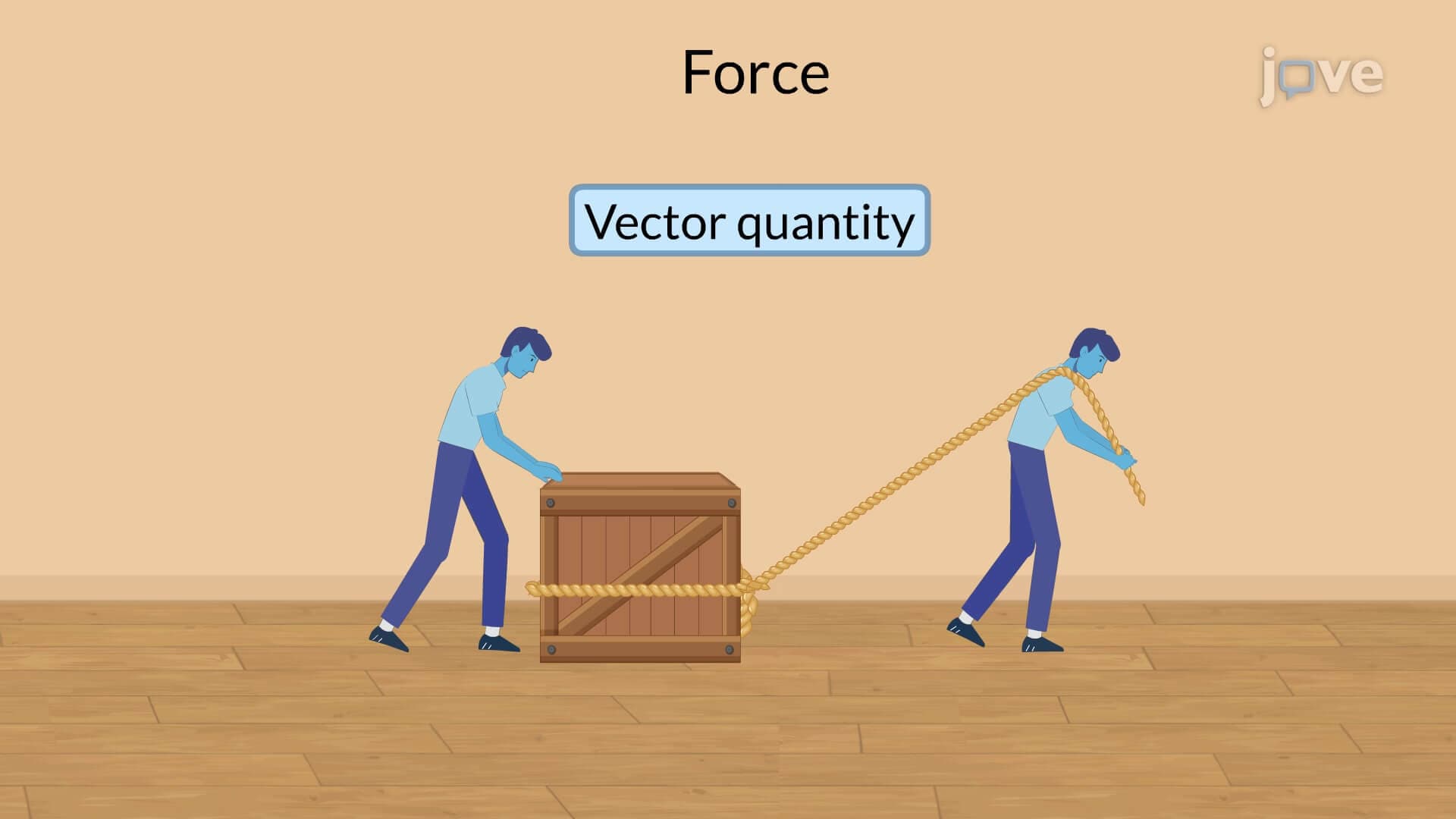

Video Summary: What Is Force
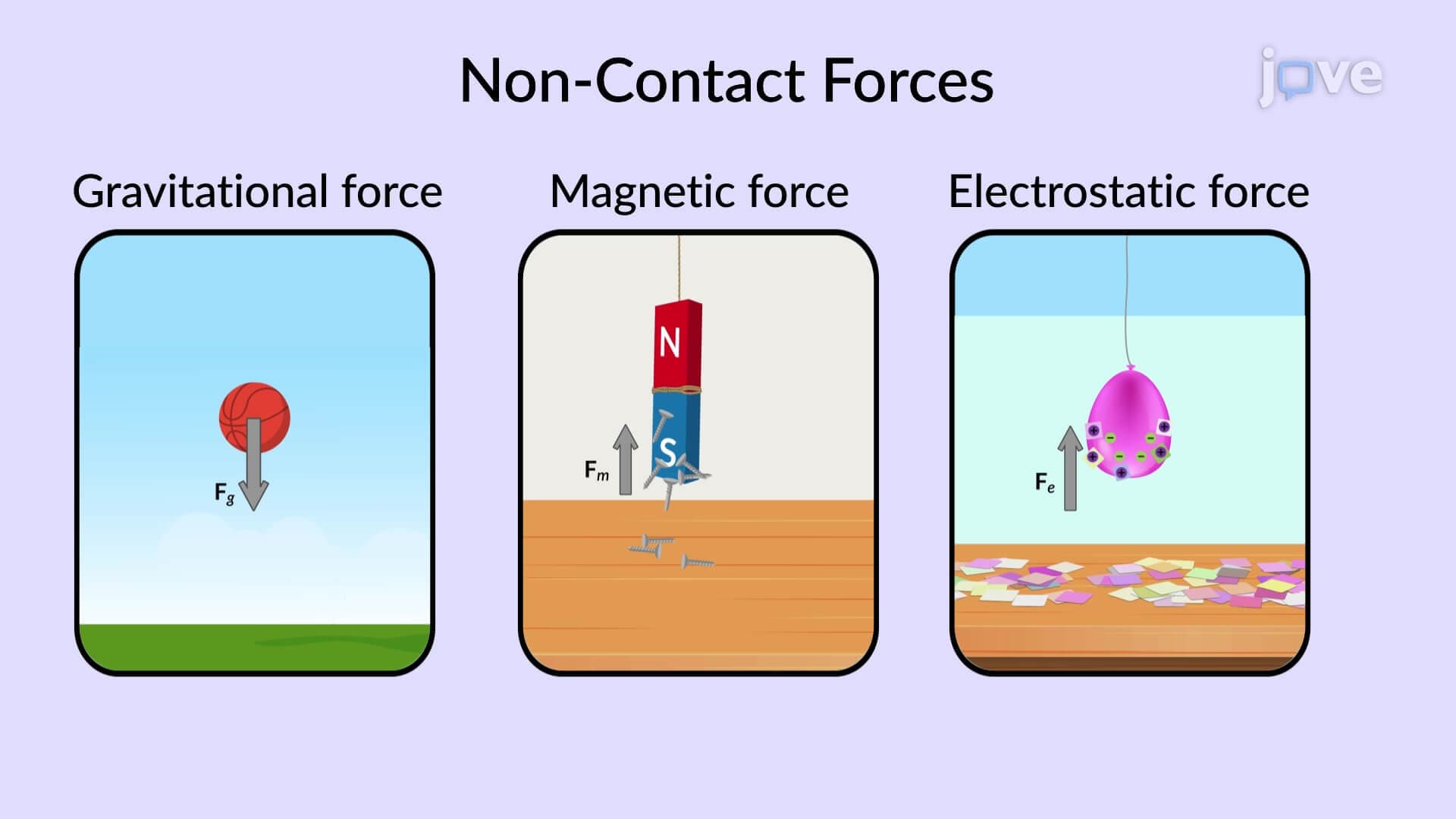
Did you know that every time you walk, you're applying hundreds of pounds of force with each step? Force is the fundamental push or pull that makes objects move, from a quarterback throwing a football in the NFL to engineers designing bridges that withstand wind loads. This vector quantity, measured in newtons, can be categorized as external forces (applied from outside) or internal forces (reactions within objects). The principle of transmissibility reveals that force effects remain constant regardless of where along the same line of action the force is applied. Watch the full video on JoVE Coach to master this concept with expert-led visuals and step-by-step explanations.
Force represents one of physics' most fundamental concepts-the interaction that changes an object's motion or shape. When NASA engineers calculate rocket thrust or when a pitcher throws a 95-mph fastball, they're applying force principles that govern everything from molecular interactions to planetary motion.
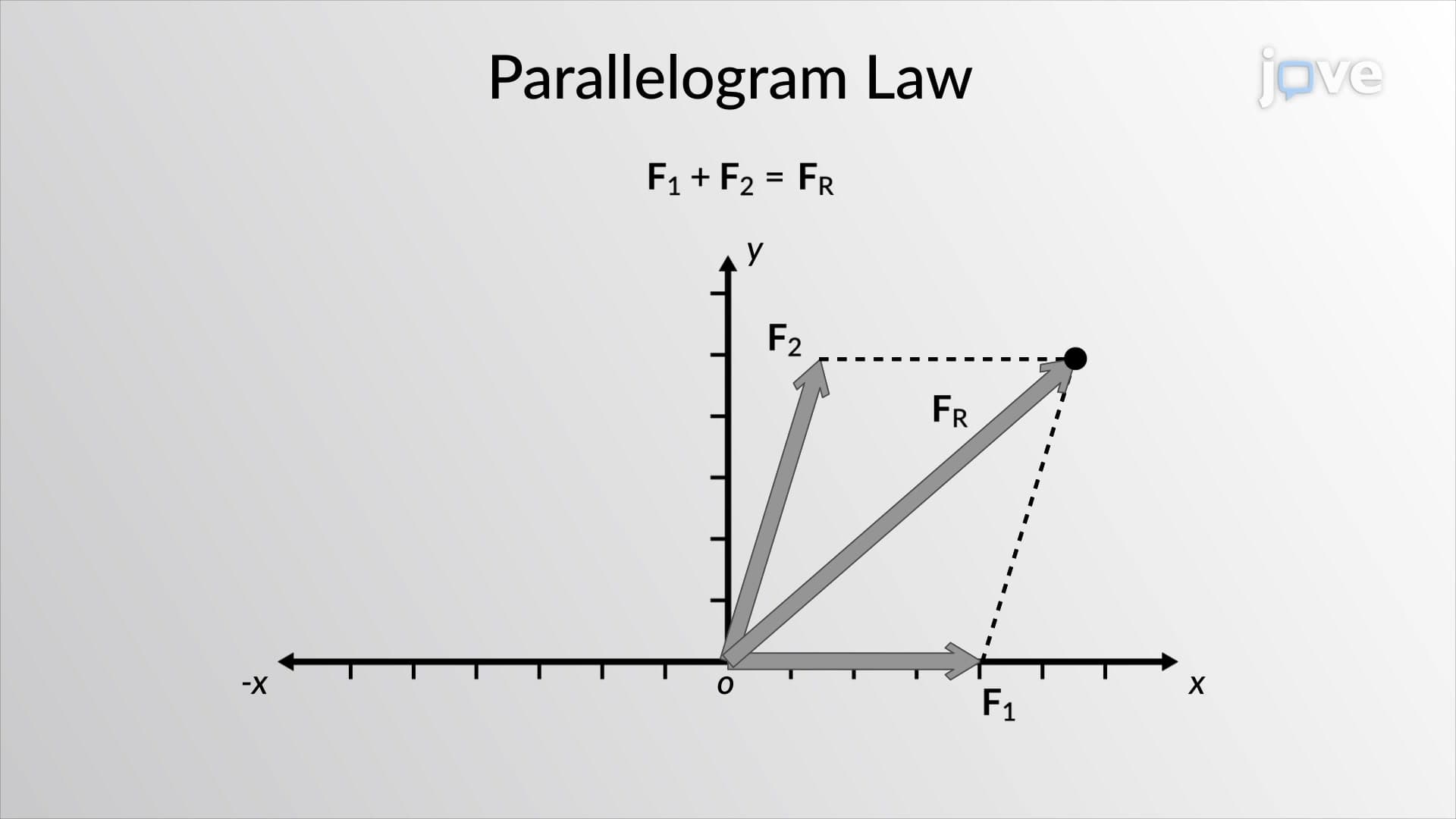
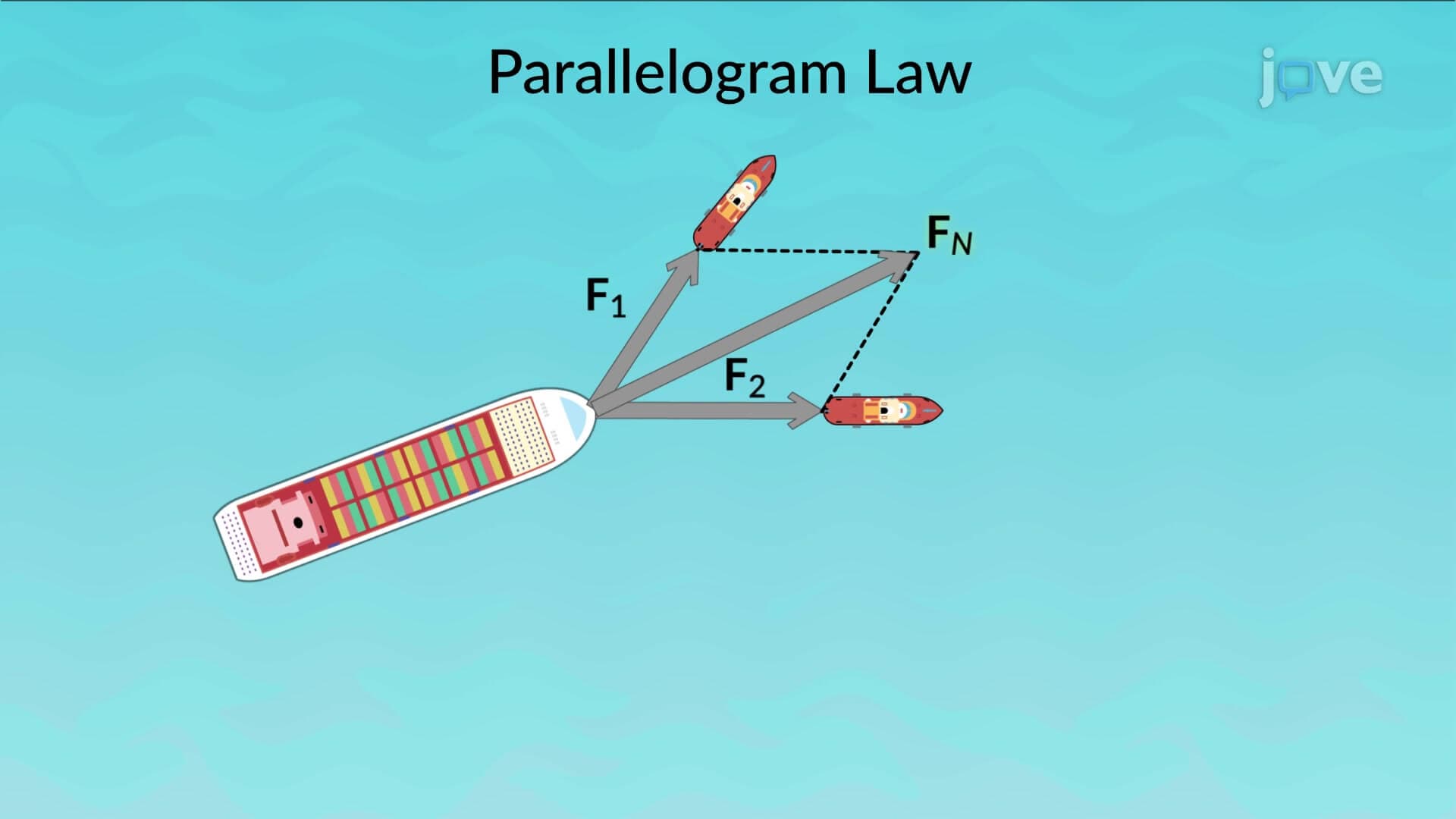
The complete force definition encompasses both magnitude (how strong) and direction (which way), making it a vector quantity. In the International System of Units, force is measured in newtons (N), named after Sir Isaac Newton. One newton equals the force required to accelerate one kilogram of mass at one meter per second squared. This relationship, expressed as F = ma, appears frequently on AP Physics exams and college mechanics courses.
Understanding what is force in detail requires recognizing its dual nature: forces always occur in pairs (Newton's Third Law) and can exist without causing motion if balanced by opposing forces. A skyscraper experiences enormous gravitational force downward, yet remains stationary due to equal upward forces from its foundation.
Force overview includes distinguishing between external and internal forces. External forces originate outside the system-like wind pushing against a building or friction opposing a sliding box. Internal forces develop within objects as reactions to external forces, such as tension throughout a rope or compression in a beam supporting weight.
This classification proves crucial for engineering students taking the Fundamentals of Engineering (FE) exam, where force analysis determines structural safety margins. For instance, when analyzing a bridge, engineers must consider external forces (traffic loads, wind) and internal forces (member stresses, joint reactions).
The principle of transmissibility states that a force's effect remains unchanged if moved along its line of action. This force concept simplifies complex engineering problems by allowing force repositioning without altering the overall system behavior. Consider pushing a door: whether you push near the handle or closer to the hinges (along the same perpendicular line), the door experiences identical rotational effects, though your effort may feel different due to leverage.
Force study guide materials emphasize real-world applications appearing on standardized tests. The MCAT includes force problems in biological contexts, such as muscle contractions or blood pressure. AP Physics C exams feature force analysis in rotational systems and oscillatory motion. College physics courses expand these concepts into advanced topics like stress analysis and fluid mechanics.
Understanding force provides the foundation for more complex physics topics including momentum conservation, energy transformations, and wave mechanics, making mastery essential for STEM career preparation.
Related Micro-courses