Loading video…


 17 Concepts
 21.8K views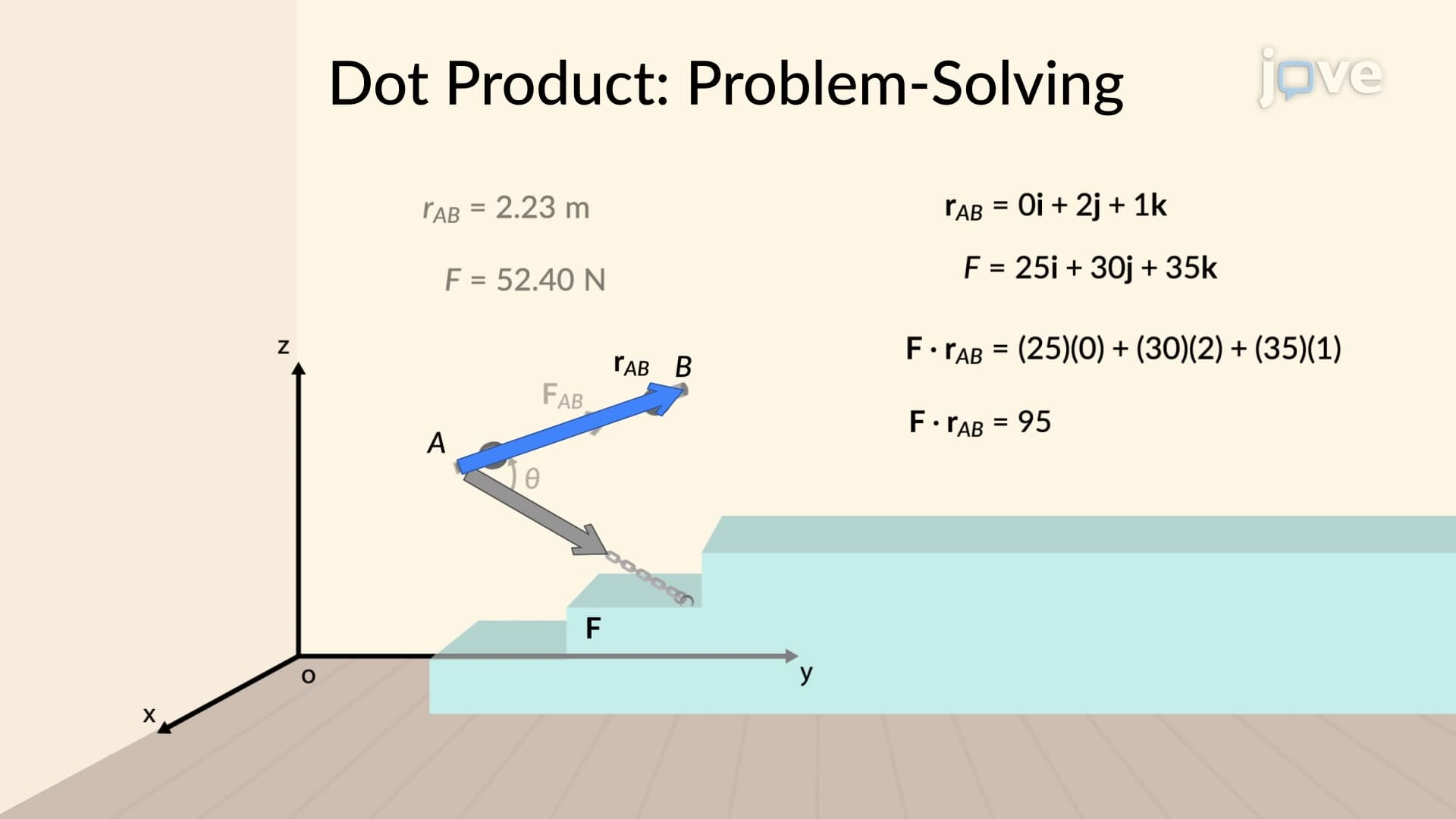

Video Summary: What Is Dot Product Problem Solving
Ever wonder how NASA engineers calculate the exact force needed to position a satellite's solar panels? Dot product problem solving is the mathematical technique that makes these precise calculations possible. From determining forces in bridge construction to analyzing tensions in suspension cables on the Golden Gate Bridge, what is dot product problem solving becomes essential for engineering applications across America. This fundamental vector operation helps us find projections, angles, and force components in three-dimensional space. Watch the full video on JoVE Coach to master this concept with expert-led visuals and step-by-step explanations.
Dot product problem solving represents one of the most practical applications of vector mathematics in engineering and physics. This mathematical technique allows us to quantify relationships between vectors, particularly when determining how much of one vector acts in the direction of another. The process involves multiplying corresponding components of two vectors and summing the results, creating a scalar value that reveals important geometric and physical relationships.
The dot product problem solving definition centers on the formula: A · B = |A||B|cos(θ), where θ represents the angle between vectors A and B. This relationship proves invaluable when analyzing forces, velocities, or any vector quantities in engineering contexts. For students preparing for AP Physics or college-level mechanics courses, mastering this concept becomes crucial for success on exams and practical problem-solving scenarios.
In coordinate form, if vector A has components (Ax, Ay, Az) and vector B has components (Bx, By, Bz), then A · B = AxBx + AyBy + AzBz. This computational approach makes dot product problem solving accessible even in complex three-dimensional scenarios.
What is dot product problem solving in detail becomes clearer through practical examples. Consider aerospace engineers at Boeing designing aircraft wing supports. They use dot products to calculate how wind forces project onto structural elements, ensuring adequate strength in critical directions. Similarly, civil engineers working on the Hoover Dam used these principles to analyze water pressure forces against the dam face.
The dot product problem solving concept also appears in robotics, where engineers calculate joint torques by projecting force vectors along specific axes. Students studying mechanical engineering at institutions like MIT or Stanford encounter these applications in their statics and dynamics coursework.
A systematic dot product problem solving study guide approach involves: first, identifying the vectors involved; second, determining their components or magnitudes and included angle; third, applying the appropriate dot product formula; and fourth, interpreting the physical meaning of the result. This methodology proves essential for SAT Subject Tests, AP Physics exams, and college engineering assessments.
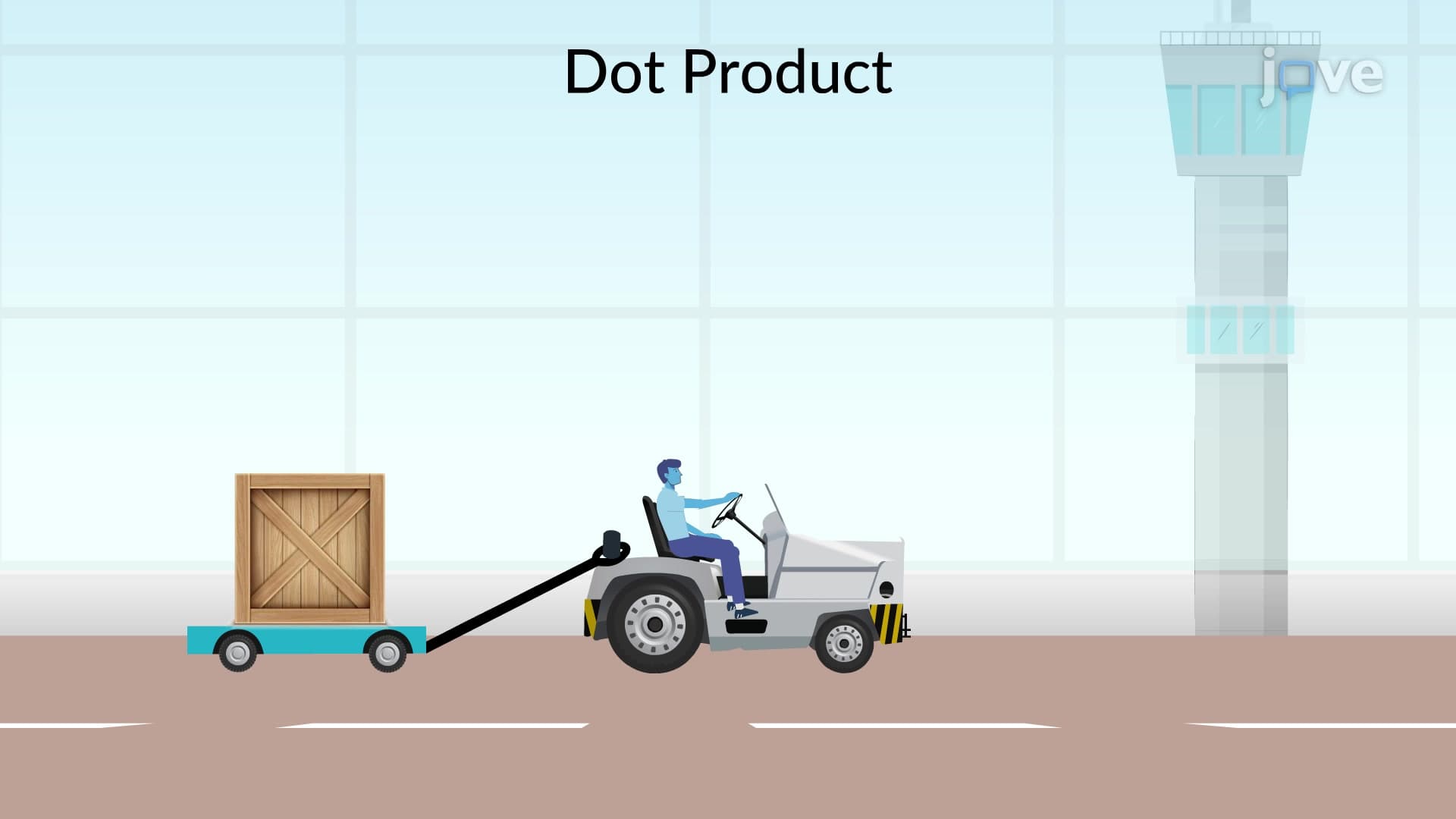
Understanding dot product problem solving also connects to energy calculations, since work equals the dot product of force and displacement vectors. This relationship frequently appears on MCAT physics sections and engineering licensure examinations.
Related Micro-courses