Loading video…


 17 Concepts
 17K views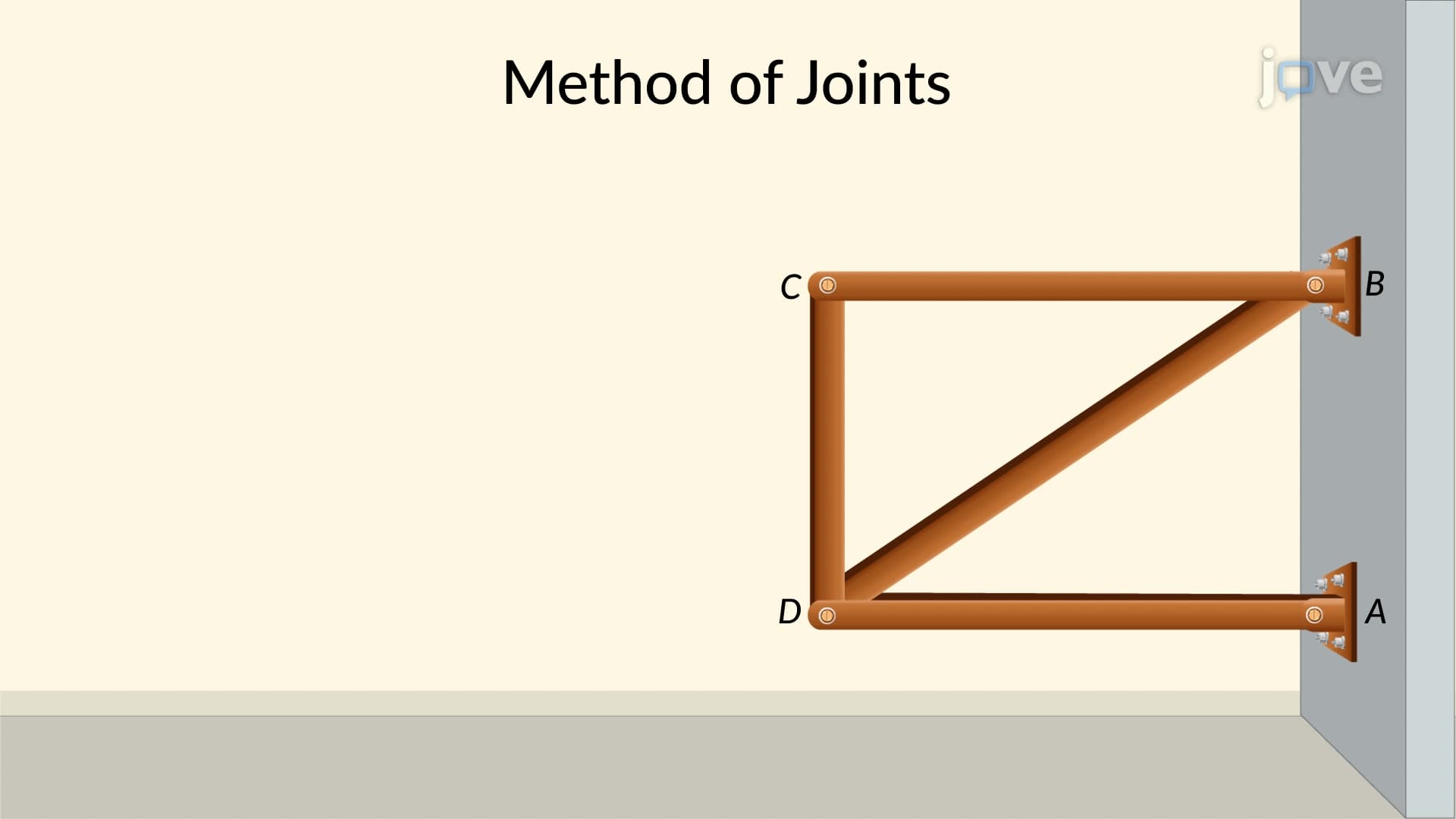

Video Summary: Method of Joints Problem Solving I Guide
Why do bridges stay standing under massive loads while appearing deceptively simple? The method of joints problem solving i reveals the hidden forces within truss structures by analyzing equilibrium at each connection point. Consider the Golden Gate Bridge's iconic towers, engineers used this exact technique to calculate internal forces and ensure each steel member could handle compression or tension safely. The Method of Joints Problem Solving I Guide breaks down this systematic approach into manageable steps. Watch the full video on JoVE Coach to master this concept with expert-led visuals and step-by-step explanations.
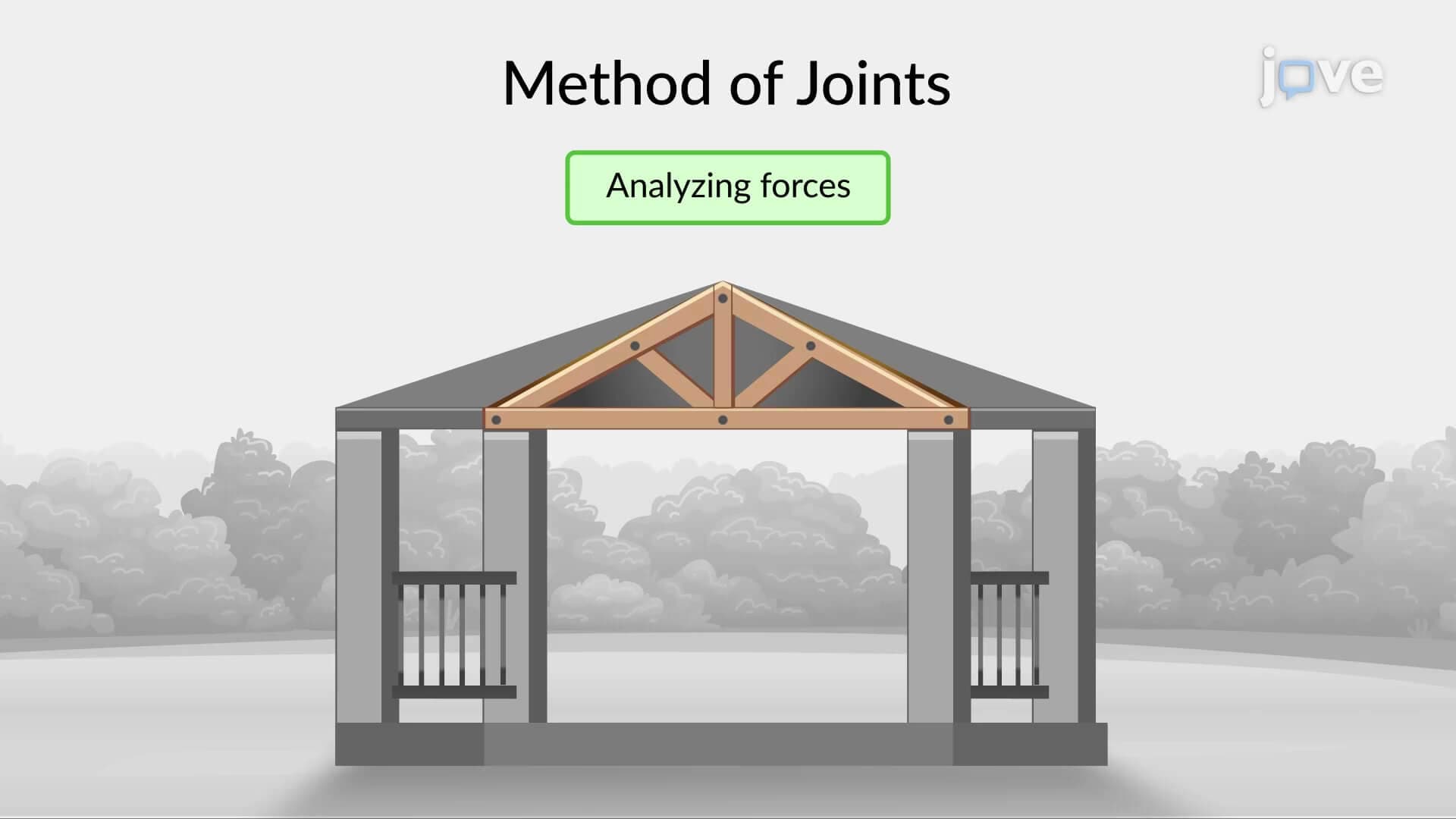
The method of joints problem solving i represents a fundamental structural analysis technique that engineers use to determine internal forces within truss systems. This approach treats each joint as an isolated system in equilibrium, where the sum of forces in both horizontal and vertical directions equals zero. By systematically moving from joint to joint, engineers can calculate every member force throughout the entire structure.
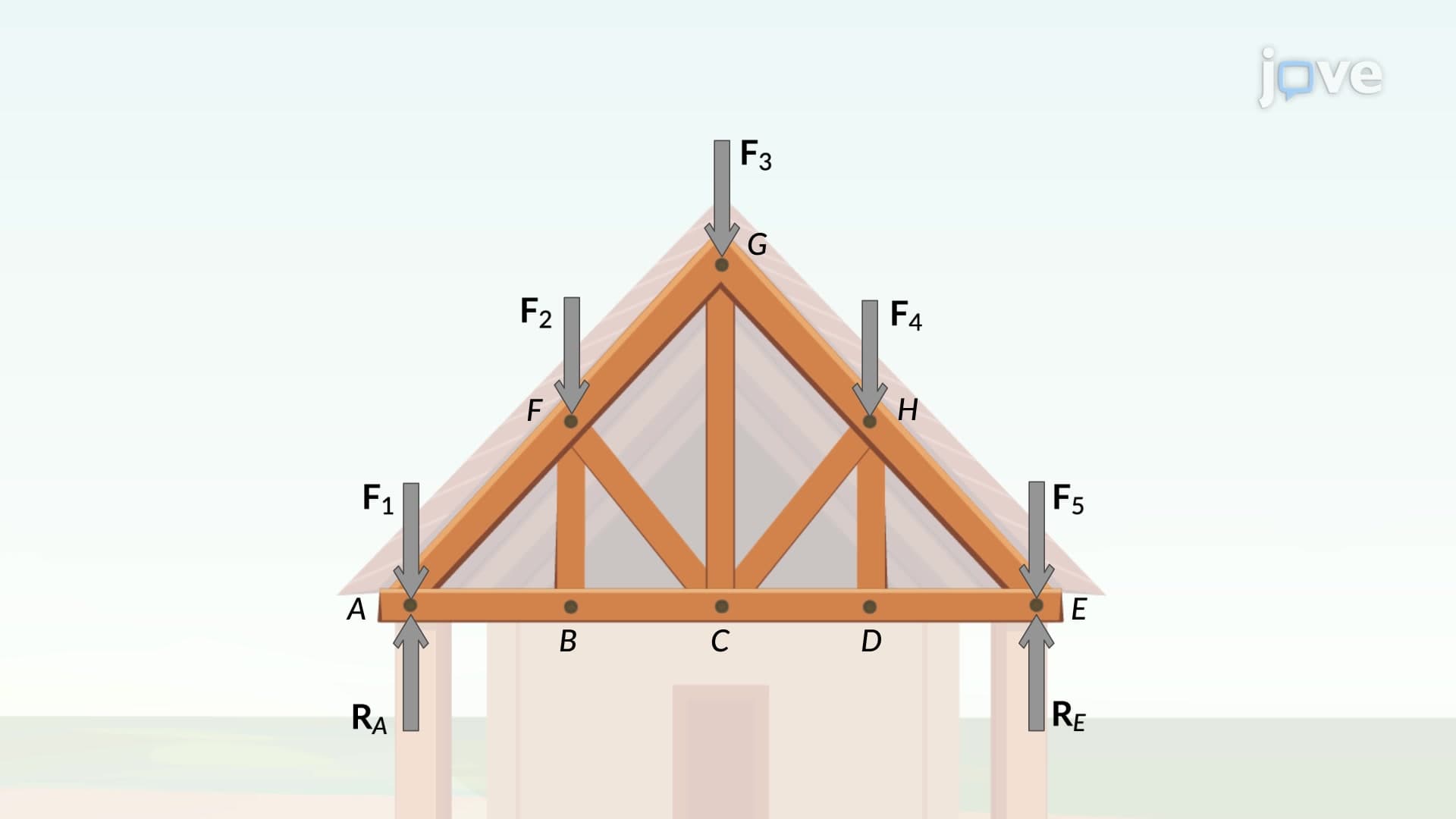
Success in method of joints problem solving i begins with smart joint selection. The most efficient approach starts with joints having only two unknown forces, typically found at external supports or load application points. For instance, when analyzing a roof truss supporting snow loads in Colorado, engineers would begin at the apex joint where the ridge beam connects, as this location often presents the clearest force relationships.
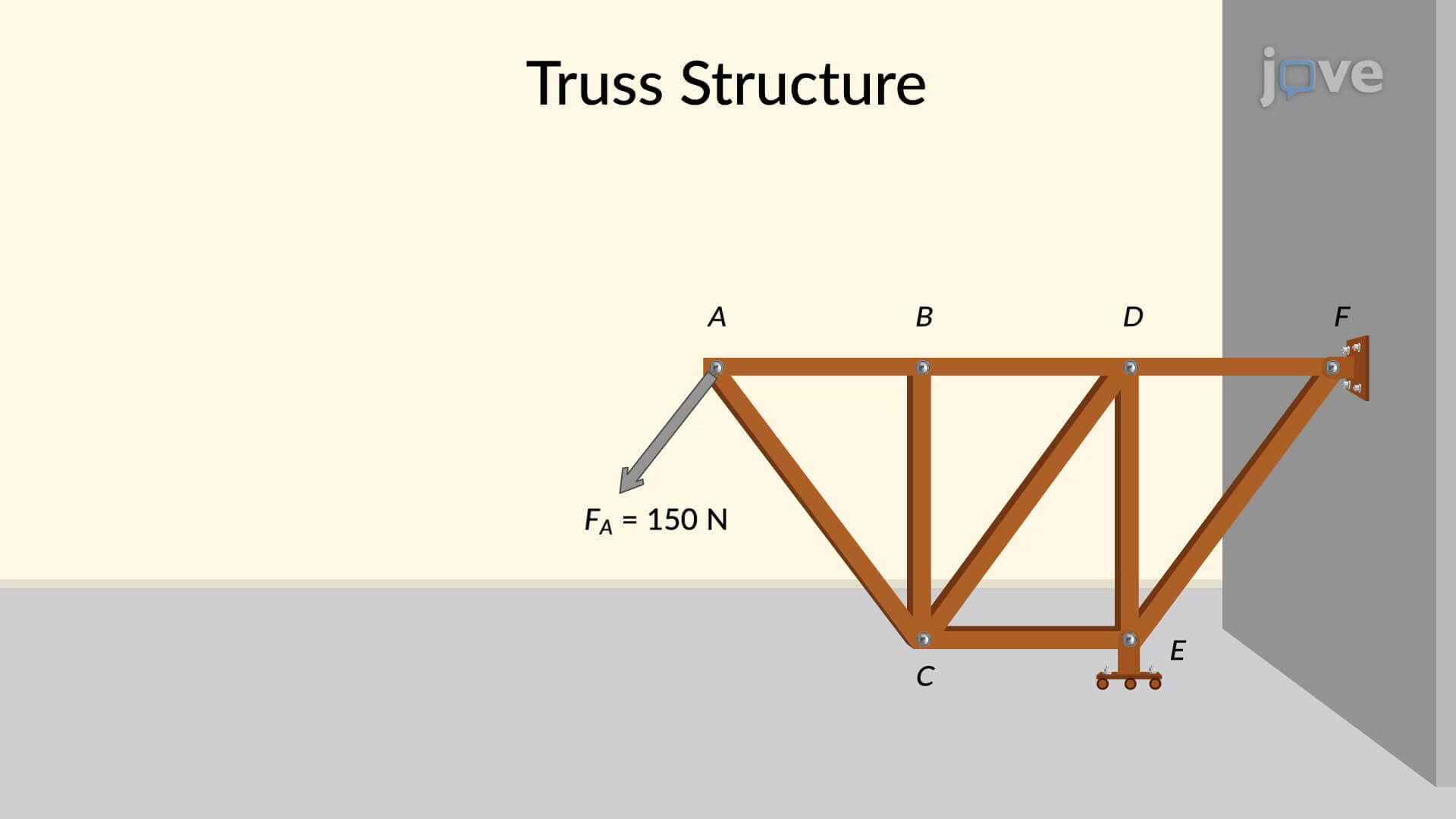
The analysis process involves drawing precise free-body diagrams for each joint, showing all applied loads and member forces. Students preparing for AP Physics C or college-level statics courses must master this visualization skill, as it directly translates to exam success on problems involving equilibrium systems.
When truss members connect at angles, the method of joints problem solving i requires resolving forces into orthogonal components. Consider a typical Warren truss used in highway overpasses across interstate systems, the diagonal members create angles that demand trigonometric analysis. The angle calculation uses inverse tangent functions based on geometric relationships within the truss structure.
For each joint analysis, two equilibrium equations emerge: summation of forces in the x-direction equals zero, and summation of forces in the y-direction equals zero. These simultaneous equations allow determination of unknown member forces. Students encounter these concepts extensively in college engineering mechanics courses and on the Fundamentals of Engineering (FE) exam.
The method of joints problem solving i concludes with force interpretation. Members experiencing forces directed away from joints operate in tension, imagine pulling on both ends of a rope. Conversely, members with forces pointing toward joints experience compression, like pressing inward on both ends of a wooden beam. This distinction proves critical for material selection in actual construction projects, as steel performs differently under tension versus compression loading conditions.
Understanding these concepts prepares students for advanced coursework in structural engineering and provides essential knowledge for careers in civil engineering, architecture, and construction management throughout the United States.
Related Micro-courses