Loading video…


 17 Concepts
 17K views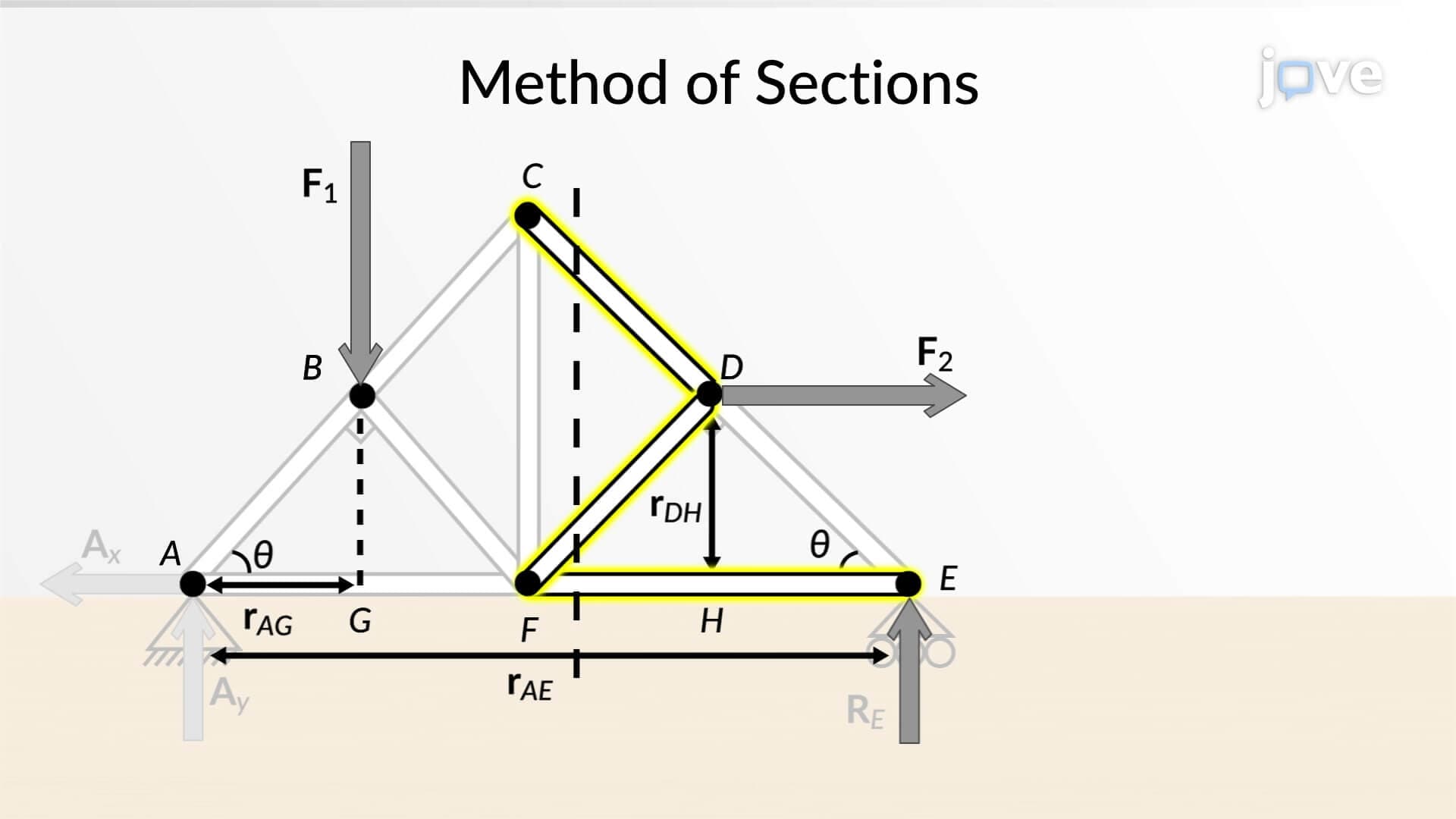

Video Summary: What are Method of Sections
Ever wonder how engineers ensure that massive bridges like San Francisco's Golden Gate Bridge won't collapse under traffic loads? The method of sections is a fundamental structural analysis technique that allows engineers to determine internal forces within specific members of truss structures by strategically cutting through the truss and analyzing equilibrium conditions. This powerful analytical tool is essential for designing safe buildings, bridges, and towers across the United States. Watch the full video on JoVE Coach to master this concept with expert-led visuals and step-by-step explanations.
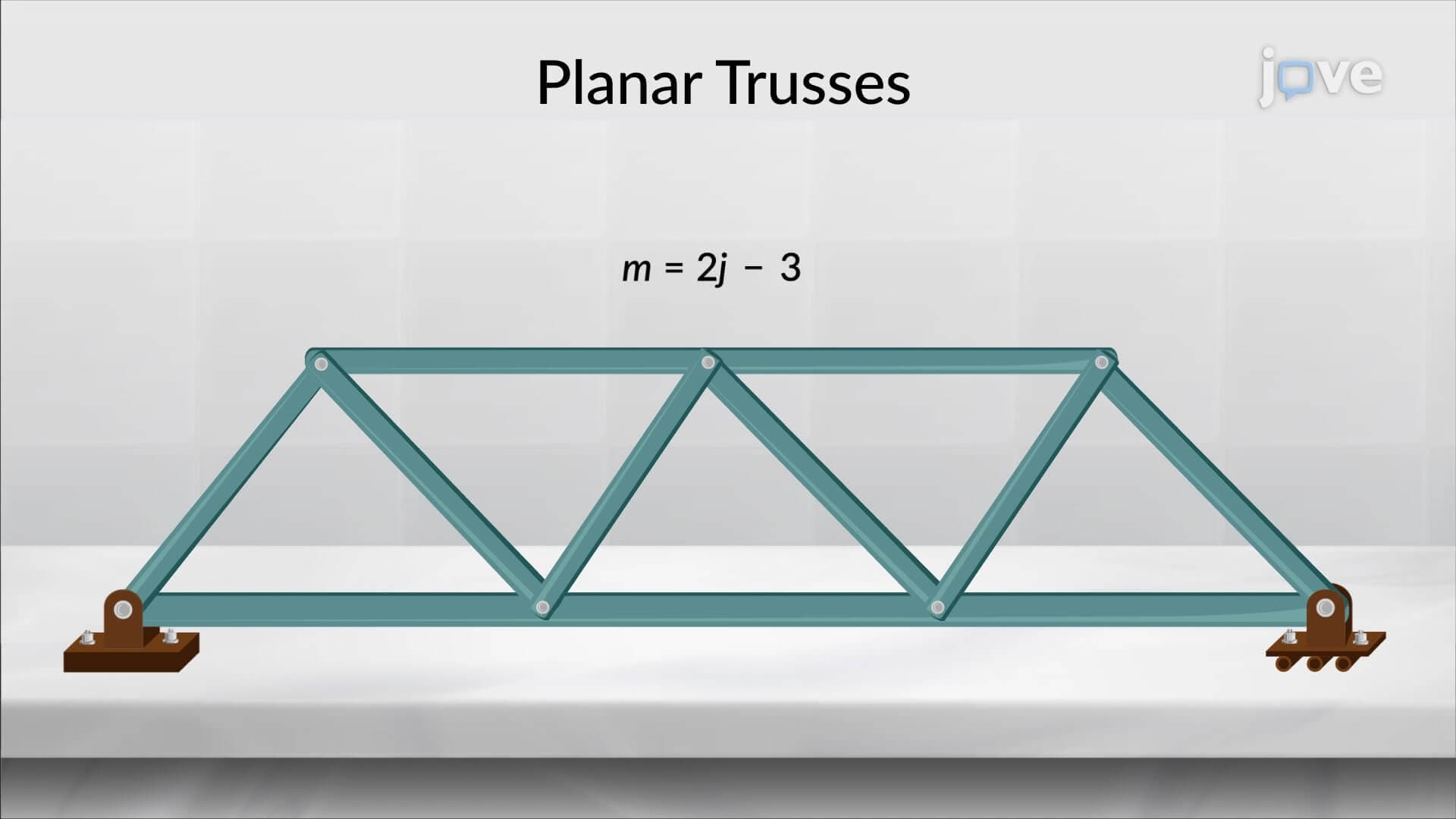
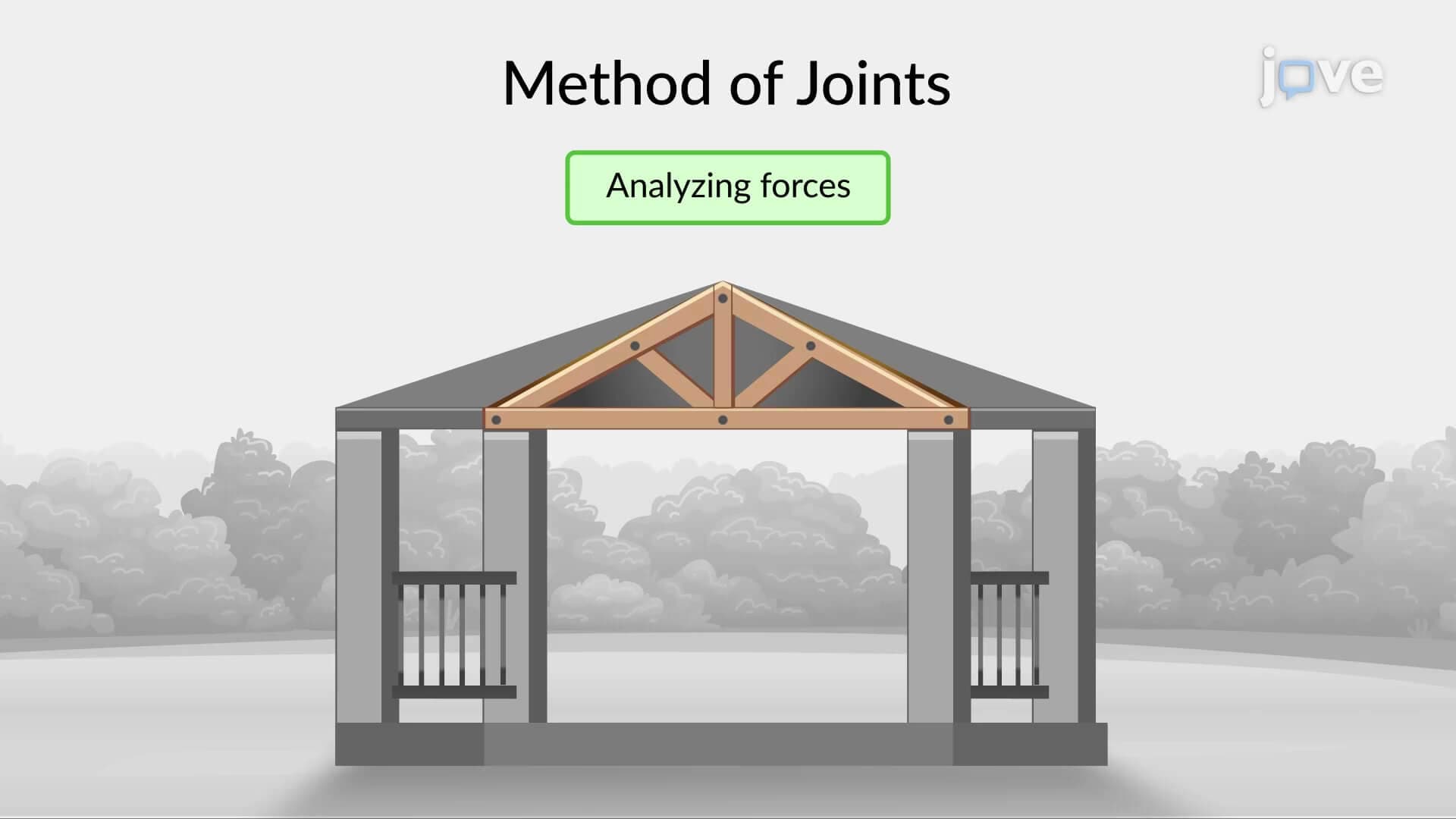
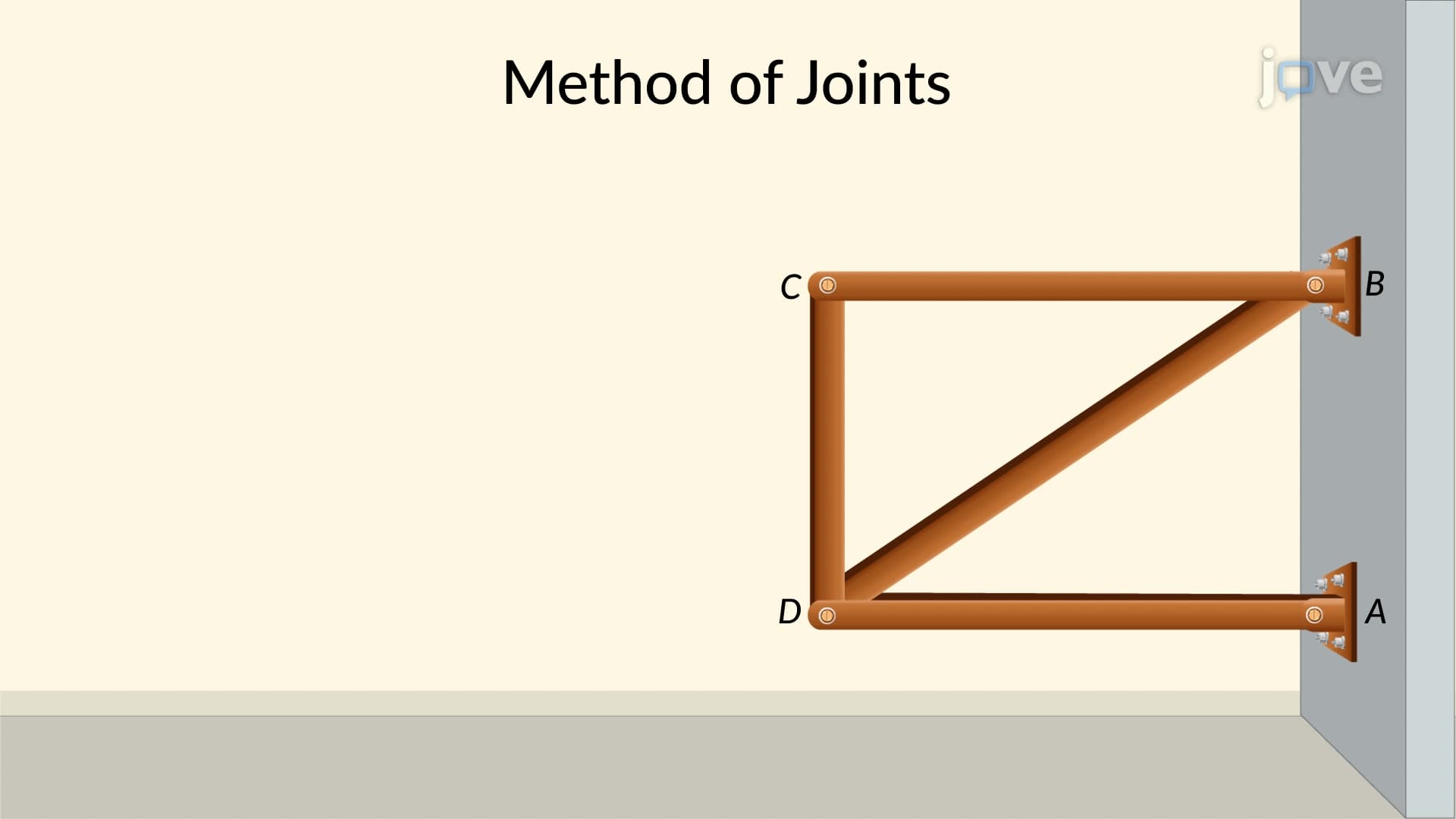
The method of sections represents one of the most powerful analytical tools in structural engineering, allowing engineers to determine internal forces in specific truss members without analyzing the entire structure. Unlike the method of joints, which requires sequential analysis of each joint, the method of sections provides direct access to forces in particular members of interest.
This technique operates on the fundamental principle of static equilibrium: if an entire truss structure is in equilibrium, then any section or portion of that truss must also be in equilibrium. This concept forms the theoretical foundation for cutting through truss structures and analyzing the resulting free-body diagrams.
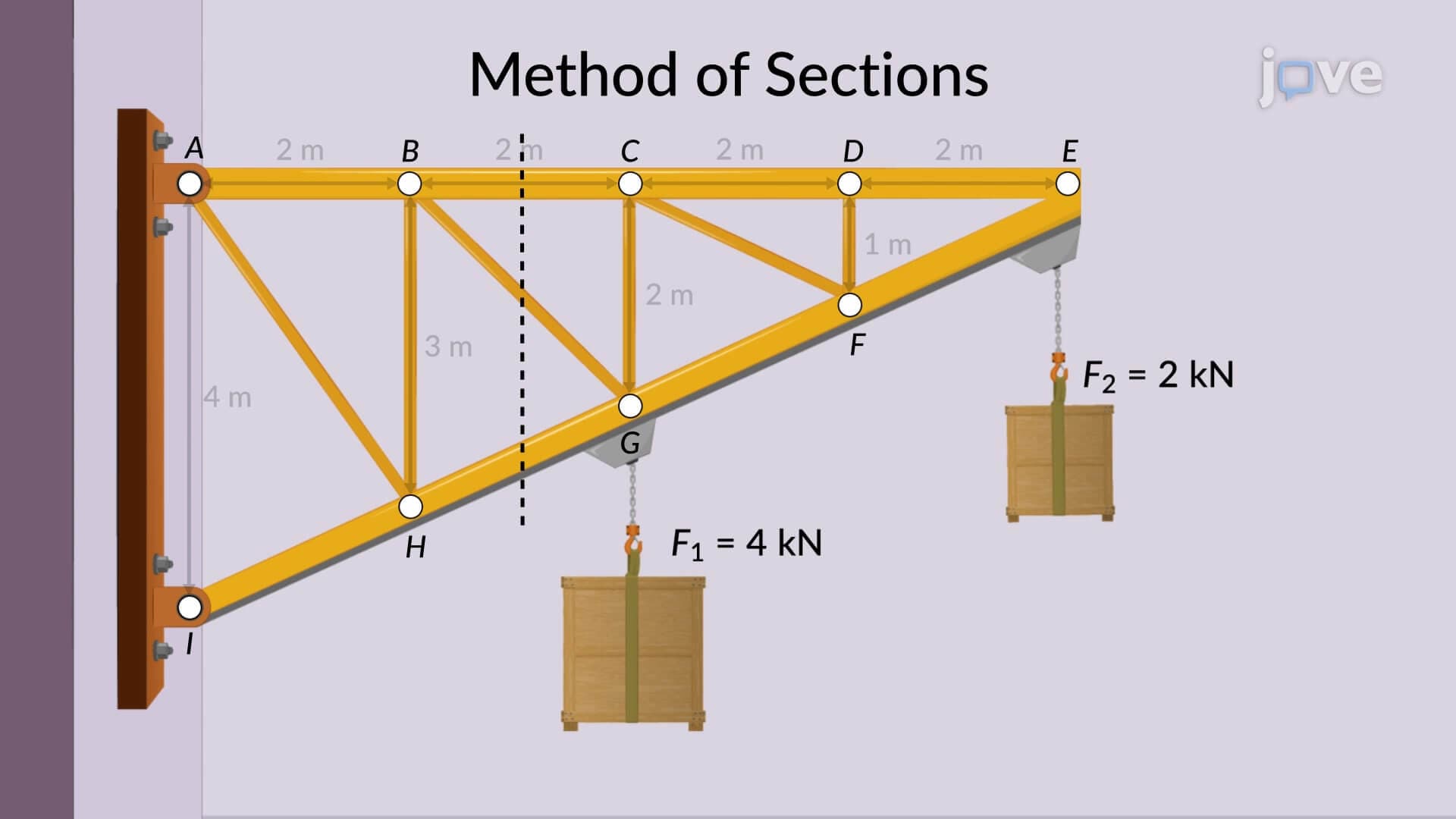
The method of sections involves making strategic cuts through a truss structure, with one critical limitation: the sectional plane can intersect a maximum of three members whose forces are unknown. This restriction exists because we can write only three independent equilibrium equations for a two-dimensional system: sum of forces in the x-direction equals zero, sum of forces in the y-direction equals zero, and sum of moments about any point equals zero.
When selecting where to make cuts, engineers strategically choose locations that expose the members of interest while maintaining the three-member limit. For example, when analyzing the Pratt truss design commonly used in American railroad bridges, engineers might cut through specific diagonal and vertical members to determine their load-carrying capacity.
After making the sectional cut, engineers draw free-body diagrams assuming all unknown forces act in tension (pulling away from the cut sections). This assumption simplifies the initial setup, if calculations yield negative values, the actual force direction is compressive rather than tensile.
The analysis typically proceeds by taking moments about strategic points. Choosing the moment center at the intersection of two unknown force lines eliminates those forces from the moment equation, leaving only one unknown to solve for directly. This technique is particularly valuable when analyzing complex roof trusses in commercial buildings across the United States.
For inclined members, forces must be resolved into horizontal and vertical components using trigonometry. The force equilibrium equations in both directions provide the additional relationships needed to solve for all unknown forces simultaneously.
The method of sections appears extensively in engineering curricula, from high school physics courses through university-level structural analysis. Students encounter this concept in AP Physics C mechanics, where it demonstrates practical applications of equilibrium principles. At the college level, civil and mechanical engineering programs use method of sections as preparation for more advanced topics like influence lines and indeterminate structures.
Professional engineers apply this method when designing everything from pedestrian bridges in national parks to industrial crane structures in manufacturing facilities. The technique proves essential for meeting building codes and safety standards established by organizations like the American Institute of Steel Construction (AISC).
Related Micro-courses