Loading video…


 17 Concepts
 17K views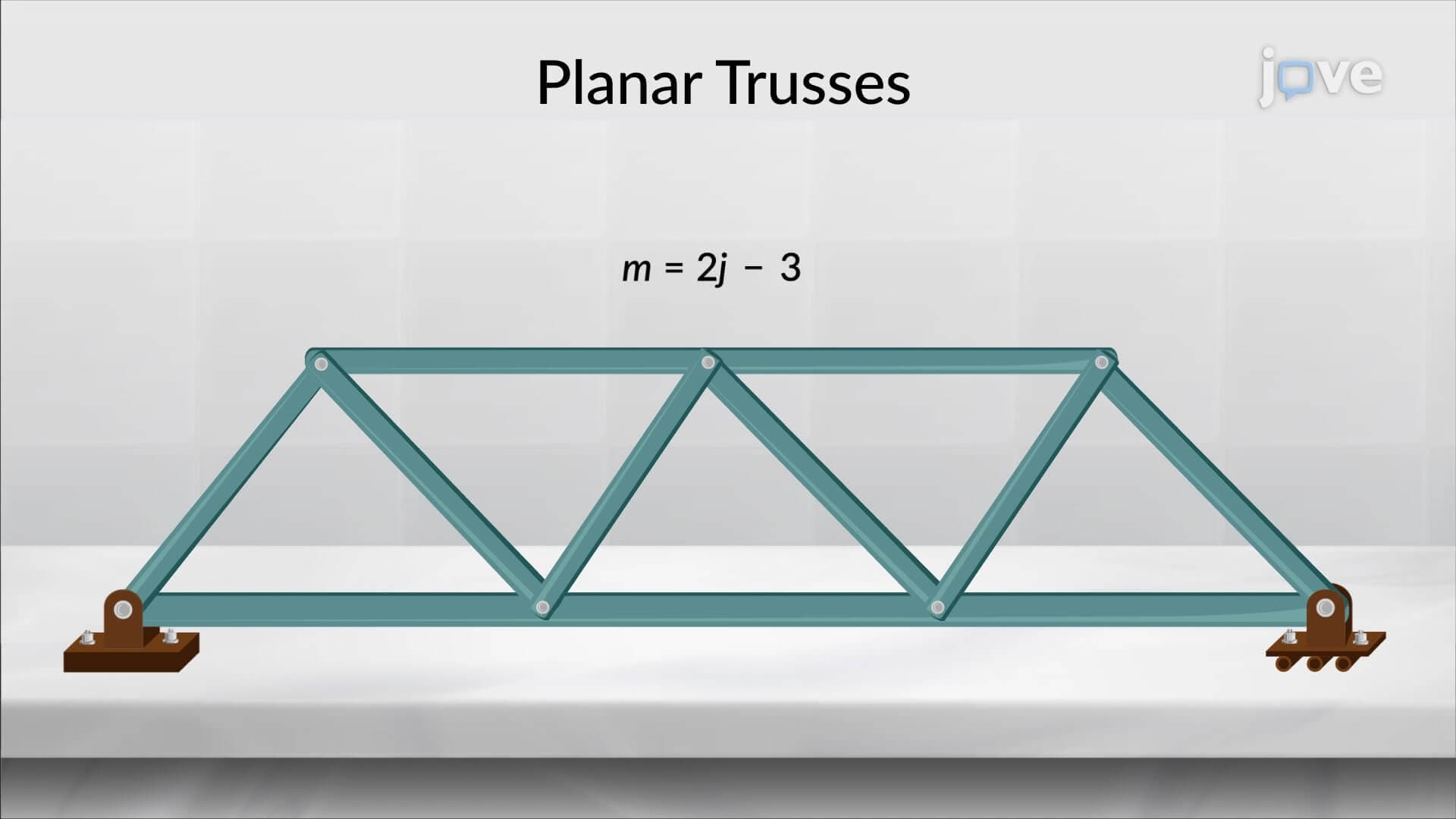

Video Summary: What are Simple Trusses
Ever wonder how the Golden Gate Bridge carries thousands of cars daily without collapsing? Simple trusses form the backbone of countless American structures, from highway overpasses to stadium roofs. These triangular frameworks of connected members create incredibly strong yet lightweight structures that engineers rely on for safe, efficient design. Understanding what simple trusses are reveals the elegant engineering principles behind everyday infrastructure we take for granted. Watch the full video on JoVE Coach to master this concept with expert-led visuals and step-by-step explanations.
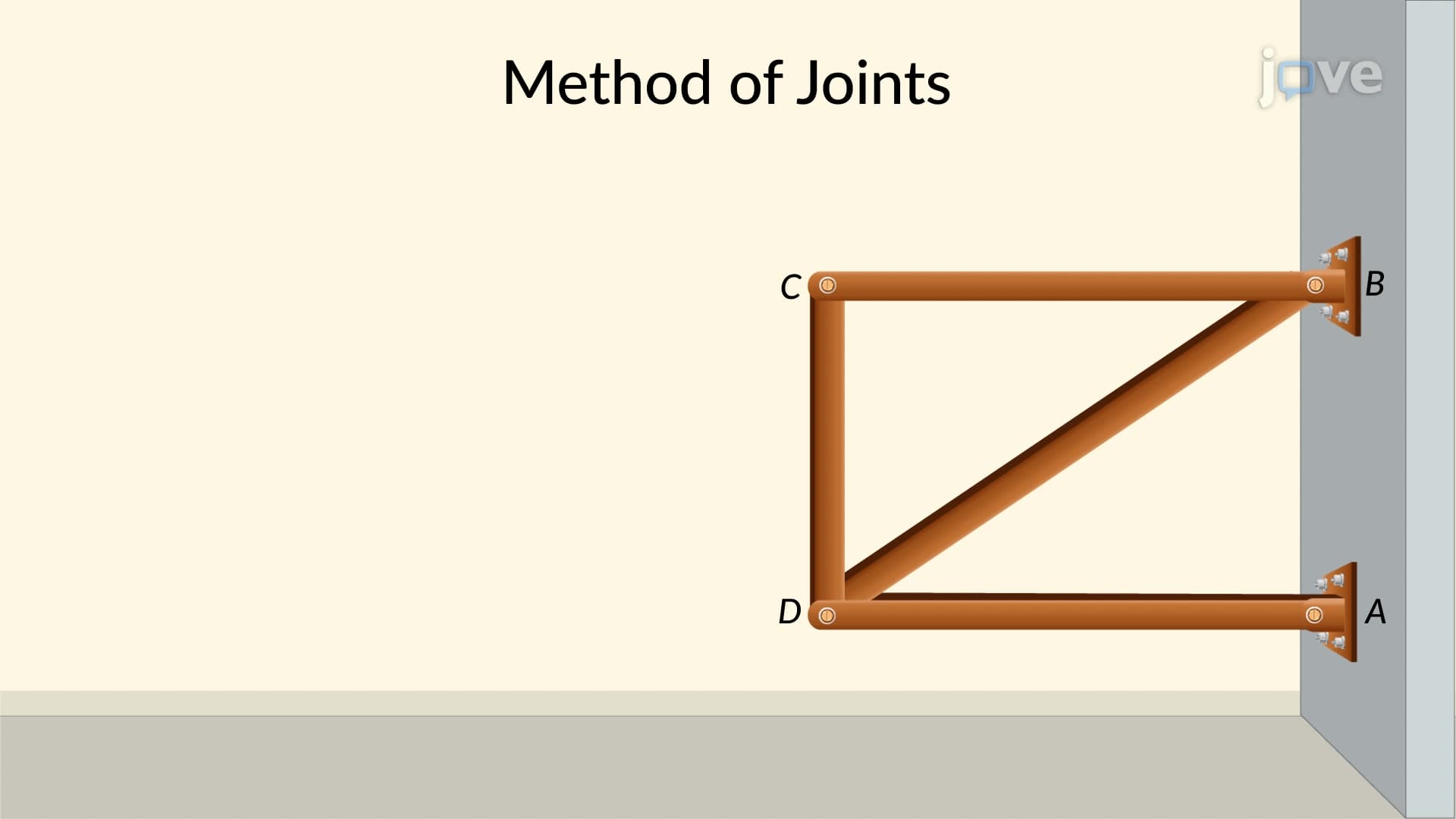
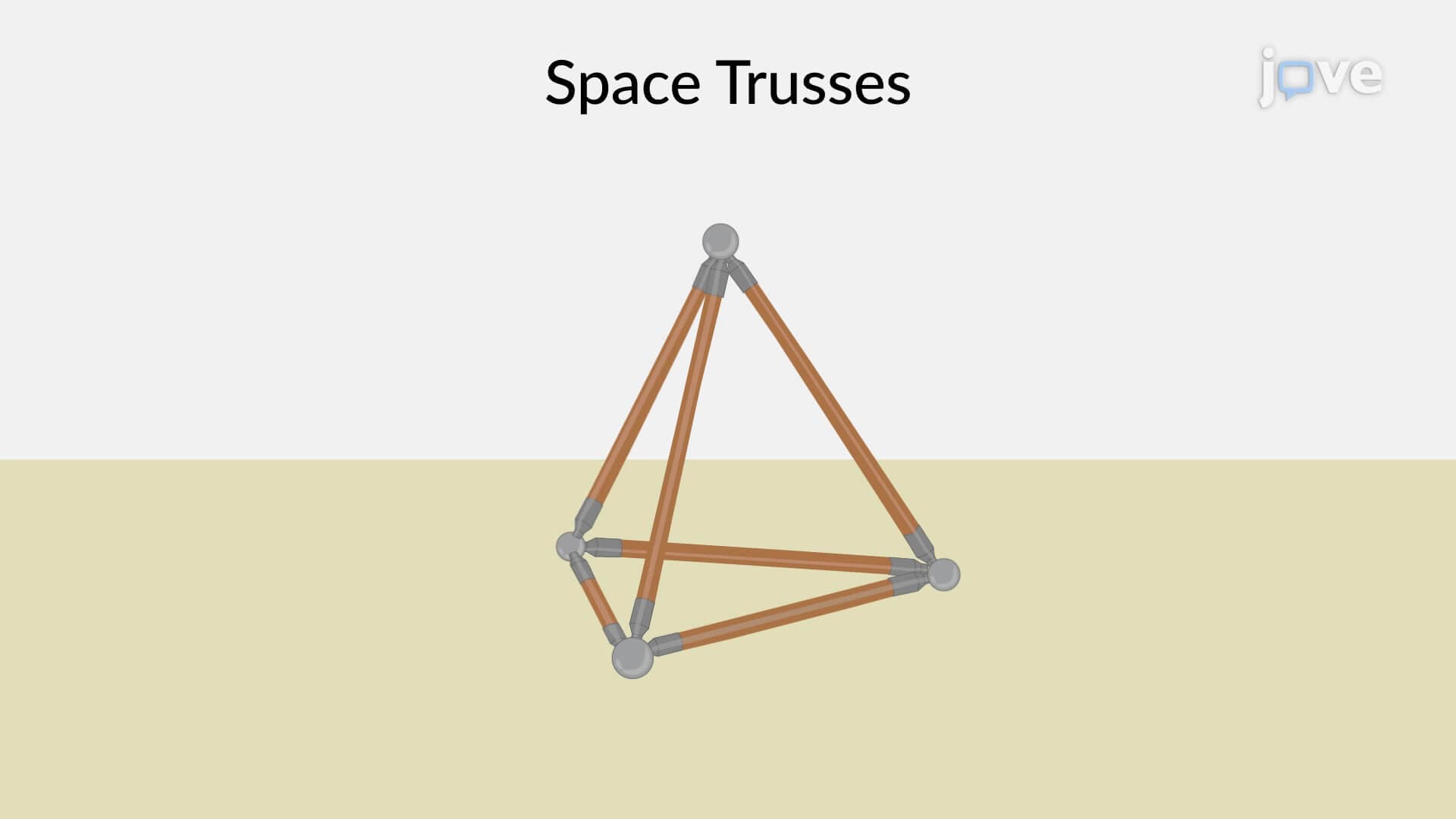
Simple trusses represent one of the most elegant solutions in structural engineering, combining maximum strength with minimal material usage. At its core, a simple truss consists of three members arranged in a triangle-nature's most stable geometric shape. This triangular configuration cannot be deformed without changing the length of at least one member, making it the perfect building block for larger structures.
The genius of simple trusses lies in their systematic expansion capability. Engineers can create complex truss systems by strategically adding two members and one joint at a time, maintaining structural stability throughout the process. This methodical approach ensures that each addition contributes meaningfully to the structure's load-carrying capacity while preserving the fundamental principles that make trusses so effective.
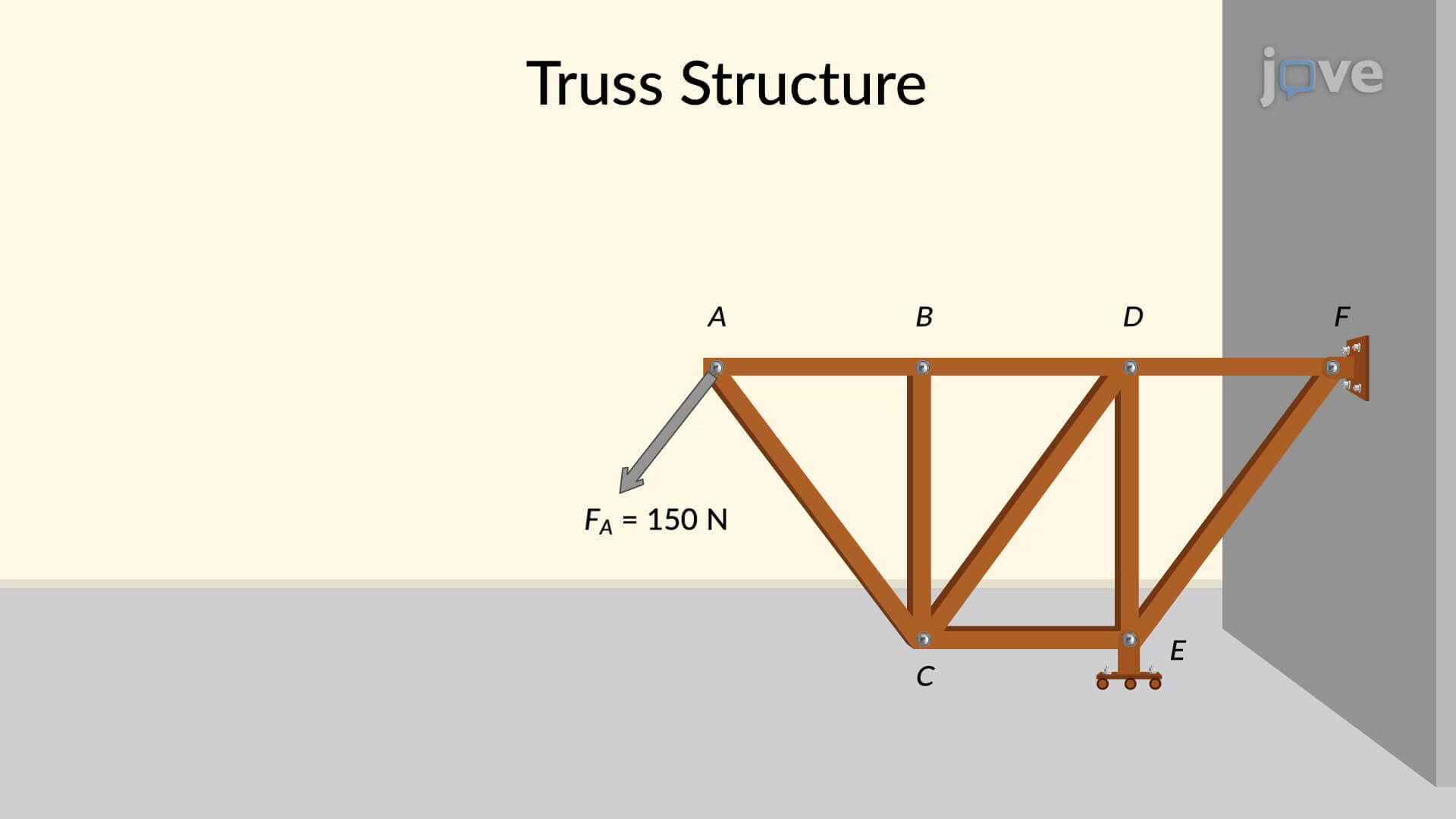
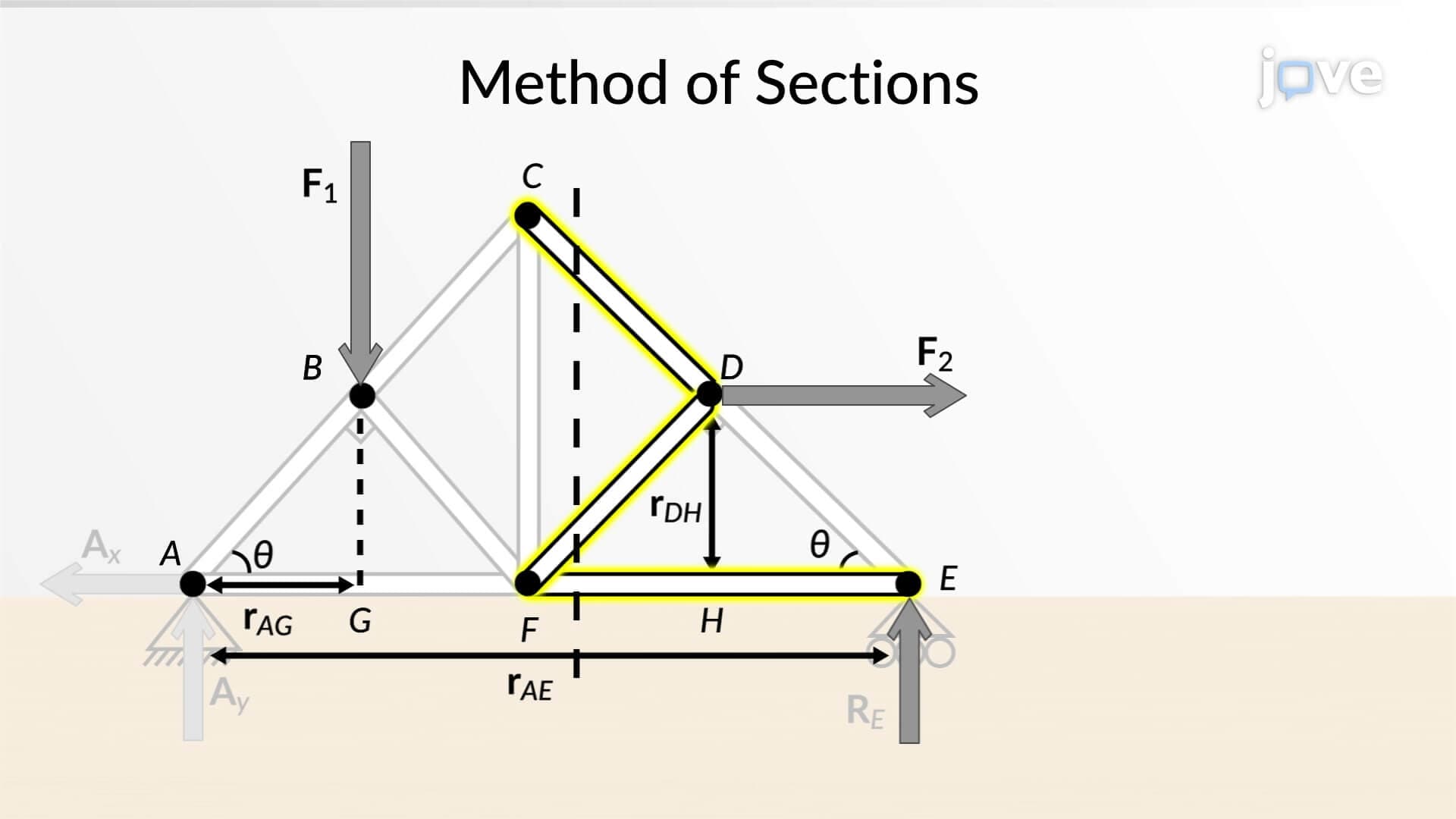
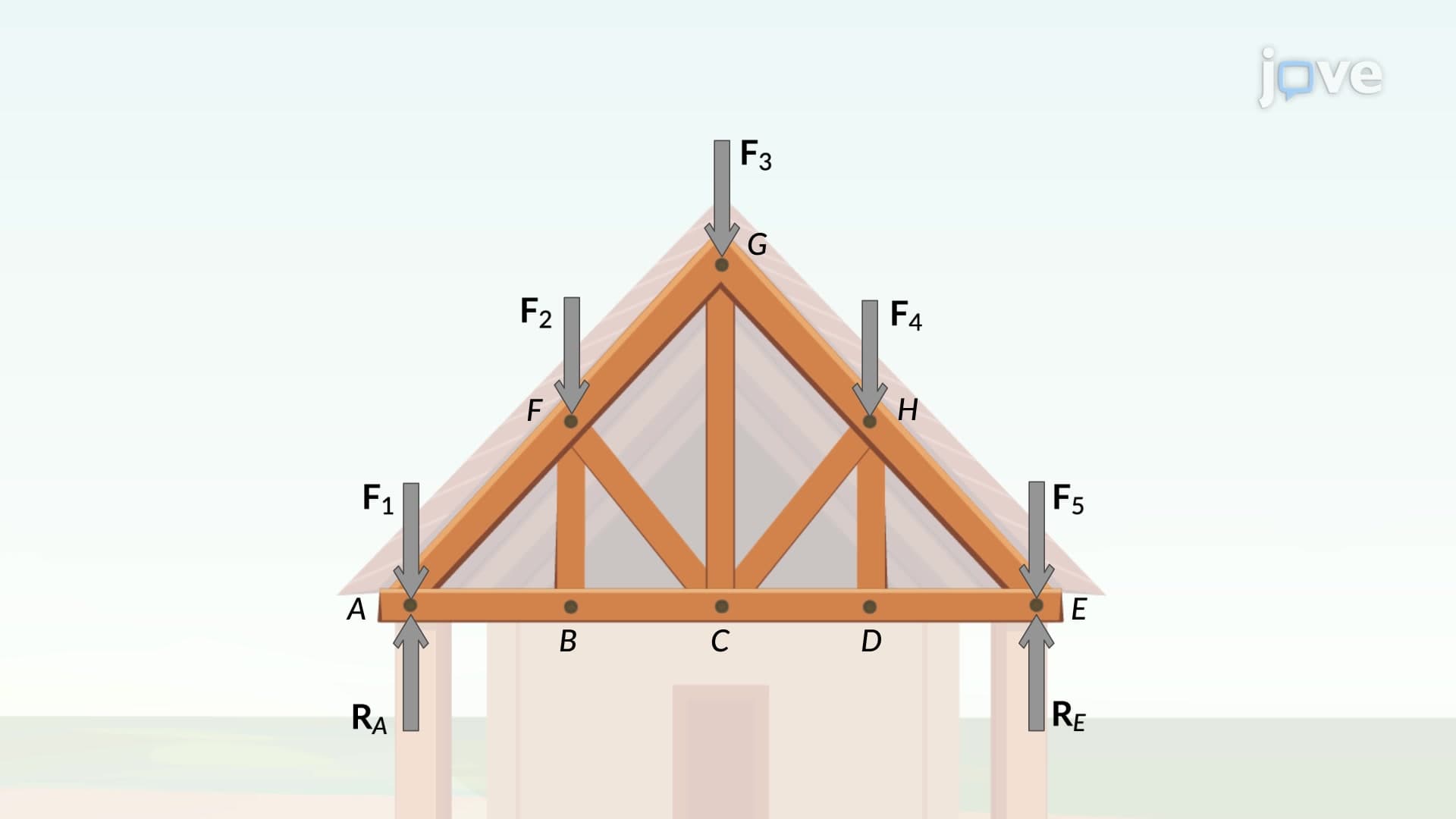
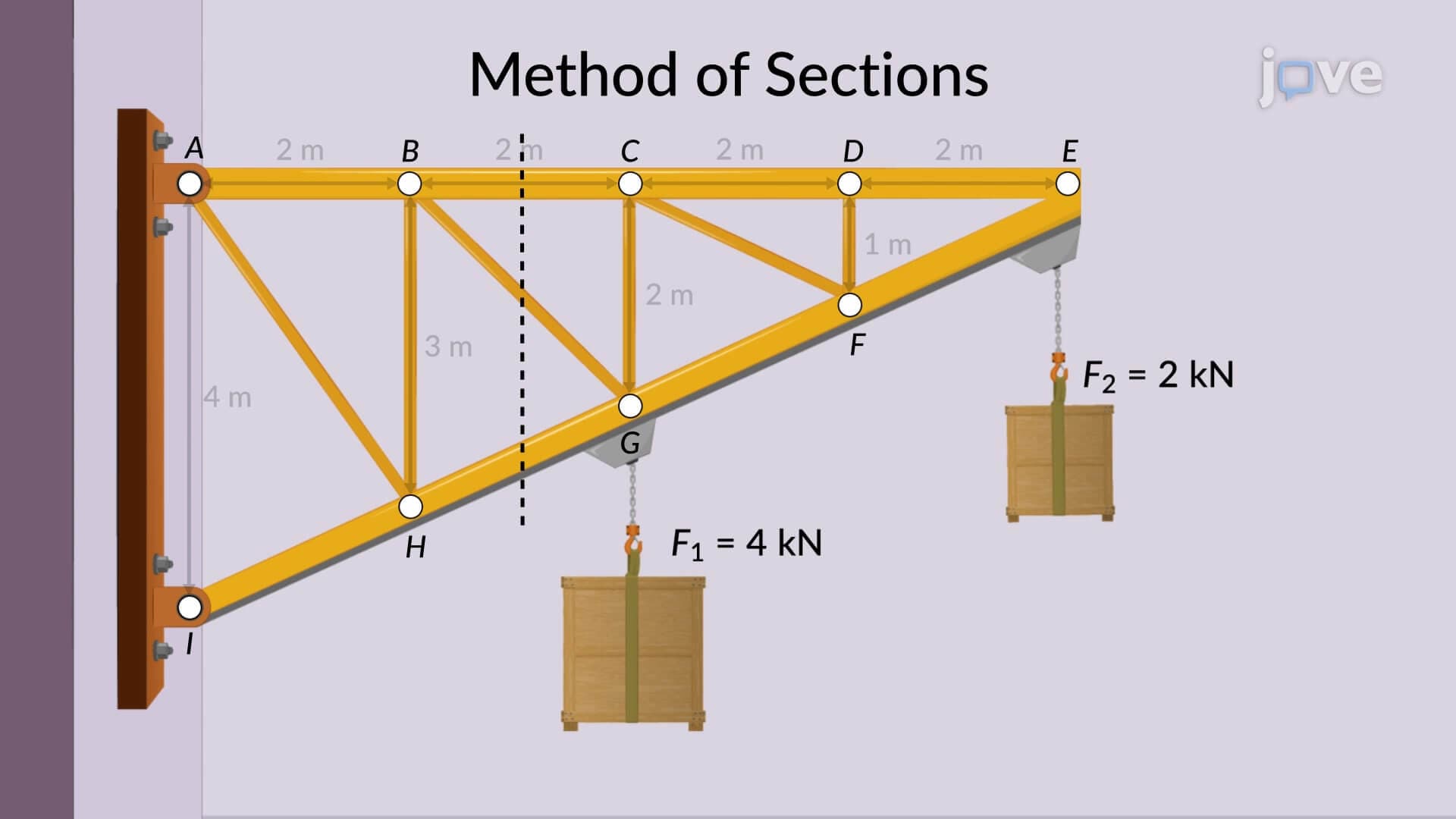
Professional truss analysis relies on two critical assumptions that transform complex real-world structures into manageable engineering problems. First, all external loads must be applied directly at joints, not along member lengths. When member weights become significant-such as in large steel bridge trusses-engineers distribute half the weight to each connecting joint as vertical forces.
The second assumption treats all connections as frictionless pin joints, even though actual construction uses welded, bolted, or riveted connections. This simplification works remarkably well in practice, provided that member centerlines intersect at joint centers. These assumptions ensure that truss members function as two-force members, experiencing only axial compression or tension-never bending moments or shear forces.
The relationship between members (m) and joints (j) in simple trusses follows a fundamental equation that determines structural stability and analysis complexity. For a statically determinate simple truss, this relationship ensures that engineers can solve for all member forces using only equilibrium equations-a cornerstone principle tested extensively on the AP Physics exam and college-level statics courses.
Understanding this mathematical foundation proves essential for students preparing for engineering programs or professional licensing exams like the Fundamentals of Engineering (FE) exam. American engineering curricula emphasize these principles because they form the basis for analyzing everything from residential roof trusses to major suspension bridge towers.
Simple truss principles appear throughout American infrastructure, from the iconic truss bridges spanning the Mississippi River to the roof systems of major sports stadiums like AT&T Stadium in Dallas. Highway overpasses frequently employ truss designs because they provide excellent strength-to-weight ratios while allowing for long spans between supports-crucial for maintaining traffic flow below.
Modern applications extend beyond traditional construction into aerospace and automotive industries. The International Space Station's framework utilizes truss principles, while race car roll cages represent simple truss systems designed to protect drivers during crashes. These diverse applications demonstrate why understanding simple trusses remains fundamental to multiple engineering disciplines taught at universities nationwide.
Related Micro-courses