Loading video…


 17 Concepts
 17K views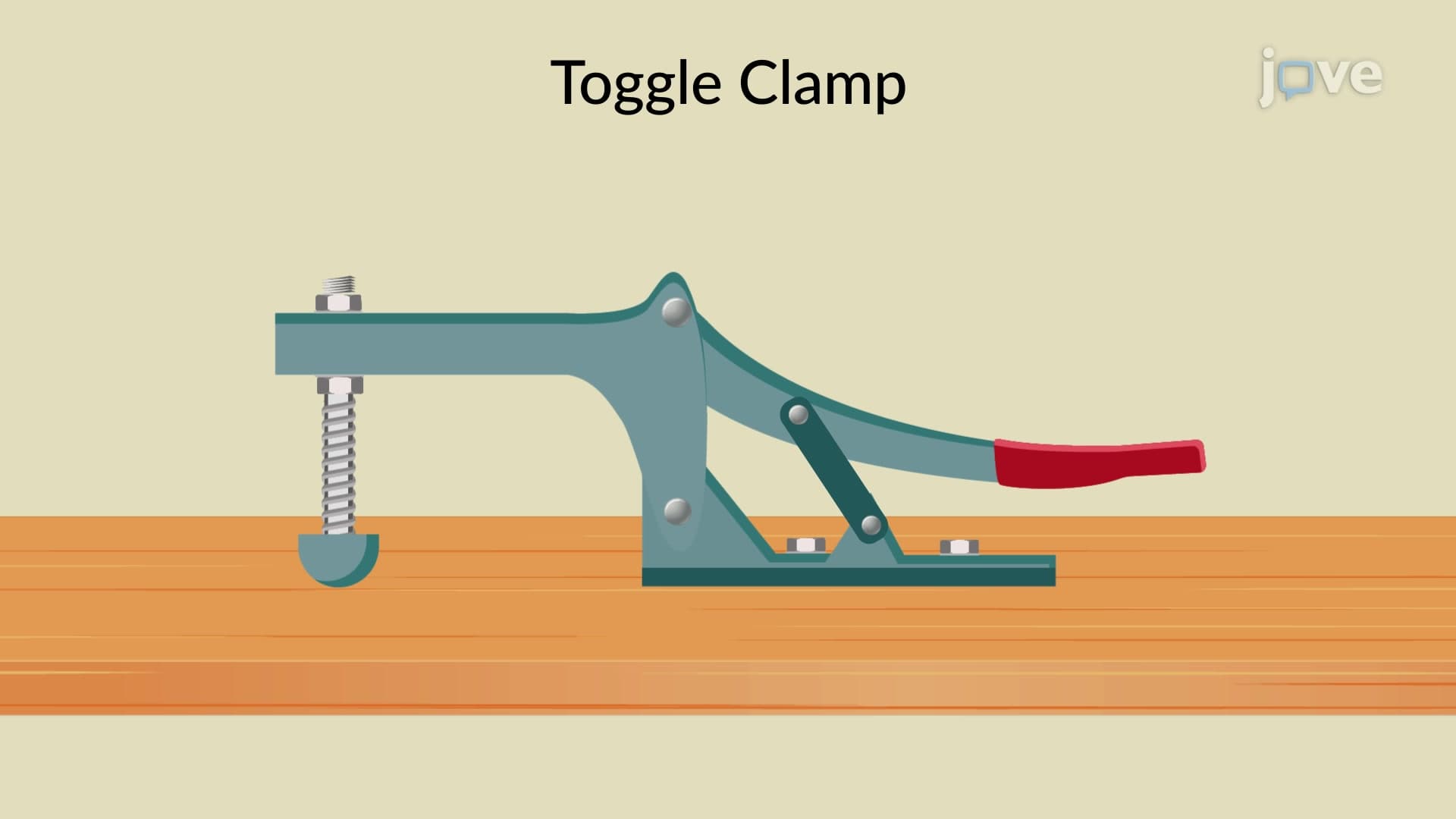

Video Summary: What Is Machines Problem Solving I
Ever wondered how a simple car jack can lift a 4,000-pound vehicle with just human force? Machines problem solving I reveals the engineering principles behind mechanical advantage in everyday tools. From automotive hydraulic systems in Detroit factories to construction cranes building New York skyscrapers, understanding force transmission through pin-connected members is crucial for aspiring engineers. What is Machines Problem Solving I demonstrates how toggle clamps, linkages, and multi-force member systems amplify input forces through strategic geometry and pivot points. Watch the full video on JoVE Coach to master this concept with expert-led visuals and step-by-step explanations.
Machines Problem Solving I represents the foundational approach to analyzing mechanical systems where multiple rigid bodies connect through pins, joints, or hinges to transmit and modify forces. Unlike simple static structures, these systems involve movable components that work together to achieve mechanical advantage-the ability to amplify input forces or change their direction.
The core principle revolves around treating complex machines as assemblies of interconnected members, each following the fundamental laws of static equilibrium. When you apply a 200-Newton force to a toggle clamp handle, the system doesn't simply transfer that exact force to the workpiece. Instead, the geometric arrangement of members creates a mechanical advantage that can multiply your input force several times over.
Understanding member classification is crucial for machines problem solving I success. Two-force members, like the rod CD in our toggle clamp example, have forces acting only at two points-typically the connection joints. These forces must be equal in magnitude, opposite in direction, and collinear along the member's centerline. This simplification makes analysis more manageable.
Multi-force members, conversely, experience forces at three or more points and may include applied loads, reaction forces, and internal stresses. The handle and main body of our toggle clamp exemplify multi-force members requiring more complex equilibrium analysis.
Successful machines problem solving I depends heavily on strategic free-body diagram construction. Rather than analyzing the entire machine simultaneously, engineers use section analysis-isolating specific portions of the mechanism to apply equilibrium conditions systematically.
For the toggle clamp problem, creating separate free-body diagrams for sections BCF and EBA allows independent application of moment equilibrium at different pivot points. This sectioning approach appears frequently in AP Physics C mechanics problems and college-level statics courses, making it essential for students planning engineering careers.
Toggle clamps find extensive use in American manufacturing, from automotive assembly lines in Michigan to aerospace production facilities in California. Boeing uses similar mechanisms in aircraft assembly fixtures, while Ford employs pneumatically-actuated toggle systems for precise part positioning during welding operations.
Understanding these principles prepares students for careers in mechanical engineering, where machine analysis skills directly apply to designing everything from robotic systems to industrial automation equipment. Many state universities, including Penn State and Georgia Tech, emphasize these foundational concepts in their freshman engineering curricula.
Related Micro-courses