Loading video…


 17 Concepts
 17K views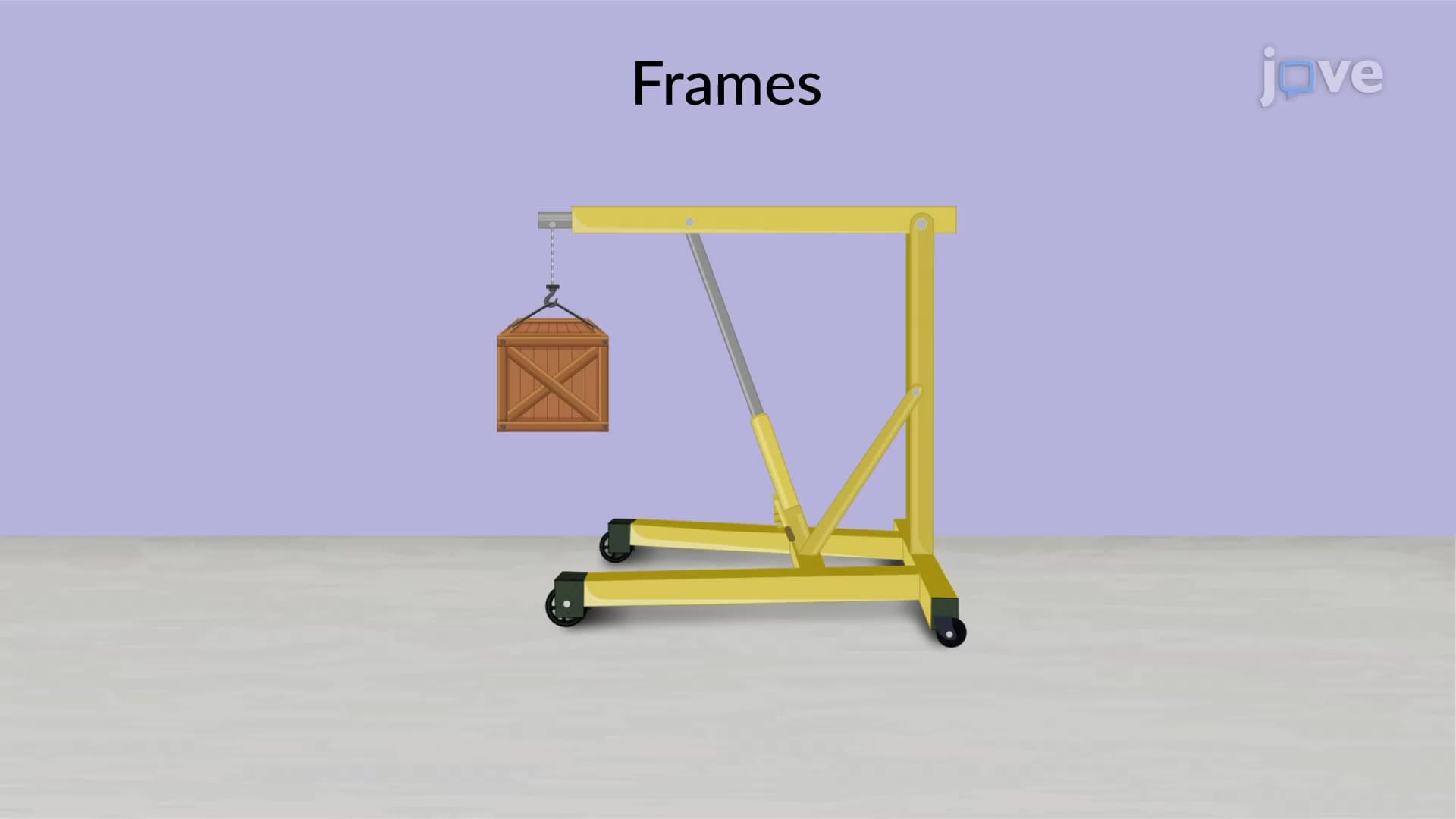

Video Summary: What Is Frames Problem Solving Ii
Ever wondered how engineers ensure skyscrapers don't collapse or bridges can support massive loads? Frames problem solving II tackles the complex analysis of multi-member structures where forces interact across multiple joints and connections. Unlike simple beam analysis, this advanced technique examines structures like the support frameworks in New York's One World Trade Center, where multiple force and multi-force members work together to distribute loads safely. Watch the full video on JoVE Coach to master this concept with expert-led visuals and step-by-step explanations.
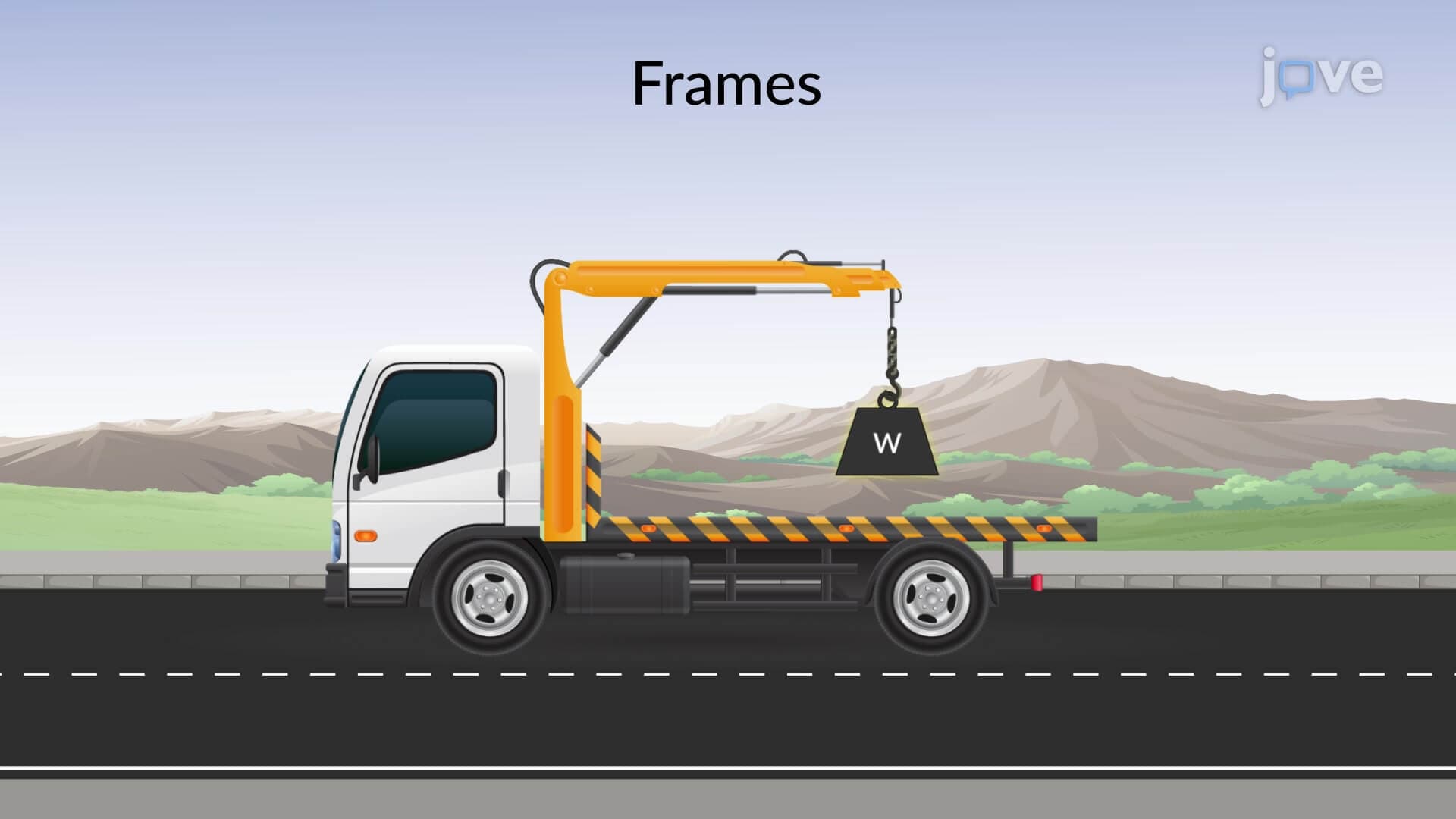
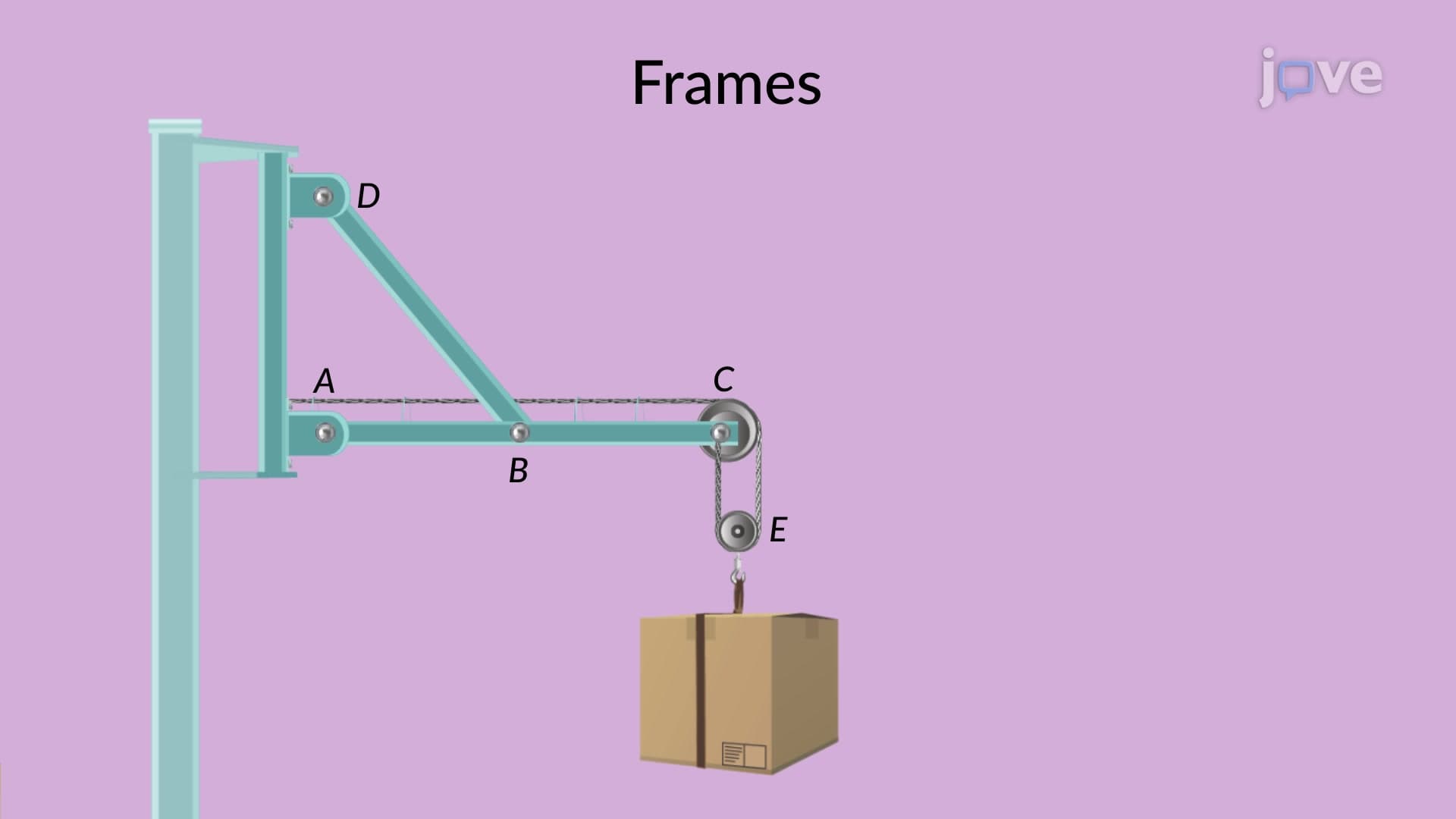
Frames problem solving II represents an advanced structural analysis technique that examines how forces distribute through complex frame systems containing both two-force and multi-force members. Unlike simple truss analysis, this method addresses structures where members experience bending moments, shear forces, and axial loads simultaneously. Engineering students encounter this concept in statics courses, where it serves as a bridge between basic equilibrium problems and advanced structural engineering principles.
The foundation of frames problem solving II lies in correctly identifying member classifications. Two-force members, such as tension rods or compression struts, only experience forces at their endpoints along their longitudinal axis. Multi-force members, however, can experience loads at multiple points and develop internal moments. Consider the framework supporting a highway billboard in California - the diagonal braces act as two-force members, while the main horizontal beam functions as a multi-force member supporting the sign's weight at various points.
Successful frames problem solving II requires systematic free-body diagram construction for each structural component. Engineers isolate individual members and identify all external forces, including reactions at supports and internal forces from connected members. The slope triangle method proves invaluable for resolving forces into horizontal and vertical components. For instance, if a diagonal member makes a 3-4-5 triangle with the horizontal, forces along that member can be decomposed using these ratios, simplifying calculations significantly.
The solution process involves applying three equilibrium equations - sum of forces in x-direction equals zero, sum of forces in y-direction equals zero, and sum of moments about any point equals zero. Strategic selection of moment centers often eliminates multiple unknowns simultaneously. When analyzing a frame supporting a water tank in Texas, taking moments about joint locations where multiple unknown forces intersect reduces the problem complexity dramatically.
This methodology appears frequently on AP Physics exams and college engineering assessments, where students must demonstrate understanding of both conceptual principles and computational techniques. Mastering frames problem solving II prepares students for advanced coursework in structural engineering, mechanical design, and civil engineering applications.
Related Micro-courses