Loading subject page…

- Physics
- Fluid Mechanics
- Application of Pascal's Law
Micro-course: Fluid Mechanics
201,010 views
Learn key concepts and earn your certificate.




Application of Pascal's Law

00:00
01:03
Video Summary: Application of Pascals Law Explained
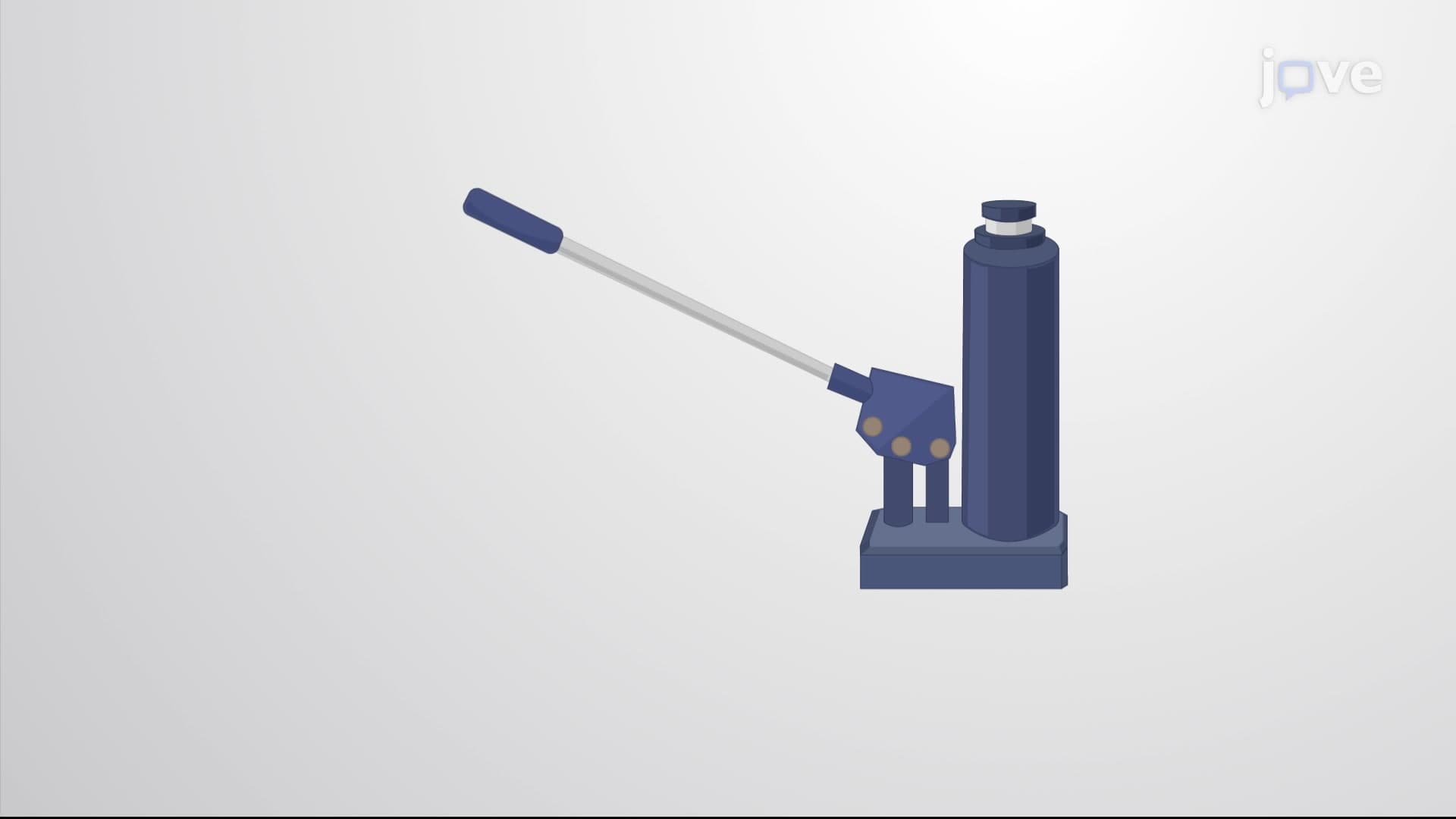
Did you know that the massive hydraulic lifts in automotive repair shops can effortlessly raise 2-ton cars using relatively small applied forces? The application of Pascal's law makes this mechanical advantage possible through pressure transmission in hydraulic systems. From car jacks to industrial presses used in manufacturing facilities across the United States, Pascal's principle enables engineers to multiply forces efficiently. Watch the full video on JoVE Coach to master this concept with expert-led visuals and step-by-step explanations.
- Understand how the application of Pascal's law enables hydraulic systems to multiply force through pressure transmission in incompressible fluids
- Identify the key components of hydraulic systems including pistons of different cross-sectional areas and the fluid medium that transmits pressure
- Analyze the mathematical relationship between applied force, piston area, and output force using the equation F₁/A₁ = F₂/A₂
- Compare pressure values at different points in a hydraulic system and recognize that pressure remains constant throughout the fluid
- Evaluate real-world hydraulic applications such as car lifts, brake systems, and construction equipment to understand practical implementations
- Apply Pascal's principle to solve quantitative problems involving force multiplication and mechanical advantage calculations
- Recognize the assumptions and limitations of ideal hydraulic systems, including the effects of friction and fluid compressibility
- Explore how Pascal's law connects to broader physics concepts including fluid statics, pressure, and energy conservation
Understanding the Application of Pascal's Law
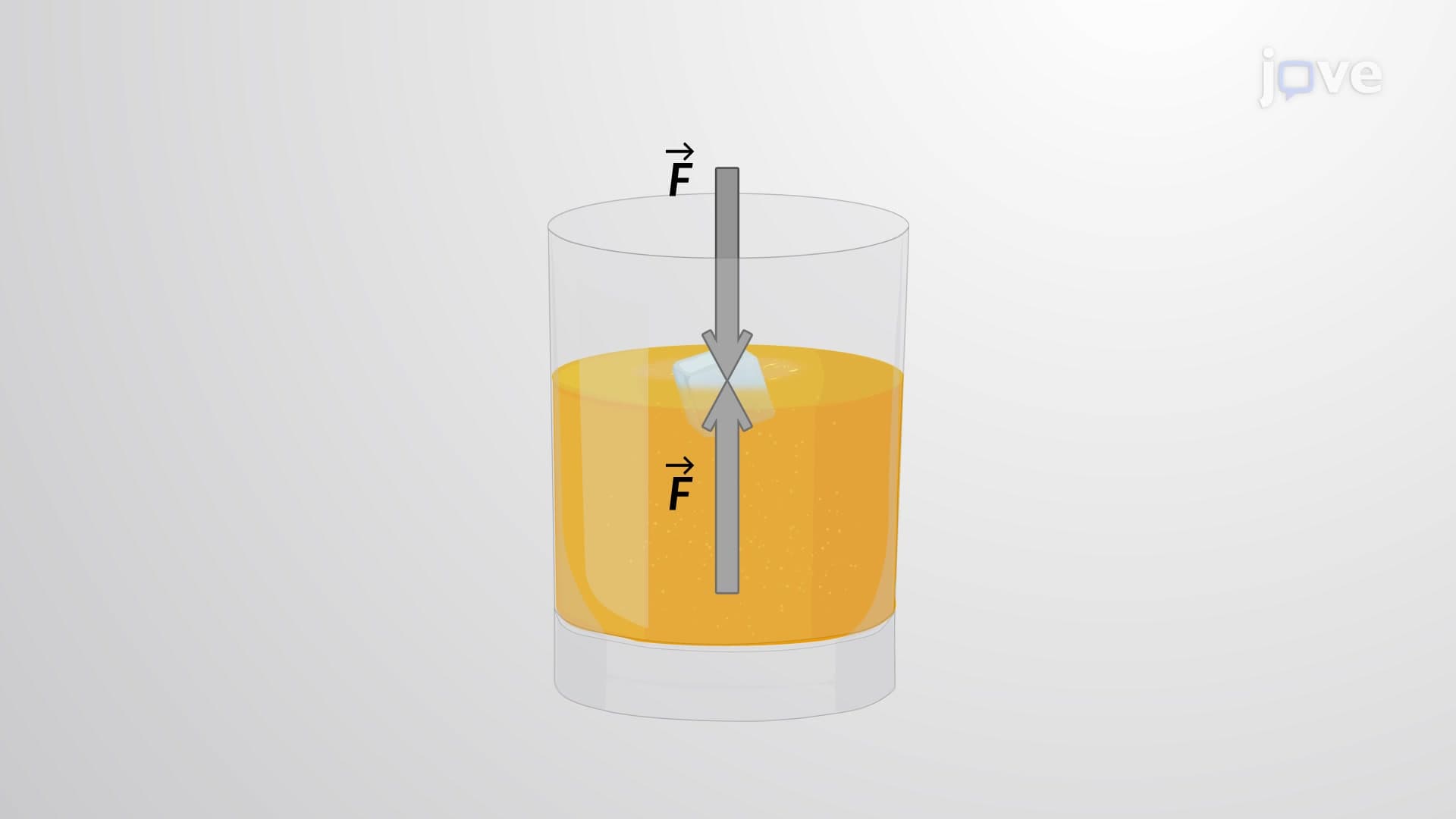
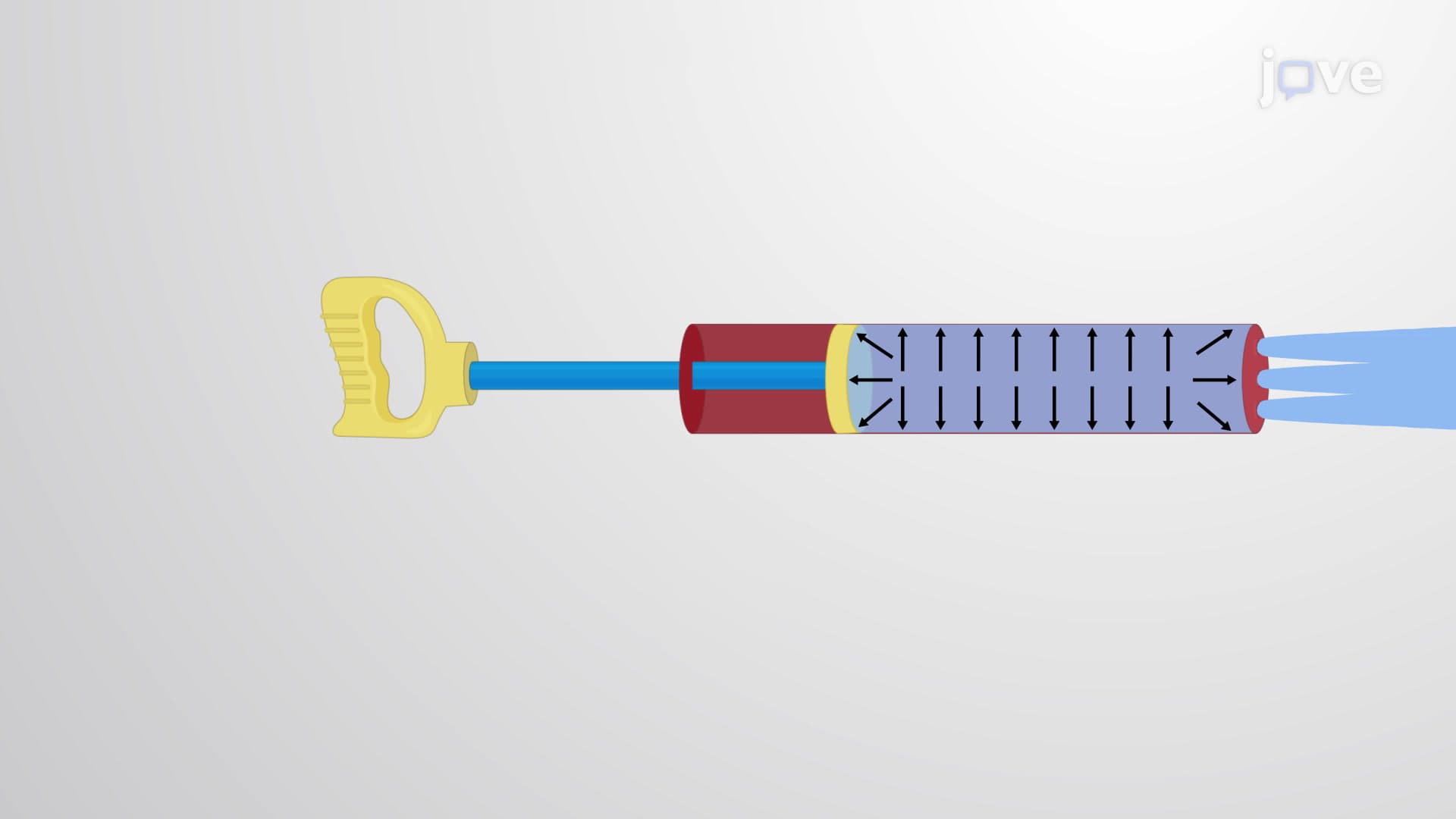
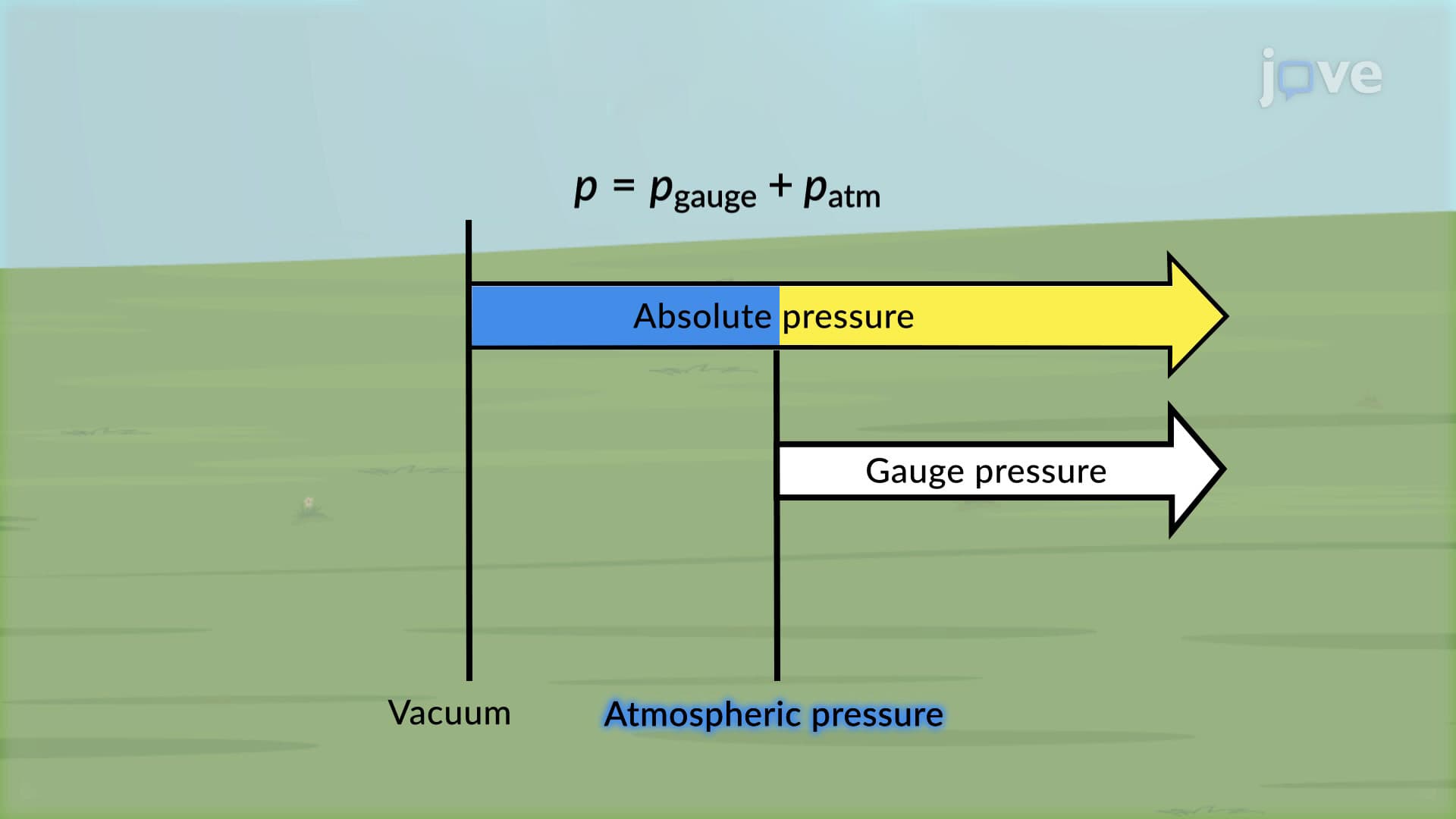
Pascal's law states that pressure applied to a confined fluid is transmitted equally in all directions throughout the fluid. This fundamental principle, discovered by French mathematician Blaise Pascal in the 17th century, forms the foundation for countless mechanical systems that amplify force through hydraulic mechanisms.
The mathematical expression of Pascal's law reveals its power: when pressure P₁ is applied to piston A with area A₁, the same pressure is transmitted to piston B with area A₂. Since pressure equals force divided by area (P = F/A), we can write: F₁/A₁ = F₂/A₂. Rearranging this equation shows that F₂ = F₁ × (A₂/A₁), demonstrating how a small force can generate a much larger output force when A₂ is significantly larger than A₁.
Real-World Applications in American Industry
Hydraulic systems utilizing Pascal's law are ubiquitous in American infrastructure and industry. Automotive service centers rely on hydraulic lifts that can raise vehicles weighing thousands of pounds using hand pumps or small electric motors. The brake systems in every car on US highways depend on Pascal's principle-when you press the brake pedal, hydraulic fluid transmits that pressure to brake calipers at each wheel, applying stopping force proportional to the system's mechanical advantage.
Construction equipment manufacturers like Caterpillar and John Deere engineer massive excavators and bulldozers that use hydraulic cylinders to lift tons of earth and debris. These machines demonstrate Pascal's law on an industrial scale, where relatively small hydraulic pumps generate enormous forces through carefully designed piston area ratios.
Academic Applications and Exam Preparation
Students preparing for AP Physics exams frequently encounter Pascal's law problems that require calculating mechanical advantage in hydraulic systems. College physics courses expand on this foundation, connecting Pascal's principle to broader topics in fluid mechanics and thermodynamics. Pre-engineering students at universities like MIT and Stanford study hydraulic systems as examples of efficient force multiplication in mechanical design.
MCAT preparation often includes Pascal's law questions in the physics section, particularly in contexts involving medical devices like hydraulic patient lifts or surgical equipment. Understanding the mathematical relationships and practical applications helps students excel in both multiple-choice questions and free-response problems that require detailed explanations of physical principles.
Frequently Asked Questions
Pascal's law enables hydraulic systems to multiply force by transmitting pressure equally through incompressible fluids. When force is applied to a small piston, the resulting pressure spreads throughout the fluid and acts on a larger piston, creating a proportionally greater output force. This principle powers everything from car jacks to industrial manufacturing equipment.
AP Physics 1 exams often present hydraulic system scenarios requiring students to calculate force ratios, mechanical advantage, or pressure relationships. Questions may involve car lifts, brake systems, or generic hydraulic presses where you must apply F₁/A₁ = F₂/A₂ to solve for unknown variables. Practice with quantitative problems and conceptual explanations improves performance.
MCAT physics passages frequently feature hydraulic systems in medical or industrial contexts, testing your ability to calculate forces, pressures, and mechanical advantages. Questions may involve patient lifts in hospitals, hydraulic surgical tools, or industrial applications. Focus on understanding the underlying physics rather than memorizing formulas.
Your car's brake system perfectly demonstrates Pascal's law-when you press the brake pedal, hydraulic fluid transmits that pressure to brake calipers at all four wheels simultaneously. The master cylinder and brake lines maintain constant pressure throughout the system, ensuring reliable stopping power. Automotive lifts in service stations use the same principle to raise heavy vehicles effortlessly.
Pascal's law requires only basic algebra and an understanding of ratios and proportions. The key equation F₁/A₁ = F₂/A₂ uses simple arithmetic operations, making it accessible to high school students. Focus on understanding the physical concept first, then practice applying the mathematical relationships to various scenarios.
Start by mastering the conceptual understanding of pressure transmission in fluids, then practice calculating force ratios and mechanical advantages using real-world examples. Create a formula sheet with key equations and work through diverse problem types including car lifts, brake systems, and industrial presses. Drawing diagrams helps visualize the physical setup.
Pascal's law serves as a foundation for fluid mechanics, thermodynamics, and mechanical engineering design principles. Advanced coursework explores topics like hydraulic efficiency, pump design, and system optimization. Engineering programs at schools like Purdue and Georgia Tech build on these fundamentals to design complex hydraulic machinery and aerospace systems.
Related Micro-courses


