Loading subject page…

- Physics
- Fluid Mechanics
- Bernoulli's Principle: Applications
Micro-course: Fluid Mechanics
201,010 views
Learn key concepts and earn your certificate.








Bernoulli's Principle: Applications

00:00
01:17
Video Summary: What Is Bernoullis Principle Applications
Ever wonder why a perfume atomizer creates that fine mist when you press the bulb? Bernoulli's principle applications explain this everyday phenomenon through the relationship between fluid velocity and pressure. From NASCAR race cars using aerodynamics to gain speed advantage to medical ventilators saving lives in US hospitals, these applications demonstrate how decreasing pressure accompanies increasing fluid velocity. Watch the full video on JoVE Coach to master this concept with expert-led visuals and step-by-step explanations.
- Understand what is Bernoulli's principle applications and how they demonstrate the inverse relationship between fluid velocity and pressure in real-world scenarios
- Identify common applications including venturi tubes, carburetors, airplane wings, and medical devices used throughout American industry and healthcare
- Analyze how the continuity equation works alongside Bernoulli's principle to explain fluid behavior in converging and diverging passages
- Apply mathematical relationships to calculate fluid velocities and pressure differences in venturi tube measurements and similar flow systems
- Recognize the connection between cross-sectional area changes and corresponding velocity adjustments in practical engineering applications
- Evaluate pressure differentials using height measurements in connected vertical tubes as demonstrated in laboratory and industrial settings
- Compare various Bernoulli applications from simple household items like spray bottles to complex aerospace engineering in US aircraft design
- Explore how these principles enable precise flow measurements essential for chemical processing plants and water treatment facilities across America
Understanding Bernoulli's Principle Applications in Engineering
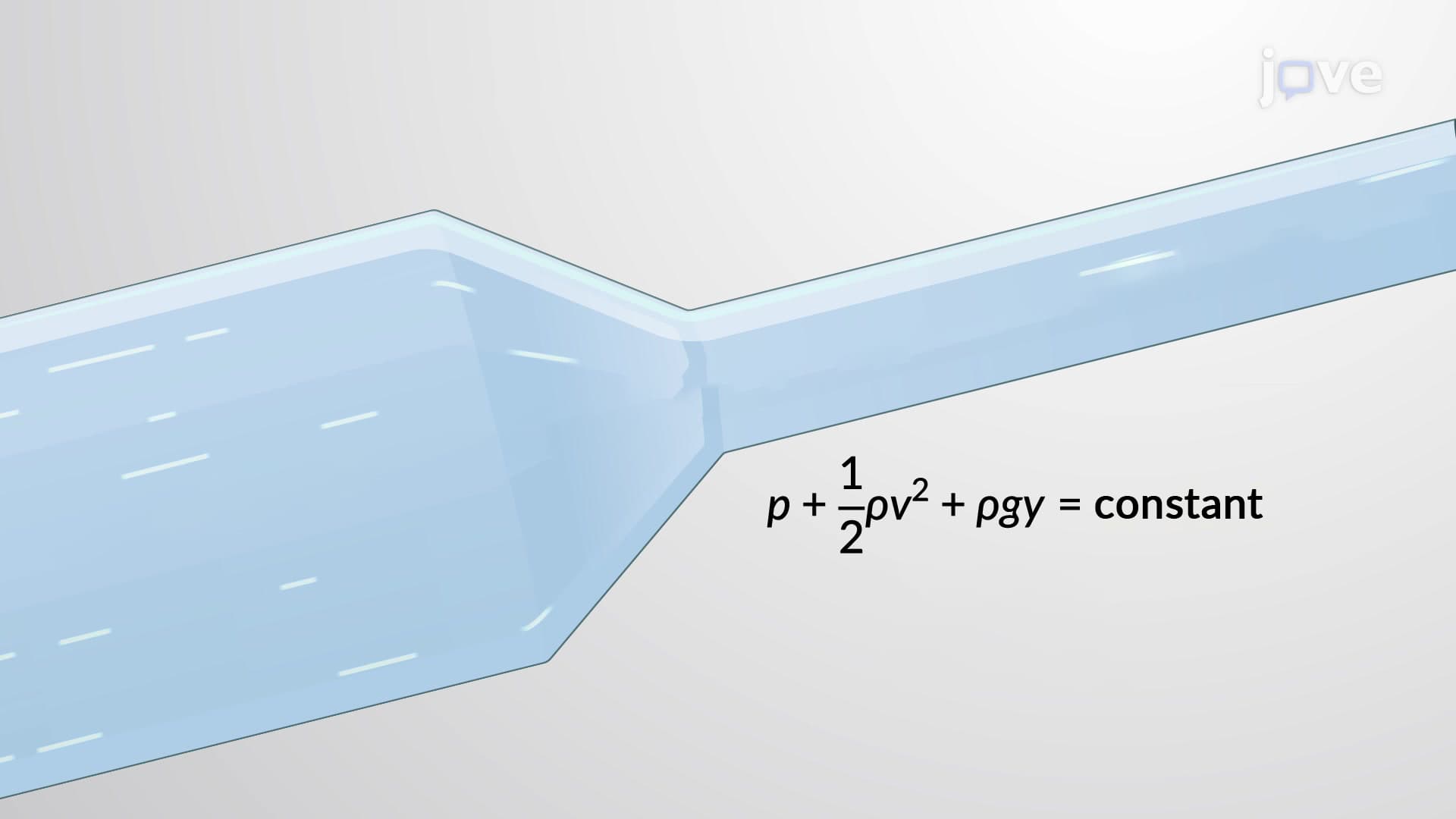
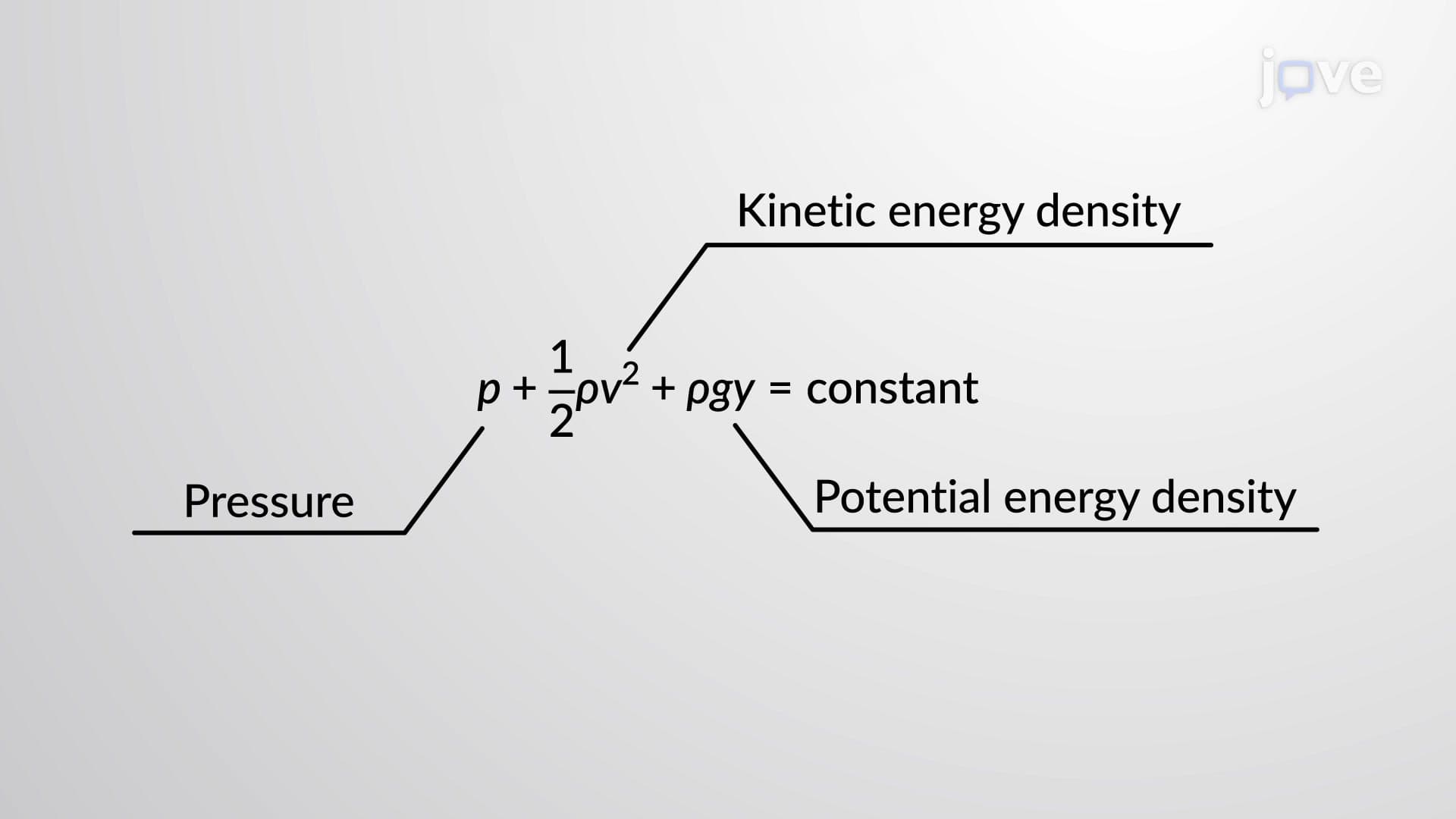
Bernoulli's principle applications represent one of fluid mechanics' most practically relevant concepts, governing countless devices Americans encounter daily. These applications demonstrate how fluid velocity increases correspond to pressure decreases, creating predictable and useful phenomena across industries from automotive to aerospace.
The Venturi Tube: Precision Flow Measurement
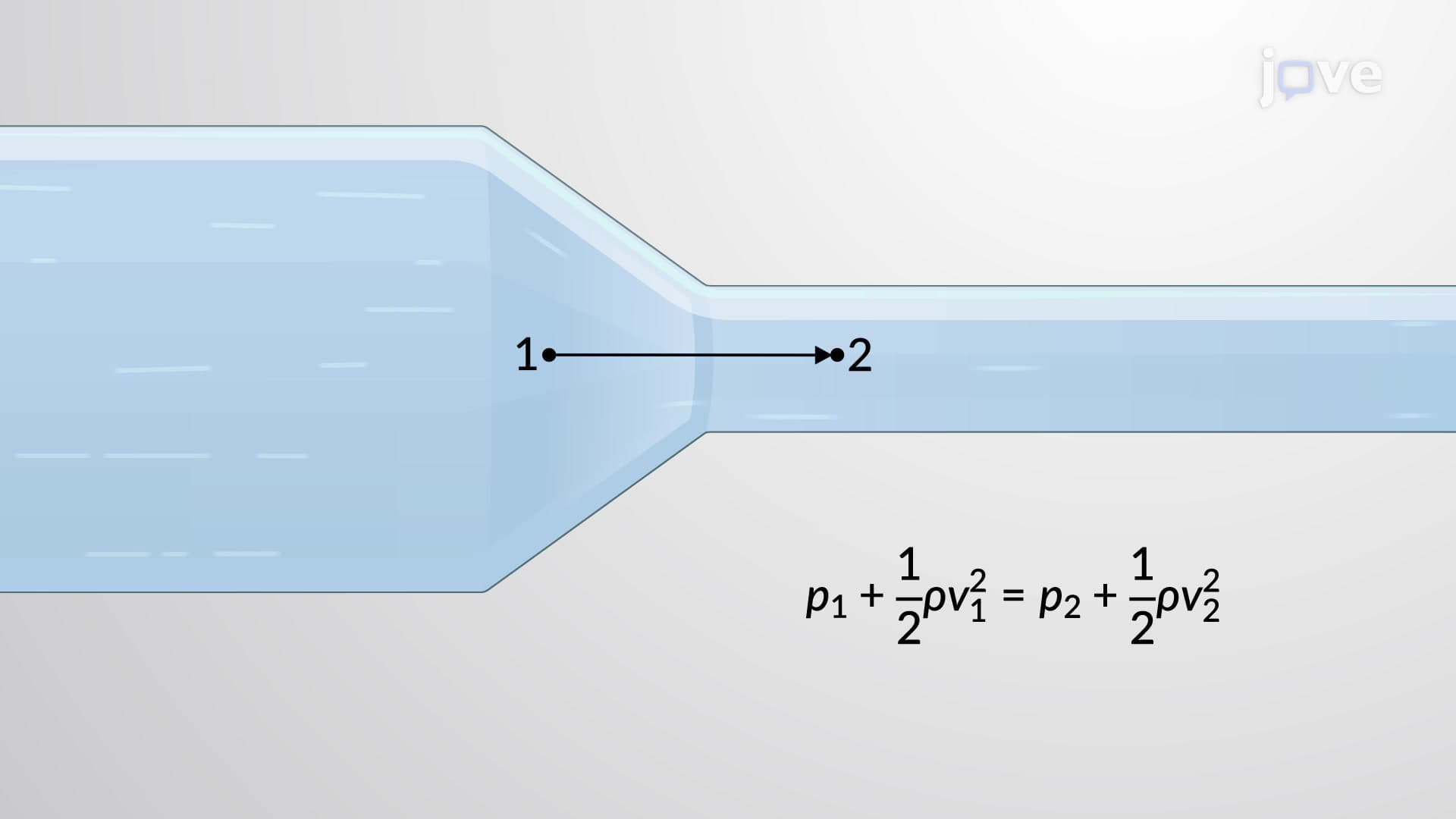
The venturi tube exemplifies sophisticated Bernoulli applications, serving as the gold standard for flow measurement in American industrial facilities. This device features three distinct sections: a converging inlet, a narrow throat, and a diverging outlet. As fluid enters the converging section, the continuity equation demands velocity increases to maintain constant mass flow rate through the reduced cross-sectional area.
Connected vertical tubes at the inlet and throat regions visually demonstrate pressure differences. Higher pressure at the inlet pushes fluid higher in the first tube, while lower pressure at the throat results in reduced fluid height in the second tube. This height differential directly correlates to pressure difference, enabling precise velocity calculations essential for chemical plants, water treatment facilities, and petroleum refineries throughout the United States.
Practical Applications in American Industry
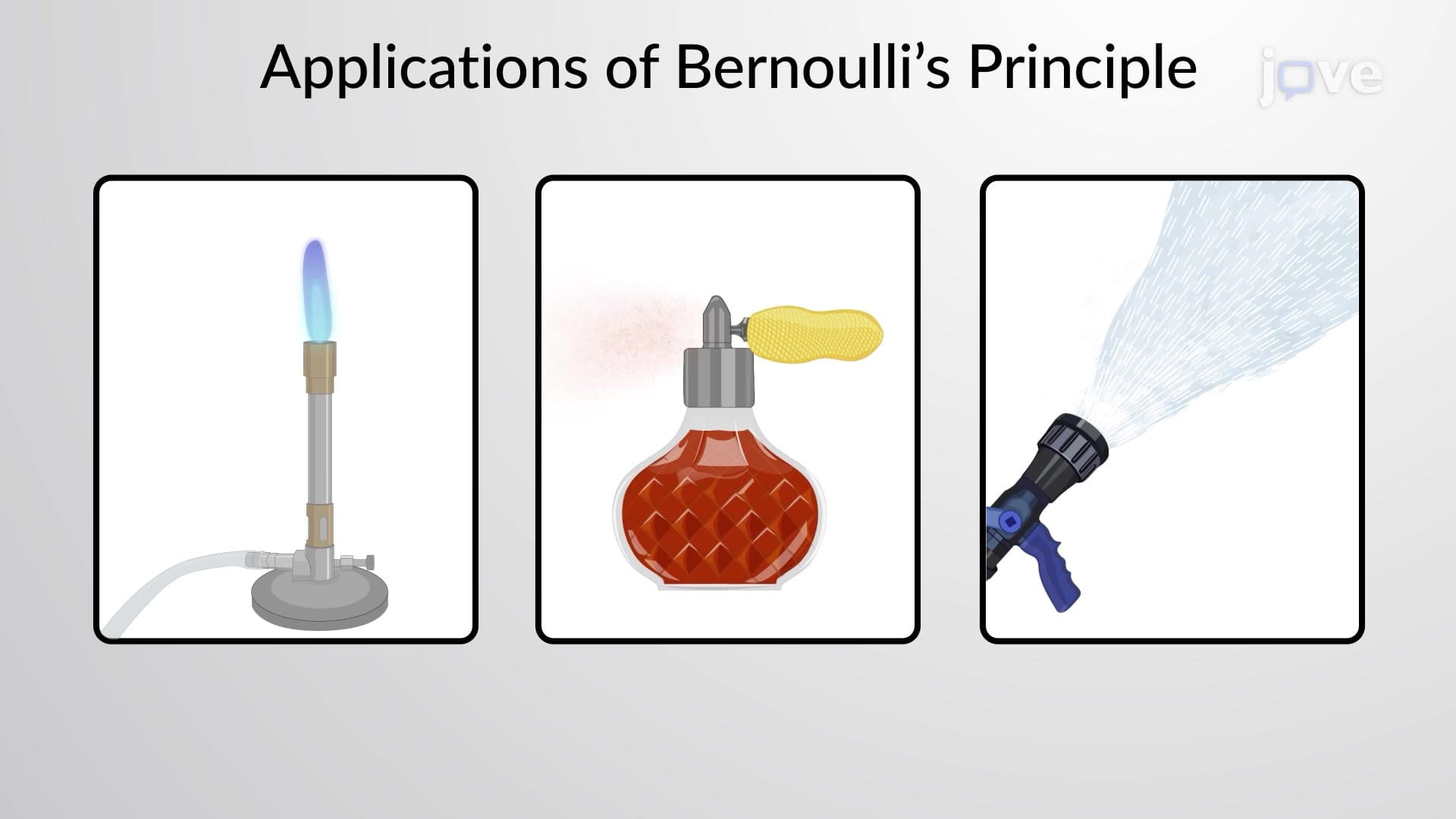
Beyond measurement devices, Bernoulli applications power numerous everyday technologies. Bunsen burners in high school chemistry labs across America rely on this principle-gas flowing through a narrow orifice creates low pressure that draws air into the mixing chamber. Similarly, perfume atomizers and spray bottles use compressed air flowing over liquid surfaces to create the pressure differential needed for fine misting.
Automotive carburetors, though largely replaced by fuel injection, historically demonstrated Bernoulli principles by using airflow velocity to draw gasoline into engine cylinders. Modern NASCAR vehicles still employ these concepts through carefully designed aerodynamics that manipulate airflow to reduce drag and increase downforce.
Academic and Exam Relevance
Students preparing for AP Physics exams frequently encounter Bernoulli applications in both multiple-choice and free-response sections. The MCAT includes fluid dynamics problems requiring understanding of pressure-velocity relationships in biological systems like blood flow and respiratory function. College physics courses at institutions like MIT and Stanford emphasize practical problem-solving involving venturi calculations and flow measurement techniques.
These applications bridge theoretical physics with engineering practice, making them essential knowledge for students pursuing careers in mechanical engineering, aerospace, or biomedical fields at American universities.
Frequently Asked Questions
Bernoulli's principle applications are real-world implementations demonstrating how fluid velocity increases correspond to pressure decreases. They're crucial because they explain countless everyday phenomena from airplane flight to medical ventilators, making abstract physics concepts tangible and practically useful across American industries.
MCAT questions often feature blood flow through arteries, respiratory system mechanics, and medical device operations. You'll encounter problems calculating pressure differences in narrowed blood vessels or explaining how breathing apparatus functions, requiring understanding of velocity-pressure relationships in biological contexts.
Focus on venturi tubes, airplane wing lift generation, and fluid flow through pipes with varying diameters. AP exams frequently test mathematical problem-solving involving continuity equations combined with Bernoulli's principle, particularly calculating flow velocities and pressure differences in connected tube systems.
Boeing aircraft manufacturing relies heavily on Bernoulli principles for wing design, where airflow velocity differences above and below wings create lift forces. Additionally, Chevron and ExxonMobil refineries use venturi tubes to precisely measure petroleum flow rates through processing equipment, ensuring accurate production monitoring.
Not at all-these applications build on simple concepts you already know. If you understand that water flows faster through a garden hose nozzle than the wider hose itself, you grasp the basic idea. The mathematical relationships are straightforward algebra, making these concepts accessible to any student with basic physics background.
Practice solving venturi tube problems step-by-step, focusing on applying both continuity equation and Bernoulli's principle together. Work through pressure calculation problems using connected vertical tubes, and memorize the key relationship that velocity increases when cross-sectional area decreases in flowing fluids.
Advanced fluid dynamics courses explore turbulent flow, computational fluid dynamics used in aerospace engineering, and complex applications in biomedical engineering like artificial heart design. Many mechanical engineering programs at schools like Georgia Tech and Purdue emphasize these principles in senior-level design courses.
Yes, particularly in physiology contexts involving cardiovascular and respiratory systems. Medical students must understand how arterial stenosis affects blood flow velocities and pressures, knowledge essential for diagnosing conditions like heart valve disorders and designing treatment protocols in American healthcare settings.
Related Micro-courses


