Loading…
Loading video…

70,000 views

Did you know that the CDC uses statistical tests to compare disease rates across different populations? The test for homogeneity is a powerful chi-square-based statistical method that determines whether two or more separate populations share similar distributions of a categorical variable. Unlike other chi-square tests that analyze single populations, this test compares multiple independent groups—like comparing malaria susceptibility between people with normal red blood cells versus sickle cell carriers. Watch the full video on JoVE Coach to master this concept with expert-led visuals and step-by-step explanations.
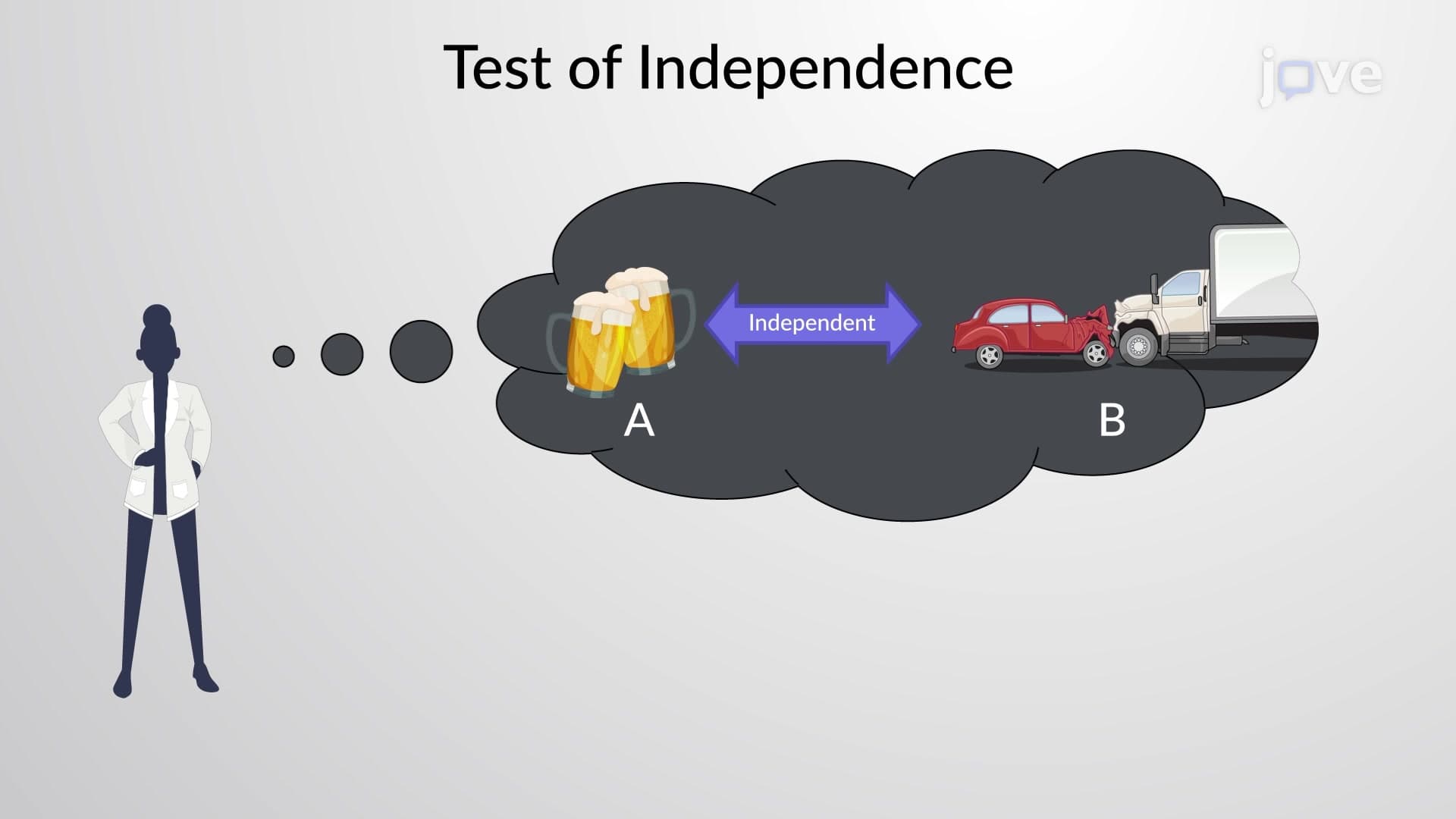
The test for homogeneity serves as a cornerstone statistical method for comparing categorical data distributions across multiple independent populations. This chi-square-based approach answers a fundamental research question: "Do these separate groups show the same pattern of responses or characteristics?" Unlike the goodness-of-fit test (which compares observed data to expected theoretical distributions) or the test for independence (which examines relationships within a single population), homogeneity testing specifically compares proportions between distinct, separate populations.
Consider how the Centers for Disease Control and Prevention (CDC) might compare vaccination rates across different states, or how pharmaceutical companies evaluate drug effectiveness across diverse patient populations. In the medical example from our content, researchers comparing malaria susceptibility between people with normal red blood cells and sickle cell carriers exemplify perfect homogeneity test application. The key insight: we're not looking at one population with two variables, but rather two distinct populations (normal RBC carriers vs. sickle cell carriers) and asking if their malaria infection distributions are homogeneous (similar).
The test for homogeneity follows standard chi-square methodology but with specific population-comparison focus. Researchers establish null hypotheses stating that population distributions are identical (homogeneous), while alternative hypotheses propose significant differences exist. The chi-square statistic calculation remains familiar: Chi-square = Σ[(Observed - Expected)²/Expected], but the interpretation focuses on population comparison rather than variable association. Critical values depend on degrees of freedom calculated as (rows - 1) × (columns - 1), where columns represent different populations being compared.
For AP Statistics students and college undergraduates, understanding when to choose homogeneity tests over independence or goodness-of-fit tests represents crucial analytical thinking. The MCAT frequently includes scenarios requiring this distinction, particularly in biological and medical research contexts. College statistics courses emphasize recognizing population structure in research questions—multiple independent groups suggest homogeneity testing, while single populations with multiple variables indicate independence testing. Practice identifying these patterns through sample problems involving clinical trials, demographic studies, and experimental research designs.
Frequently Asked Questions
The test for homogeneity is a chi-square statistical method that compares categorical data distributions across two or more independent populations to determine if they share similar patterns. Unlike other chi-square tests, it specifically examines whether separate groups have homogeneous (identical) distributions of a categorical variable. This test proves essential in medical research, market analysis, and social science studies where comparing different populations is crucial.
The key difference lies in data structure and research questions. Homogeneity tests compare multiple separate populations (like comparing voting patterns across different states), while independence tests examine relationships between variables within a single population (like studying the relationship between education level and voting preference among all voters). The calculation methods are similar, but the interpretation and application contexts differ significantly.
AP Statistics frequently includes homogeneity test questions in free-response sections, typically presenting scenarios comparing categorical outcomes across different groups or populations. Common contexts include comparing treatment effectiveness across different hospitals, analyzing consumer preferences across different regions, or examining academic performance across different schools. The exam emphasizes proper test selection, hypothesis formulation, and conclusion interpretation.
College exams often feature complex scenarios requiring students to distinguish between homogeneity and independence tests, calculate chi-square statistics, determine degrees of freedom, and interpret P-values correctly. MCAT preparation materials frequently include medical research contexts, while business statistics courses emphasize market research applications. Expect problems involving multiple choice distributions, clinical trial comparisons, and demographic analysis.
US medical researchers use homogeneity tests to compare treatment outcomes across different patient populations, evaluate drug effectiveness across diverse demographic groups, and analyze disease prevalence patterns between geographic regions. For example, comparing COVID-19 vaccine effectiveness across different age groups, or analyzing cancer treatment success rates between different hospitals or ethnic populations.
No advanced mathematics is required beyond basic algebra and understanding of percentages. The test for homogeneity uses straightforward chi-square calculations that high school students can master with practice. Focus on understanding when to apply the test, how to set up hypotheses correctly, and how to interpret results rather than memorizing complex formulas.
Practice identifying population structure in research scenarios—look for keywords like "compare," "different groups," or "separate populations" that signal homogeneity testing. Create hypothesis statements clearly, practice chi-square calculations with real data sets, and focus on interpreting P-values and critical values correctly. Work through medical and social science examples to build pattern recognition skills.
Progress to analysis of variance (ANOVA) for comparing means across multiple groups, logistic regression for more complex categorical analysis, and non-parametric alternatives like the Kruskal-Wallis test. Understanding homogeneity testing provides excellent foundation for advanced statistical methods used in research design and data analysis.
Related Micro-courses
Related Subjects
 Physics 33 micro-courses›
 Math Fundamentals 11 micro-courses›