Loading video…


 13 Concepts
 38.6K views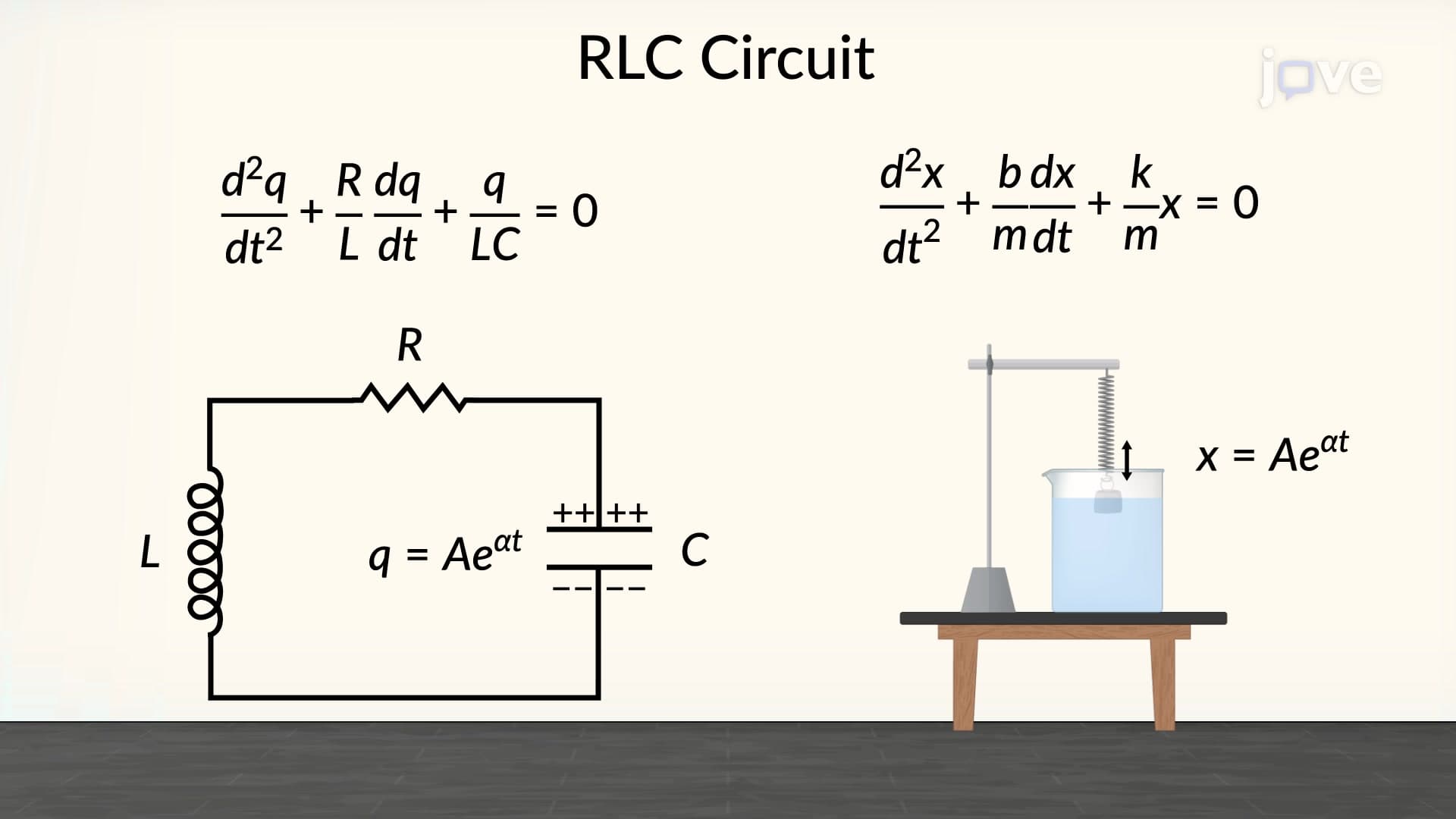

Video Summary: Rlc Circuit as a Damped Oscillator Explained
Ever wonder why your car's suspension system doesn't bounce forever after hitting a bump? The same physics governing automotive shock absorbers applies when studying an RLC circuit as a damped oscillator. Unlike ideal oscillators that swing indefinitely, real circuits in devices like radio tuners and electronic filters gradually lose energy due to resistance. This damping creates three distinct behaviors: underdamped (oscillates while decaying), critically damped (returns to equilibrium fastest), and overdamped (slowly approaches equilibrium without oscillating). Watch the full video on JoVE Coach to master this concept with expert-led visuals and step-by-step explanations.
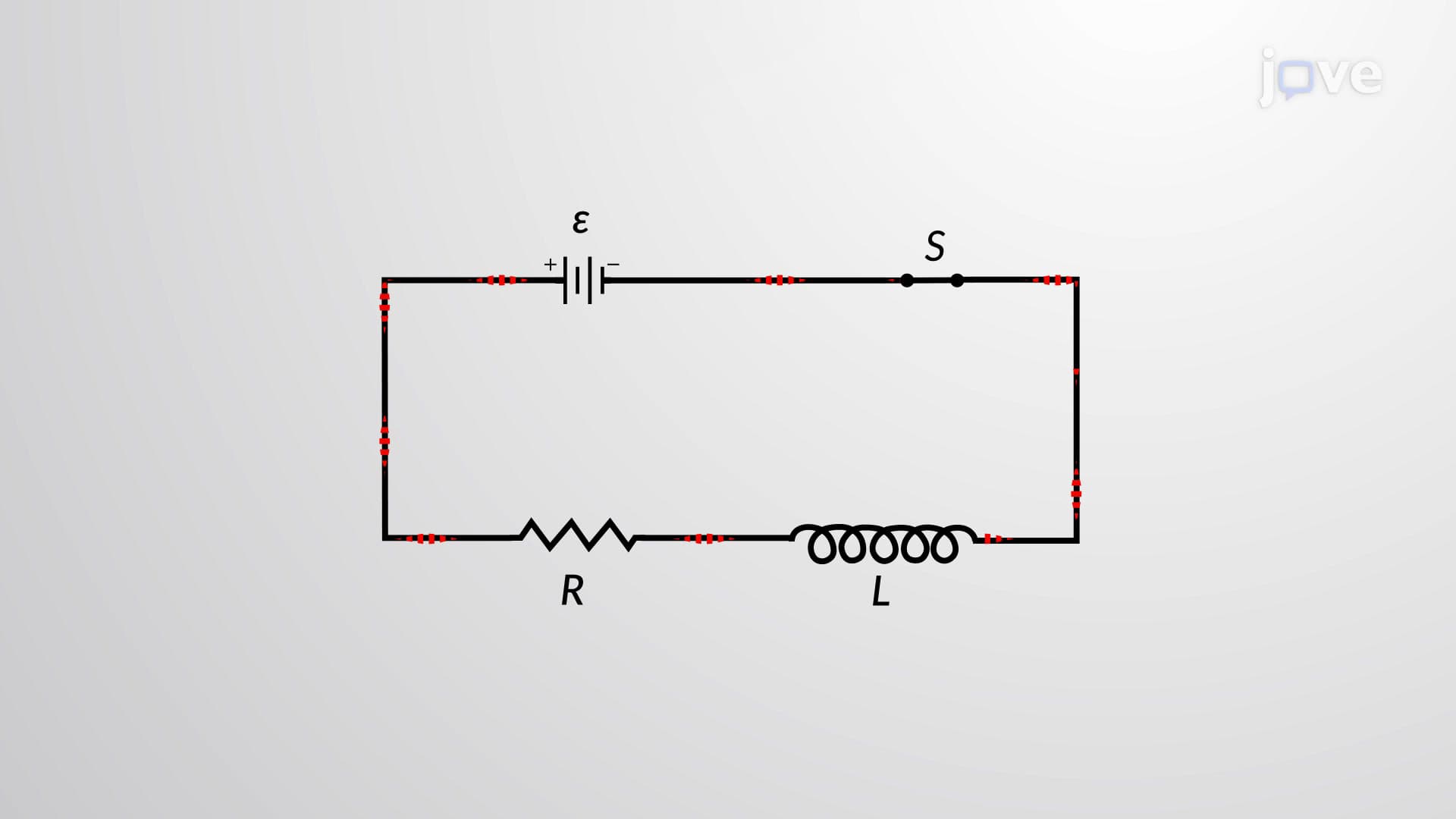
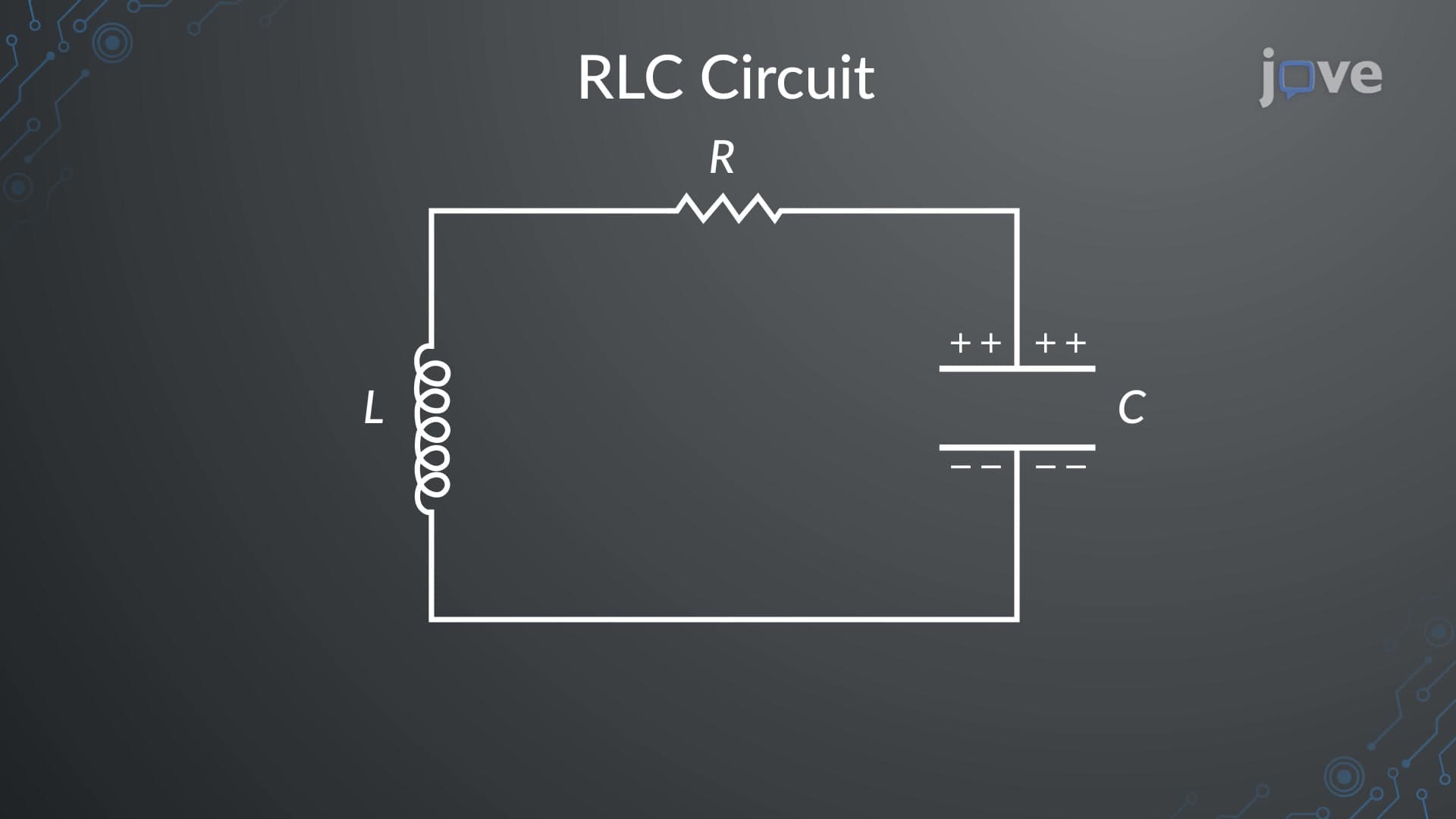
An RLC circuit as a damped oscillator represents one of the most elegant examples of how electrical systems mirror mechanical motion. When you apply Kirchhoff's voltage law to a series RLC circuit, you obtain a second-order linear differential equation identical in form to a mass-spring-damper system. The inductance L acts like mass (inertia), capacitance C behaves like spring compliance, and resistance R provides damping that dissipates energy.
The governing differential equation takes the form: L(d²q/dt²) + R(dq/dt) + q/C = 0, where q represents charge. This mathematical similarity isn't coincidental-both systems store and exchange energy between two forms while losing some to dissipation.
The characteristic equation yields two roots that determine circuit behavior. The damping factor ζ = R/(2√(L/C)) and natural frequency ω₀ = 1/√(LC) define three distinct regimes. When ζ < 1 (underdamped), the circuit oscillates with exponentially decaying amplitude-common in radio frequency circuits where you want sustained oscillation with minimal losses.
For underdamped cases, the solution becomes q(t) = Ae^(-αt)cos(ωt + φ), where α = R/(2L) represents the decay constant and ω = √(ω₀² - α²) is the damped frequency. Notice how damping reduces the oscillation frequency below the natural frequency, a crucial consideration in timing circuits.
American automotive manufacturers extensively use RLC damping principles in electronic suspension control systems. Companies like General Motors implement magnetorheological dampers that electrically adjust damping coefficients in real-time, directly applying RLC oscillator theory to mechanical systems.
In telecommunications, RLC damping governs how quickly cell phone circuits settle to steady-state values after receiving signal bursts. Verizon and AT&T network equipment relies on precisely tuned RLC filters that achieve critical damping to minimize settling time without overshoot.
For AP Physics C students, expect questions requiring you to sketch current vs. time graphs for different damping scenarios. College-level courses (particularly in electrical engineering programs at institutions like MIT and Stanford) emphasize calculating quality factors Q = ω₀/(2α) and relating them to bandwidth in filter circuits.
MCAT physical sciences sections occasionally test RLC concepts in biological contexts, such as modeling nerve impulse propagation where cell membrane capacitance and resistance create damped oscillatory responses. Understanding these connections helps pre-med students recognize physics principles in physiological systems.
Related Micro-courses