Loading subject page…


203,317 views

Video Summary: What are Divergence and Stokes Theorems
Ever wondered how NASA calculates fluid flow around spacecraft or how meteorologists predict storm circulation patterns? Divergence and stokes theorems form the mathematical backbone of these real-world applications, connecting local field behavior to global properties. These fundamental theorems bridge the gap between microscopic vector field analysis and macroscopic surface phenomena, appearing everywhere from electromagnetic field calculations at MIT's research labs to fluid dynamics studies at Stanford. Understanding what are divergence and stokes theorems unlocks powerful problem-solving tools essential for physics, engineering, and applied mathematics success. Watch the full video on JoVE Coach to master this concept with expert-led visuals and step-by-step explanations.
Divergence and stokes theorems represent two of the most powerful tools in vector calculus, transforming complex multi-dimensional integration problems into more manageable forms. These theorems don't just provide computational shortcuts-they reveal fundamental relationships between local field behavior and global system properties that govern everything from weather patterns to electromagnetic phenomena.
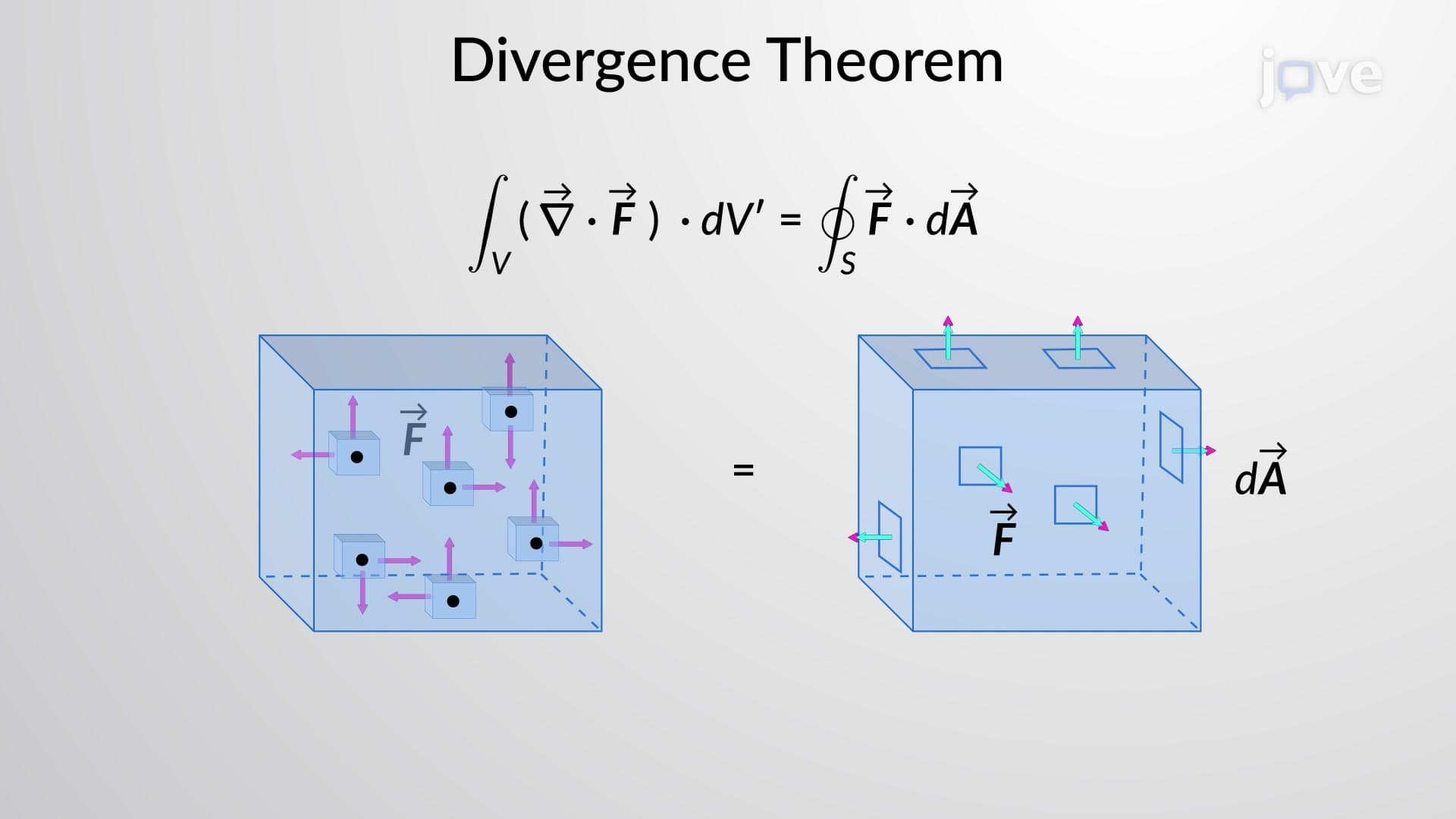
The divergence theorem, also known as Gauss's theorem, establishes that the total flux flowing outward through any closed surface equals the accumulated divergence within the enclosed volume. This relationship proves invaluable in engineering applications, such as analyzing heat transfer in building HVAC systems or calculating electric field flux in semiconductor design.
Consider a practical example: engineers at Boeing use divergence theorem principles when analyzing airflow around aircraft wings. If air has positive divergence in a region (indicating expansion or a source), the theorem guarantees that net airflow must exit through the surrounding surface. This mathematical certainty allows aerospace engineers to predict lift characteristics and optimize wing designs without measuring every point in the flow field.
The theorem appears frequently on AP Calculus BC exams and college-level vector calculus courses, particularly in problems involving fluid flow rates, electromagnetic flux, and gravitational field calculations. Students preparing for the MCAT often encounter divergence theorem applications in physics passages about blood flow dynamics or respiratory system mechanics.
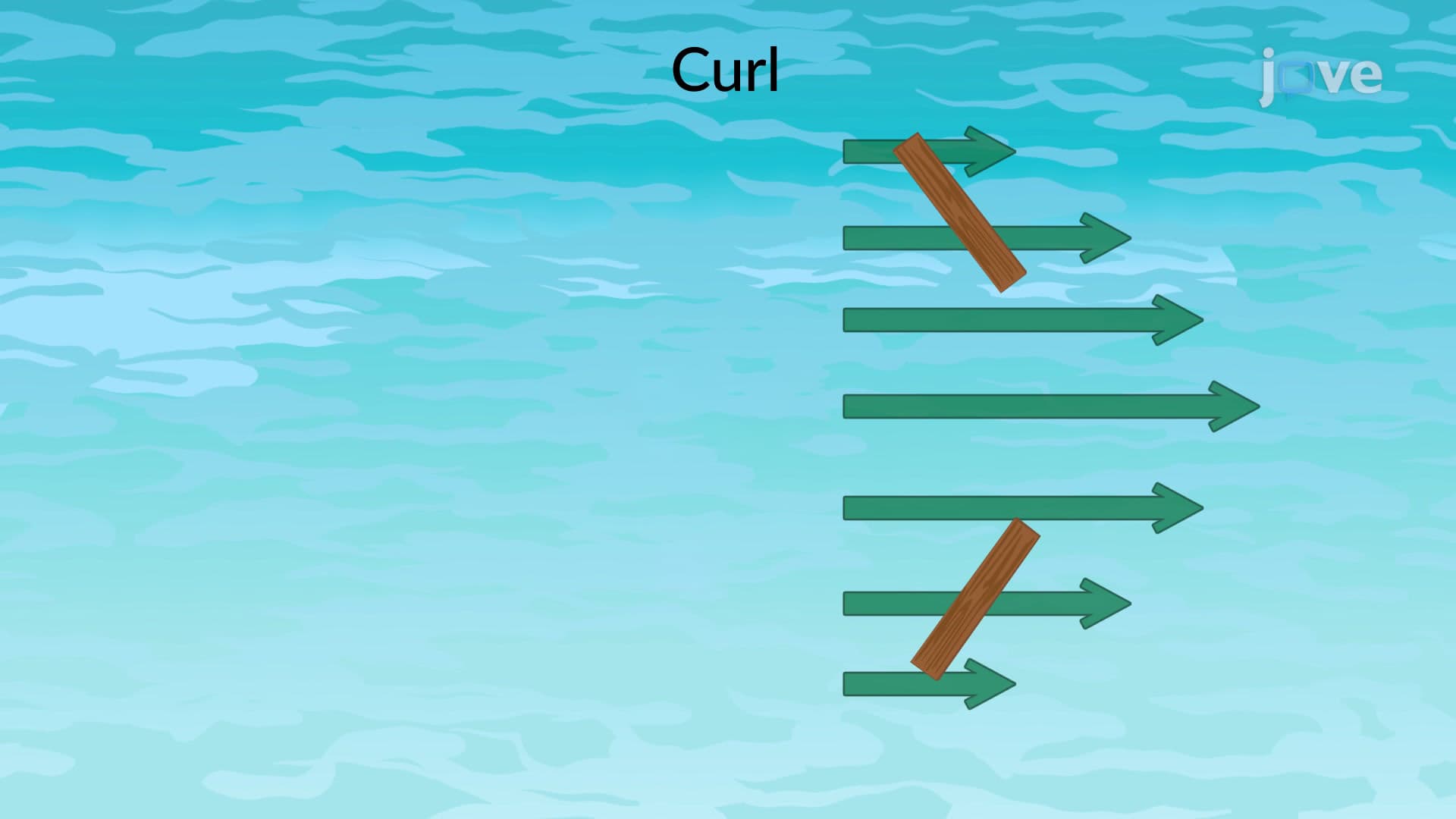
Stokes theorem connects the circulation around a boundary curve to the curl integrated over the surface bounded by that curve. This relationship explains why meteorologists can predict storm rotation by analyzing wind patterns-circulation around a storm's edge directly relates to the rotational tendency (curl) throughout the storm system.
The theorem's power becomes evident in electromagnetic theory, where it helps explain Faraday's law of electromagnetic induction. When a changing magnetic field induces an electric field, Stokes theorem quantifies how circulation around a wire loop relates to the magnetic field changes passing through the loop's interior.
Both theorems find extensive application in computational fluid dynamics software used by companies like General Electric for turbine design and by NASA for spacecraft heat shield analysis. The theorems enable engineers to solve complex three-dimensional problems by converting them into more tractable two-dimensional surface integrations or one-dimensional line integrations.
Students planning careers in physics, engineering, or applied mathematics will encounter these theorems throughout their studies, from undergraduate differential equations courses to graduate-level electromagnetic theory and fluid mechanics. Mastering their physical interpretations-not just their mathematical manipulations-provides crucial insight for success in advanced STEM fields.
Related Micro-courses