Loading video…


 15 Concepts
 203.3K views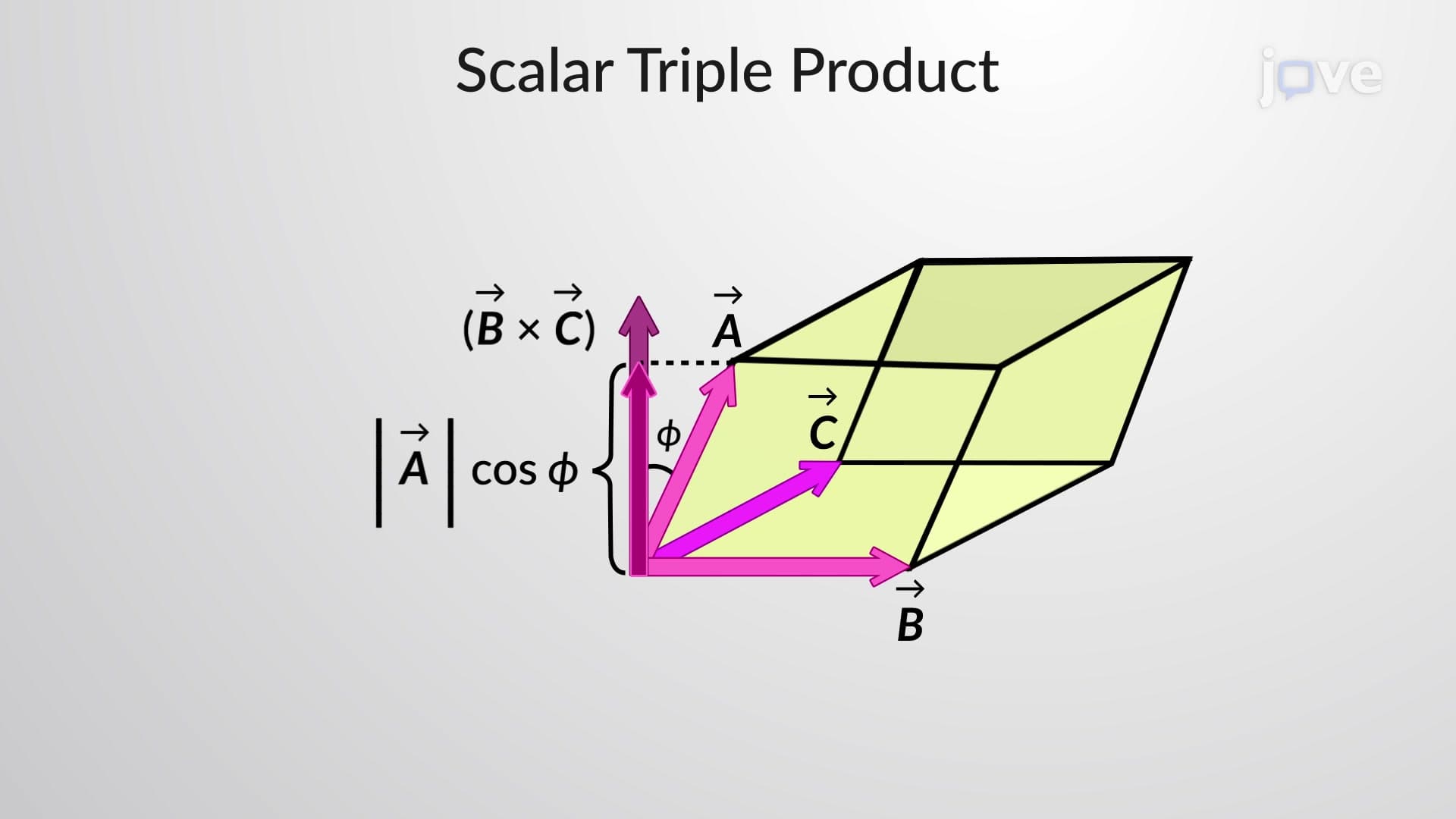

Video Summary: Scalar and Vector Triple Products Explained
Ever wondered how NASA calculates the volume of cargo compartments on the International Space Station using three-dimensional vectors? Scalar and vector triple products are mathematical operations that unlock the geometry hidden within vector combinations, with the scalar triple product revealing volumes of three-dimensional shapes while the vector triple product creates entirely new directional quantities. These operations appear frequently in physics problems involving torque, angular momentum, and electromagnetic fields across US high school and college curricula. Watch the full video on JoVE Coach to master this concept with expert-led visuals and step-by-step explanations.
The world of vector mathematics extends beyond simple addition and scalar multiplication into sophisticated operations that reveal hidden geometric relationships. Scalar and vector triple products represent two distinct mathematical operations that combine three vectors using both dot and cross product operations, each serving unique purposes in physics and engineering applications.
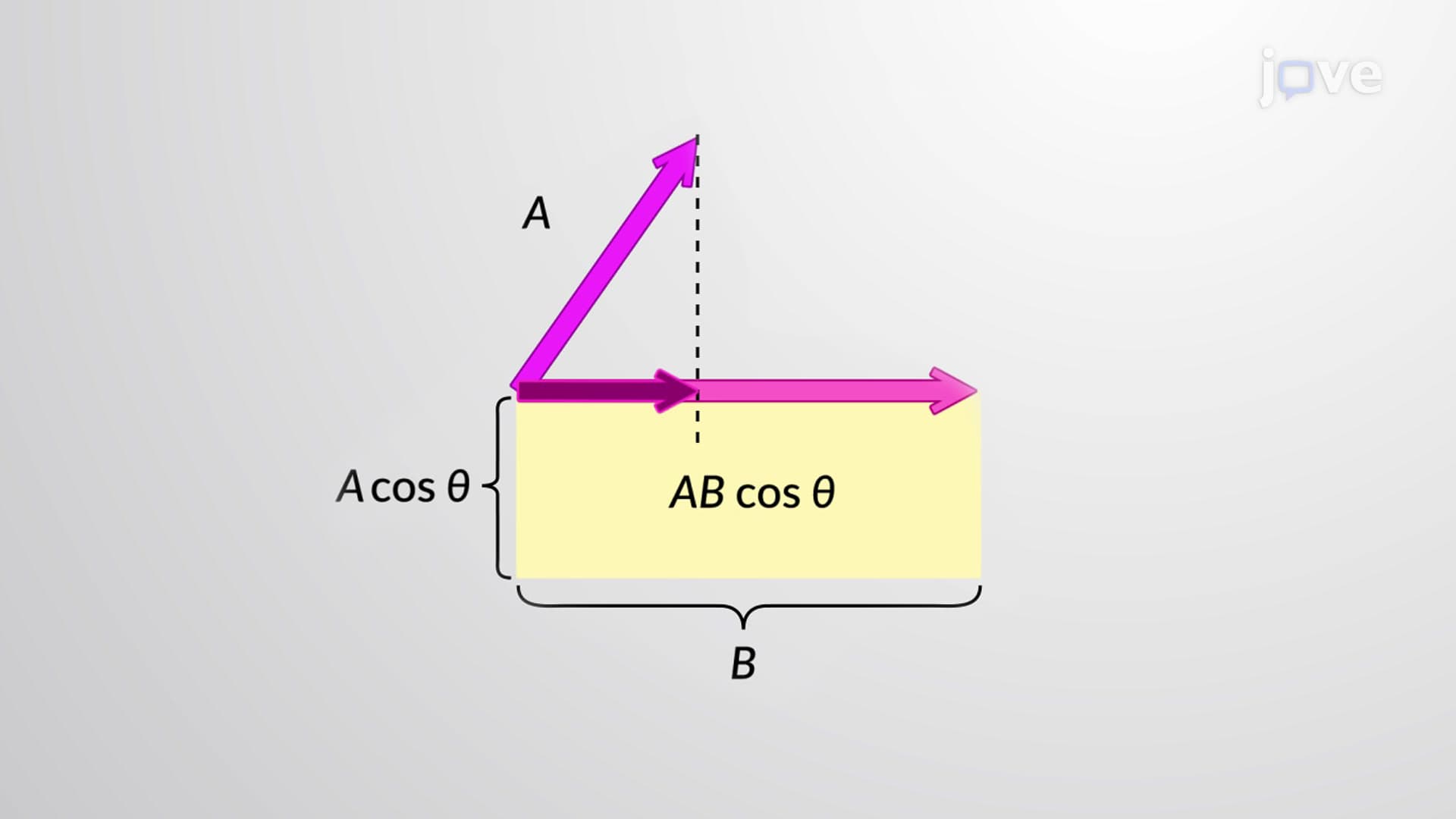
The scalar triple product, denoted as a · (b × c), combines three vectors through a cross product followed by a dot product operation. This operation produces a scalar quantity whose absolute value equals the volume of a parallelepiped formed by the three vectors. Consider three vectors representing the edges of a shipping container: the scalar triple product directly calculates the container's internal volume.
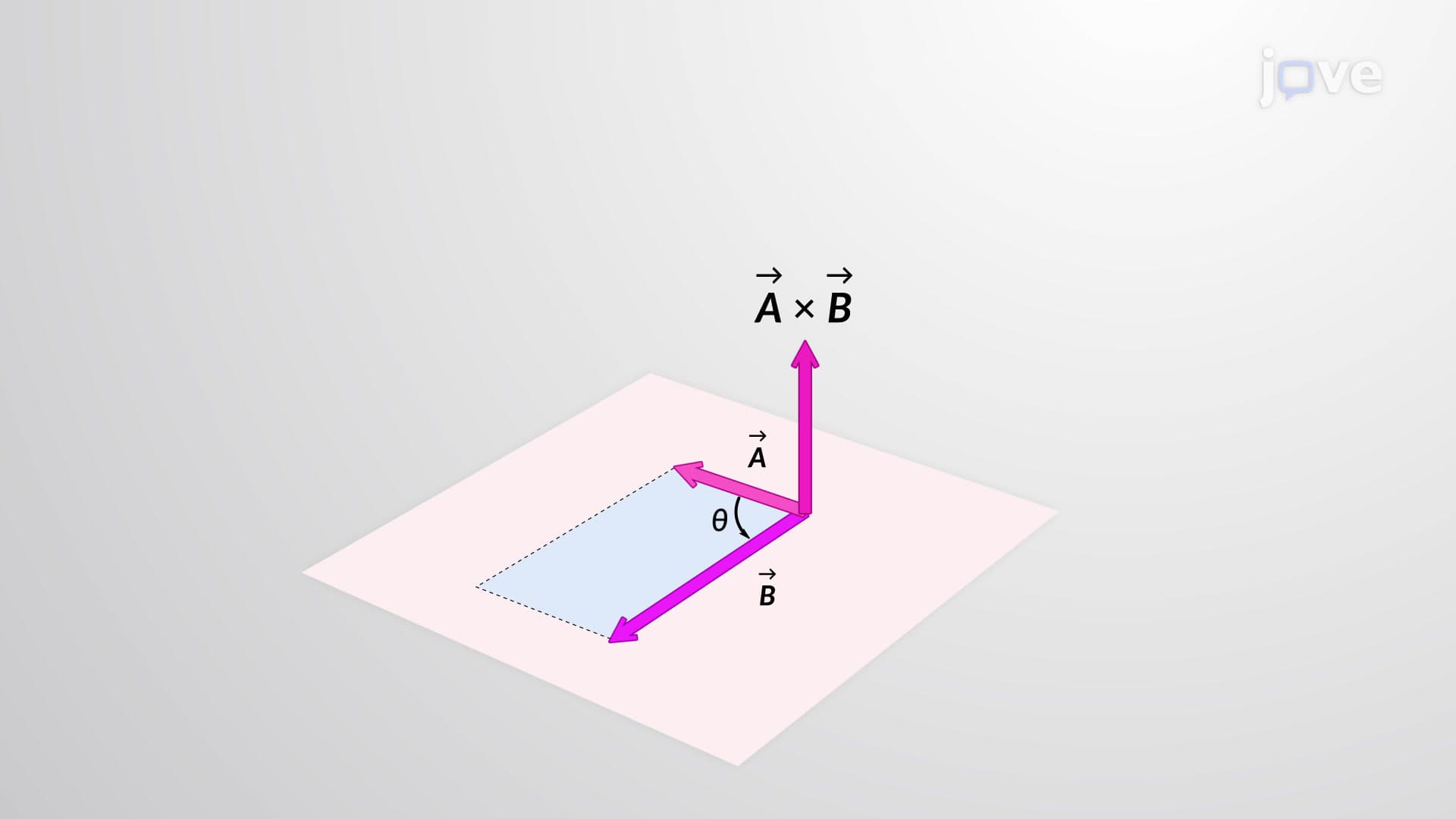
The geometric interpretation reveals why this works: the cross product b × c creates a vector perpendicular to both b and c, with magnitude equal to the parallelogram area formed by these vectors. The subsequent dot product with vector a projects a onto this perpendicular direction, effectively measuring the "height" of the three-dimensional structure.
A remarkable property of scalar triple products involves cyclic permutation: a · (b × c) = b · (c × a) = c · (a × b). This means rotating the vectors cyclically preserves the volume calculation, reflecting the geometric reality that a box's volume remains constant regardless of which edge you designate as length, width, or height.
The vector triple product, expressed as a × (b × c), follows a different mathematical pathway. This operation produces a vector quantity lying in the plane formed by vectors b and c, but perpendicular to vector a. Unlike scalar triple products, vector triple products are non-associative: a × (b × c) ≠ (a × b) × c.
The vector triple product finds extensive application in electromagnetic field calculations, where electric and magnetic field interactions require precise directional analysis. The famous vector triple product identity a × (b × c) = b(a · c) - c(a · b) provides computational shortcuts for complex three-dimensional vector problems.
These concepts appear prominently in AP Physics C: Mechanics courses when studying rotational dynamics and angular momentum. College-level Physics 2 courses at institutions like MIT and Stanford integrate triple products into electromagnetic field theory. Engineering mechanics courses utilize scalar triple products for determining moments about axes and calculating structural volumes.
Students preparing for the MCAT Physics section encounter these concepts in questions involving torque calculations and three-dimensional force analysis. Graduate-level physics programs expand these foundations into tensor calculus and advanced field theory applications.
Related Micro-courses