Loading video…


 15 Concepts
 203.3K views

Video Summary: Line Surface and Volume Integrals Explained
Ever wonder how NASA engineers calculate fuel consumption during a rocket launch or how meteorologists predict storm intensity? Line surface and volume integrals form the mathematical backbone of these complex calculations. These three integral types-line, surface, and volume-allow scientists and engineers to compute quantities like work done by forces, fluid flow through surfaces, and total mass distributions. For instance, aerospace engineers at Boeing use surface integrals to calculate air pressure distribution across aircraft wings during flight testing. Line Surface And Volume Integrals Explained provides the foundation for understanding these powerful mathematical tools. Watch the full video on JoVE Coach to master this concept with expert-led visuals and step-by-step explanations.
Line surface and volume integrals represent three distinct mathematical operations that extend basic integration concepts into multidimensional space. Each integral type serves specific purposes in physics, engineering, and applied mathematics, making them essential tools for students pursuing STEM careers.
Line integrals evaluate functions along curved paths in space, most commonly calculating work done by force fields. When a force F acts on an object moving along path C, the work equals the line integral ∫C F·dr. This concept appears frequently on AP Calculus BC exams and college multivariable calculus courses.
Consider a practical example: NASA engineers use line integrals to calculate the work required for spacecraft trajectory corrections. When the Space Shuttle adjusted its orbit, controllers computed line integrals of thruster forces along the desired path to determine fuel requirements.
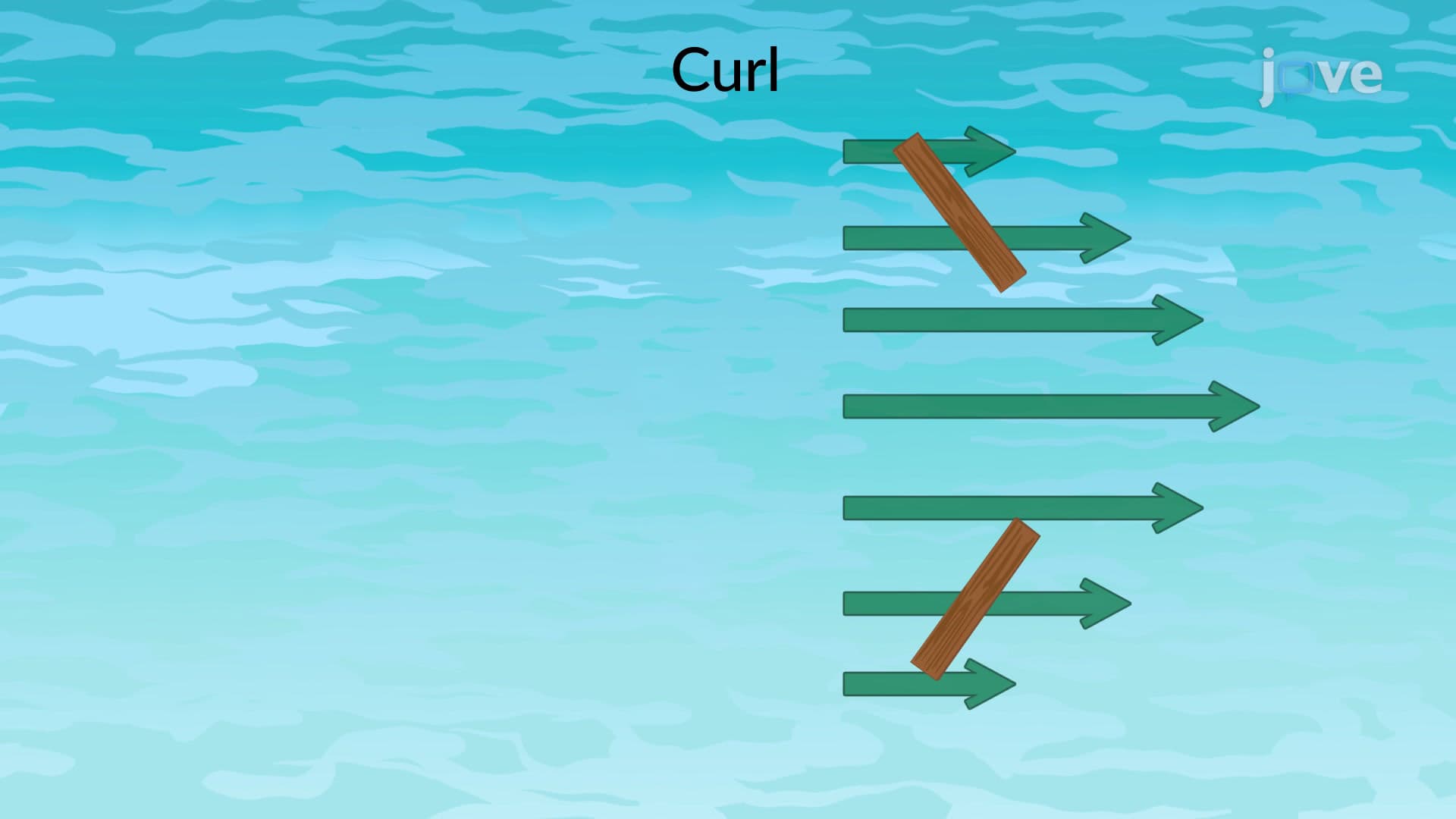
Closed-line integrals, where the path forms a complete loop, measure circulation. Meteorologists use circulation calculations to analyze weather patterns-positive circulation indicates counterclockwise rotation (typical in low-pressure systems), while negative circulation suggests clockwise rotation.
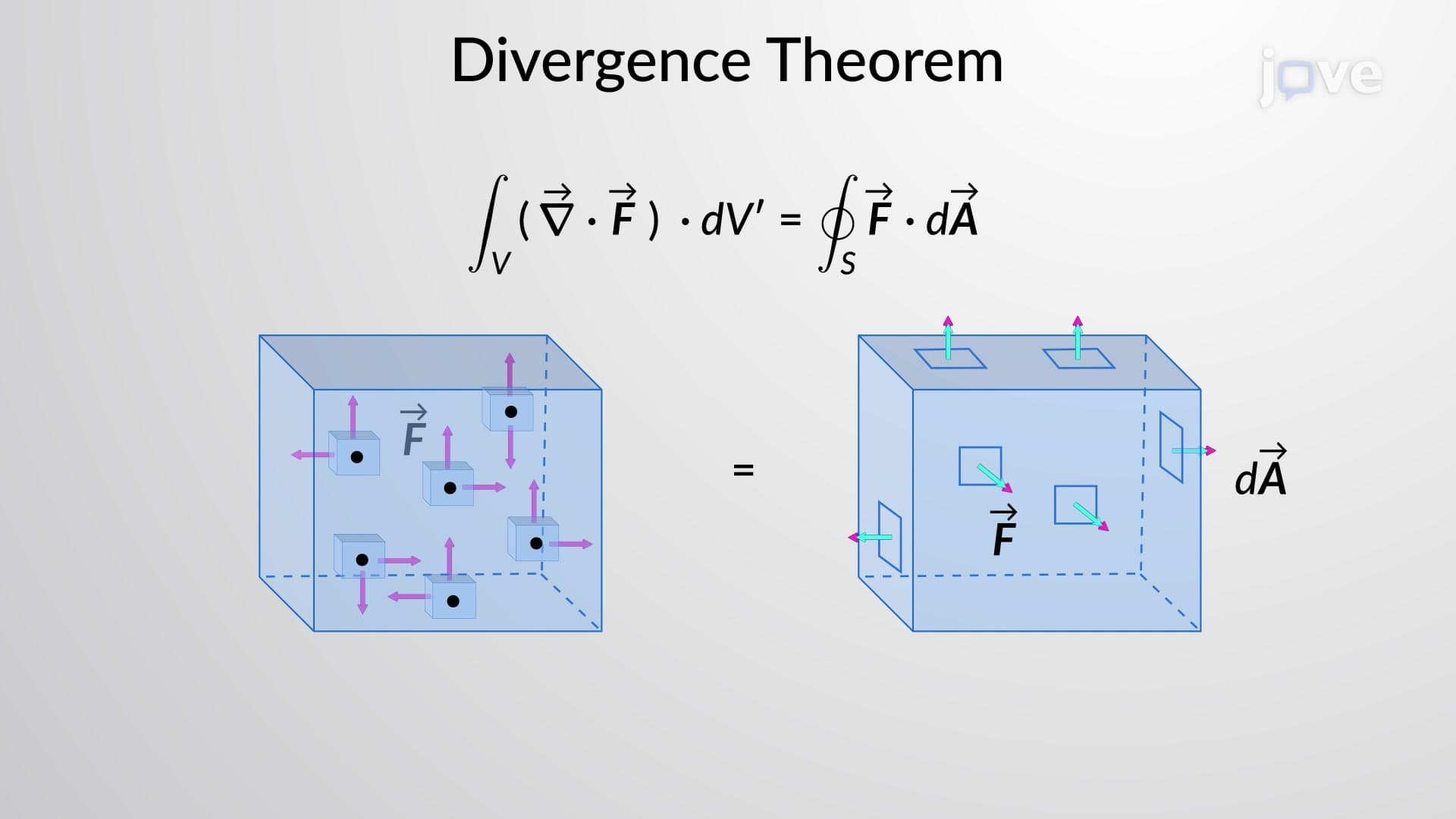
Surface integrals extend integration across two-dimensional surfaces embedded in three-dimensional space. The most important application involves flux calculations-measuring how much of a vector field passes through a surface.
For vector field F and surface S, the flux equals ∫∫S F·n dS, where n represents the unit normal vector. This concept proves crucial in fluid dynamics, electromagnetism, and heat transfer applications.
Tesla's electric vehicle engineers use surface integrals to optimize battery cooling systems. By calculating heat flux through battery pack surfaces, they design cooling channels that maintain optimal operating temperatures. Similarly, Boeing aerodynamicists apply surface integrals to determine lift forces across wing surfaces during wind tunnel testing.
Volume integrals integrate functions throughout three-dimensional regions, typically calculating total mass, charge, or energy. For scalar function f over region V, the volume integral ∫∫∫V f dV gives the accumulated quantity.
Medical physicists at Johns Hopkins use volume integrals for radiation therapy planning. They integrate dose functions throughout tumor volumes to ensure adequate treatment while minimizing healthy tissue exposure. This application directly impacts patient outcomes in cancer treatment protocols.
Students encounter these concepts in college physics courses, particularly when studying electromagnetism and fluid mechanics. The MCAT includes related problems in its physics section, testing students' ability to apply integral concepts to biological systems.
Related Micro-courses