Loading subject page…


203,317 views

Video Summary: What Is Vector Product Cross Product
Why does a wrench applied perpendicular to a bolt create maximum turning force? The vector product cross product explains this phenomenon through the mathematical relationship between two vectors and the angle between them. This fundamental operation combines magnitude, direction, and geometric positioning to determine both the strength and orientation of the resulting vector. In engineering applications like calculating torque on NASA rocket components, the vector product cross product becomes essential for precise mechanical design. Watch the full video on JoVE Coach to master this concept with expert-led visuals and step-by-step explanations.
The vector product cross product represents one of the most powerful tools in three-dimensional mathematics and physics. Unlike scalar multiplication, which produces a number, the cross product of two vectors creates an entirely new vector with unique magnitude and direction properties. This operation becomes particularly valuable when analyzing rotational forces, magnetic fields, and angular momentum in engineering systems.
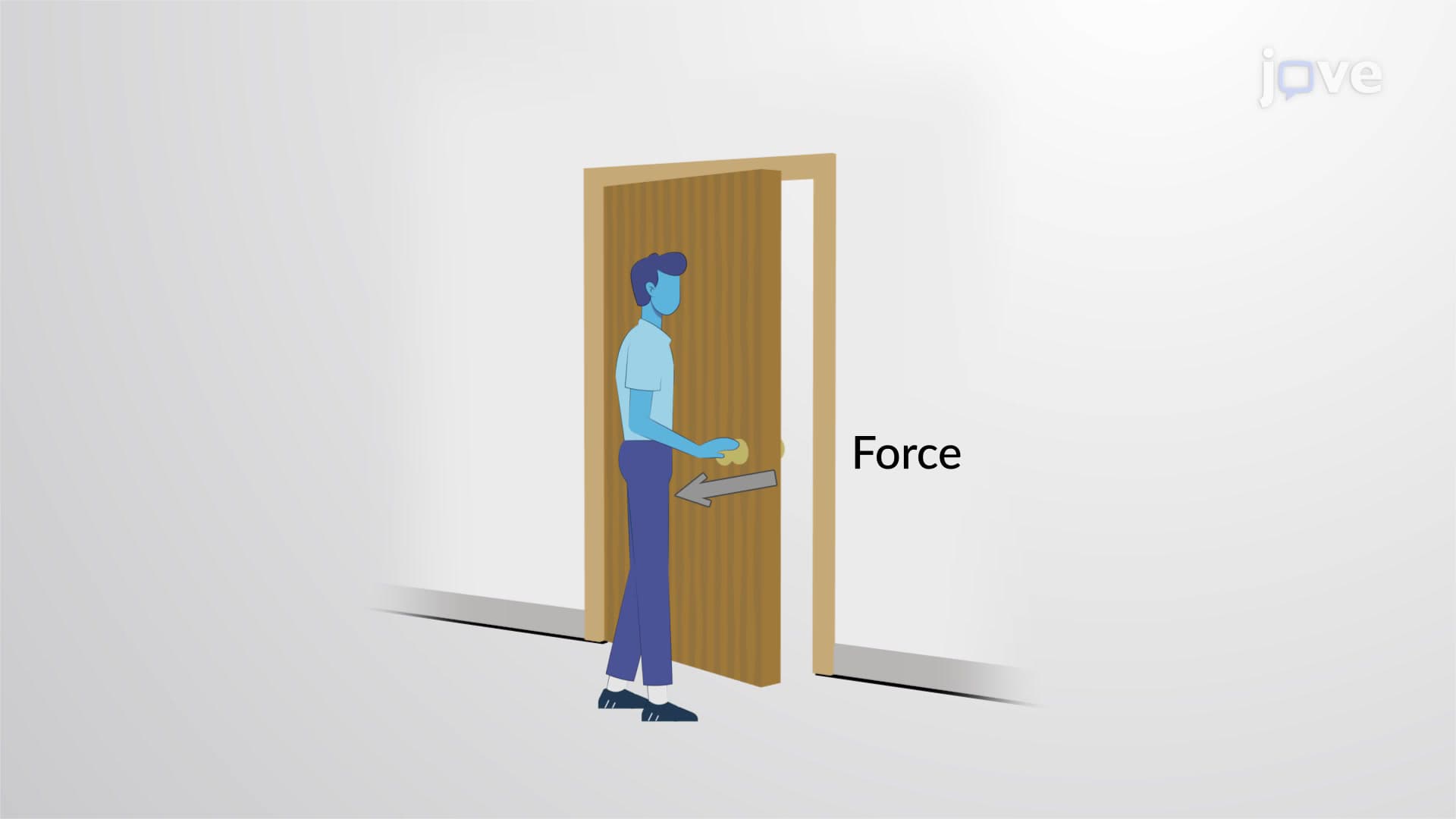
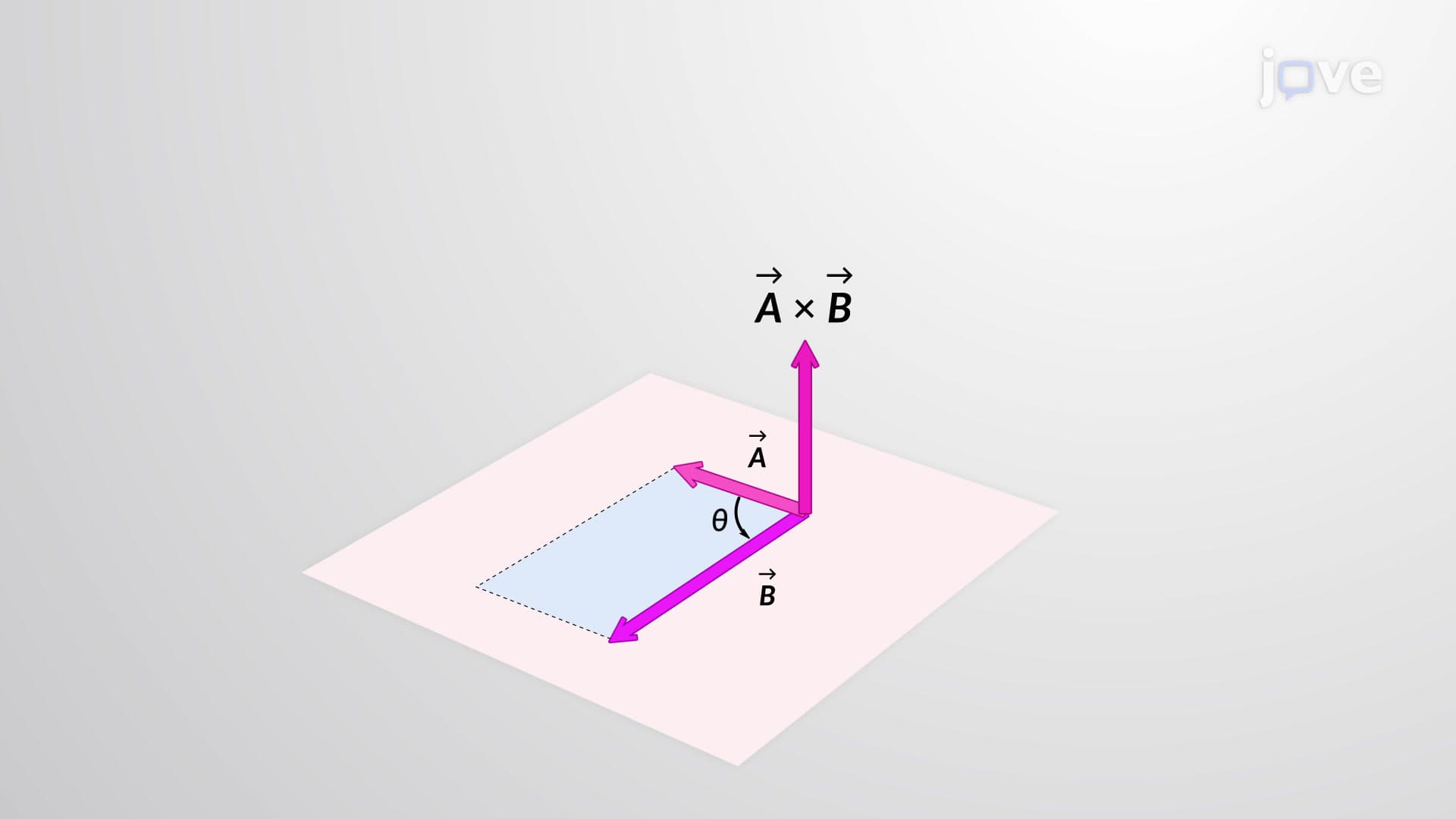
The mathematical definition states that for vectors A and B, their cross product A × B equals |A| |B| sin(θ), where θ represents the angle between the vectors. This formula reveals why perpendicular vectors (θ = 90°) produce maximum cross product magnitude, while parallel vectors (θ = 0°) yield zero-explaining why pushing perpendicular to a door handle creates optimal rotation.
Geometrically, the vector product cross product magnitude equals the area of the parallelogram spanned by the two input vectors. This visualization helps students understand why cross products appear frequently in physics problems involving areas, volumes, and rotational quantities.
The right-hand rule provides the directional component: point your index finger along the first vector, middle finger along the second vector, and your thumb indicates the cross product direction. This method ensures consistent results across different coordinate systems and becomes essential for solving AP Physics problems involving torque and angular momentum.
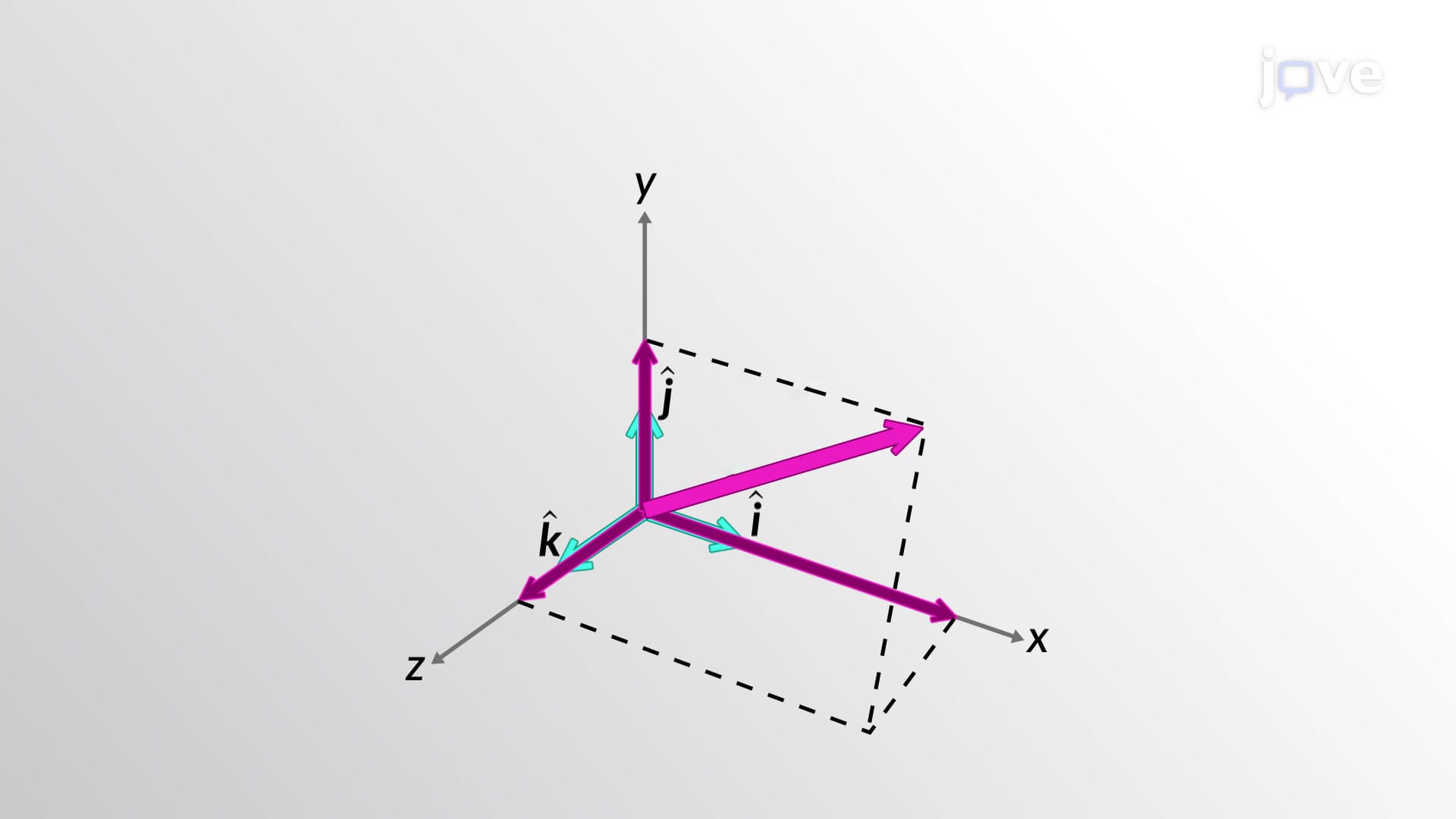
For vectors A = (Ax, Ay, Az) and B = (Bx, By, Bz), the cross product components are:
This determinant method appears regularly on SAT Subject Tests and college physics midterms. Students at MIT and Stanford frequently encounter cross product calculations in engineering mechanics courses, where determining forces on structural beams requires precise vector analysis.
The vector product cross product governs countless engineering applications across American industries. Aerospace engineers at Boeing use cross products to calculate control surface torques on aircraft. Automotive engineers at Ford apply these principles when designing steering systems and suspension components. Even in biomedical engineering, cross products help analyze joint forces and muscle torques in prosthetic design.
Understanding cross products becomes particularly crucial for students pursuing STEM careers, as graduate programs and professional licensing exams extensively test three-dimensional vector mathematics. The concept bridges high school trigonometry with advanced engineering coursework, making it a cornerstone of technical education.
Related Micro-courses