Loading subject page…


203,317 views

Video Summary: What are Polar and Cylindrical Coordinates
Ever wonder how GPS systems pinpoint your exact location using satellites orbiting Earth? Polar and cylindrical coordinates make this possible by describing positions through radial distances and angles rather than traditional x-y grids. While Cartesian coordinates work well for linear motion, engineers at companies like Lockheed Martin use polar and cylindrical coordinate systems to design everything from satellite trajectories to radar systems. What are polar and cylindrical coordinates? They're alternative mathematical frameworks that simplify complex rotational and three-dimensional problems. Watch the full video on JoVE Coach to master this concept with expert-led visuals and step-by-step explanations.
What are polar and cylindrical coordinates? These coordinate systems offer powerful alternatives to the familiar Cartesian x-y-z framework, particularly excelling in scenarios involving rotation, circular motion, or cylindrical symmetry. While Cartesian coordinates describe position using perpendicular axes, polar and cylindrical systems use radial distances and angles-making them indispensable tools for engineers, physicists, and mathematicians.
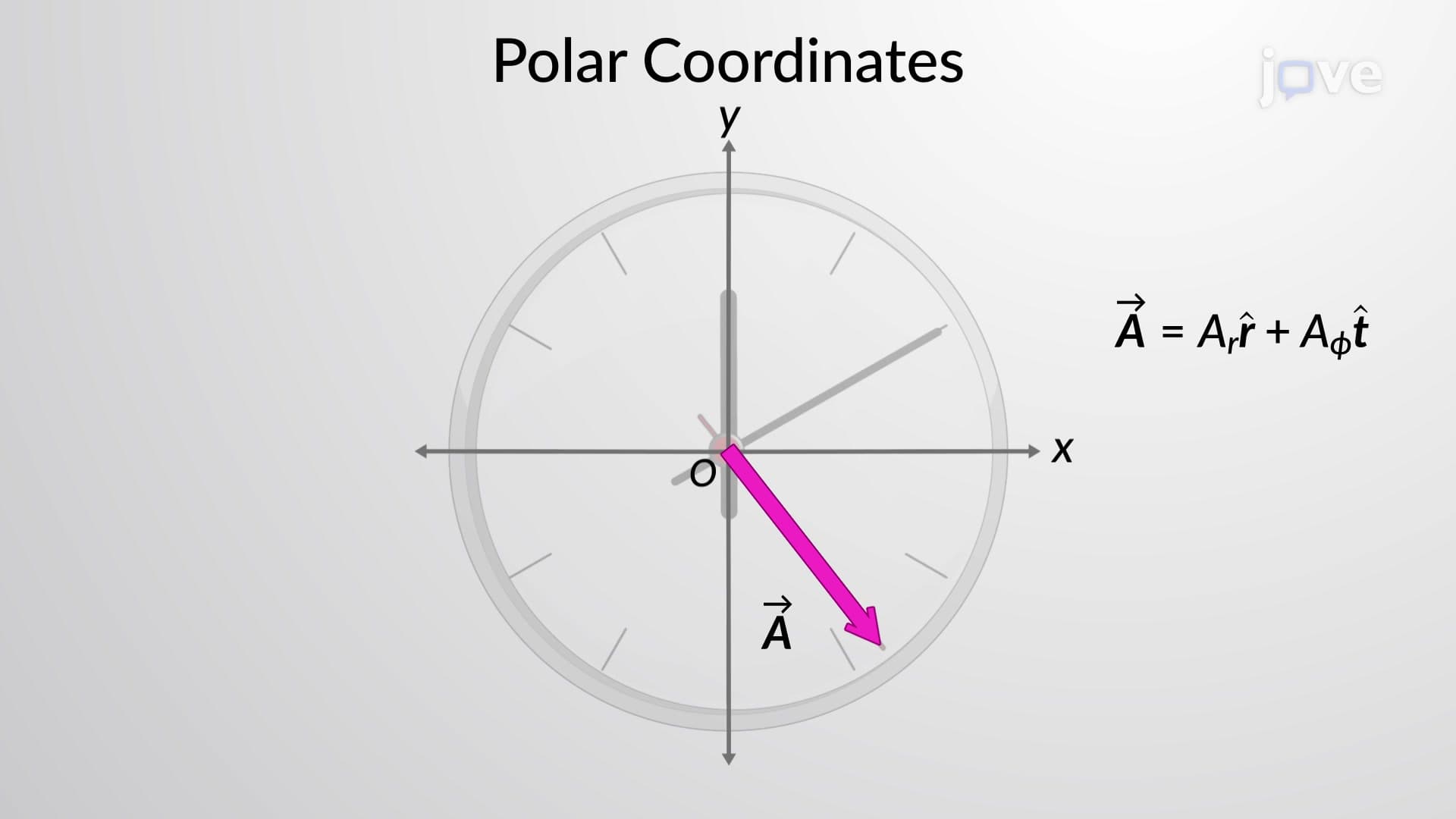
The polar coordinate system operates in two dimensions, defining any point using just two values: the radial component (r) representing distance from the origin, and the polar angle (θ) measured counterclockwise from the positive x-axis. This system proves particularly elegant for describing circular motion, like the rotation of wind turbine blades at General Electric facilities or the orbital mechanics NASA uses for satellite positioning.
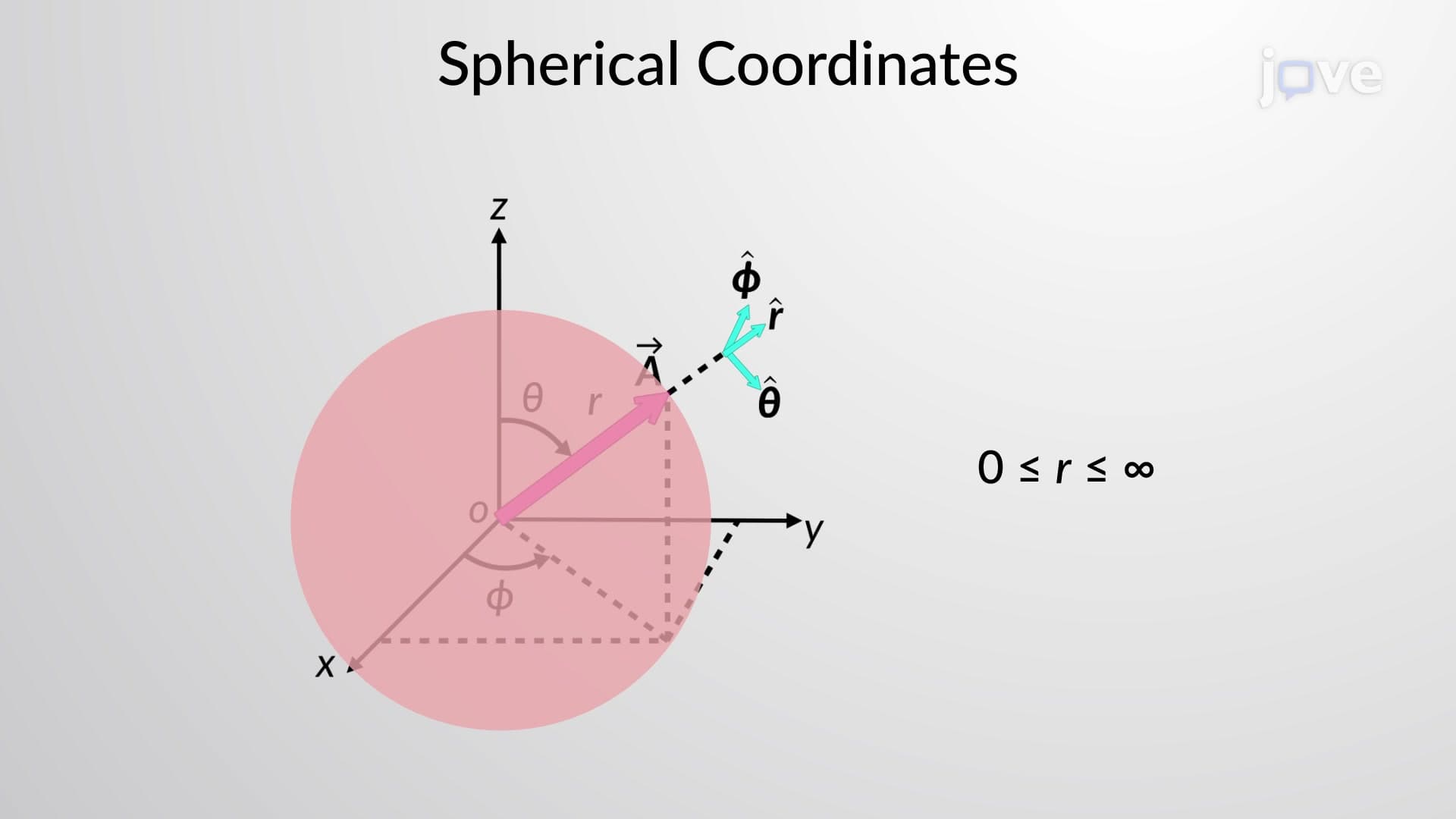
Cylindrical coordinates extend polar coordinates into three dimensions by adding a z-component representing height above the xy-plane. This creates a coordinate system defined by (r, θ, z), where r and θ function identically to polar coordinates while z operates like the Cartesian z-axis. Engineers at Boeing utilize cylindrical coordinates when designing aircraft engines, where the natural cylindrical symmetry of turbofan components makes calculations significantly more manageable.
Understanding these coordinate systems becomes crucial for students preparing for AP Physics C exams, where rotational dynamics problems frequently appear. The transformation equations connecting these systems-such as x = r·cos(θ) and y = r·sin(θ)-regularly surface in college calculus courses at institutions like MIT and Stanford.
In practical applications, meteorologists use polar coordinates for radar systems that track storm patterns across the United States. The National Weather Service's Doppler radar stations naturally operate in polar coordinates, measuring both the distance to precipitation (radial component) and its direction (angular component) from the radar installation.
Students should recognize that polar and cylindrical coordinates concept mastery involves more than memorizing transformation formulas. Success requires visualizing how these systems naturally describe rotational phenomena that appear cumbersome in Cartesian coordinates. Practice problems involving springs in helical motion, electromagnetic fields around cylindrical conductors, or projectile motion in rotating reference frames will solidify understanding for MCAT preparation and undergraduate physics coursework.
Related Micro-courses