Loading video…


 11 Concepts
 85.6K views

Video Summary: Estimating the Population Mean with Known Standard Deviation
Ever wondered how forestry engineers determine if shipping containers can accommodate longer lumber without measuring every tree in America? Estimating the population mean with known standard deviation allows researchers to make precise predictions about entire populations using just sample data. When redesigning truck containers for oakwood logs, engineers use statistical sampling techniques and confidence intervals to estimate the true average length of all logs. This method proves invaluable when complete population data is impossible to collect, yet accurate estimates are crucial for engineering decisions. Watch the full video on JoVE Coach to master this concept with expert-led visuals and step-by-step explanations.
Estimating the population mean with known standard deviation represents a fundamental statistical technique that bridges the gap between sample data and population-level insights. This method becomes essential when researchers need accurate estimates of population parameters but cannot feasibly measure every individual in the target population.
The foundation of this estimation method rests on three critical assumptions. First, both the population and sample must follow a normal distribution pattern. Second, the sample size must exceed 30 observations to ensure statistical validity. Third, and most importantly, researchers must have prior knowledge of the population standard deviation-often the most challenging requirement in practice.
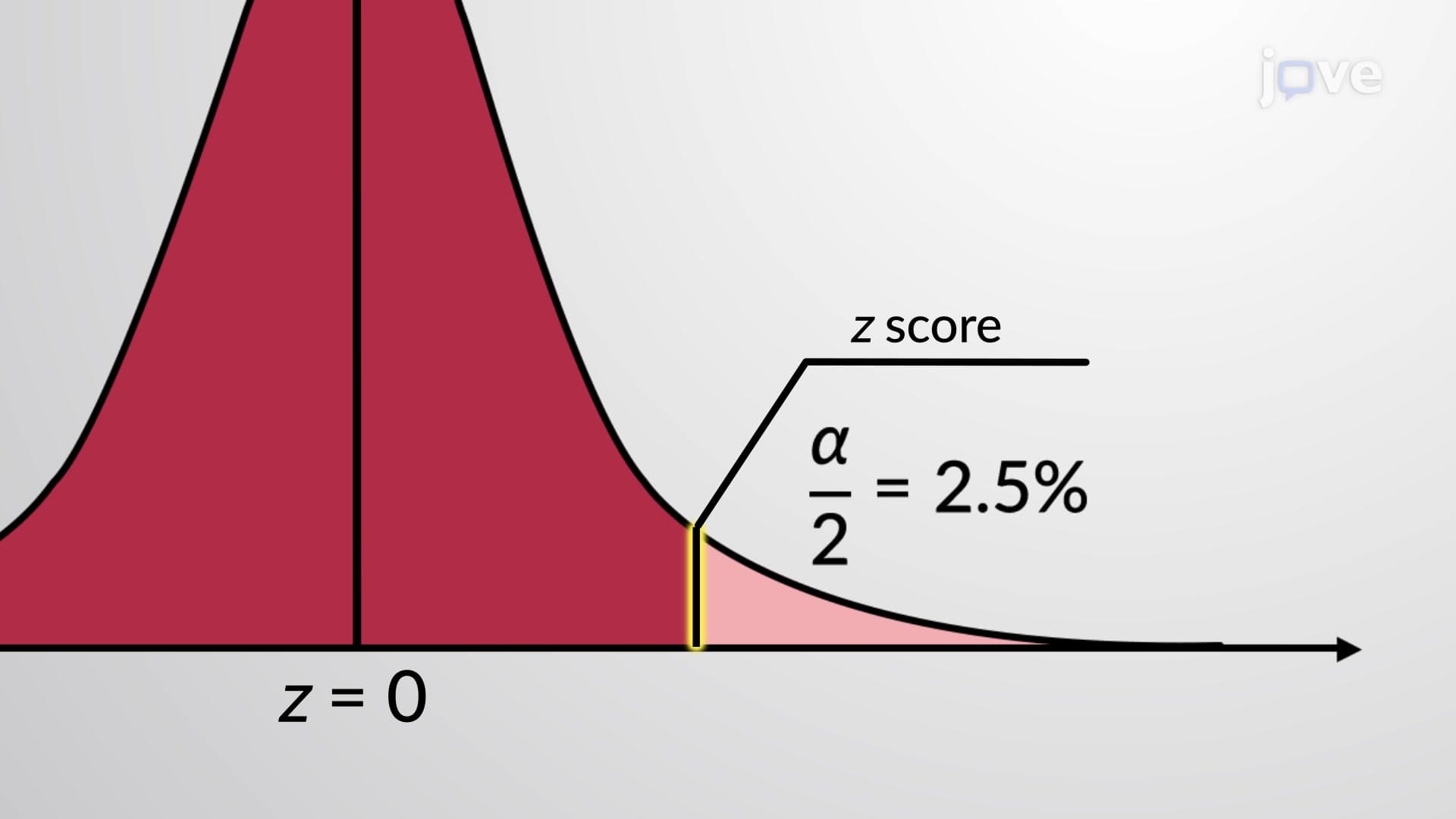
When these conditions are met, statisticians can employ the z-distribution to determine critical values for confidence interval calculations. The margin of error formula becomes: Margin of Error = (Critical Value) × (Population Standard Deviation / √Sample Size). This mathematical relationship allows researchers to quantify the precision of their population estimates.
Consider quality control at Boeing's aircraft manufacturing facilities. Engineers must ensure that aluminum sheets meet specific thickness requirements across thousands of components. Rather than measuring every sheet-an impossible task-quality control specialists collect representative samples. Using historical production data that provides the population standard deviation, they can estimate the true mean thickness of all aluminum sheets with remarkable precision.
Similarly, the FDA relies on this technique when evaluating pharmaceutical products. During clinical trials for new medications, researchers cannot test every potential patient. Instead, they use sample data combined with known population parameters from previous studies to estimate treatment effectiveness across the broader population.
This concept frequently appears on Advanced Placement (AP) Statistics exams, where students must demonstrate mastery of confidence interval construction. College-level statistics courses, particularly those required for pre-med and engineering programs, extensively cover this topic. Students preparing for graduate school entrance exams like the GRE often encounter problems requiring population mean estimation with known standard deviation.
The technique also proves valuable in business analytics coursework, where students learn to make data-driven decisions using limited sample information. Understanding when and how to apply this method distinguishes competent analysts from those who struggle with statistical inference.
Related Micro-courses